

Beyond the Receipt: Unlocking Korea’s Informal Economy
Hello! This is Maeil Hangul (매일한글), here to upgrade your Korean skills to the next level!
Today, we’re diving into a topic that’s part economics, part cultural anthropology, and 100% essential for understanding modern Korea: the informal economy (비공식 경제). You might think of economics as something that happens in boardrooms and stock markets, but some of the most interesting transactions happen without a receipt.
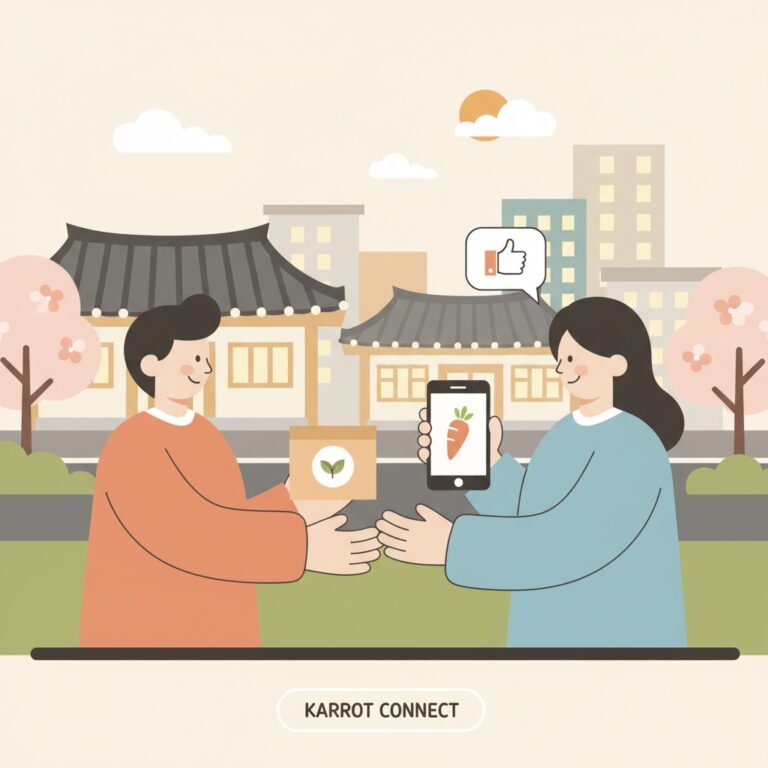
Lately in Korea, the informal economy has gone digital with the explosive popularity of second-hand trading apps like Karrot Market (당근마켓). These platforms are more than just online garage sales; they are a fascinating window into how Koreans negotiate, build trust, and create value outside of formal systems. Let’s learn the key phrases that will make you sound like a pro in this dynamic world!
Core Expressions for the Modern Marketplace
Here are the essential terms you need to navigate Korea’s vibrant informal economy, both online and offline.
1. 흥정 (Heungjeong)
- Pronunciation [Romanization]: [Heung-jeong]
- English Meaning: Bargaining; haggling; negotiation.
- Detailed Explanation: Heungjeong is the classic art of negotiation. While it’s a staple of traditional markets (전통시장), it has found a new life in the digital world. It’s not just about aggressively lowering the price; it’s a nuanced social interaction, a dance to find a price that both buyer and seller feel good about. Successfully engaging in heungjeong shows you understand the underlying give-and-take of Korean commerce.
- 💡 Pronunciation Tip: The key here is the final consonant cluster ‘ㅇ’ (ng). It’s a single nasal sound made at the back of your throat, like the ‘ng’ in “singing”. Avoid pronouncing it as “Heung-je-ong”. It’s a smooth, two-syllable word: [hɯŋ.dʑʌŋ].
2. 쿨거래 (Kul-georae)
- Pronunciation [Romanization]: [Kul-geo-rae]
- English Meaning: A “cool transaction.” A quick, easy, hassle-free deal.
- Detailed Explanation: This is a fantastic piece of modern slang, combining the English word “cool” (쿨) with the Korean word for transaction, “거래”. A kul-georae is the opposite of a long, drawn-out heungjeong. It signifies a deal where the buyer agrees to the seller’s price without any questions or haggling, promising a swift and pleasant exchange. In the fast-paced world of online trading, sellers often prefer a kul-georae.
- 💡 Pronunciation Tip: The ‘ㄱ’ in ‘거래’ is an unaspirated consonant. This means it’s pronounced without the puff of air you’d use for ‘k’ in English. It sounds somewhere between an English ‘g’ and ‘k’. Try saying “go-rae” but start the ‘g’ sound with a bit more tension in your throat. This is a common feature of Korean pronunciation called tensification (경음화).
3. 네고 (Nego)
- Pronunciation [Romanization]: [Ne-go]
- English Meaning: Nego (short for negotiation).
- Detailed Explanation: Nego is the modern, abbreviated form of “negotiation” (네고시에이션). It’s used almost exclusively in informal and online transactions. You’ll often see sellers specify 네고 불가 (nego bulga), meaning “negotiation impossible” or “price is firm.” Or they might say 네고 가능 (nego ganeung) to show they’re open to offers. Using this term shows you’re fluent in the specific jargon of Korean online marketplaces.
4. 정 (Jeong)
- Pronunciation [Romanization]: [Jeong]
- English Meaning: A deep, affectionate connection; attachment; sentiment.
- Detailed Explanation: This is a high-level concept crucial to understanding Korean culture. Jeong is the invisible social and emotional bond that connects people. In the context of the informal economy, jeong is the force that turns a simple transaction into a human interaction. It’s the grandmother at the market who throws in an extra apple for free (덤), or the seller on Karrot Market who waits patiently for you because you share a common local connection. It’s the trust and goodwill that exists beyond contracts and money.
- 💡 Pronunciation Tip: The vowel ‘ㅓ’ (eo) can be tricky. It is not the ‘o’ in “go”. It’s the ‘o’ sound in “song” or the ‘u’ in “uh-oh”. Open your mouth comfortably and make a sound from the back of your throat: [tɕʌŋ].
Example Dialogue: A Karrot Market Deal
Let’s see how these terms play out in a typical chat on a second-hand trading app.
A: 안녕하세요, 올려두신 스탠드 조명 보고 연락드렸습니다. 혹시 네고가 조금 가능할까요?
(Annyeonghaseyo, ollyeodusin seutaendeu jomyeong bogo yeollak deuryeotseumnida. Hoksi nego-ga jogeum ganeunghalkkayo?)
Hello, I’m contacting you about the floor lamp you posted. I was wondering if a little negotiation is possible?
B: 아, 죄송하지만 이미 가격을 많이 내려서 네고 불가 상품입니다. 대신 이 근처로 와주시면 제가 바로 쿨거래 약속드릴 수 있어요.
(A, joesonghajiman imi gagyeogeul mani naeryeoseo nego bulga sangpumimnida. Daesin i geuncheoro wajusimyeon jega baro kul-georae yaksok deiril su isseoyo.)
Ah, I’m sorry, but I’ve already lowered the price quite a bit, so the item is non-negotiable. However, if you can come to my area, I can promise a quick and cool transaction.
A: 알겠습니다! 그럼 흥정 없이 바로 구매할게요. 제가 그 동네는 처음이라서요.
(Algesseumnida! Geureom heungjeong eopsi baro gumaehalgeyo. Jega geu dongne-neun cheoeumiraseoyo.)
I understand! Then I’ll purchase it without any haggling. It’s my first time in that neighborhood.
B: 괜찮아요! 한국의 정이라고 생각하시고 편하게 오세요. 제가 출구 앞에서 기다리고 있을게요.
(Gwaenchanayo! Hangugui jeong-irago saenggakhasigo pyeonhage oseyo. Jega chulgu apeseo gidarigo isseulgeyo.)
No problem! Think of it as Korean jeong and don’t worry. I’ll be waiting for you in front of the station exit.
Culture Tip & Trend Analysis
The explosion of hyper-local apps like Karrot Market is a perfect case study in the digitalization of the informal economy. These platforms succeed not just because they are technologically advanced, but because they brilliantly translate traditional cultural concepts into digital features.
For example, Karrot Market’s famous “Manner Temperature” (매너온도) system, where users rate each other after a transaction, is a digital form of reputation-building that used to happen through word-of-mouth and jeong in a physical neighborhood. A high “Manner Temperature” signals a trustworthy person, making it easier to facilitate transactions based on trust rather than formal contracts.
The coexistence of terms like 흥정 (heungjeong) and 쿨거래 (kul-georae) shows a cultural tension: the traditional value placed on human interaction and negotiation versus the modern desire for speed and efficiency. By understanding and using these terms, you’re not just speaking Korean; you’re actively participating in a living, evolving part of its economic culture.
Let’s Practice!
Ready to test your knowledge?
- You want to buy a used book online, but you want a quick, hassle-free process. You message the seller: “I’ll take it for the asking price. I’d like a ______________.”
- In your own words, how might the concept of 정 (jeong) lead a seller to offer you a small discount, even if they originally listed the item as 네고 불가 (nego bulga)?
We’d love to hear your thoughts and answers! Leave a comment below using the expressions you learned today. Happy learning
Frequently Asked Questions (FAQ)
Q: What does "네고 불가" mean in Korean and how do you pronounce it?
A: In Korean, "네고 불가" is pronounced [nego bulga] and means: , meaning "negotiation impossible" or "price is firm." Or they might say
Q: What does "네고 가능" mean in Korean and how do you pronounce it?
A: In Korean, "네고 가능" is pronounced [nego ganeung] and means: to show they're open to offers. Using this term shows you're fluent in the specific jargon of Korean online marketplaces.
Q: What does "쿨거래" mean in Korean and how do you pronounce it?
A: In Korean, "쿨거래" is pronounced [kul-georae] and means: shows a cultural tension: the traditional value placed on human interaction and negotiation versus the modern desire for speed and efficiency. By understanding and using these terms, you're not just speaking Korean; you're actively participating in a living, evolving part of its economic culture.
Q: What does "정" mean in Korean and how do you pronounce it?
A: In Korean, "정" is pronounced [jeong] and means: lead a seller to offer you a small discount, even if they originally listed the item as







