

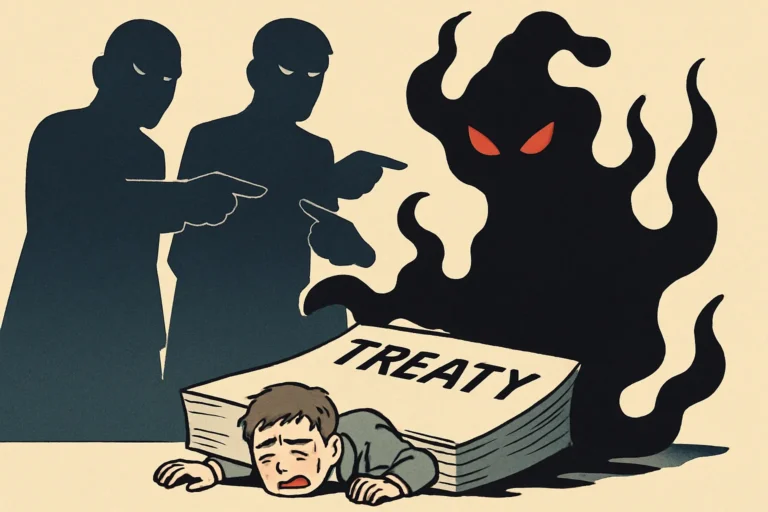
The “Peace” That Sparked a War? Debating the Treaty of Versailles in Korean
Hello! Welcome back to [Maeil Hangeul], the place to upgrade your Korean skills to the next level!
Today, we’re diving deep into a topic that requires sophisticated language and a nuanced understanding of history: the Treaty of Versailles. How do you debate its controversial clauses and far-reaching consequences in Korean? This is the kind of discussion you might have in a university seminar, a history book club, or when watching a serious documentary in Korea. Understanding this vocabulary is not just about history; it’s about mastering the formal, persuasive language used in academic and political discourse today.
Recently, there’s been a renewed global interest in the parallels between the early 20th century and today’s geopolitical climate. In Korea, too, discussions about historical treaties, reparations, and national responsibility are ever-present in the news. So, let’s equip you with the advanced vocabulary you need to participate in these profound conversations.
Core Expressions for Your Historical Debate
Here are four key phrases that will allow you to discuss the Treaty of Versailles with precision and depth.
1. 가혹한 배상금 (gahokhan baesanggeum)
- English Meaning: Harsh/Severe Reparations
- Detailed Explanation: This phrase combines 가혹하다 (gahok-hada), meaning ‘to be harsh, cruel, or severe,’ with 배상금 (baesang-geum), meaning ‘reparations’ or ‘compensation money.’ The nuance here is critical; it doesn’t just mean “a large sum of money.” 가혹한 implies that the amount was punitive, excessive, and designed to cripple the German economy. It’s a term loaded with negative judgment.
- 💡 Pronunciation Tip:
- The ‘ㅎ’ (h) in 가혹한 (gahokhan) is aspirated, meaning you should release a strong puff of air. It sounds like the ‘k’ followed by an ‘h’ sound. It’s not ga-ok-han, but closer to [ga-ho-kan].
2. ~에 대한 책임을 묻다 (e daehan chaegimeul mutda)
- English Meaning: To hold (someone) responsible for… / To impute responsibility for…
- Detailed Explanation: This is a formal and powerful way to talk about accountability. 책임 (chaegim) means ‘responsibility,’ and 묻다 (mutda) here doesn’t mean ‘to ask’ a simple question, but rather ‘to question,’ ‘to demand,’ or ‘to formally assign’ blame. It’s a standard phrase in legal, political, and historical contexts. For example, “독일에 전쟁에 대한 책임을 물었다” means “They held Germany responsible for the war.”
- 💡 Pronunciation Tip:
- Notice the sound linking (연음) in 책임을 [chaegimeul]. The final consonant ‘ㅁ’ (m) from the syllable ‘임’ moves over to the next empty syllable, creating a smooth transition. It’s not chaegim-eul, but a fluid [chae-gi-meul].
3. 민족 자결주의 (minjok jagyeoljuui)
- English Meaning: The principle of national self-determination
- Detailed Explanation: This is a cornerstone concept of 20th-century history. It’s a compound word derived from Hanja (Chinese characters): 민족 (民族) for ‘ethnic nation,’ 자결 (自決) for ‘self-determination,’ and 주의 (主義) for ‘-ism’ or ‘principle.’ This term is especially significant in a Korean context, as Woodrow Wilson’s promotion of this idea heavily influenced the March 1st Movement (3.1 운동) for independence from Japanese colonial rule in 1919.
- 💡 Pronunciation Tip:
- This is a long word, so practice it in chunks: 민-족 [min-jok] / 자-결 [ja-gyeol] / 주-의 [ju-ui]. The final vowel ‘의’ [ui] can be tricky. When it’s not the first syllable of a word, it’s often simplified in speech to [e], so you might hear this pronounced as [minjok jagyeoljue]. Both are acceptable, but the [ui] sound is more formal.
4. 굴욕감을 안겨주다 (guryokgameul angyeojuda)
- English Meaning: To inflict a sense of humiliation
- Detailed Explanation: This is a highly emotive and descriptive phrase. 굴욕감 (guryokgam) means ‘a feeling of humiliation’ (屈辱感). The verb 안겨주다 (angyeojuda) is much more profound than simply ‘주다’ (to give). It means to cause someone to have or to embrace (often an abstract, negative feeling). It implies that the humiliation was a burden forced upon them.
- 💡 Pronunciation Tip:
- Again, sound linking is key! 굴욕감을 is pronounced [gu-ryok-ga-meul], with the ‘ㅁ’ (m) moving to the next syllable. In 안겨주다 [an-gyeo-ju-da], make sure to pronounce the ‘겨’ [gyeo] syllable clearly. It’s a ‘g’ sound followed by the ‘yeo’ vowel (like in ‘yo-ga’).
Sample Dialogue
Let’s see how these expressions work in a conversation between two university students, Min-jun and Se-yeon.
A (민준): 베르사유 조약이 제2차 세계대전의 직접적인 원인이었다는 주장에 대해 어떻게 생각해?
A (Min-jun): What do you think about the argument that the Treaty of Versailles was a direct cause of World War II?
B (서연): 상당 부분 동의해. 특히 독일에 부과된 가혹한 배상금과 전쟁 책임 조항은 독일 국민에게 엄청난 굴욕감을 안겨줬어.
B (Se-yeon): I agree to a large extent. The harsh reparations imposed on Germany and the war guilt clause, in particular, inflicted a tremendous sense of humiliation on the German people.
A (민준): 맞아. 민족 자결주의 원칙을 내세웠지만, 패전국에게는 선택적으로 적용됐지. 결국 전쟁에 대한 모든 책임을 독일에 물은 셈이야.
A (Min-jun): Right. They promoted the principle of national self-determination, but it was applied selectively to the defeated nations. Ultimately, it was a case of holding Germany responsible for the entire war.
B (서연): 그 경제적, 심리적 압박이 결국 극단주의가 성장할 수 있는 토양을 만들었다고 봐.
B (Se-yeon): I believe that economic and psychological pressure created the fertile ground for extremism to grow.
Culture & Deeper Insights
While these terms are perfect for discussing European history, they are intensely relevant in modern Korea.
- Echoes in Korean History: As mentioned, 민족 자결주의 (minjok jagyeoljuui) is a term every Korean student learns in the context of their own struggle for independence. Using this term correctly shows a deep understanding of the historical forces that shaped not just the West, but East Asia as well.
-
Modern Political Language: Phrases like 책임을 묻다 (chaegimeul mutda) are staples of Korean political news. You will hear it used when opposition parties criticize the government, in discussions about corporate scandals, or in debates over international disputes. Mastering this phrase allows you to understand the language of accountability in Korean society.
-
Historical Dramas & Films: When you watch Korean films or dramas set in the 20th century, like “Mr. Sunshine” or “Assassination,” you’ll hear this level of formal, impactful language used constantly. Understanding these expressions will unlock a new layer of meaning in Korean media.
Let’s Wrap Up & Practice!
Today, we learned four powerful expressions to elevate your Korean to an academic level: 가혹한 배상금, ~에 대한 책임을 묻다, 민족 자결주의, and 굴욕감을 안겨주다. These are not just historical terms; they are living words used to debate complex issues today.
Now, it’s your turn to practice!
- Fill in the blanks:
베르사유 조약은 독일에 전쟁에 대한 모든 ___________ __________.
(The Treaty of Versailles ______ Germany ______ for the entire war.) -
Sentence Building:
Using the phrase 가혹한 배상금, write one sentence in Korean explaining why it was a controversial part of the treaty.
We’d love to see your answers! Share your sentences in the comments below using the expressions you learned today. Keep up the fantastic work
Frequently Asked Questions (FAQ)
Q: What does "가혹하다" mean in Korean and how do you pronounce it?
A: In Korean, "가혹하다" is pronounced [gahok-hada] and means: , meaning 'to be harsh, cruel, or severe,' with
Q: What does "배상금" mean in Korean and how do you pronounce it?
A: In Korean, "배상금" is pronounced [baesang-geum] and means: , meaning 'reparations' or 'compensation money.' The nuance here is critical; it doesn't just mean "a large sum of money."
Q: What does "가혹한" mean in Korean and how do you pronounce it?
A: In Korean, "가혹한" is pronounced [gahokhan] and means: is aspirated, meaning you should release a strong puff of air. It sounds like the 'k' followed by an 'h' sound. It's not
Q: What does "책임" mean in Korean and how do you pronounce it?
A: In Korean, "책임" is pronounced [chaegim] and means: means 'responsibility,' and







