

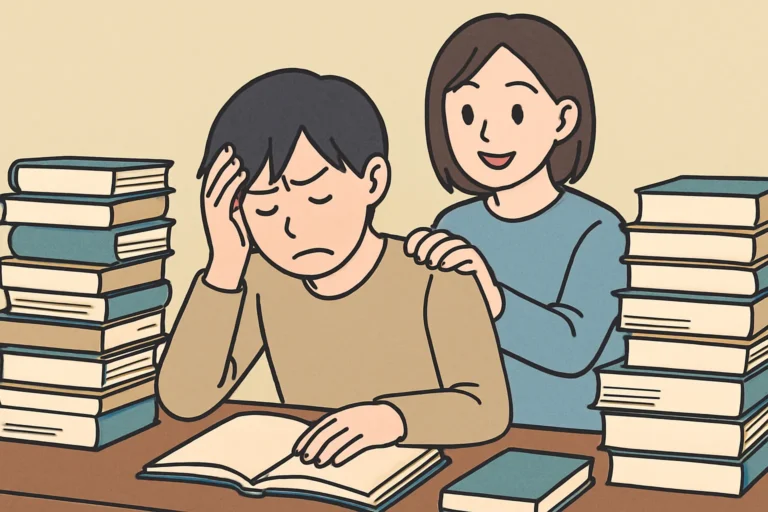
Feeling Stressed? Power Up with Positive Korean Phrases!
Hello! Welcome to [Maeil Hangul], here to upgrade your Korean skills!
Feeling a little overwhelmed lately? You’re not alone! Life can be stressful, whether you’re studying for an exam, working on a big project, or just trying to keep up with all the new K-dramas. In those moments, a few positive words can make a world of difference.
Lately in Korea, there’s a big focus on mental well-being and finding small ways to bring joy into everyday life, a concept often called ‘소확행’ (so-hwak-haeng – small but certain happiness). Today, we’re going to learn some essential Korean phrases that are perfect for cheering someone up, encouraging yourself, and embracing the power of positive thinking. Let’s learn how to be a source of strength for your friends, just like the supportive characters in your favorite dramas!
Core Expressions to Boost Your Mood
Here are three powerful phrases to help you and your friends stay positive.
1. 괜찮아 (Gwaenchana)
- Pronunciation [Romanization]: Gwaenchana
- English Meaning: It’s okay / It’s alright / No problem.
- Detailed Explanation: This is one of the most versatile and comforting words in Korean. You can use it to reassure a friend who made a mistake, to say “no, thank you” politely, or even to tell yourself that a difficult situation is manageable. It’s an informal phrase, perfect for friends and people you are close to. Think of it as a warm, verbal hug. For a more formal version, you would say 괜찮아요 (gwaenchanayo).
- 💡 Pronunciation Tip: The syllable ‘괜’ might look tricky. It’s a combination of ‘ㄱ(g)’, ‘ㅗ(o)’, ‘ㅏ(a)’, and ‘ㅣ(i)’, creating a ‘wae’ sound, similar to “when” in English. So, it’s pronounced [Gwaen-cha-na]. The ‘ㅎ(h)’ sound in ‘찮’ is very soft and often almost silent, blending into the ‘ㅊ(ch)’ sound.
2. 힘내 (Himnae)
- Pronunciation [Romanization]: Himnae
- English Meaning: Cheer up! / Stay strong! / You can do it!
- Detailed Explanation: This phrase literally means “Put out your strength!” (힘 = strength/power, 내다 = to put out). It’s the go-to expression for encouraging someone who is tired, sad, or facing a challenge. It’s a powerful and direct way to show your support. It’s informal, so use 힘내세요 (himnaeseyo) with people who are older or whom you don’t know well.
- 💡 Pronunciation Tip: The pronunciation is quite straightforward: [Him-nae]. Make sure to pronounce the ‘힘(him)’ with your lips closed at the end for the ‘ㅁ(m)’ sound. It’s a short and punchy phrase, so say it with energy!
3. 잘될 거야 (Jal doel geoya)
- Pronunciation [Romanization]: Jal doel geoya
- English Meaning: It will turn out well / Everything will be fine.
- Detailed Explanation: This is the ultimate phrase of reassurance. It expresses a strong belief in a positive future outcome. It’s made up of 잘 (well) + 되다 (to become) + the future tense ending -ㄹ 거야 (informal). You can say this when a friend is worried about an exam, an interview, or any uncertain situation. The formal version is 잘될 거예요 (jal doel geoyeyo).
- 💡 Pronunciation Tip: When the final consonant ‘ㄹ(l)’ in ‘될(doel)’ comes before ‘ㄱ(g)’ in ‘거야(geoya)’, the ‘ㄱ’ sound becomes slightly harder and tenser. It sounds like [jal-dwel-kkoya]. This is a common sound change in Korean called ‘tensing’ or ‘fortis’. Practicing this will make you sound much more natural!
Sample Dialogue
Let’s see how these phrases work in a real conversation. Imagine two friends talking about the stress of final exams.
A: 아, 어떡해… 요즘 너무 바빠서 시험공부 하나도 못했어. 스트레스받아.
(A: Ah, eotteokae… Yojjeum neomu bappaseo siheomgongbu hanado mothaesseo. Seuteureseu bada.)
(A: Oh, what do I do… I’ve been so busy lately I haven’t studied for the exam at all. I’m so stressed.)
B: 괜찮아, 아직 시간 좀 있잖아. 너무 걱정 마.
(B: Gwaenchana, ajik sigan jom itjana. Neomu geokjeong ma.)
(B: It’s okay, we still have some time. Don’t worry too much.)
A: 그래도… 이번 시험은 진짜 어려울 것 같아.
(A: Geuraedo… ibeon siheomeun jinjja eoryeoul geot gata.)
(A: Still… I think this exam will be really difficult.)
B: 힘내! 내가 도와줄게. 같이 공부하면 잘될 거야!
(B: Himnae! Naega dowajulge. Gachi gongbuhamyeon jal doel geoya!)
(B: Stay strong! I’ll help you. If we study together, everything will be fine!)
Culture Tip & Trend Deep Dive
In Korea, showing collective support is a huge part of the culture. You’ve probably heard the famous word “화이팅! (Hwaiting!)”, which is a Korean-style English word derived from “Fighting!”. While “Hwaiting!” is a general cheer for good luck, the phrases we learned today offer more personal and empathetic support.
You’ll hear these expressions constantly in modern Korean media. When K-pop idols do live streams on platforms like Weverse, they often read comments from fans who are having a hard time and respond with “힘내세요! 잘될 거예요!” to encourage them. In K-dramas, the moment a character is at their lowest point, you can almost guarantee their best friend will show up with some snacks and a heartfelt “괜찮아.”
Using these phrases shows that you not only understand the Korean language but also the culture of mutual support and encouragement. It’s a way of saying, “I’m on your team.”
Let’s Review and Practice!
Great job today! We learned three amazing phrases to spread positivity:
* 괜찮아 (Gwaenchana): It’s okay.
* 힘내 (Himnae): Stay strong!
* 잘될 거야 (Jal doel geoya): Everything will be fine.
Now, let’s put your knowledge to the test!
Practice Quiz:
Your friend is nervous before giving a big presentation at work. Fill in the blanks to complete your encouraging message!
“Don’t be nervous! You prepared a lot, so everything will be fine. Stay strong!”
“긴장하지 마! 준비 많이 했으니까 _________! _______!”
Think you know the answer? Leave your answer in the comments below, and try making your own encouraging sentence
Frequently Asked Questions (FAQ)
Q: What does "힘내세요" mean in Korean and how do you pronounce it?
A: In Korean, "힘내세요" is pronounced [himnaeseyo] and means: with people who are older or whom you don't know well.
Q: What does "괜찮아" mean in Korean and how do you pronounce it?
A: In Korean, "괜찮아" is pronounced [Gwaenchana] and means: It's okay.
Q: What does "힘내" mean in Korean and how do you pronounce it?
A: In Korean, "힘내" is pronounced [Himnae] and means: Stay strong!
Q: What does "잘될 거야" mean in Korean and how do you pronounce it?
A: In Korean, "잘될 거야" is pronounced [Jal doel geoya] and means: Everything will be fine.







