

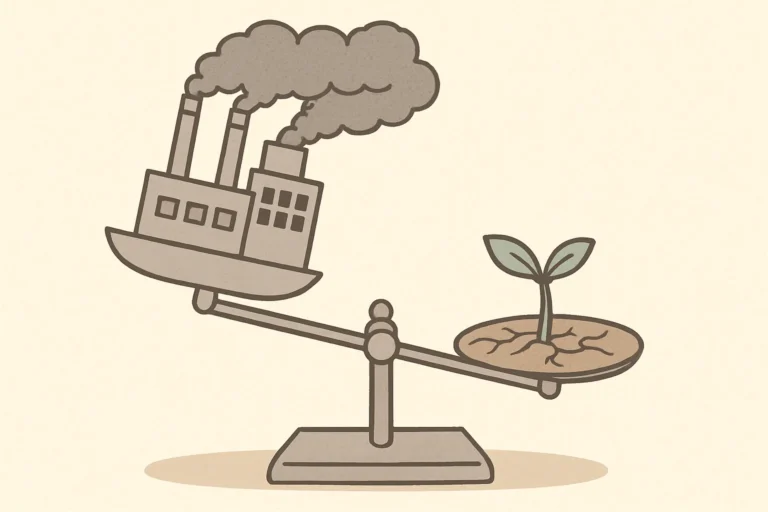
Climate Justice Debate: Sound Like a Pro in Korean!
Hello! Welcome to [Maeil Hangeul], here to upgrade your Korean skills!
Have you ever wanted to discuss important global issues in Korean? Today, we’re diving into a challenging but super relevant topic: climate justice. Specifically, we’ll learn how to talk about the different responsibilities of developed and developing countries.
Lately in Korea, there’s a growing conversation about environmental issues and global responsibility. Knowing how to express your opinion on this topic will not only make you sound more fluent but also allow you to participate in deeper, more meaningful conversations. Let’s learn how to debate like a pro!
Core Expressions for Your Debate
Here are some essential phrases you’ll need to discuss climate justice with confidence.
1. 책임이 있다 (chaegimi itda)
- Pronunciation [Romanization]: Chaegimi itda
- English Meaning: To have responsibility / To be responsible
- Detailed Explanation: This is the cornerstone phrase for any discussion about accountability. It combines 책임 (chaegim), meaning “responsibility,” with the verb 있다 (itda), meaning “to have.” You can use it to state that a person, group, or country is responsible for something. It’s a neutral term used in both formal and casual contexts.
- 💡 Pronunciation Tip:
Listen closely to 책임이 [chaegimi]. The final consonant ‘ㅁ’ (m) of ‘책임’ links to the next vowel ‘ㅣ’ (i). This is a pronunciation rule called 연음 (yeoneum), or liaison. Instead of a choppy “chaegim… i,” it flows smoothly into [chaegimi]. It’s a small change that makes a big difference in sounding natural!
2. ~에 기여하다 (~e giyeohada)
- Pronunciation [Romanization]: ~e giyeohada
- English Meaning: To contribute to ~
- Detailed Explanation: This is a slightly more formal and academic-sounding phrase, perfect for a debate! It’s used to explain a cause-and-effect relationship. You place the “cause” or “factor” before the particle ~에 (~e). For example, you could say that industrialization “contributed to” carbon emissions.
- 💡 Pronunciation Tip:
The ‘ㅎ’ (h) in 기여하다 (giyeohada) is a soft, aspirated sound, almost like a sigh. Be careful not to make it a hard, strong ‘h’ sound like in the English word “hat.” It should be light and airy.
3. 불공평하다 (bulgongpyeonghada)
- Pronunciation [Romanization]: Bulgongpyeonghada
- English Meaning: To be unfair / unjust
- Detailed Explanation: This word is key to expressing the core idea of climate injustice. It’s built from two parts: 불 (bul-), a prefix that means “un-” or “non-,” and 공평하다 (gongpyeonghada), which means “to be fair.” So, literally, “to be un-fair.” It powerfully describes a situation that lacks fairness.
- 💡 Pronunciation Tip:
When you say 불공평하다 [bulgongpyeonghada], make sure to clearly pronounce the final ‘ㅇ’ (ng) sound in 공 (gong) and 평 (pyeong). This is a nasal sound made at the back of your throat, similar to the “-ng” in the English word “singing.”
4. 공동의 노력 (gongdongui noryeok)
- Pronunciation [Romanization]: Gongdongui noryeok
- English Meaning: Joint effort / Common effort
- Detailed Explanation: After pointing out problems, you need to suggest solutions! This phrase is perfect for that. 공동 (gongdong) means “joint” or “common,” and 노력 (noryeok) means “effort.” Together, they refer to a collaborative action needed to solve a problem.
- 💡 Pronunciation Tip:
The possessive particle 의 (ui) has a tricky pronunciation. While its official sound is [ui], in natural, fast speech, it often sounds like [에] (e), especially after a consonant. So, you’ll often hear 공동의 pronounced as [공동에/gongdonge]. Using this pronunciation will make you sound just like a native speaker!
Example Dialogue
Let’s see these expressions in a conversation between two friends discussing a news report.
A: 기후 변화에 대한 뉴스를 봤어? 선진국들이 역사적으로 더 큰 책임이 있다고 생각해.
(Bwasseo? Seonjingukdeuri yeoksajeogeuro deo keun chaegimi itdago saenggakhae.)
A: Did you see the news about climate change? I think developed countries historically have a greater responsibility.
B: 맞아. 산업화가 환경 오염에 많이 기여했으니까. 그런데 기후 변화의 피해는 개발도상국이 더 많이 받는 건 정말 불공평하다고 생각해.
(Maja. Sanhophwaga hwangyeong oyeome mani giyeohaesseunikka. Geureonde gihu byeonhwaui pihaeneun gaebaldosanggugi deo mani batneun geon jeongmal bulgongpyeonghadago saenggakhae.)
B: Right. Because industrialization contributed a lot to environmental pollution. But I think it’s really unfair that developing countries suffer more from the damages of climate change.
A: 동의해. 그래서 모든 나라의 공동의 노력이 필요해. 우리부터라도 작은 것부터 실천해야지.
(Donguihae. Geuraeseo modeun naraui gongdongui noryeoki piryohae. Uributeorado jageun geotbuteo silcheonhaeyaji.)
A: I agree. That’s why a joint effort from all countries is necessary. We should start by practicing small things ourselves.
Culture Tip & Trend Deep Dive
In Korea, a country that experienced incredibly rapid industrialization, the conversation around climate responsibility is very dynamic. Korea is now a developed nation, so it sits in a unique position—it understands the drive for development but also recognizes its new role and global responsibilities.
You’ll see young Koreans, especially the MZ Generation, being very vocal about this online. They use hashtags like #기후위기 (gihu-wigi: climate crisis) and #제로웨이스트 (jero-weiseuteu: zero waste) to share information and encourage action.
When you use phrases like ‘공동의 노력’ or discuss who has ‘책임이 있는지’, you’re not just using advanced vocabulary; you’re participating in a conversation that is happening right now in Korean society. It shows you understand not just the language, but the culture and current events too!
Let’s Practice!
Ready to test your knowledge? Try these short exercises!
- Fill in the Blank:
산업 혁명은 온실가스 배출에 많이 ______________.
(The Industrial Revolution ______________ a lot to greenhouse gas emissions.)- Hint: Use the verb for “to contribute to.”
- Make a Sentence:
Using the word 불공평하다 (bulgongpyeonghada), write one short sentence in Korean explaining why you think a certain situation is unfair.
Great job today! You’ve learned some powerful expressions to discuss a very important topic. Now you’re ready to share your opinions with more confidence.
Why not try using one of today’s phrases in the comments below? I’d love to see your sentences!
Frequently Asked Questions (FAQ)
Q: What does "책임" mean in Korean and how do you pronounce it?
A: In Korean, "책임" is pronounced [chaegim] and means: , meaning "responsibility," with the verb
Q: What does "있다" mean in Korean and how do you pronounce it?
A: In Korean, "있다" is pronounced [itda] and means: , meaning "to have." You can use it to state that a person, group, or country is responsible for something. It’s a neutral term used in both formal and casual contexts.
Q: What does "책임이" mean in Korean and how do you pronounce it?
A: In Korean, "책임이" is pronounced [chaegimi] and means: . The final consonant 'ㅁ' (m) of '책임' links to the next vowel 'ㅣ' (i). This is a pronunciation rule called
Q: What does "연음" mean in Korean and how do you pronounce it?
A: In Korean, "연음" is pronounced [yeoneum] and means: , or liaison. Instead of a choppy "chaegim... i," it flows smoothly into







