

Hello! Welcome to [Maeil Hangul], here to upgrade your Korean skills!
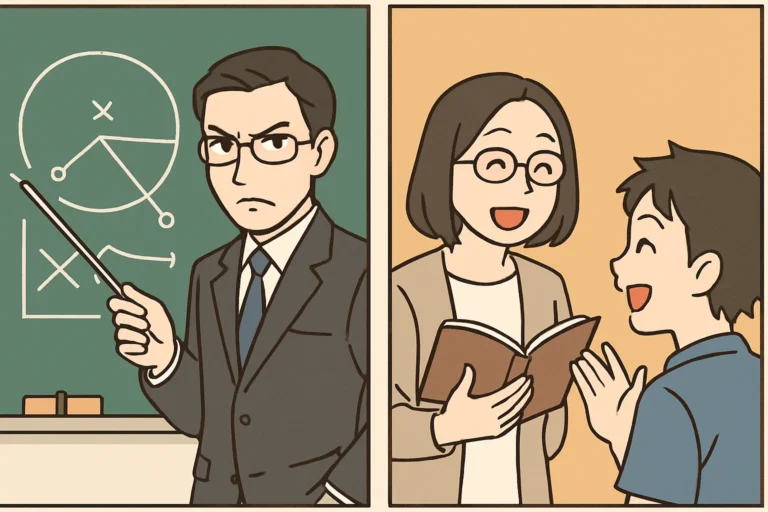
Ever wanted to tell your friends about your amazing (or maybe super strict!) Korean teacher, but couldn’t find the right words? You’re in luck! Today, we’re going to learn how to describe people’s personalities, focusing on a very important person in your learning journey: your teacher (선생님).
These days in Korea, K-dramas set in schools with memorable teachers, like the recent hit “Crash Course in Romance” (일타 스캔들), are super popular! Viewers love the teachers with unique personalities. Learning today’s expressions will not only help you in real life but also help you understand your favorite K-dramas better. Let’s get started!
Core Expressions: Describing Your Teacher
Here are four essential adjectives you can use to talk about your teacher. Remember, in Korea, it’s very important to speak respectfully to and about your teachers, so we’ll use the honorific form -(으)시다.
1. 엄격하시다 (Eomgyeokasida)
- Pronunciation [Romanized]: Eom-gyeo-ka-si-da
- English Meaning: To be strict (honorific)
- Detailed Explanation: This is the perfect word for a teacher who has high standards, gives a lot of homework, and doesn’t accept late assignments. It’s not necessarily a negative word; it often implies that the teacher is strict because they want their students to succeed. The
-(으)시part adds a level of respect. - 💡 Pronunciation Tip:
The magic happens between ‘격’ and ‘하’. The final consonantㄱ (g)of ‘격’ meets theㅎ (h)in ‘하’. In Korean,ㄱ + ㅎcombine to make a strong, airyㅋ (k)sound! So, instead of sayingeom-gyeok-ha-si-da, you should pronounce it naturally as [엄겨카시다, eom-gyeo-ka-si-da].
2. 자상하시다 (Jasanghasida)
- Pronunciation [Romanized]: Ja-sang-ha-si-da
- English Meaning: To be kind, caring, thoughtful (honorific)
- Detailed Explanation: This is the opposite of 엄격하시다! Use this for a teacher who is warm, patient, and always willing to help students. They might ask how you are doing and genuinely care about your well-being. It’s a wonderful compliment for a teacher.
- 💡 Pronunciation Tip:
The pronunciation here is quite straightforward. Just remember that the Koreanㅅ (s)is a plain ‘s’ sound. Don’t pronounce it like ‘sh’. So, it’s [자상하시다, ja-sang-ha-si-da], not ‘ja-shang-ha-shi-da’.
3. 재미있으시다 (Jaemiisseusida)
- Pronunciation [Romanized]: Jae-mi-i-sseu-si-da
- English Meaning: To be fun / funny (honorific)
- Detailed Explanation: Is your teacher’s class the one you look forward to all day? Do they tell jokes and use fun games to teach? Then they are 재미있으시다! This word comes from 재미있다 (to be interesting/fun). We add
으시for respect. - 💡 Pronunciation Tip:
The double consonantㅆ (ss)has a tensed sound, stronger than a singleㅅ (s). Also, notice the two words ‘재미’ and ‘있다’ are combined. The final consonant of있links to the next vowel으, so있으is pronounced as [이쓰, isseu]. The whole phrase sounds like [재미이쓰시다, jae-mi-i-sseu-si-da].
4. 꼼꼼하시다 (Kkomkkomhasida)
- Pronunciation [Romanized]: Kkom-kkom-ha-si-da
- English Meaning: To be meticulous, detail-oriented (honorific)
- Detailed Explanation: This describes a teacher who explains grammar points very clearly, checks your homework thoroughly, and never misses a mistake. They are organized and precise. This is a very positive trait for a teacher!
- 💡 Pronunciation Tip:
The double consonantㄲ (kk)is a “tensed” sound. To make this sound, don’t release a puff of air like you would for ‘k’. It’s a tighter, stronger sound made at the back of your throat. Practice saying [꼼꼼, kkom-kkom] with no air escaping.
Example Dialogue
Let’s see how these expressions work in a real conversation between two students, Sora and Minjun.
- Sora: 민준아, 이번 학기 한국어 선생님은 누구야?
- (Minjun, who is your Korean teacher this semester?)
- Minjun: 박은주 선생님이야.
- (It’s Park Eun-ju seonsaengnim.)
- Sora: 아, 정말? 박 선생님 어떠셔?
- (Oh, really? What is she like?)
- Minjun: 조금 엄격하신데, 수업은 정말 재미있으셔. 그리고 아주 꼼꼼하셔서 설명을 잘 해주셔.
- (She’s a little strict, but her classes are really fun. And she’s very meticulous, so she explains things well.)
- Sora: 와, 좋겠다! 우리 선생님은 아주 자상하셔. 항상 우리를 도와주셔.
- (Wow, that’s great! Our teacher is very caring. She always helps us.)
Culture Tip & Trend Deep Dive
In Korea, the relationship between a teacher and a student is built on deep respect (존중). This is why using honorifics like -(으)시다 is not just a grammar rule—it’s a cultural necessity!
You’ll see this reflected everywhere in Korean media. The “strict but secretly caring teacher” is a classic K-drama character! They might seem 엄격하시다 at first, but they always end up being the most supportive. On the other hand, the fun, friendly teacher who is 재미있으시다 is often portrayed as a mentor who inspires students’ dreams.
Pro-Tip: When you use these expressions, always remember to add -(으)세요 or -(으)셔요 at the end of the sentence. For example, “우리 선생님은 자상하세요.” (Our teacher is kind.) This makes your Korean sound much more natural and respectful!
Let’s Wrap Up & Practice!
Great job today! You’ve learned four key expressions to describe your teacher’s personality and teaching style: 엄격하시다 (strict), 자상하시다 (caring), 재미있으시다 (fun), and 꼼꼼하시다 (meticulous).
Now it’s your turn to practice!
1. Fill in the blank:
My teacher always uses games and jokes in class. He is very _______.
(우리 선생님은 수업 시간에 항상 게임과 농담을 하세요. 아주 ________.)
2. Make a sentence:
How would you describe a teacher who is very kind and always helps you? (Use 자상하시다)
Don’t be shy! What is YOUR teacher like? Leave a comment below and describe them using the expressions we learned today. We’d love to read them







