

Hello! It’s your favorite Korean booster, [Everyday Hangul], here to upgrade your Korean skills!
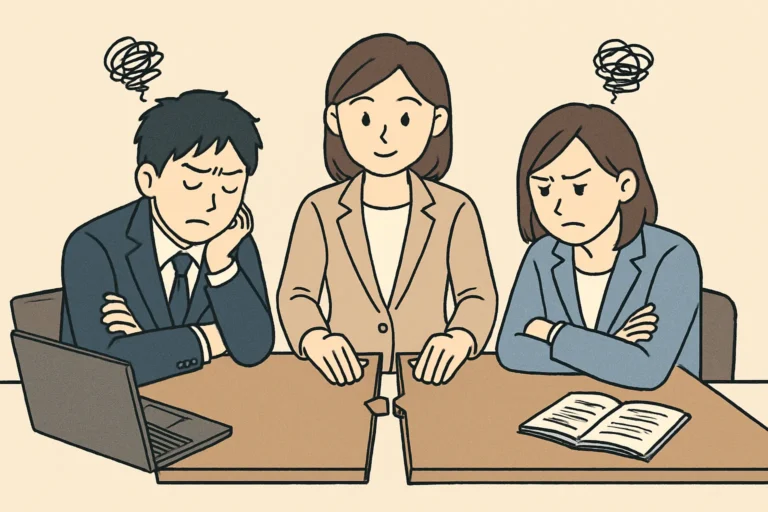
Today, we’re tackling a serious but incredibly important topic: how to handle conflicts at work. Disagreements happen in any job, right? Knowing how to formally and politely ask for help is a superpower. Especially now, as many Korean companies are adopting more modern, structured HR systems, moving away from old-school informal hierarchies. Learning these phrases will not only make you sound professional but also show that you are serious about finding a positive solution.
Let’s learn how to navigate these tricky situations and request mediation from HR like a pro!
Core Expressions for a Peaceful Resolution
Here are the key phrases you’ll need when you decide it’s time to talk to HR.
1. 중재를 요청하고 싶습니다 (Jungjae-reul yocheonghago sipseumnida)
- Romanization: [Jungjae-reul yocheonghago sipseumnida]
- English Meaning: I would like to request mediation.
- Detailed Explanation: This is the most direct and formal way to state your purpose.
중재 (jungjae)means ‘mediation,’ and요청하다 (yocheonghada)means ‘to request.’ The ending-고 싶습니다 (-go sipseumnida)is the polite form of “I want to,” making it perfect for a professional setting. Use this phrase to clearly state your intention at the beginning of the conversation with HR.
2. 의견 차이가 있습니다 (Uigyeon chai-ga itseumnida)
- Romanization: [Uigyeon chai-ga isseumnida]
- English Meaning: We have a difference of opinion.
- Detailed Explanation: This is a neutral and professional way to describe the problem without placing blame.
의견 (uigyeon)means ‘opinion,’ and차이 (chai)means ‘difference.’ Instead of saying “We are fighting,” this phrase frames the issue as a professional disagreement, which is much more constructive.
3. 원만하게 해결하고 싶습니다 (Wonmanhage haegyeolhago sipseumnida)
- Romanization: [Wonmanhage haegyeolhago sipseumnida]
- English Meaning: I want to resolve this amicably/smoothly.
- Detailed Explanation: This phrase is key to showing your positive intentions.
원만하게 (wonmanhage)means ‘amicably’ or ‘smoothly,’ and해결하다 (haegyeolhada)means ‘to solve’ or ‘resolve.’ By saying this, you communicate that your goal isn’t to win an argument, but to find a solution that works for everyone and restore a good working relationship. - 💡 Pronunciation Tip:
The word해결is spelled ‘hae-gyeol’ but the pronunciation is closer to [해결 (haegyeol)]. The tricky part is the consonantㄱ(g/k). When it follows a vowel, as in해결하고 (haegyeol-hago), it’s a soft[g]sound. However, in a word like직장 (jikjang - workplace), whereㄱcomes after anotherㄱ, it creates a tensed sound, pronounced [직짱 (jikjjang)]. This phenomenon is called ‘된소리되기 (doensoridwegi)’ or ‘tensing.’ It’s a common rule that makes your Korean sound much more natural!
4. 객관적인 조언이 필요합니다 (Gaekgwanjeogin jo-eoni piryohamnida)
- Romanization: [Gaekgwanjeogin jo-eoni piryohamnida]
- English Meaning: I need objective advice.
- Detailed Explanation: This explains why you are coming to HR.
객관적인 (gaekgwanjeogin)means ‘objective,’ and조언 (jo-eon)is ‘advice.’ It shows that you value a neutral, third-party perspective to help solve the issue fairly. This phrase demonstrates maturity and a commitment to a fair process.
Example Dialogue: At the HR Office
Let’s see how these expressions work in a real conversation between an employee (A) and an HR Manager (B).
- A (Employee): 안녕하세요, 인사팀장님. 잠시 이야기 나눌 수 있을까요?
- (Annyeonghaseyo, insa-timjangnim. Jamsi iyagi nanul su isseulkkayo?)
- Hello, HR Manager. Do you have a moment to talk?
- B (HR Manager): 네, 들어오세요. 무슨 일이신가요?
- (Ne, deureo-oseyo. Museun irisigayo?)
- Yes, please come in. What can I help you with?
- A (Employee): 최근 진행 중인 프로젝트 때문에 동료와 의견 차이가 있습니다. 문제를 원만하게 해결하고 싶어서요.
- (Choegeun jinhaeng jung-in peurojekteu ttaemune dongnyo-wa uigyeon chai-ga itseumnida. Munjereul wonmanhage haegyeolhago sipseoseoyo.)
- I have a difference of opinion with a colleague regarding a recent project. I want to resolve the issue amicably.
- B (HR Manager): 그렇군요. 상황을 좀 더 자세히 설명해주시겠어요?
- (Geureokun-yo. Sanghwang-eul jom deo jasehi seolmyeonghae-jusigesseoyo?)
- I see. Could you explain the situation in more detail?
- A (Employee): 네. 감정적인 부분을 떠나서 팀장님의 객관적인 조언이 필요합니다. 혹시 공식적으로 중재를 요청하고 싶습니다.
- (Ne. Gamjeongjeogin bubun-eul tteonaseo timjangnim-ui gaekgwanjeogin jo-eoni piryohamnida. Hoksi gongsikjeogeuro jungjae-reul yocheonghago sipseumnida.)
- Yes. Setting emotions aside, I need your objective advice. I would like to formally request mediation.
Cultural Tip & Trend Deep Dive
In the past, workplace hierarchy (선배-후배 문화, seonbae-hubae munhwa) often meant that conflicts were either ignored or handled informally by a senior colleague. However, things are changing fast!
Today, especially among the MZ generation in Korea, there’s a much stronger awareness of workers’ rights and mental well-being. The concept of 직장 내 괴롭힘 (jikjang nae goero-pim - workplace bullying/harassment) is now legally defined, and companies are required to have official channels to address it.
Using phrases like 중재를 요청하다 isn’t seen as weak or troublesome anymore. Instead, it’s viewed as a proactive and professional step. By using this formal language, you show that you respect the company’s official process and are serious about creating a better work environment for everyone. You’re not just complaining; you’re seeking a solution.
Let’s Recap & Practice!
Great job today! We learned how to professionally and politely request HR’s help to solve a workplace conflict. You now know how to:
* Formally request mediation (중재를 요청하고 싶습니다)
* Describe the issue neutrally (의견 차이가 있습니다)
* Show your positive intent (원만하게 해결하고 싶습니다)
* Ask for a neutral perspective (객관적인 조언이 필요합니다)
Now, let’s put it into practice!
Quiz: Imagine you have a disagreement with a colleague about the project schedule. How would you fill in the blank to tell the HR manager what the problem is?
“저와 김대리님 사이에 프로젝트 일정에 대한 ( ______________ )이/가 있습니다.”
(Jeo-wa gimdaerinim sa-i-e peurojekteu iljeong-e daehan ( ______________ )i/ga itseumnida.)
Leave your answer in the comments below using one of the expressions we learned today! Fighting! (화이팅!)







