

Hello! This is Daily Hangul, here to upgrade your Korean skills to the next level!
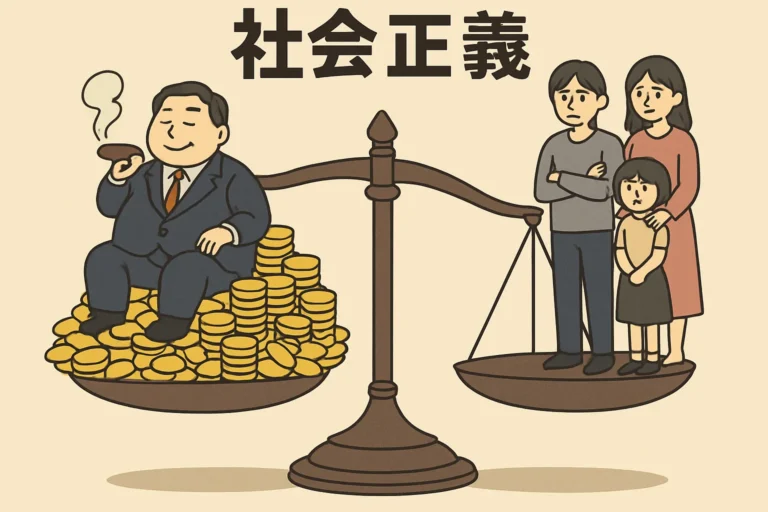
Ever found yourself captivated by a K-drama, wondering about the immense gap between the super-rich chaebol families and the struggling protagonists? You’re not just watching a story; you’re witnessing a core tension in modern Korean society. Today, we’re diving deep into the advanced topic of 분배 정의 (distributive justice). We’ll learn the vocabulary and grammar you need to discuss the ethical debates on wealth redistribution, a conversation happening everywhere in Korea, from university classrooms to blockbuster films.
Ready to sound like an intellectual powerhouse in Korean? Let’s begin!
Core Expressions for the Big Debate
Here are the essential terms you need to navigate this complex topic like a native speaker.
1. 분배 정의 (Bunbae Jeong-ui)
- Pronunciation [Bunbae Jeong-ui]: Boon-beh Jeong-ee
- English Meaning: Distributive Justice
- Detailed Explanation: This is the core concept. It refers to the socially just and fair distribution of goods, wealth, and opportunities within a society. It’s a formal, academic term often used in news, articles, and formal debates. It asks the fundamental question: “Who gets what, and is it fair?”
- 💡 Pronunciation Tip: The particle ‘의’ (ui) can be tricky. When used as a possessive marker like in “부의 재분배” (see below), it’s often pronounced as [에/e]. However, in a compound noun like here, or at the beginning of a word, it retains a sound closer to [의/ui].
2. 부의 재분배 (Bu-ui Jaebunbae)
- Pronunciation [Bu-e Jaebunbae]: Boo-eh Jeh-boon-beh
- English Meaning: Redistribution of Wealth
- Detailed Explanation: This is the practical application of distributive justice. It refers to mechanisms like progressive taxation or social welfare policies designed to transfer wealth from the more affluent to the less affluent. It’s a key term in any political or economic discussion.
- 💡 Pronunciation Tip: Notice how ‘부의’ is pronounced [부에/bu-e]. The possessive particle ‘의’ after a noun is commonly simplified to [에/e] in everyday speech, making you sound much more natural.
3. 사회적 안전망 (Sahoejeok Anjeonmang)
- Pronunciation [Sahoejeok Anjeonmang]: Sa-hweh-jeok An-jeon-mang
- English Meaning: Social Safety Net
- Detailed Explanation: This refers to a collection of services provided by the state—such as social security, unemployment benefits (실업 급여), and public health care (공공 의료)—that prevent individuals from falling into poverty. When discussing wealth redistribution, strengthening the ‘사회적 안전망’ is a common argument.
- 💡 Pronunciation Tip: In ‘안전망’, the final consonant ‘ㄴ’ (n) of ‘안전’ links to the ‘ㅁ’ (m) of ‘망’, but since they are both nasal sounds, the pronunciation is quite smooth. Focus on clearly articulating each syllable: An-jeon-mang.
4. 공리주의 (Gongnijueui)
- Pronunciation [Gongnijueui]: Gong-ni-joo-ee
- English Meaning: Utilitarianism
- Detailed Explanation: This is a major ethical theory often cited in these debates. It argues that the best action is the one that maximizes utility, usually defined as that which maximizes happiness and well-being for the greatest number of people. A utilitarian argument for wealth redistribution would state that it increases the overall happiness of society. The suffix ‘-주의’ (-jueui) means ‘-ism’.
- 💡 Pronunciation Tip: The final part ‘주의’ [주의/ju-ui] can be simplified to [주이/ju-i] in faster speech. Practice saying it slowly first to get the hang of the vowel combination.
5. -는/은/ㄴ 반면에 (-neun/eun/n banmyeone)
- Pronunciation [~neun/eun/n banmyeone]: ~neun/eun/n ban-myo-neh
- English Meaning: On the other hand; Whereas; While
- Detailed Explanation: This is a crucial C1-level grammar pattern for presenting contrasting ideas, which is essential for any debate. You attach it to the stem of a verb or adjective to contrast two clauses. (Action verb: -는 반면에, Descriptive verb/이다: -(으)ㄴ 반면에).
- Example: 높은 세율은 복지를 향상시키는 반면에, 기업의 투자를 위축시킬 수 있다. (While high tax rates improve welfare, on the other hand, they can stifle corporate investment.)
- 💡 Pronunciation Tip: The ‘ㄴ’ sound in ‘반면’ often causes the following ‘에’ to sound slightly nasalized. Practice saying “반면에” smoothly.
Example Dialogue
Let’s see how these expressions are used in a real conversation. Two university students, A and B, are discussing the themes in a popular new K-drama.
A: 요즘 인기 드라마 ‘재벌가의 그림자’ 봤어? 분배 정의에 대해 다시 생각하게 되더라고.
(Have you seen the popular drama ‘Shadow of the Chaebol Family’? It really made me think again about distributive justice.)
B: 응, 나도 봤어. 부의 재분배가 왜 필요한지 보여주는 것 같아. 주인공 가족은 최소한의 사회적 안전망도 없이 살아가잖아.
(Yeah, I saw it too. It seems to show why the redistribution of wealth is necessary. The main character’s family lives without even a minimal social safety net.)
A: 맞아. 공리주의적 관점에서도 그건 문제가 있지. 소수의 부를 위해 다수가 고통받는 건 비효율적이잖아.
(Exactly. Even from a utilitarian perspective, that’s problematic. It’s inefficient for the majority to suffer for the wealth of a few.)
B: 그렇지. 드라마가 부자들의 화려한 삶을 보여주는 반면에, 그 이면에 있는 사회 구조적 문제를 잘 짚어낸 것 같아.
(I agree. On one hand, the drama shows the glamorous lives of the rich, but on the other hand, I think it did a great job pointing out the structural societal problems behind it.)
Culture Tip & Trend Deep Dive
In Korea, the debate around distributive justice is not just academic. It’s deeply personal and reflects everyday realities. You might have heard of the “수저 계급론” (Spoon Class Theory), which uses gold, silver, and dirt spoons to symbolize the socio-economic class one is born into. This concept frequently appears in media and daily conversation.
Films like Bong Joon-ho’s “Parasite” (기생충) and global hits like “Squid Game” (오징어 게임) became international phenomena precisely because they masterfully captured this societal anxiety about economic inequality.
When you use terms like 분배 정의 or 사회적 안전망 in a conversation about these shows, you’re not just showing off your vocabulary. You’re demonstrating a deep understanding of the contemporary issues that shape modern Korean culture and society. You’re connecting the dots between entertainment and the real-world ethical questions Koreans grapple with every day.
Let’s Review & Practice!
Today, we learned some high-level vocabulary and grammar to discuss the complex topic of distributive justice in Korean. We covered 분배 정의 (distributive justice), 부의 재분배 (redistribution of wealth), 사회적 안전망 (social safety net), 공리주의 (utilitarianism), and the grammar pattern -는/은/ㄴ 반면에 (on the other hand).
Now it’s your turn to practice!
- Fill in the blank:
- 과도한 부의 쏠림 현상을 해결하기 위해 ___________ 정책에 대한 사회적 합의가 필요하다.
- (In order to solve the problem of excessive wealth concentration, a social consensus on ___________ policies is needed.)
- Sentence Building:
- Using -는/은/ㄴ 반면에, write a sentence that explains one positive and one negative aspect of a strong social safety net.
What are your thoughts on this topic? Leave a comment below using the expressions we learned today. We’d love to hear your opinion
Frequently Asked Questions (FAQ)
Q: What does "분배 정의" mean in Korean and how do you pronounce it?
A: In Korean, "분배 정의" is pronounced [distributive justice] and means: . We'll learn the vocabulary and grammar you need to discuss the ethical debates on wealth redistribution, a conversation happening everywhere in Korea, from university classrooms to blockbuster films.
Q: What does ""수저 계급론"" mean in Korean and how do you pronounce it?
A: In Korean, ""수저 계급론"" is pronounced [Spoon Class Theory] and means: , which uses gold, silver, and dirt spoons to symbolize the socio-economic class one is born into. This concept frequently appears in media and daily conversation.
Q: What does "공리주의" mean in Korean and how do you pronounce it?
A: In Korean, "공리주의" is pronounced [utilitarianism] and means: , and the grammar pattern






