

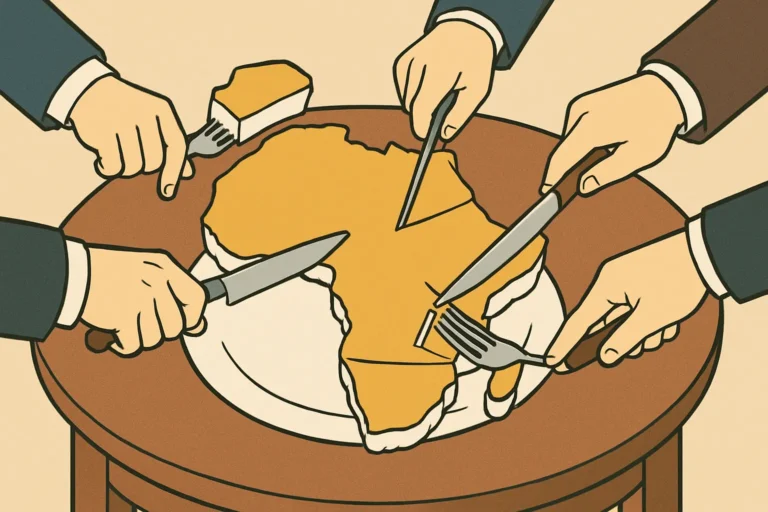
아프리카 분할: 제국주의 시대의 서막
The Partition of Africa: Prelude to the Age of Imperialism
안녕하세요! 여러분의 한국어 실력을 한 단계 업그레이드해 줄 [매일한글]입니다!
Hello! This is [Maeil Hangul], here to upgrade your Korean skills!
Today, we’re moving beyond everyday conversation to tackle a more academic and profound topic: The Scramble for Africa (아프리카 분할). You might wonder, “Why learn this?” Well, understanding this vocabulary is essential for anyone who wants to read Korean news about international relations, understand historical documentaries, or participate in intellectual discussions at a university level.
요즘 한국에서는 과거의 역사가 현재의 국제 관계에 미치는 영향에 대한 논의가 활발해요. The influence of past history on current international relations is a hot topic of discussion in Korea these days. By learning the terms related to the era of imperialism, you’ll gain a deeper insight into the Korean perspective on world history and be able to engage in much more sophisticated conversations. Let’s dive in!
Core Expressions
Here are some key terms you need to know to discuss this historical historical period.
1. 제국주의 (Jegukjuui)
- Pronunciation [Romanized]: [Je-guk-ju-ui]
- English Meaning: Imperialism
- Detailed Explanation: This is a crucial term composed of two parts. 제국 (帝國, jeguk) means ‘empire,’ and 주의 (主義, juui) is a suffix that means ‘-ism,’ just like in 민주주의 (minjujuui, democracy) or 자본주의 (jabonjuui, capitalism). So, 제국주의 literally means ‘empire-ism.’ It refers to the policy and ideology of extending a country’s power and influence through colonization, use of military force, or other means.
- 💡 Pronunciation Tip:
The vowel ‘의’ (ui) is one of the trickiest in Korean! Its pronunciation changes. When it’s at the beginning of a word, it’s pronounced [ui]. However, when it comes after a consonant as it does in 주’의’, it’s pronounced more like [이/i]. So, you’ll sound much more natural saying [제국주이 (jegukju-i)] rather than [jegukju-ui].
2. 쟁탈전 (Jaengtaljeon)
- Pronunciation [Romanized]: [Jaeng-tal-jeon]
- English Meaning: A scramble; a fierce struggle/competition to seize something.
- Detailed Explanation: This word perfectly captures the “scramble” for Africa. Let’s break down the Hanja (Chinese characters): 쟁(爭) means to fight or contend, 탈(奪) means to snatch or seize, and 전(戰) means war or battle. So, it literally translates to a “war of contention and seizure.” It implies a chaotic and aggressive competition, much more intense than the simple word 경쟁 (gyeongjaeng), which just means ‘competition’.
- 💡 Pronunciation Tip:
Pay attention to the final consonant ‘ㅇ’ (ng) in 쟁 [jaeng]. It’s a nasal sound made at the back of your throat, similar to the ‘-ng’ in the English word ‘singing’. Make sure not to pronounce it like ‘n’ (jaen), as that would change the meaning.
3. 식민지 (Singminji)
- Pronunciation [Romanized]: [Sing-min-ji]
- English Meaning: Colony
- Detailed Explanation: This is the term for a territory under the political control of another country. The Hanja here is quite revealing: 식(植) means to plant, and 민(民) means people. It carries the historical nuance of a powerful nation “planting” its people and control in a foreign land. In modern Korean, this word carries a strong negative connotation due to Korea’s own historical experience.
- 💡 Pronunciation Tip:
There’s a phonetic rule at play here called ‘비음화’ (nasalization). When the consonant ‘ㄱ’ (g/k) is followed by ‘ㅁ’ (m) or ‘ㄴ’ (n), the ‘ㄱ’ sound often changes to ‘ㅇ’ [ng]. While it’s not present in this specific word, you see it in related words. For example, a king in a colony is a 식민지 군주 (singminji gunju), but the word for ‘nation,’ 국민 (gukmin), is pronounced [궁민 (gungmin)]. It’s a key rule for sounding natural! For 식민지, the pronunciation is straightforward: [싱민지].
4. 이권 (Igwon)
- Pronunciation [Romanized]: [I-gwon]
- English Meaning: Interests; rights; privileges (especially economic or political)
- Detailed Explanation: This word refers to the special rights or benefits—often economic—that a foreign power seeks in another country. 이(利) means ‘profit’ or ‘benefit,’ and 권(權) means ‘right’ or ‘authority.’ During the Scramble for Africa, European powers were not just seeking land, but also 이권, such as the rights to mine for diamonds, build railways, or control trade routes.
- 💡 Pronunciation Tip:
When ‘ㄱ’ (g/k) comes after a vowel or a voiced consonant, it is often pronounced as a softer [g] sound rather than a hard [k]. So, instead of a sharp [ik-kwon], it’s a smoother [igwon].
Example Dialogue
Let’s see how two university students might use these words while discussing a history presentation.
A: 수진아, 우리 팀 역사 발표 주제가 ’19세기 제국주의와 아프리카 분할’ 맞지? 자료 조사는 좀 해봤어?
(Sujin, our team’s history presentation topic is ’19th Century Imperialism and the Partition of Africa,’ right? Have you done any research?)
B: 응. 유럽 열강들이 아프리카의 자원과 이권을 놓고 벌인 쟁탈전이 생각보다 훨씬 치열했더라.
(Yeah. The scramble that the European powers waged over Africa’s resources and interests was far more fierce than I thought.)
A: 맞아. 그 과정에서 수많은 아프리카 국가들이 식민지로 전락했고, 그 상처가 지금까지도 이어지고 있잖아.
(Exactly. In that process, countless African nations were reduced to colonies, and those scars continue to this day.)
B: 우리가 발표할 때 그 역사적 배경과 현대에 미치는 영향까지 깊이 있게 다뤄야 할 것 같아.
(I think we need to cover that historical background and its modern-day impact in depth in our presentation.)
Culture Tip & Deeper Dive
Why does this topic resonate so strongly in Korea?
Because of its own painful history, Korea is highly attuned to the narratives of 제국주의 (imperialism) and 식민지 (colony). Korea was a Japanese colony from 1910 to 1945. This experience, known as 일제강점기 (Ilje Gangjeomgi), has profoundly shaped the modern Korean identity, its politics, and its view of the world.
Therefore, when Koreans learn about or discuss the Scramble for Africa, it’s not just a distant historical event. They often approach it with a deep sense of empathy and understanding of what it means to lose sovereignty and have one’s culture suppressed. You’ll find that discussions about historical justice and the post-colonial condition are very common in Korean academia and media. Understanding this vocabulary allows you to tap into this deeper layer of the national consciousness.
Let’s Practice!
Time to check your understanding.
- Fill in the blank:
19세기 말, 유럽 열강들은 아프리카 대륙을 자신들의 ( ) (으)로 만들기 위해 치열한 경쟁을 벌였다.
(In the late 19th century, European powers competed fiercely to turn the African continent into their ____.) -
Sentence Making:
Using the word 쟁탈전 (jaengtaljeon), try to make a sentence about a modern-day competition (e.g., for resources, technology, market share).
Great job today tackling such a complex topic! You’ve added some powerful, high-level vocabulary to your Korean arsenal.
오늘 배운 표현으로 만든 문장을 댓글로 남겨주세요! (Please leave a comment with a sentence you made using today’s expressions!)
Frequently Asked Questions (FAQ)
Q: What does "제국" mean in Korean and how do you pronounce it?
A: In Korean, "제국" is pronounced [帝國, jeguk] and means: means 'empire,' and
Q: What does "주의" mean in Korean and how do you pronounce it?
A: In Korean, "주의" is pronounced [主義, juui] and means: is a suffix that means '-ism,' just like in 민주주의 (minjujuui, democracy) or 자본주의 (jabonjuui, capitalism). So,
Q: What does "'의'" mean in Korean and how do you pronounce it?
A: In Korean, "'의'" is pronounced [ui] and means: is one of the trickiest in Korean! Its pronunciation changes. When it's at the beginning of a word, it's pronounced [ui]. However, when it comes after a consonant as it does in
Q: What does "쟁" mean in Korean and how do you pronounce it?
A: In Korean, "쟁" is pronounced [爭] and means: means to fight or contend,






