

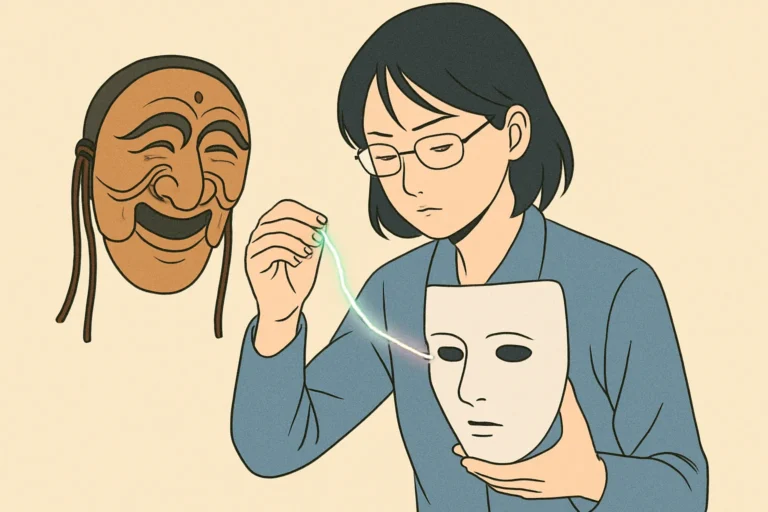
Preserving the Soul: Nuances in Korean Theater Translation
Hello! Welcome to [Maeil Hangeul], your guide to upgrading your Korean skills to a professional level!
Today, we’re diving into a fascinating and complex topic: how to discuss strategies for preserving cultural nuances when translating Korean theater. This is an essential conversation for anyone working in translation, the arts, or international business. As Korean plays and musicals are captivating audiences worldwide, the demand for high-quality, culturally sensitive translation has never been higher. So, how do you translate not just the words, but the very soul of a Korean play? Let’s explore the key expressions you’ll need to have this high-level discussion.
Core Expressions for Nuanced Discussion
Here are the essential terms you need to discuss theatrical translation like a pro.
1. 원작의 결을 살리다 (wonjagui gyeoreul sallida)
- Romanization: [wonjagui gyeoreul sallida]
- English Meaning: To preserve the texture/grain of the original work.
- Detailed Explanation: This is a sophisticated and crucial phrase in artistic translation. ‘결’ (gyeol) literally means the grain in wood or texture in fabric. In a literary context, it refers to the unique style, tone, subtle atmosphere, and spirit of the original piece. ‘살리다’ (sallida) means “to bring to life” or “to save.” Therefore, this expression means going beyond a literal word-for-word translation to keep the original’s unique artistic feeling alive. It’s the ultimate goal of any literary translator.
- 💡 Pronunciation Tip:
- Notice the sound in ‘결을’ [겨를/gyeoreul]. The final consonant ‘ㄹ’ (l) in ‘결’ links to the vowel ‘으’ (eu) in the next syllable, creating a smooth, connected sound. This linking rule, called ‘연음’ (yeoneum), is fundamental to sounding natural in Korean.
2. 각색(하다) (gaksaek(hada))
- Romanization: [gaksaekada]
- English Meaning: To adapt or dramatize (a work).
- Detailed Explanation: ‘각색’ (gaksaek) is more than just translation; it’s the process of actively modifying a work for a different medium (like a novel into a play) or, importantly, for a different cultural context. When discussing translation strategy, suggesting ‘각색’ implies a willingness to change specific cultural references, jokes, or situations to ensure they resonate with the target audience, rather than just explaining them with a footnote. It’s a key strategy for making a foreign play feel immediate and relevant.
- 💡 Pronunciation Tip:
- In ‘각색’, the ‘ㅅ’ (s) sound becomes tensed, making it sound like [각쌕/gakssaek]. This is an example of ‘된소리되기’ (doensori doegi), or “tensing.” When a syllable ending in ‘ㄱ’, ‘ㄷ’, or ‘ㅂ’ is followed by certain consonants (including ‘ㅅ’), that consonant is pronounced with more tension.
3. 고유의 정서 (goyuui jeongseo)
- Romanization: [goyuui jeongseo]
- English Meaning: Inherent/unique cultural sentiment.
- Detailed Explanation: This phrase refers to the specific emotional landscape unique to a culture, often considered “untranslatable.” ‘고유의’ (goyuui) means “inherent” or “unique to,” and ‘정서’ (jeongseo) means “sentiment” or “emotion.” Concepts like ‘한’ (han)—a complex feeling of unresolved sorrow and resentment—or ‘정’ (jeong)—a deep, connection-based affection—are perfect examples of Korean ‘고유의 정서’. Acknowledging this is the first step in finding creative ways to convey it.
- 💡 Pronunciation Tip:
- The possessive particle ‘의’ (ui) has a flexible pronunciation. While its official sound is [ui], when used as a particle after a word, it is almost always pronounced as [에/e] in conversation. So, ‘고유의’ is naturally pronounced [고유에/goyue]. Mastering this will make you sound incredibly fluent.
4. 의역 (uiyeok) vs. 직역 (jigyeok)
- Romanization: [uiyeok] vs. [jigyeok]
- English Meaning: Liberal/free translation vs. Literal/direct translation.
- Detailed Explanation: This is the classic dilemma every translator faces. ‘직역’ (jigyeok) is a direct, word-for-word translation that prioritizes faithfulness to the original text’s structure. ‘의역’ (uiyeok), on the other hand, focuses on conveying the original meaning, intent, and nuance (‘의미’), even if it requires changing the phrasing completely. In theater, a script must be performable and immediately understandable, so translators constantly navigate the balance between these two approaches.
Example Dialogue
Here’s how these terms might be used in a conversation between a director (A) and a translator (B).
A: 이 작품은 한국 고유의 정서가 아주 짙어서 번역이 쉽지 않겠어요.
[I jagpumeun hanguk goyuui jeongseoga aju jiteoseo beonyeogi swipji ankesseoyo.]
This work is so steeped in unique Korean sentiment; translation won’t be easy.
B: 맞습니다. 단순히 직역만으로는 원작의 결을 살리기 어렵다고 봅니다. 일부 대사는 현지 관객을 위해 과감하게 각색할 필요가 있습니다.
[Matseumnida. Dansunhi jigyeokmaneuroneun wonjagui gyeoreul salligi eoryeopdago bomnida. Ilbu daesaneun hyeonji gwangaegeul wihae gwagamhage gaksaekhal piryoga itseumnida.]
I agree. I believe it will be difficult to preserve the original’s texture with a simple literal translation. Some lines will need to be boldly adapted for the local audience.
A: 좋은 접근법이네요. 결국 의역을 통해 원작의 핵심 메시지를 전달하는 게 가장 중요하니까요.
[Joeun jeopgeunbeobineyo. Gyeolguk uiyeokeul tonghae wonjagui haeksim mesijireul jeondalhaneun ge gajang jungyohanikkayo.]
That’s a good approach. Ultimately, conveying the core message of the original through a liberal translation is what’s most important.
Culture Tip & Trend Deep Dive
The global rise of Korean content isn’t limited to K-pop and K-dramas; Korean theater is rich with stories that offer a deep dive into the Korean psyche.
A prime example of ‘고유의 정서’ (goyuui jeongseo) is the concept of ‘한’ (han). It’s a powerful theme in many classic and modern Korean plays, representing a collective sense of sorrow, injustice, and a yearning for resolution. How do you translate ‘한’? A good translator knows a single word won’t work. Instead, they might use the strategy of ‘의역’ (uiyeok), showing ‘한’ through a character’s weary sigh, a repeated poetic metaphor in the dialogue, or a tense silence—thus ‘원작의 결을 살리는’ (preserving the original’s texture) without a literal translation.
Furthermore, contemporary Korean plays are full of modern slang and pop culture references. A ‘직역’ (jigyeok) of a new internet meme would be meaningless to a foreign audience. This is where ‘각색’ (gaksaek) becomes crucial. The translator must act as a cultural bridge, finding an equivalent cultural reference or joke in the target language that elicits the same reaction from the audience.
Let’s Review & Practice!
To translate theater effectively, one must move beyond words to convey feeling and culture. It’s a delicate balance between 직역 (literal translation) and 의역 (liberal translation), often requiring bold 각색 (adaptation) to preserve the 원작의 결 (original texture) and communicate the 고유의 정서 (unique sentiment).
Now, let’s test your understanding!
- Fill in the blank: If you change a historical Korean reference in a play to a well-known local historical event for an American audience, you are performing ______.
- Short Answer: In your own words, explain why a translator might choose ‘의역’ over ‘직역’ when translating a theatrical script.
We’d love to hear your thoughts! Have you ever seen a Korean play or its translation? What challenges do you think are most difficult? Leave a comment below using the expressions we learned today
Frequently Asked Questions (FAQ)
Q: What does "'결'" mean in Korean and how do you pronounce it?
A: In Korean, "'결'" is pronounced [gyeol] and means: literally means the grain in wood or texture in fabric. In a literary context, it refers to the unique style, tone, subtle atmosphere, and spirit of the original piece.
Q: What does "'살리다'" mean in Korean and how do you pronounce it?
A: In Korean, "'살리다'" is pronounced [sallida] and means: means "to bring to life" or "to save." Therefore, this expression means going beyond a literal word-for-word translation to keep the original's unique artistic feeling alive. It's the ultimate goal of any literary translator.
Q: What does "'결을'" mean in Korean and how do you pronounce it?
A: In Korean, "'결을'" is pronounced [겨를/gyeoreul] and means: . The final consonant 'ㄹ' (l) in '결' links to the vowel '으' (eu) in the next syllable, creating a smooth, connected sound. This linking rule, called
Q: What does "'연음'" mean in Korean and how do you pronounce it?
A: In Korean, "'연음'" is pronounced [yeoneum] and means: , is fundamental to sounding natural in Korean.







