

Noisy Neighbors? How to Ask for Advice in Korean!
Hello! Welcome to [Daily Hangul], here to upgrade your Korean skills!
Have you ever been in a tricky situation and didn’t know what to do? Today, we’re going to learn how to ask for and give advice in Korean, focusing on a very real-life problem.
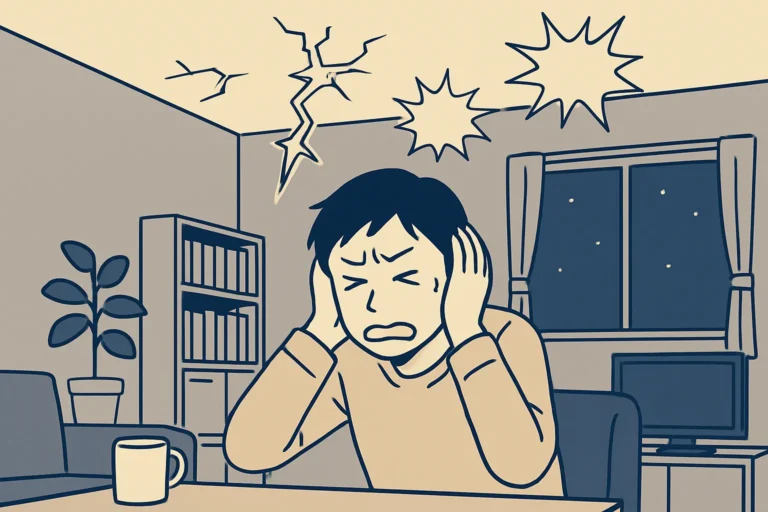
You see, in Korea, a huge portion of the population lives in apartments. This means that one of the most common social issues is… noise from the neighbors! It’s such a big deal that you’ll often see it featured in K-dramas and movies. So, let’s learn some essential phrases to handle this situation like a local.
Core Expressions You Need to Know
Here are three key expressions to help you navigate the noisy world of Korean apartment living!
1. The Problem: 층간소음 (Inter-floor Noise)
- Korean Expression: 층간소음
- Pronunciation [Romanization]: Cheung-gan so-eum
- English Meaning: Inter-floor noise (specifically, noise between apartment floors)
- Detailed Explanation: This is a crucial vocabulary word for anyone living or planning to live in Korea. It’s a compound word: 층 (cheung) means ‘floor’ or ‘story’, 간 (gan) means ‘between’, and 소음 (so-eum) means ‘noise’. So, it literally means “noise between floors.” It can refer to anything from loud footsteps and running children to vacuuming late at night.
- 💡 Pronunciation Tip: The pronunciation is quite straightforward. Just remember to pronounce 층 (cheung) with a ‘ch’ sound, like in “church.”
2. Asking for Help: ~ㄴ/는데 어떡하죠? (What should I do?)
- Korean Expression: 윗집이 너무 시끄러운데 어떡하죠?
- Pronunciation [Romanization]: Witjibi neomu sikkeureounde eotteokajyo?
- English Meaning: The people upstairs are so noisy, what should I do?
- Detailed Explanation: This grammar pattern is perfect for asking for advice.
- ~ㄴ/는데 (~n/neunde) is attached to a verb or adjective to provide the background or context for your problem. It’s like saying, “This is the situation, and…”
- 어떡하죠? (eotteokajyo?) is a very common and natural way to ask, “What should I do?” or “What’s the solution?”.
- 💡 Pronunciation Tip: The word 어떡하죠 (eotteokajyo) is a contraction of 어떻게 하죠 (eotteoke hajyo). The ㅎ (h) sound gets combined with the preceding ㄱ (k), creating a stronger ㅋ (k) sound. So, instead of saying “eotteok-hajyo,” it sounds more like [어떠카죠 (eotteokajyo)]. This makes you sound much more like a native speaker!
3. Giving Advice: ~는 게 어때요? (How about…?)
- Korean Expression: 관리사무소에 연락해 보는 게 어때요?
- Pronunciation [Romanization]: Gwallisamusoe yeollakae boneun ge eottaeyo?
- English Meaning: How about trying to contact the management office?
- Detailed Explanation: This is a gentle and polite way to offer a suggestion.
- ~는 게 어때요? (~neun ge eottaeyo?) literally translates to “How is the thing of doing (verb)?”. You attach it to a verb stem to suggest an action. It’s much softer than giving a direct command.
- 관리사무소 (gwallisamuso) means ‘management office,’ a very important place in Korean apartment complexes!
- 💡 Pronunciation Tip: Notice the double consonant ‘ㄸ’ (tt) in 어때요 (eottaeyo). This is a tense consonant. To make this sound, you should pronounce it like a ‘t’ but without any puff of air, making the sound short and sharp.
Example Dialogue
Let’s see these expressions in a real conversation! Imagine two friends, Minjun (A) and Sora (B), are talking.
A (민준): 소라야, 나 요즘 고민이 있어. 밤마다 윗집에서 쿵쿵거려서 잠을 못 자겠어. 진짜 스트레스받는데 어떡하죠?
(Sora, I have a problem these days. I can’t sleep because of the stomping from upstairs every night. It’s so stressful, what should I do?)
B (소라): 아, 층간소음 때문에 고생이 많구나. 직접 찾아가는 건 좀 그럴 수 있으니, 관리사무소에 먼저 연락해 보는 게 어때요?
(Ah, you’re having a hard time because of inter-floor noise. Going up there directly might be a bit awkward, so how about contacting the management office first?)
A (민준): 그게 좋겠다! 좋은 생각이야, 고마워!
(That sounds good! That’s a great idea, thanks!)
Culture Tip & Trend Deep Dive
In Korea, directly confronting a neighbor about noise can sometimes lead to bigger conflicts. That’s why the advice to contact the 관리사무소 (gwallisamuso / management office) is so common and wise.
Almost every large apartment complex has a management office that handles maintenance, administration, and, importantly, mediating disputes between residents. It’s the standard first step for resolving issues like 층간소음. By going through them, you can report the problem anonymously and avoid an awkward face-to-face confrontation. So, if you ever find yourself in this situation, remembering the word 관리사무소 will make you seem like you truly understand Korean culture!
Let’s Wrap It Up & Practice!
Great job today! We learned about a very real Korean social issue, 층간소음, and the essential phrases for asking for advice (~는데 어떡하죠?) and giving suggestions (~는 게 어때요?).
Now it’s your turn to practice!
Quiz: Your friend tells you, “요즘 한국 드라마가 너무 보고 싶은데, 뭐가 재미있는지 모르겠어요. 어떡하죠?” (I really want to watch a K-drama these days, but I don’t know what’s fun. What should I do?).
How would you give them advice using the ~는 게 어때요? pattern?
Example Answer: “요즘 인기 있는 드라마를 검색해 보는 게 어때요?” (How about searching for popular dramas these days?)
Now, leave a comment below with your own answer to the quiz! Or, try asking for advice about something using the phrases we learned today. We can’t wait to see what you come up with
Frequently Asked Questions (FAQ)
Q: What does "층" mean in Korean and how do you pronounce it?
A: In Korean, "층" is pronounced [cheung] and means: means 'floor' or 'story',
Q: What does "간" mean in Korean and how do you pronounce it?
A: In Korean, "간" is pronounced [gan] and means: means 'between', and
Q: What does "소음" mean in Korean and how do you pronounce it?
A: In Korean, "소음" is pronounced [so-eum] and means: means 'noise'. So, it literally means "noise between floors." It can refer to anything from loud footsteps and running children to vacuuming late at night.
Q: What does "층" mean in Korean and how do you pronounce it?
A: In Korean, "층" is pronounced [cheung] and means: with a 'ch' sound, like in "church."







