

Hello! It’s your favorite Korean booster, [Daily Hangul], here to upgrade your fluency!
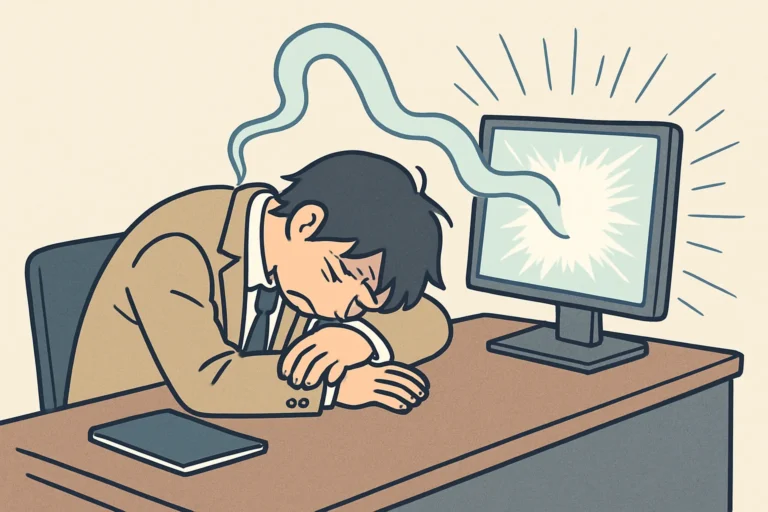
Are you tired of just saying “피곤해요” (I’m tired) when you feel completely exhausted? Today, we’re diving deep into a topic that is incredibly relevant in modern Korean society: stress and burnout. Lately in Korea, the conversation around “워라밸” (work-life balance) and mental well-being has become more important than ever, especially among the younger generation. Learning how to talk about these complex feelings will not only make your Korean sound more natural but also help you connect with people on a much deeper level.
Let’s learn how to express that feeling of being utterly overwhelmed, just like a native speaker!
Core Expressions You Need to Know
Here are some essential phrases to articulate the nuances of stress and burnout.
- 번아웃이 오다 (beon-a-usi o-da)
- Pronunciation: [beon-a-usi o-da]
- English Meaning: To experience burnout. (Literally: “Burnout comes.”)
- Detailed Explanation: This is the most direct way to say you’re burnt out. Notice the verb 오다 (to come). In Korean, burnout is often expressed as something that happens to you, like catching a cold, rather than a state you actively enter. It emphasizes the feeling of being overwhelmed by external pressures. It’s a very common phrase in professional and academic settings.
- 기가 빨리다 (gi-ga ppal-li-da)
- Pronunciation: [gi-ga ppal-li-da]
- English Meaning: To have one’s energy completely drained or sucked out.
- Detailed Explanation: This is a highly evocative and native-like expression. ‘기’ (gi) refers to the concept of life force or spiritual energy (similar to ‘qi’). ‘빨리다’ means ‘to be sucked’. So, you’re literally saying your life energy has been sucked out of you. It’s more intense than just being tired and is perfect for describing the feeling after dealing with a difficult person, a draining meeting, or an overwhelming task.
- 현타가 오다 (hyeon-ta-ga o-da)
- Pronunciation: [hyeon-ta-ga o-da]
- English Meaning: To have a moment of harsh realization; to be hit with reality.
- Detailed Explanation: This is modern slang that you’ll hear everywhere. ‘현타’ (hyeon-ta) is a shortened form of 현실 자각 타임 (hyeonsil jagak taim), which means “reality awareness time.” It describes that sudden, often demotivating moment when you snap out of a fantasy or a period of hard work and question what you’re doing. For example, after pulling an all-nighter for a project, you might suddenly think, “Why am I working this hard? What’s the point?” That feeling is ‘현타’.
- 모든 걸 내려놓고 싶다 (mo-deun geol nae-ryeo-no-ko sip-da)
- Pronunciation: [mo-deun geol nae-ryeo-no-ko sip-da]
- English Meaning: I want to let go of everything / I want to just drop everything.
- Detailed Explanation: This phrase powerfully expresses the desire to escape from all responsibilities and pressures. ‘내려놓다’ (naeryeonota) means “to put down” or “to set down.” When you feel like the weight of your work, studies, and personal life is too much to carry, this is the perfect way to express that deep sense of wanting to give up and be free.
Sample Dialogue
Let’s see how these expressions work in a real conversation between two colleagues, Sujin and Minjun, on a Friday evening.
A (Sujin): 민준 씨, 오늘따라 너무 힘들어 보이네요. 괜찮아요?
(Minjun, you look particularly exhausted today. Are you okay?)
B (Minjun): 솔직히 말하면, 요즘 번아웃이 온 것 같아요. 새 프로젝트 때문에 정말 기가 다 빨리네요.
(To be honest, I think I’m experiencing burnout. The new project is just completely draining all my energy.)
A (Sujin): 어떤 마음인지 알아요. 저도 어젯밤에 야근하다가 갑자기 현타가 왔어요. 이게 다 무슨 의미가 있나 싶더라고요.
(I know how you feel. I was working late last night and suddenly had a moment of harsh realization. I started wondering what the point of it all was.)
B (Minjun): 맞아요. 가끔은 정말 모든 걸 내려놓고 싶어요. 주말에는 꼭 쉬어야겠어요.
(Exactly. Sometimes I really just want to let go of everything. I definitely need to rest this weekend.)
Culture Tip & Trend Deep Dive
In Korea’s famously competitive society (과도한 경쟁 사회), conversations about burnout are not just small talk; they reflect a significant cultural shift.
- The Rise of ‘워라밸’ (Work-Life Balance): The term ‘워라밸’ (wo-ra-bael) is a keyword for Korea’s MZ Generation (Millennials and Gen Z). It represents a reaction against the older generation’s culture of sacrificing personal life for the company. Using the phrases you learned today shows you understand this important social value.
- ‘현타’ in the Digital Age: ‘현타가 오다’ is a phrase born from the internet and is extremely common on social media, in webtoons, and even in K-dramas. The recent hit drama “My Liberation Notes” (나의 해방일지) masterfully captured this sense of existential dread and the desire to be “liberated” from societal pressure, resonating deeply with many young Koreans.
- From Suffering in Silence to Seeking ‘힐링’ (Healing): While the pressure is immense, there’s a growing movement towards openly discussing mental health and actively seeking ‘힐링’ (hilling – healing). This can mean anything from taking up a new hobby, traveling to Jeju Island, or simply enjoying a quiet cup of coffee. Acknowledging the struggle is the first step towards finding a solution.
Let’s Wrap It Up & Practice!
Great job today! We’ve moved beyond “피곤해요” and learned four powerful and nuanced expressions—번아웃이 오다, 기가 빨리다, 현타가 오다, and 모든 걸 내려놓고 싶다—to discuss the very real feelings of stress and burnout.
Now, it’s your turn to practice!
- Fill in the blank: You just spent three hours in a tense, unproductive meeting. You walk out feeling completely exhausted. You could say to a coworker: “이번 회의는 정말 ______.”
(Hint: Which phrase means your energy was sucked away?) -
Your Turn: Think about a time you felt overwhelmed by work or school. Try to write one sentence describing that feeling using one of the expressions we learned today.
Don’t be shy! Share your answers and sentences in the comments below. We’re all here to learn together. Keep up the amazing work
Frequently Asked Questions (FAQ)
Q: What does "오다" mean in Korean and how do you pronounce it?
A: In Korean, "오다" is pronounced [to come] and means: . In Korean, burnout is often expressed as something that happens
Q: What does "'기'" mean in Korean and how do you pronounce it?
A: In Korean, "'기'" is pronounced [gi] and means: refers to the concept of life force or spiritual energy (similar to 'qi').
Q: What does "현실 자각 타임" mean in Korean and how do you pronounce it?
A: In Korean, "현실 자각 타임" is pronounced [hyeonsil jagak taim] and means: , which means "reality awareness time." It describes that sudden, often demotivating moment when you snap out of a fantasy or a period of hard work and question what you're doing. For example, after pulling an all-nighter for a project, you might suddenly think, "Why am I working this hard? What's the point?" That feeling is '현타'.
Q: What does "'내려놓다'" mean in Korean and how do you pronounce it?
A: In Korean, "'내려놓다'" is pronounced [naeryeonota] and means: means "to put down" or "to set down." When you feel like the weight of your work, studies, and personal life is too much to carry, this is the perfect way to express that deep sense of wanting to give up and be free.







