Phase 1: The Rollercoaster of Relief After a Big Project
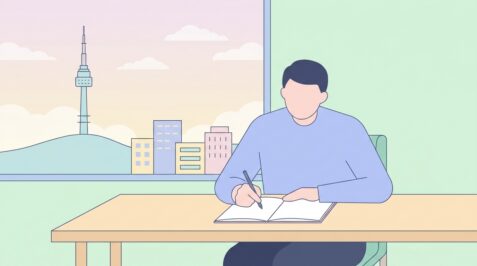
안녕하세요! (Annyeonghaseyo!) This is your Daily Hangul editor. Picture that nail-biting finale scene in a K-Drama like Start-Up or Misaeng: the team pulls three all-nighters, your heart sinks (가슴이 철렁하다, ga-seum-i cheol-leong-ha-da) when the presentation slide freezes, and then—boom!—the client smiles and claps. Suddenly, you exhale and feel huge relief. Many intermediate learners tell us they get stuck saying plain phrases like 기분이 좋아요 (gi-bun-i jo-a-yo, I feel good) or 걱정 없어요 (geok-jeong eop-sseo-yo, I have no worries). Based on real feedback from our TOPIK 4 students, switching to vivid body-part idioms like 마음이 놓이다 and 어깨가 가벼워지다 instantly upgrades your Korean from textbook-stiff to native-level storytelling!
Phase 2: Deep Dive Into 3 Essential Emotion Idioms
1. 마음이 놓이다 (ma-eum-i no-i-da)
- Pronunciation: ma-eum-i no-i-da (Sounds like “mah-uhm-ee no-ee-dah” — imagine the smooth “o” in “no” followed by “ee-dah”)
- Meaning: Literally “one’s heart/mind is put down.” In real life, it means to feel relieved or to have one’s mind put at ease after prolonged worry.
- K-Culture Moment: In K-Dramas about medical emergencies or high-stakes exams, a mother hears the good news, closes her eyes, and whispers, “이제야 마음이 놓이네 (I-je-ya ma-eum-i no-i-ne, Now my mind is finally at ease).”
- Editor’s Insight: Think of anxiety as holding a heavy stone tightly in your chest. When the problem is solved, you finally put it down (놓이다, passive of 놓다). Unlike the slightly clinical word 안심하다 (an-sim-ha-da, to feel relieved), 마음이 놓이다 carries warm, emotional exhaustion turning into peace.
- Situation Spectrum:
- Casual (마음이 놓여): ✅
- Semi-formal (마음이 놓여요): ✅
- Formal (마음이 놓입니다): ✅
- 🤔 Think About It: English talks about putting your mind “at ease,” while Korean talks about physically “putting the mind down.” What daily worries feel like something you have to carry until a deadline passes?
2. 어깨가 가벼워지다 (eo-kke-ga ga-byeo-wo-ji-da)
- Pronunciation: eo-kke-ga ga-byeo-wo-ji-da (Sounds like “uh-keh-gah gah-byuh-wuh-jee-dah” — stress the tense “kk” like the “k” in “sky” without a puff of air)
- Meaning: Literally “one’s shoulders become light.” It means a heavy burden or responsibility has been lifted off your shoulders.
- K-Culture Moment: Think of an idol group right after finishing their final encore concert of a world tour, or a team leader in an office drama stepping out of the building on Friday evening, rolling their neck and saying, “프로젝트가 끝나니까 어깨가 가벼워졌어요 (Peu-ro-jek-teu-ga kkeut-na-ni-kka eo-kke-ga ga-byeo-wo-jyeo-sseo-yo, Since the project ended, a weight lifted off my shoulders).”
- Editor’s Insight: This idiom specifically highlights responsibility and duty (책임감, chaek-im-gam). You wouldn’t usually say this just because you found your lost umbrella; you use it when a major task, role, or long-term obligation wraps up successfully. Its natural opposite is 어깨가 무겁다 (eo-kke-ga mu-geop-da, to feel heavy pressure/responsibility).
- Situation Spectrum:
- Casual (어깨가 가벼워졌어): ✅
- Semi-formal (어깨가 가벼워졌어요): ✅
- Formal (어깨가 가벼워졌습니다): ✅
- 🤔 Think About It: Both English and Korean connect shoulders with responsibility! Why do you think human languages across the world map mental stress onto the upper back and shoulders?
3. 가슴이 철렁하다 (ga-seum-i cheol-leong-ha-da)
- Pronunciation: ga-seum-i cheol-leong-ha-da (Sounds like “gah-suhm-ee chul-lung-hah-dah” — “cheol-leong” mimics a heavy metal thud dropping inside you)
- Meaning: Literally “one’s chest drops with a thud.” It describes one’s heart sinking or getting a sudden, freezing shock of fear or bad news.
- K-Culture Moment: Imagine a variety show like Running Man where the host announces an unexpected penalty, or an office drama where an employee realizes they sent a confidential file to the wrong client—their eyes go wide as the narrator says, “그 순간 가슴이 철렁했어요 (Geu sun-gan ga-seum-i cheol-leong-hae-sseo-yo, At that moment, my heart sank).”
- Editor’s Insight: Notice the sound symbolism! 철렁 (cheol-leong) is an ideophone (mimetic word) evoking water sloshing or a heavy latch dropping suddenly. If the fear lasts longer or makes you feel tiny and helpless, Koreans also say 간이 콩알만 해지다 (ga-ni kong-al-man hae-ji-da, one’s liver shrinks to the size of a bean—meaning scared stiff!).
- Situation Spectrum:
- Casual (가슴이 철렁했어): ✅
- Semi-formal (가슴이 철렁했어요): ✅
- Formal (가슴이 철렁했습니다): ✅
- 🤔 Think About It: While English uses the “heart” sinking or “stomach” dropping, Korean uses the “chest” (가슴) and even the “liver” (간) for bravery and fear. How does knowing the body part change how vivid a story sounds?
Phase 3: Textbook Korean vs. Real Korean
Situation 1: Breathing a sigh of relief right after the final presentation
- 📖 Textbook Korean: 이제 걱정이 없어서 안심이 됩니다. (I-je geok-jeong-i eop-seo-seo an-sim-i doem-ni-da. — Now I have no worries, so I am relieved.)
- 🗣️ Real Korean: 휴, 이제야 마음이 놓이네요! 진짜 십 년 감수했어요. (Hyu, i-je-ya ma-eum-i no-i-ne-yo! Jin-jja sim nyeon gam-su-hae-sseo-yo. — Phew, my mind is finally at ease! That seriously took ten years off my life.)
- 💡 Why the difference? Textbook sentences feel like a formal report. Real Koreans pair a natural sigh (휴) with the ending -네요 (-ne-yo) to share the emotional release in real time, often adding dramatic humor like 십 년 감수하다 (losing 10 years of lifespan from stress).
Situation 2: Confessing how terrified you were before the results came out
- 📖 Textbook Korean: 결과를 기다릴 때 너무 무섭고 긴장되었어요. (Gyeol-gwa-reul gi-da-ril ttae neo-mu mu-seop-go gin-jang-doe-eo-sseo-yo. — I was very scared and nervous while waiting for the results.)
- 🗣️ Real Korean: 발표 전까지 진짜 간이 콩알만 해지는 줄 알았어요! (Bal-pyo jeon-kka-ji jin-jja ga-ni kong-al-man hae-ji-neun jul a-ra-sseo-yo! — Until the announcement, I honestly thought I was going to be scared stiff!)
- 💡 Why the difference? Saying 무섭다 (scared) sounds a bit childish in an adult work setting. Using 간이 콩알만 해지다 with the hyperbolic pattern -는 줄 알았다 (“I thought it was going to happen”) makes your workplace banter witty, relatable, and distinctly Intermediate-Advanced.
Phase 4: K-Culture Deep Dive & Non-Verbal Manners
4-1. Nunchi (눈치) & Gestures
When expressing relief in Korea, your body speaks before your words do. Right after surviving a nerve-wracking moment, Koreans gently pat or sweep down the center of their chest with an open palm—literally acting out the idiom 가슴을 쓸어내리다 (ga-seum-eul sseul-eo-nae-ri-da, sweeping down one’s chest in relief). When talking about 어깨가 가벼워지다, people naturally roll their shoulders back, drop their arms loosely, and let out an audible exhale (휴~). One key nunchi tip: in an office setting, always check if your teammates or seniors are still buried in work before celebrating too loudly! Offer a polite bow and say 수고하셨습니다 (su-go-ha-syeot-seum-ni-da, Thank you for your hard work) first, then share your relief together.
4-2. Cultural Code: From Extreme Tension to Hoesik Bonding
Korean work and university cultures thrive on intense collective sprints—from late-night team projects (팀플, tim-peul) to major product launches. Because everyone shares the pressure (조마조마하다, jo-ma-jo-ma-ha-da, feeling on pins and needles), the emotional payoff at the end is also collective. That is why after-work gatherings (회식, hoe-sik) or celebratory chicken-and-beer nights exist: they mark the ritual boundary between heavy shoulders (어깨가 무겁다) and light shoulders (어깨가 가벼워지다). Sharing stories of when your heart sank (가슴이 철렁했던 순간) over grilled pork belly turns past stress into team nostalgia.
Phase 5: Interactive Roleplay Scenario
Setting: A warm, bustling modern Korean pub in Euljiro, Seoul, clinking with glasses and sizzling side dishes. You and Team Leader Park (박 팀장님)—a sharp, caring mentor who barely slept all week—just finished a massive three-month project launch.
- Team Leader Park: 🎭 Leaning back in the chair and pouring a cold glass of beer 오늘 발표 정말 완벽했어요. 그동안 고생 많았죠? (O-neul bal-pyo jeong-mal wan-byeok-hae-sseo-yo. Geu-dong-an go-saeng ma-nat-jyo? — Today’s presentation was truly perfect. You went through a lot of trouble up until now, didn’t you?)
- You: 🎭 Smiling brightly with both hands holding your glass politely 감사합니다, 팀장님! 프로젝트가 성공적으로 끝나니까 이제야 마음이 놓여요. (Gam-sa-ham-ni-da, tim-jang-nim! Peu-ro-jek-teu-ga seong-gong-jeog-eu-ro kkeut-na-ni-kka i-je-ya ma-eum-i no-yeo-yo. — Thank you, Team Leader! Because the project ended successfully, my mind is finally at ease.)
- Team Leader Park: 🎭 Chuckling and nodding in agreement 저도요. 솔직히 어제 파일에 오류가 났을 때는 가슴이 철렁했어요. (Jeo-do-yo. Sol-jik-hi eo-je pa-il-e o-ryu-ga na-sseul ttae-neun ga-seum-i cheol-leong-hae-sseo-yo. — Me too. Honestly, when the file had an error yesterday, my heart sank.)
- You: 🎭 Laughing nervously as you recall the chaos 저도 그 순간에 간이 콩알만 해지는 줄 알았어요! (Jeo-do geu sun-gan-e ga-ni kong-al-man hae-ji-neun jul a-ra-sseo-yo! — At that moment, I thought my liver was going to shrink to a bean too!)
- Team Leader Park: 🎭 Rolling his shoulders with a satisfied sigh 그래도 우리가 밤새워서 잘 해결했잖아요. 오늘부터는 어깨가 좀 가벼워졌어요. (Geu-rae-do u-ri-ga bam-sae-wo-seo jal hae-gyeol-haet-ja-na-yo. O-neul-bu-teo-neun eo-kke-ga jom ga-byeo-wo-jyeo-sseo-yo. — Still, we stayed up all night and solved it well. Starting today, my shoulders feel much lighter.)
- You: 🎭 Raising your glass slightly 맞아요. 이제 주말에는 아무 생각 없이 푹 쉴 수 있겠어요! (Ma-ja-yo. I-je ju-mal-e-neun a-mu saeng-gak eop-si puk swil su it-ge-sseo-yo! — That’s right. Now this weekend, we can rest deeply without any worries!)
- Team Leader Park: 🎭 Clinking glasses warmly 그래요, 주말에 푹 쉬어요. 오늘 밤은 마음 놓고 즐깁시다! (Geu-rae-yo, ju-mal-e puk swi-eo-yo. O-neul bam-eun ma-eum not-ko jeul-gip-si-da! — Yes, rest well this weekend. Tonight, let’s relax our minds and enjoy!)
- You: 🎭 Cheering enthusiastically 네! 다들 정말 수고 많으셨습니다! (Ne! Da-deul jeong-mal su-go ma-neu-syeot-seum-ni-da! — Yes! Everyone worked so hard!)
🔀 Interactive Branching Point: What is your best follow-up reply when Team Leader Park asks how you will celebrate your lighter shoulders?
- Option A: “이번 주말에는 진짜 아무것도 안 하고 집에서 푹 자려고요!” (I-beon ju-mal-e-neun jin-jja a-mu-geot-do an ha-go jib-e-seo puk ja-ryeo-go-yo! — This weekend I’m going to do absolutely nothing and sleep deeply at home!)
- Feedback (Best!): Natural, relatable, and matches the cozy relief vibe of Korean after-work culture without overthinking.
- Option B: “일 없으니까 심심할 것 같아서 내일 바로 새 프로젝트 달라고 할래요.” (Il eop-seu-ni-kka sim-sim-hal geot ga-ta-seo nae-il ba-ro sae peu-ro-jek-teu dal-la-go hal-lae-yo. — Since there’s no work, I think I’ll be bored, so I’ll ask for a new project tomorrow.)
- Feedback (Bad!): Total nunchi miss! Everyone just survived a grueling sprint and wants to enjoy the relief—don’t kill the celebratory mood!
- Option C: “팀장님 어깨도 가벼워졌으니까 오늘 2차는 팀장님이 쏘시는 거죠?” (Tim-jang-nim eo-kke-do ga-byeo-wo-jyeo-sseu-ni-kka o-neul i-cha-neun tim-jang-nim-i sso-si-neun geo-jyo? — Since your shoulders are light too, Team Leader, round two is on you tonight, right?)
- Feedback (Risk!): Playful and humorous if you already have a super close, teasing bond with your boss—but risky in a strictly hierarchical company if said too seriously!
Phase 6: 10-Second Emotion Shadowing Drill
Read aloud with the pauses (/) and match the emotional tone!
[😰 Tense & whispered]어제 실수했을 때 / 가슴이 철렁했어요. (Eo-je sil-su-hae-sseul ttae / ga-seum-i cheol-leong-hae-sseo-yo. — When I made a mistake yesterday / my heart sank.)[😮💨 Exhaling with huge relief]드디어 다 끝나서 / 이제야 마음이 놓이네요. (Deu-di-eo da kkeut-na-seo / i-je-ya ma-eum-i no-i-ne-yo. — Since it’s finally all over / my mind is at ease now.)[😄 Bright & carefree]큰 숙제를 끝내니까 / 어깨가 가벼워졌어요! (Keun suk-je-reul kkeut-nae-ni-kka / eo-kke-ga ga-byeo-wo-jyeo-sseo-yo! — Finishing the big task / lifted a weight off my shoulders!)
Phase 7: K-Culture Mini Dictionary
- 조마조마하다 (jo-ma-jo-ma-ha-da) | To feel anxious, on pins and needles | Used when waiting nervously for test scores, concert ticketing results, or project feedback.
- 간이 콩알만 해지다 (ga-ni kong-al-man hae-ji-da) | To be scared stiff | Vivid idiom used in K-Variety shows and casual chats when fear makes you shrink inside.
- 후련하다 (hu-ryeon-ha-da) | To feel refreshed and relieved | Describes that clean, unburdened feeling after finishing a tough task or speaking your honest mind.
- 뒷풀이 (dwit-pu-ri) | Post-event after-party | A staple gathering after university club shows, concerts, or major work projects to celebrate together.
Phase 8: Traveler’s Survival Kit
Top 3 Survival Expressions for Stressful Travel Moments
- 다행히 찾았네요, 이제 마음이 놓여요. (Da-haeng-hi cha-jat-ne-yo, i-je ma-eum-i no-yeo-yo.) — Luckily I found it, now I’m relieved. Pro Tip: Use this warmly to thank hotel staff or café baristas after they return a misplaced phone or bag!
- 길이 헷갈려서 가슴이 철렁했어요. (Gil-i het-gal-lyeo-seo ga-seum-i cheol-leong-hae-sseo-yo.) — I got confused by the directions so my heart sank. Pro Tip: Great icebreaker when arriving slightly late to a tour meeting point.
- 덕분에 걱정 없이 여행할 수 있겠어요. (Deok-bun-e geok-jeong eop-si yeo-haeng-hal su it-ge-sseo-yo.) — Thanks to you, I can travel without worries. Pro Tip: Adding 덕분에 (thanks to you) shows wonderful Korean politeness.
Editor’s Travel Note
Nothing ruins travel peace of mind faster than getting lost! Before flying to Seoul, be sure to Download the Naver Map App for Accurate Korean Walking Directions since global map apps often lack turn-by-turn walking routes in Korea. You can also Check the Official Korea Tourism Guide for T-money Transit Cards to breeze through subways, buses, and convenience store payments without fumbling for cash.
Phase 9: One Step Deeper (Cultural Reflection)
Have you noticed how Korean emotional expressions rarely stay abstract? Instead of simply saying “I am anxious” or “I am relieved,” Korean anchors feelings inside physical organs—the mind being set down (마음이 놓이다), the chest dropping with a thud (가슴이 철렁하다), the liver shrinking (간이 콩알만 해지다), or the shoulders lightening (어깨가 가벼워지다). In Korea’s high-context, community-oriented society, emotions are treated as shared physical weights that people carry together through jeong (정, deep human warmth). When you tell a Korean friend that your shoulders finally feel light, you aren’t just describing your mood—you are inviting them to share in the physical relief of a journey survived together.
💬 Your Turn: What was a recent moment in your life when your heart sank (가슴이 철렁하다), and how did it feel once your mind was finally at ease (마음이 놓이다)? Share your story in the comments below—try writing at least one Korean sentence!
Phase 10: FAQ & Common Mistakes
Q: Can I use 마음이 놓이다 and 안심하다 interchangeably?
A: They share the same core meaning (“to feel relieved”), so yes in most contexts! However, 안심하다 is slightly more formal and news-like, whereas 마음이 놓이다 sounds warmer, more personal, and much more natural in everyday speech.
Q: Is 어깨가 가벼워지다 only for work or school projects?
A: Not at all! You can use it anytime a heavy personal duty or long-standing worry ends—such as paying off a loan, finishing a big family event, or seeing your child graduate.
Q: Can I say 가슴이 철렁하다 for positive surprises, like winning the lottery?
A: Careful! 가슴이 철렁하다 almost always implies a sudden negative shock, fear, or panic. For a happy or romantic flutter, Koreans use 가슴이 두근거리다 (ga-seum-i du-geun-geo-ri-da, my heart is pounding with excitement).
🚨 Common Mistakes TOP 3
- Using the active verb 놓다 instead of 놓이다: Saying 마음을 놓았어요 changes the meaning to “I let my guard down” (sometimes careless!), whereas 마음이 놓였어요 means “I feel relieved.” Correct Action: Always pair 마음 + 이 + 놓이다 for relief.
- Using 어깨가 가볍다 for literal muscle pain: If you got a great shoulder massage, say 어깨가 시원해요 (My shoulders feel refreshed), not 어깨가 가벼워졌어요 (unless joking about stress!). Correct Action: Reserve 어깨가 가벼워지다 for mental burdens and responsibilities.
- Forgetting past tense in storytelling: When recounting a sudden scare, learners sometimes say 가슴이 철렁해요 in present tense. Correct Action: Use past tense 가슴이 철렁했어요 to describe the exact split second it happened.
Phase 11: Action Mission & Participation
- 🥉 Bronze Mission (Solo Practice): Stand in front of a mirror and act out all three idioms with matching facial expressions and gestures—sweep your chest for 마음이 놓이다 and roll your shoulders for 어깨가 가벼워지다!
- 🥈 Silver Mission (Share Online): Post a short social update or story celebrating the end of a tough week using
#DailyHanguland the sentence: 이번 주 일 끝나서 어깨가 가벼워졌어요! (I-beon ju il kkeut-na-seo eo-kke-ga ga-byeo-wo-jyeo-sseo-yo!) - 🥇 Gold Mission (Real-Life Use): Next time a Korean friend or tutor finishes an exam or busy shift, message them: 고생 많았어요! 이제 좀 마음이 놓이죠? (Go-saeng ma-na-sseo-yo! I-je jom ma-eum-i no-i-jyo?)
🎮 K-Culture Mission: Watch an episode of a workplace or medical K-Drama (Hospital Playlist, Misaeng, or Extraordinary Attorney Woo) and listen closely whenever a crisis gets resolved—spot if a character says 마음이 놓이다 or sighs while patting their chest!
Phase 12: Interactive Quiz Challenge
Quiz 1 (Situational Judgment): You are waiting nervously for your TOPIK score, and right as you open the website, the screen freezes for 10 seconds! Which expression fits best?
A) 어깨가 가벼워졌어요 (Eo-kke-ga ga-byeo-wo-jyeo-sseo-yo)
B) 가슴이 철렁했어요 (Ga-seum-i cheol-leong-hae-sseo-yo)
C) 마음이 놓였어요 (Ma-eum-i no-yeo-sseo-yo)
Quiz 2 (Fill in the Blank): Once our team’s 6-month project succeeded, my responsibility felt lifted: 프로젝트가 성공해서 이제 ( ____ ) 가벼워졌어요.
Quiz 3 (True or False): In Korean, you can use 가슴이 철렁하다 to describe how happy and excited you feel right before meeting your favorite K-Pop idol. (True / False)
🔍 Click here to check your answers and explanations!
- Quiz 1 Answer: B) 가슴이 철렁했어요. (Wrong-answer feedback: Option A means your burden lifted, and Option C means you feel relieved—both happen after you pass, not when the screen freezes in panic!)
- Quiz 2 Answer: 어깨가 (eo-kke-ga). Full sentence: 프로젝트가 성공해서 이제 어깨가 가벼워졌어요. Remember the subject particle -가 after 어깨!
- Quiz 3 Answer: False! 가슴이 철렁하다 is for sudden fear or sinking dread. Before meeting your bias, use 가슴이 두근거려요 (ga-seum-i du-geun-geo-ryeo-yo, my heart is fluttering)!
🎬 Watch Our Daily Videos! (Daily Hangul Official Instagram)
Review the expressions you learned in this article with our fun daily short videos! Check out native pronunciation and real-life nuances in action.
- Instagram @dailyhangul_en