Phase 1: Empathy — Stepping Into the Korean Boardroom
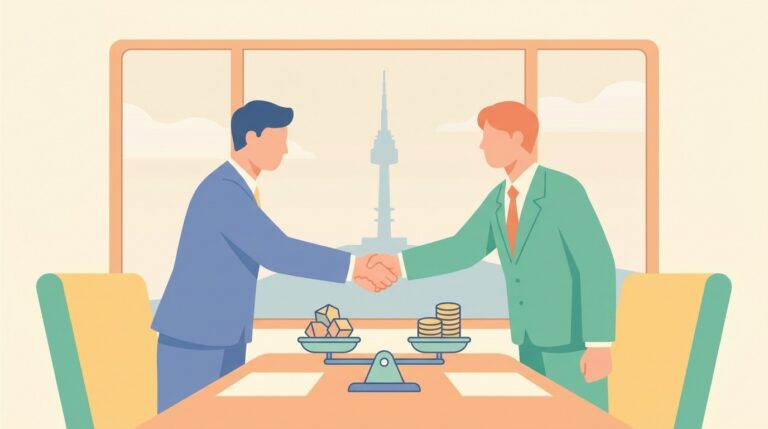
안녕하세요! 매일한글 에디터입니다. (Hello! I am your Daily Hangul Editor.) Picture a tense scene straight out of a K-drama like Misaeng: a small parts supplier sits nervously in a sleek Seoul boardroom while raw material costs skyrocket. As a global manager, how do you announce that your firm is proactively adopting supply price indexation without sounding robotic or condescending? Many advanced learners tell us that corporate compliance Korean feels like deciphering an ancient legal scroll. Based on real feedback from foreign executives in Korea, this Level 5 guide gives you the exact diplomatic phrasing to turn a rigid Fair Trade Law requirement into a trust-building moment.
Phase 2: Deep Dive Into 3 Core Expressions
1. 납품대금 연동제를 선제적으로 도입하다 (Nappumdaegeum yeondongjereul seonjejeogeuro doipada)
- Pronunciation: [Nappum-daegeum yeondong-jereul seonje-jeog-euro do-ipada] — Think of “nap” like taking a quick nap, “poom” like boom with a P, and “do-ip” like saying dough-eat quickly with a soft P at the end!
- Meaning: Literal: “To preemptively introduce a delivery-payment linkage system.” Actual Nuance: Signaling moral leadership and foresight by adopting supply price indexation before regulators force your hand.
- K-Culture Moment: In Korean corporate dramas like Reborn Rich or Agency, an ambitious executive wins over skeptical subcontractors during an emergency press briefing by declaring their firm will take the lead in fair-trade reforms rather than waiting for government audits.
- Editor’s Insight: The adverb 선제적으로 (seonjejeogeuro / proactively) is absolute gold in Korean ESG and compliance meetings. Unlike 미리 (miri / in advance), which sounds casual, 선제적으로 implies strategic wisdom and corporate responsibility.
- Situation Spectrum: Casual 🚫 | Semi-formal ⚠️ | Formal ✅
- 🤔 Think About It: In English business culture, compliance is often framed as “risk mitigation.” In Korea, why does framing a legal duty as a “proactive win-win gesture” carry so much weight with partners and the Fair Trade Commission?
2. 원자재 가격 상승분을 단가에 반영하다 (Wonjajae gagyeok sangseungbuneul dangae banyeonghada)
- Pronunciation: [Wonjajae gagyeok sangseung-buneul danga-e banyeong-hada] — “Won” sounds like Korean currency won, “sang-seung” flows like song-soong with an open mouth, and “ban-yeong” sounds like bahn-young.
- Meaning: Literal: “To reflect the rising portion of raw material prices in the unit price.” Actual Nuance: A precise, reassuring promise to suppliers that they will not have to swallow inflation losses alone.
- K-Culture Moment: Imagine a gritty manufacturing CEO in Extraordinary Attorney Woo pouring over thick ledger books at midnight, realizing the supplier’s margin has evaporated, and finally telling the legal team to adjust the contract unit price fairly.
- Editor’s Insight: Notice the noun 상승분 (sangseungbun / the portion of increase). Adding -분 (-bun) turns a vague price hike into a measurable, objective slice of data—making you sound like an authoritative CFO or compliance officer.
- Situation Spectrum: Casual 🚫 | Semi-formal ✅ | Formal ✅
- 🤔 Think About It: Korean business speakers rely heavily on Sino-Korean noun clusters like 가격 상승분 (gagyeok sangseungbun / price increase portion). How does using compact nouns instead of long clauses change the perceived authority of a speaker in your native language?
3. 상생 협력을 도모하다 (Sangsaeng hyeomnyeogeul domohada)
- Pronunciation: [Sangsaeng hyeomnyeogeul domohada] — “Sang-saeng” rhymes with song-sang, while “hyeom-nyeok” has a smooth nasal link like hyum-nyuk (never pronounce the G sound between ㅂ and ㄴ!).
- Meaning: Literal: “To plan/strive for mutual-living cooperation.” Actual Nuance: Building sustainable, ethical partnerships where the prime contractor and subcontractors thrive together.
- K-Culture Moment: You will hear this exact phrase in K-news segments whenever major conglomerates announce new compliance charters or support funds for small-and-medium partner companies (중소 협력사 / jungso hyeomnyeoksa).
- Editor’s Insight: The verb 도모하다 (domohada / to promote or pursue) elevates your Korean straight into TOPIK Level 5–6 territory. Replace ordinary 하다 (hada) with 도모하다 when discussing long-term compliance culture, trust, and mutual growth.
- Situation Spectrum: Casual 🚫 | Semi-formal ⚠️ | Formal ✅
- 🤔 Think About It: The word 상생 (sangsaeng / co-prosperity) literally means “living together.” How does this contrast with purely transactional “vendor-client” language in Western corporate contracts?
Phase 3: Textbook Korean vs. Real Korean
Situation 1: Explaining why your company adopted the indexation rule
- 📖 Textbook Korean: 하도급법을 준수하기 위해 납품단가를 조정하기로 결정했습니다. (Hadogeupbeobeul junsuhagi wihae nappumdangareul jojeonghagiro gyeoljeonghaetseumnida. / We decided to adjust the supply unit price to comply with the Subcontracting Act.)
- 🗣️ Real Korean: 협력사 부담을 덜어드리고자 납품대금 연동제를 선제적으로 도입했습니다. (Hyeomnyeoksa budameul deoreodeurigoja nappumdaegeum yeondongjereul seonjejeogeuro doipaetseumnida. / To ease the burden on our partners, we proactively introduced supply price indexation.)
- 💡 Why the difference? Saying “because of the law” sounds defensive, as if you only acted under pressure. Real Korean executives frame compliance around relieving the partner’s burden (부담을 덜어드리다 / budameul deoreodeurida) so the gesture builds genuine loyalty.
Situation 2: Confirming raw material volatility won’t squeeze the supplier
- 📖 Textbook Korean: 원자재 가격이 올라서 납품 가격을 올려 드리겠습니다. (Wonjajae gagyeogi ollaseo nappum gagyeogeul ollyeo deurigetseumnida. / Because raw material prices rose, we will raise the supply price for you.)
- 🗣️ Real Korean: 주요 원재료 시세 급등분을 단가에 투명하게 반영하겠습니다. (Juyo wonjaeryo sise geupdeungbuneul dangae tumyeonghage banyeonghagetseumnida. / We will transparently reflect the surge in key raw material market prices into the unit price.)
- 💡 Why the difference? 올려 드리다 (ollyeo deurida / raise it for you) subtly implies doing a personal favor. Using 투명하게 반영하다 (tumyeonghage banyeonghada / reflect transparently) signals objective, rule-based corporate compliance.
Phase 4: K-Culture Deep Dive & Non-Verbal Manners
4-1. Nunchi (눈치) & Gestures in Compliance Meetings
In Korea, nunchi (social radar) during a subcontracting negotiation matters just as much as the contract clause itself. When presenting a revised supply price indexation agreement (연동 약정서 / yeondong yakjeongseo), avoid sliding the paper across the table with one hand. Hold the document with both hands, offer a calm 15-degree nod, and maintain steady yet warm eye contact. If the supplier hesitates—often out of fear of offending the larger buyer (갑을 관계 / gabeul gwangye)—pause intentionally and offer tea first. Letting them speak without interrupting shows that your compliance system isn’t just paper deep.
4-2. Cultural Code Analysis: Gabeul History & K-Drama Boardrooms
If you have watched workplace K-dramas like Misaeng, you know how deeply ingrained the hierarchy between Won-cheong (원청 / prime contractor) and Ha-cheong (하청 / subcontractor) used to be. Traditionally, suppliers absorbed sudden copper or steel price spikes silently to keep future orders. Today, Korea’s Fair Trade Commission (공정거래위원회 / Gongjeonggeoraewiwonhoe) strictly enforces the Subcontracting Act (하도급법 / Hadogeupbeop), turning sangsaeng (상생 / win-win growth) into both a legal standard and a matter of corporate pride. Even over post-meeting Hoesik (회식 / team dining) or quiet Korean tea meetings, mentioning how your compliance team protects partners instantly earns immense respect.
Phase 5: Real-Life Roleplay Scenario
Setting: A sunlit meeting room on the 18th floor of an electronics manufacturer in Pangyo Techno Valley. Rain taps softly on the glass while warm barley tea steams on the table.
Characters:
* You (Director Alex): Head of Corporate Compliance at a mid-sized Korean tech firm.
* Director Park (박 이사님): Veteran CEO of a precision aluminum parts supplier, sharp-eyed and cautiously guarding his company’s survival.
- Alex: 🎭 Standing slightly and gesturing toward the seat with an open palm. 이사님, 바쁘신데 먼 길 와주셔서 감사합니다. (Isanim, bappeusinde meon gil wajusyeoseo gamsahamnida. / Director Park, thank you for coming all this way despite your busy schedule.)
- Director Park: 🎭 Sitting cautiously with a tight smile, clutching his worn leather briefcase. 아닙니다. 단가 관련 긴급 논의라고 하셔서 바로 왔습니다. 요즘 알루미늄 시세가 워낙 불안정해서요. (Animnida. Danga gwallyeon gingeup nonuirago hasyeoseo baro watseumnida. Yojeum alluminyum sise-ga wonak buranjeonghaeseoyo. / Not at all. You said it was an urgent unit-price discussion, so I came right away. Aluminum market prices have been terribly unstable lately.)
- Alex: 🎭 Nodding empathetically and sliding the printed chart forward with both hands. 맞습니다. 저희 준법지원팀에서도 그 부분을 면밀히 모니터링하고 있었습니다. (Matseumnida. Jeohui junbeopjiwontimeseodo geu bubuneul myeonmilhi moniteoringhago isseotseumnida. / Indeed. Our compliance support team has also been closely monitoring that exact issue.)
- Director Park: 🎭 Leaning forward, eyebrows raised in surprise. 아, 그러셨군요. 사실 저희도 마진이 거의 남지 않아 말씀드리기 송구스러웠습니다. (A, geureosyeotgunyo. Sasil jeohuido majini geoui namji ana malsseumdeurigi songguseureowotseumnida. / Oh, I see. To be honest, we barely have any margin left, though I felt hesitant to bring it up.)
- Alex: 🎭 Speaking in a calm, reassuring tone. 절대 부담 갖지 마세요. 저희는 원자재 가격 상승분을 납품 단가에 반영하는 ‘납품대금 연동제’를 선제적으로 도입하기로 했습니다. (Jeoldae budam gatji maseyo. Jeohuineun wonjajae gagyeok sangseungbuneul nappum dangae banyeonghaneun ‘nappumdaegeum yeondongje’reul seonjejeogeuro doipagiro haetseumnida. / Please don’t feel burdened at all. We have decided to proactively adopt supply price indexation to reflect raw material cost spikes in the delivery unit price.)
- Director Park: 🎭 Blinking in disbelief, double-checking the clause on page two. 의무 대상 기준 이하인데도 선제적으로 적용해 주시는 건가요? (Uimu daesang gijun ihaindedo seonjejeogeuro jeokyonghae jusineun geongayo? / You’re applying it proactively even though this contract is below the mandatory threshold?)
- Alex: 🎭 Smiling warmly and pointing gently to the indexation formula. 네, 공정거래 준수와 진정한 상생 협력을 도모하기 위한 결정입니다. (Ne, gongjeonggeorae junsuwa jinjeonghan sangsaeng hyeomnyeogeul domohagi wihan gyeoljeongimnida. / Yes, it is a decision to uphold fair trade compliance and promote genuine win-win cooperation.)
- Director Park: 🎭 Exhaling in deep relief and bowing slightly across the table. 정말 감사합니다. 덕분에 공급망 안정에 더 힘쓸 수 있겠습니다. (Jeongmal gamsahamnida. Deokbune gonggeummang anjeonge deo himsseul su itgetseumnida. / Thank you so much. Thanks to this, we can focus even more on stabilizing the supply chain.)
🔀 Interactive Branching Point
Director Park now asks: “혹시 원재료 가격이 다시 하락할 때는 단가도 자동으로 내려가나요? (Hoksi wonjaeryo gagyeogi dasi harakal ttaeneun dangado jadongeuro naeryeoganayo? / If raw material prices drop again, does the unit price automatically go down too?)” How do you respond?
- Option A: “네, 연동제 원칙상 상하방 모두 공정하게 연동되지만, 변동 폭과 주기 기준을 양사 합의로 투명하게 설정할 예정입니다.” (Ne, yeondongje wonchiksang sanghabang modu gongjeonghage yeondongdoejiman, byeondong pokgwa jugi gijuneul yangsa habuiro tumyeonghage seoljeonghal yejeongimnida. / Yes, by indexation principles both upward and downward shifts are linked fairly, and we will transparently set the fluctuation threshold and cycle by mutual agreement.) -> BEST! Clear, legally accurate under Korea’s Win-Win Cooperation Act, and emphasizes mutual agreement (양사 합의 / yangsa habui).
- Option B: “아, 그냥 저희가 알아서 적당히 조정해 드릴 테니 걱정 마세요.” (A, geunyang jeohuiga araseo jeokdanghi jojeonghae deuril teni geokjeong maseyo. / Oh, don’t worry, we’ll just adjust it appropriately on our own.) -> BAD! Sounds arbitrary and violates compliance transparency; “적당히” (jeokdanghi / roughly) is a red flag in legal discussions.
- Option C: “당연히 내려가죠. 저희만 손해 볼 수는 없으니까요.” (Dangyeonhi naeryeogajyo. Jeohuiman sonhae bol suneun eopseunikka-yo. / Of course it goes down. We can’t be the only ones taking a loss.) -> RISK! Legally true that indexation works both ways, but the blunt phrasing destroys all the goodwill and sangsaeng trust you just built.
Phase 6: 10-Second Emotional Shadowing Drill
Read aloud smoothly, pausing briefly at / and matching the emotional cue:
[🧐 Serious and analytical]최근 원자재 시세가 / 가파르게 상승하면서 / 협력사의 원가 부담이 / 크게 가중되었습니다. (Choegeun wonjajae sise-ga / gapareuge sangseunghamyeonseo / hyeomnyeoksa-ui wonga budami / keuge gajungdoeeotseumnida. / As raw material market prices have risen steeply recently, our partners’ cost burdens have heavily intensified.)[🤝 Sincere and reassuring]이에 당사는 / 가격 상승분을 단가에 반영하는 / 납품대금 연동제를 / 선제적으로 도입했습니다. (Ie dangsaneun / gagyeok sangseungbuneul dangae banyeonghaneun / nappumdaegeum yeondongjereul / seonjejeogeuro doipaetseumnida. / Accordingly, our company has proactively adopted supply price indexation that reflects price increases in the unit price.)[😊 Warm and forward-looking]앞으로도 공정거래 원칙을 철저히 준수하며 / 건강한 상생 생태계를 / 만들어 가겠습니다. (Apeurodo gongjeonggeorae wonchigeul cheoljeohi junsuhamyeo / geonganghan sangsaeng saengtaegye-reul / mandeureo gagetseumnida. / Moving forward, we will strictly observe fair trade principles and build a healthy win-win ecosystem.)
Phase 7: K-Culture Mini Dictionary
- 하도급법 (Hadogeupbeop) | Fair Transactions in Subcontracting Act | A cornerstone Korean law protecting smaller suppliers from unfair price cuts, delayed payments, or forced cost absorption by larger prime contractors.
- 원청 / 하청 (Woncheong / Hacheong) | Prime contractor / Subcontractor | Everyday Korean business shorthand for the main ordering company and its supplier; often heard in K-dramas and economic news.
- 준법경영 (Junbeopgyeongyeong) | Compliance Management | Corporate governance focused on following laws and ethics proactively; many Korean conglomerates now run dedicated 준법감시위원회 (compliance monitoring committees).
- 공정거래위원회 (Gongjeonggeoraewiwonhoe) | Korea Fair Trade Commission (KFTC) | Commonly abbreviated as 공정위 (Gongjeongwi), this powerful regulator oversees fair competition and investigates subcontracting violations.
Phase 8: Survival Kit for Business Travelers
- 명함 교환 (Myeongham gyohwan): “명함 한 장 드리겠습니다. (Myeongham han jang deurigetseumnida. / Let me offer you my business card.)” — Pro Tip: Always hand over and receive business cards with both hands, and spend three seconds actually reading the person’s title before placing it neatly on the table.
- 회의 자료 확인 (Hoeui jaryo hwagin): “첨부된 약정서 초안을 함께 검토하시죠. (Cheombudoen yakjeongseo choaneul hamkke geomtohasijyo. / Shall we review the attached draft agreement together?)” — Pro Tip: Using -시죠 (-sijyo) turns a command into a polite, collaborative invitation.
- 영수증 처리 (Yeongsujeung cheori): “법인카드로 결제하고 지출증빙용으로 부탁드립니다. (Beobinkadeuro gyeoljehago jichuljeungbingyongeuro butakdeurimnida. / I’ll pay by corporate card; please issue it for corporate expense verification.)” — Pro Tip: Essential when hosting a supplier lunch for tax compliance!
Editor’s Travel Note
Before heading to industrial hubs like Pangyo, Ulsan, or Suwon for supplier audits, make sure you install essential local tools: check out Naver Map for accurate Korean office directions (since Google Maps lacks turn-by-turn walking/driving routes in Korea) and grab Kakao T for fast business taxi hailing. Load a T-money card at any GS25 or CU convenience store for seamless Seoul Metro transfers, and always carry a physical corporate card alongside your smartphone since some small industrial park cafeterias don’t take Apple Pay.
Phase 9: One Step Deeper
In Western corporate law, fairness is often guarded by adversarial precision—every clause assumes two parties might clash. In Korea, however, modern compliance sits atop centuries of communal values where hierarchy (wi-arae / 위아래) once demanded silent endurance from the smaller party. That is why introducing nappumdaegeum yeondongje (납품대금 연동제 / supply price indexation) proactively is more than an accounting tweak; it is a cultural statement that power asymmetry should never dictate survival. When a foreign manager masters this nuance, they aren’t just speaking advanced Korean—they are reshaping workplace trust.
💬 Your Turn: In your country, how do big companies handle sudden raw material price spikes with smaller suppliers? Share your thoughts in the comments!
Phase 10: FAQ & Common Mistakes
Q: Is
🎬 Watch Our Daily Videos! (Daily Hangul Official Instagram)
Review the expressions you learned in this article with our fun daily short videos! Check out native pronunciation and real-life nuances in action.
- Instagram @dailyhangul_en
Frequently Asked Questions (FAQ)
Q: What does "납품대금 연동제를 선제적으로 도입하다 (Nappumdaegeum yeondongjereul seonjejeogeuro doipada)" mean in Korean and how do you pronounce it?
A: In Korean, "납품대금 연동제를 선제적으로 도입하다 (Nappumdaegeum yeondongjereul seonjejeogeuro doipada)" is pronounced [Nappum-daegeum yeondong-jereul seonje-jeog-euro do-ipada] and means: Literal: "To preemptively introduce a delivery-payment linkage system." Actual Nuance: Signaling moral leadership and foresight by adopting supply price indexation before regulators force your hand.
Q: What does "원자재 가격 상승분을 단가에 반영하다 (Wonjajae gagyeok sangseungbuneul dangae banyeonghada)" mean in Korean and how do you pronounce it?
A: In Korean, "원자재 가격 상승분을 단가에 반영하다 (Wonjajae gagyeok sangseungbuneul dangae banyeonghada)" is pronounced [Wonjajae gagyeok sangseung-buneul danga-e banyeong-hada] and means: Literal: "To reflect the rising portion of raw material prices in the unit price." Actual Nuance: A precise, reassuring promise to suppliers that they will not have to swallow inflation losses alone.
Q: What does "상생 협력을 도모하다 (Sangsaeng hyeomnyeogeul domohada)" mean in Korean and how do you pronounce it?
A: In Korean, "상생 협력을 도모하다 (Sangsaeng hyeomnyeogeul domohada)" is pronounced [Sangsaeng hyeomnyeogeul domohada] and means: Literal: "To plan/strive for mutual-living cooperation." Actual Nuance: Building sustainable, ethical partnerships where the prime contractor and subcontractors thrive together.