

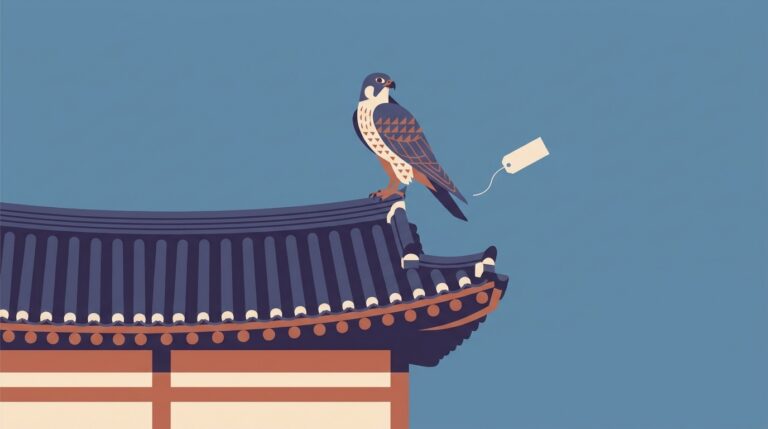
Phase 1: Empathy — The Art of the Joseon Poker Face
안녕하세요! 매일한글 에디터입니다. (Annyeonghaseyo! Maeil Hangeul editeo-imnida.) Picture this: you are binging a high-stakes K-drama, and the cunning antagonist casually sips iced Americano after sabotaging the hero’s deal, wearing the purest poker face imaginable. A character snaps, “Stop detaching the sichimi!” Wait—detaching a what? Even for C2 learners, idioms preserved from ancient Korean history can feel like a locked vault. Based on feedback from advanced learners struggling to decode sly banter in Korean boardrooms and variety shows, today we are cracking open the Joseon-era falconry custom behind ‘시치미를 떼다’ (sichimi-reul tteda) so you can catch—and deliver—razor-sharp nuance.
Phase 2: Top 3 Core Expressions Deep Dive
1. 시치미를 떼다 (Sichimi-reul tteda)
- Pronunciation: Sichimi-reul tteda (Think “she-chee-mee-reul tteh-dah” — pronounce si softly like “she”, reul with a light tap of the tongue like the Spanish ‘r’, and hit the double consonant tte with a tight, unaspirated ‘t’ like the ‘t’ in “stop”, holding zero breathiness!)
- Meaning: Literal: “To detach the falcon’s identification tag.” / Actual Nuance: To feign complete ignorance, play dumb shamelessly, or act utterly innocent despite being the obvious culprit.
- K-Culture Moment: Think of variety shows like Running Man or The Devil’s Plan, when a cast member secretly steals another player’s gold coins and then walks back into the living room calmly asking, “Wait, did someone lose something?” The editors inevitably slap giant subtitles across the screen: 완벽하게 시치미 떼는 중 (Wanbyeokhage sichimi tteneun jung — Perfectly feigning ignorance).
- Editor’s Insight: Unlike the neutral 모르는 척하다 (moreuneun cheokhada — to pretend not to know), which can be harmless or polite, 시치미를 떼다 carries an inherent accusation of brazen cheekiness. Historically, falcons (매, mae) were priceless status symbols in Goryeo and Joseon; thieves carved or snapped off the horn/bone owner’s tag (시치미) tied to the bird’s tail feathers and claimed the falcon was theirs all along.
- Situation Spectrum: Casual ✅ / Semi-formal ✅ / Formal ⚠️ (Use cautiously in formal boardrooms—calling a superior out for 시치미 sounds accusatory unless framed very jokingly.)
- 🤔 Think About It: In English, “playing dumb” or “feigning ignorance” focuses on intellect or knowledge. Why do you think Korean preserved an idiom rooted in property theft and altered identity markers to describe acting innocent? How does that reflect historical anxieties about social hierarchy and ownership?
2. 오리발을 내밀다 (Oribal-eul naemilda)
- Pronunciation: Oribal-eul naemilda (Think “oh-ree-bahl-eul neh-meel-dah” — keep o round like “or” without the ‘r’, tap ri lightly, and let nae sound crisp like “neh”).
- Meaning: Literal: “To stick out a duck’s foot.” / Actual Nuance: To flatly deny wrongdoing, refuse to admit guilt, or stonewall even when caught red-handed with irrefutable evidence.
- K-Culture Moment: Classic K-drama courtroom or chaebol-family confrontation scene: the prosecutor slides CCTV photos across the mahogany table, yet the corrupt director leans back and insists he has never met that man in his life. The exasperated hero mutters, “증거가 다 있는데 끝까지 오리발을 내미네” (Jeunggeoga da inneunde kkeutkkaji oribal-eul naemine — All the evidence is right there, yet he’s flatly denying it to the bitter end).
- Editor’s Insight: While 시치미를 떼다 emphasizes the cool, unbothered acting (pretending nothing happened), 오리발을 내밀다 highlights stubborn denial when cornered. Etymologically, it evokes a duck swimming furiously underwater while looking serene above—or simply the absurdity of sticking out webbed feet when accused of leaving footprints, shouting “Wait, those aren’t human tracks!”
- Situation Spectrum: Casual ✅ / Semi-formal ✅ / Formal ⚠️ (Common in journalism, political commentary, and heated debates, though too blunt for polite client relations.)
- 🤔 Think About It: English has “digging one’s heels in” or “covering one’s tracks.” Does your native language use animal anatomy metaphors to mock stubborn denial?
3. 딴전을 피우다 (Ttanjeon-eul piuda)
- Pronunciation: Ttanjeon-eul piuda (Think “ttahn-juhn-eul pee-oo-dah” — clamp your tongue tightly on the roof of your mouth for the tense tt like the ‘t’ in “start”, drop into a relaxed “juhn” as in “just”, and glide smoothly through pi-u-da).
- Meaning: Literal: “To put on a different market stall / play a different tune.” / Actual Nuance: To feign distraction, change the subject, or stall by doing something unrelated to evade an uncomfortable question or chore.
- K-Culture Moment: Imagine an idol variety show where the PD announces that the loser has to wash everyone’s ramen pots. Suddenly, one member becomes deeply fascinated by a speck of dust on the ceiling or starts humming to himself. That classic avoidance tactic is 딴전을 피우다.
- Editor’s Insight: 전 (jeon) traces back to traditional Joseon street markets (시전, sijeon) or theatrical side-shows—literally setting up a completely different shop to distract attention. At a C2 level, pairing this with 시치미 lets you describe someone who isn’t just acting innocent, but actively deflecting responsibility.
- Situation Spectrum: Casual ✅ / Semi-formal ✅ / Formal ✅ (Works naturally even in professional critiques: “핵심을 피하고 딴전 피우지 마십시오” — Haeksimeul pihago ttanjeon piuji masipsio — Please stop beating around the bush and evading the core issue.)
- 🤔 Think About It: In Korean, evading a topic is framed as “putting on a side-show” (딴전) or “selling wind” (한눈팔다). How does your culture frame conversational deflection—as evasion, distraction, or artistry?
Phase 3: Textbook Korean vs. Real Korean
Situation 1: Catching a close colleague who ate your labeled tiramisu from the office fridge
- 📖 교과서 한국어 (Textbook Korean): 저기요, 제가 냉장고에 넣어 둔 케이크를 드셨으면서 모르는 척하지 마세요. (Jeogiyo, jega naengjanggoe neoeo dun keikeureul deusyeosseumyeonseo moreuneun cheokhaji maseyo. — Excuse me, please don’t pretend not to know when you ate the cake I put in the fridge.)
- 🗣️ 진짜 한국어 (Real Korean): 야, 입가에 코코아 가루 다 묻었거든? 언제까지 시치미 떼고 있을 거야, 적당히 오리발 내밀어! (Ya, ipgae kokoa garu da mudeotgeodeun? Eonjekkaji sichimi ttego isseul geoya, jeokdanghi oribal naemireo! — Hey, you’ve literally got cocoa powder around your mouth! How long are you gonna play dumb—stop denying it already!)
- 💡 왜 다를까? (Why the difference?): Textbook 모르는 척하지 마세요 sounds strangely robotic and overly stiff among peers. Real native banter pairs sensory proof with rhythmic idioms (시치미 떼다 + 적당히 오리발 내밀다, “deny within reason”) to tease without starting an actual war.
Situation 2: Subtle pushback in a high-level business negotiation
- 📖 교과서 한국어 (Textbook Korean): 지난 회의 내용을 기억하지 못하시는 척하시는 것 같습니다. (Jinan hoeui naeyongeul gieokhaji mothasineun cheokhasineun geot gatseumnida. — It seems you are pretending not to remember the contents of the last meeting.)
- 🗣️ 진짜 한국어 (Real Korean): 부장님, 지난번 합의안을 두고 지금 너무 태연하게 시치미 떼시는 거 아니에요? (Bujangnim, jinanbeon habuianeul dugo jigeum neomu taeyeonhage sichimi ttesineun geo anieyo? — Director, aren’t you playing a bit too calmly innocent right now regarding our previous agreement?)
- 💡 왜 다를까? (Why the difference?): Advanced C2 speakers soften blunt accusations using the adverb 태연하게 (taeyeonhage — nonchalantly/composedly) and the rhetorical ending ~는 거 아니에요? This turns a sharp historical idiom into witty, high-context executive pushback.
Phase 4: K-Culture Deep Dive & Non-Verbal Manners
4-1. 눈치 (Nunchi) & Non-Verbal Choreography
How do Koreans visually perform 시치미를 떼다—and how do you spot it using 눈치 (nunchi, social situational awareness)?
* The “Over-Polite Blink”: When confronted, someone detaching their sichimi often widens their eyes slightly, blinks slowly in exaggerated confusion, and tilts their head (고개를 갸웃거리다 — gogaereul gyautgeorida) while saying “어머, 정말요?” (Eomeo, jeongmallyo? — Oh my, really?).
* The Micro-Deflection: Watch for someone suddenly straightening papers on a desk, adjusting their glasses, or rubbing the back of their neck (뒷목을 잡거나 쓸어내리다)—physical markers of 딴전을 피우다.
* Calling It Out Gracefully: If you want to call out a friend’s sichimi without breaking harmony, drop your chin slightly, hold steady eye contact with a half-smirk (not a glare!), and keep your tone light rather than raising your volume.
4-2. Cultural Code Analysis: From Joseon’s Eungbang to Modern K-Dramas
To truly master C2 Korean, look at why falconry (매사냥, maesanyang) left such a deep imprint on the Korean lexicon. During the Goryeo and Joseon dynasties, hunting falcons—especially the swift 해동청 (haedongcheong)—were so prized by kings and aristocrats that the state operated an official bureau called the 응방 (Eungbang) solely to train and manage royal birds of prey.
Because lost falcons flew far, owners tied a thin carved horn or bone tag—a 시치미 (sichimi)—inscribed with their name and residence onto the bird’s tail feathers. If a greedy passerby caught a stray falcon, pried off the sichimi, and claimed, “What bird? Oh, I raised this falcon from a chick!”, it wasn’t just a white lie; it was calculated fraud wrapped in faux innocence.
Fast forward to modern K-Dramas like Vincenzo or The Glory: screenwriters love this exact tension. Korean villains rarely cackle wildly like cartoon characters; instead, they wear pristine suits, pour tea, and detach the sichimi with ice-cold poise—making the eventual moment their 오리발 (duck’s foot) is exposed twice as cathartic!
Phase 5: Interactive Roleplay Scenario
Setting: 10:30 PM at a dimly lit, retro pojangmacha (tent bar) in Euljiro, Seoul. Rain patters against the vinyl tarp while sizzling kimchi-jeon fills the air with savory warmth. Across from you sits Team Leader Min-su (민수 팀장)—charismatic, impeccably dressed, and notorious for taking credit for other people’s brilliant ideas in front of the CEO.
- 민수 (Min-su): 🎭 (Pours soju into your glass with both hands, flashing an angelic smile) 오늘 발표 진짜 잘했어! 역시 우리 팀 에이스야.
(Oneul balpyo jinjja jalhaesseo! Yeoksi uri tim eiseuya.)
“You crushed the presentation today! Truly the ace of our team.” - 나 (You): 🎭 (Takes a slow sip of barley tea, raising one eyebrow subtly) 감사하긴 한데… 팀장님, 아까 임원 보고서에 제 이름이 빠져 있던데요?
(Gamsahagin hande… timjangnim, akka imwon bogoseoe je ireumi ppajyeo itdeondeyo?)
“I appreciate that, but… Team Leader, my name happened to be missing from the executive report earlier?” - 민수 (Min-su): 🎭 (Blinks in exaggerated shock, holding his chopsticks mid-air) 어? 진짜? 난 또 편집팀에서 자동으로 넣은 줄 알았지! 전혀 몰랐네.
(Eo? Jinjja? Nan tto pyeonjiptimeseo jadongeuro neoeun jul aratji! Jeonhyeo mollanne.)
“Huh? Really? I totally thought the editing team put it in automatically! Had no idea at all.” - 나 (You): 🎭 (Leans forward gently, lowering your voice with a knowing half-smile) 팀장님, 어제 밤에 직접 최종본 수정하셨잖아요. 지금 시치미 떼시는 거예요?
(Timjangnim, eoje bame jikjeop choejongbon sujeonghasyeotjanayo. Jigeum sichimi ttesineun geoyeyo?)
“Team Leader, you personally revised the final draft last night. Are you seriously detaching the sichimi right now?” - 민수 (Min-su): 🎭 (Chuckles nervously, scratching the back of his neck and glancing at the rain) 아, 내가 요즘 정신이 없어서… 파일이 겹쳤나 봐. 다음엔 꼭 챙길게.
(A, naega yojeum jeongsini eopseoseo… pairi gyeopchyeonna bwa. Daeumen kkok chaenggilge.)
“Ah, I’ve been so scattered lately… the files must have overlapped. I’ll definitely make sure next time.” - 나 (You): 🎭 (Maintains calm eye contact without breaking poise) 다음엔 파일 겹칠 일 없도록 제가 직접 공유 드라이브에 기록해 둘게요.
(Daeumen pail gyeopchil il eopdorok jega jikjeop gongyu deuraibeue girokae dulgeyo.)
“To make sure files don’t overlap next time, I’ll log it directly on the shared drive myself.” - 민수 (Min-su): 🎭 (Clears his throat, realizing his excuse just hit a brick wall) 크흠… 그래, 그게 서로 깔끔하겠다. 건배나 하자.
(Keuheum… geurae, geuge seoro kkalkkeumhagetda. Geonbaena haja.)
“Ahem… right, that would be cleaner for both of us. Let’s just cheers.” - 나 (You): 🎭 (Clinks glasses crisply) 네, 깔끔하게 갑시다. 짠!
(Ne, kkalkkeumhage gapsida. Jjan!)
“Yes, let’s keep things crystal clean. Cheers!”
🔀 Interactive Branching Point: How would you respond at Turn 4 when Min-su feigns total shock?
- Option A: “팀장님, 어제 수정 로그 다 남아 있는데 계속 오리발 내미시면 곤란하죠.” (Timjangnim, eoje sujeong rogeu da nama inneunde gyesok oribal naemisimyeon gollanhajyo. — Team Leader, the edit logs from yesterday are all still there, so it’s awkward if you keep flatly denying it.) -> [RISK / High-Tension] Grammatically natural C2 Korean, and effective if you want total confrontation—but in a Korean hoesik (team dinner) setting, dropping 오리발 내밀다 directly on a superior burns bridges instantly unless you are ready for office warfare.
- Option B: “팀장님, 설마 시치미 떼시는 건 아니죠?” (Timjangnim, seolma sichimi ttesineun geon anijyo? — Team Leader, surely you’re not playing dumb, are you?) -> [BEST] Using 설마 ~는 건 아니죠? wraps the sharp 시치미를 떼다 idiom in playful rhetorical disbelief. It signals loud and clear that you are not fooled while giving him an off-ramp to save face (체면, chemyeon).
- Option C: “네, 그럴 수 있죠. 제가 시치미를 떼겠습니다.” (Ne, geureol su itjyo. Jega sichimireul ttegetseumnida. — Yes, that can happen. I will detach the sichimi.) -> [BAD] Oops! You cannot use 시치미를 떼다 to mean “I will let it slide” or “I’ll overlook it.” Using it on yourself here sounds like you are volunteering to act shady or hide a crime!
Phase 6: 10-Second Emotional Shadowing Drill
Read these aloud, pausing briefly at / and matching the exact emotional cadence!
- [😏 Playfully skeptical — raised eyebrow, smooth downward cadence at the end]
“어머, / 방금까지 다 들어놓고 / 이제 와서 시치미 떼는 거야?”
(Eomeo, / banggeumkkaji da deureonoko / ije waseo sichimi tteneun geoya?)
“Oh my, you heard everything up until a second ago, and now you’re playing dumb?” -
[😤 Exasperated & sharp — crisp emphasis on 오리발]
“물증이 이렇게 확실한데 / 언제까지 오리발만 / 내밀 셈이에요?”
(Muljeungi ireoke hwaksilhande / eonjekkaji oribalman / naemil semieyo?)
“With physical proof this solid, how long are you planning to just deny everything?” -
[😇 Exaggeratedly innocent — high, airy pitch to act out the sichimi persona]
“제가요? / 에이, 설마요~ / 전 진짜 아무것도 몰랐어요!”
(Jegayo? / Ei, seolmayo~ / Jeon jinjja amugeotdo mollasseoyo!)
“Me? Oh come on, no way~ I genuinely had no clue!”
Phase 7: K-Culture Mini Dictionary
- 응방 (Eungbang) | Royal Falconry Bureau | Historically, the state office in Goryeo and Joseon dedicated to falconry. Today you will encounter it in historical novels, sageuk dramas, and etymology essays explaining idioms like 시치미를 떼다 or 바람맞다 (being stood up—also linked to falcons missing the wind/prey!).
- 발뺌하다 (Balppaemhada) | To wiggle out of / deny involvement | Literally “to pull one’s foot out.” Extremely common in both everyday arguments and news reports (책임 회피를 위해 발뺌하다 — to deny responsibility to evade blame). Slightly less dramatic than 오리발 내밀다, great for subtle excuses.
- 모르쇠로 일관하다 (Moreusoero ilgwanhada) | To stick strictly to “I know nothing” | A sophisticated, journalistic C2 expression combining 모르쇠 (a coined noun mocking someone who keeps saying 모르쇠/모르오) + 일관하다 (to remain consistent). Ideal for formal essays, legal summaries, or business analyses.
- 능청맞다 (Neungcheongmatda) | Shamelessly smooth / slyly cheeky | Describes someone who pulls off 시치미 or bold pranks with astonishing composure and zero shame. Can be affectionate among close friends (너 진짜 능청맞다!) or critical toward politicians.
Phase 8: Traveler’s Survival Kit
Top 3 Survival Expressions (When Banter Meets Street Reality)
- 장난하시죠? 시치미 떼지 마세요! (Jangnanhasijyo? Sichimi tteji maseyo!) — “You’re kidding, right? Don’t play innocent with me!”
Pro Tip: Use this with a bright smile if a friendly market imo (auntie) at Gwangjang Market playfully claims she “forgot” to give you the extra tteokbokki piece she promised! - 딴전 피우지 말고 본론으로 들어가죠. (Ttanjeon piuji malgo bolloneuro deureogajyo.) — “Let’s stop stalling and get straight to the point.”
Pro Tip: Handy if an aggressive street promoter or pushy souvenir seller keeps circling around the actual price. - 저 그런 적 없는데요? (Jeo geureon jeok eopneundeyo?) — “I’ve never done that, though?”
Pro Tip: Your polite, natural way to defend yourself cleanly when there is a genuine misunderstanding (far safer than sounding defensive with 오리발!).
Editor’s Travel Note
Navigating Seoul’s historical layers is way easier when your tech toolkit is ready. Before visiting traditional hanok neighborhoods like Bukchon (where Joseon aristocrats once kept hunting falcons!), Download the Naver Map App for Seamless Seoul Navigation since Google Maps lacks turn-by-turn walking routes in South Korea. Want to dive deeper into living falconry heritage? Explore the Cultural Heritage Administration Guide on Korean Falconry, as traditional Korean falconry (매사냥) is officially recognized as UNESCO Intangible Cultural Heritage! Also, load a T-money card at any GS25 or CU convenience store—and if you accidentally tap out twice at a subway gate, don’t 시치미 떼다; just press the “Help” button at the barrier and station staff will reset it warmly.
Phase 9: “One Step Deeper” — Face, Harmony, and the Art of Evasion
In a high-context society shaped by centuries of tight-knit agrarian communities and Confucian 체면 (chemyeon — social face), direct confrontation often carries a heavier social price tag than the original mistake itself. That is precisely why Korean developed such a rich spectrum of evasion idioms—distinguishing between a malicious falsehood (거짓말, geojinmal), an awkward social dodge (딴전을 피우다), stubborn stonewalling (오리발을 내밀다), and coolly acting untouched by the crime (시치미를 떼다). Calling someone out with 시치미 isn’t merely accusing them of lying; it is pulling back the curtain on a theatrical performance. Interestingly, Koreans often admire 능청 (effortless, humorous composure) in comedy while fiercely resenting 시치미 in ethics and politics.
💬 Your Turn: Does your native language have a historically rooted idiom for “playing innocent” that feels oddly vivid or theatrical? Drop it in the comments and let’s compare cultural detective work!
Phase 10: FAQ & Common Mistakes
Q: Can I use “시치미를 떼다” for an innocent prank or cute situation, or is it strictly negative?
A: Context is everything! In serious news or office disputes, it is biting and negative. However, among close friends or couples—like when your partner eats the last strawberry and whistles innocently—saying “어? 시치미 떼네?” (Eo? Sichimi ttene?) is playful, affectionate teasing.
Q: Is “시치미” ever used by itself in modern Korean without the verb “떼다”?
A: Rarely in everyday conversation! Almost 99% of native usage pairs 시치미 with 떼다 (to detach) or 뚝 떼다 (to snap cleanly off, adding emphasis: 시치미를 뚝 떼다). Outside historical documentaries or museum plaques about falconry, 시치미 rarely stands alone.
Q: What is the exact difference between “시치미를 떼다” and “시치미를 잡다”?
A: Careful—시치미를 잡다 is NOT a valid idiom! Because the historical act was removing the owner’s tag to disguise the bird’s identity, the verb must be 떼다 (to detach/take off). Always pair 시치미 with 떼다.
🚨 Common Mistakes Warning Board
- Mistake: Saying “제가 시치미를 뗄게요” to mean “I’ll pretend I didn’t see your mistake (to help you out).”
- Correct Action: Use “눈감아 줄게요” (Nungama julgeyo — I’ll turn a blind eye) or “모른 척해 줄게요” (Moreun cheokhae julgeyo — I’ll pretend not to know for your sake). 시치미 is almost always about hiding your own fault or stealing credit, not generously covering for someone else!
- Mistake: Confusing the verb 떼다 (tteda — to detach) with 때다 (ttaeda — to fuel a fire/patch up) in spelling.
- Correct Action: Remember ㅔ (e) for detaching a sticker or tag (스티커를 떼다 -> 시치미를 떼다). Even native Koreans occasionally mistype this, so getting it right marks true C2 mastery!
- Mistake: Using 오리발을 내밀다 directly toward a senior client or boss in a formal email.
- Correct Action: In formal writing, swap vivid animal idioms for neutral, high-register phrases like “사실관계를 부인하다” (sasilgwangyereul buinhada — to deny the facts) or “입장을 번복하다” (ipjangeul beonbokhada — to reverse one’s stated position).
Phase 11: Action Mission & Engagement
- 🥉 Bronze (Solo Practice): Record yourself delivering the 3 shadowing lines in Phase 6, exaggerating the contrast between the tense tte in 시치미를 떼다 and the soft cheok in 모르는 척하다. Listen back and check your 눈치 tone!
- 🥈 Silver (Social Share): Screenshot your favorite historical fact about Joseon falconry (응방 & 시치미) and share a 2-sentence reflection on Instagram or Threads tagging
#DailyHanguland#KoreanEtymology. - 🥇 Gold (Real-World Application): Next time you chat with a Korean language partner or friend, playfully accuse them of “시치미 떼지 마~” the moment they claim they didn’t have time to practice or secretly finished a K-drama episode without you!
- 🎮 K-Culture Mission: Watch one episode of any Korean crime thriller or variety game show (The Genius, The Devil’s Plan, or Vincenzo) with Korean subtitles on. Count how many times 시치미, 오리발, or 발뺌 pops up in either dialogue or editor captions!
Phase 12: Interactive Quiz Challenge
Test your C2 instincts! Try answering all three before opening the spoiler toggle.
1. Situational Judgment: Your Korean friend accidentally knocks over your iced latte, quickly wipes the table with a napkin before you return, and innocently asks, “Huh, where did your coffee go?” Which response is LEAST natural here?
A) 야, 지금 시치미 떼는 거야?
B) 끝까지 오리발 내미네!
C) 고마워, 나 대신 시치미 떼줘서.
2. Fill in the Blank: Complete this sharp journalistic sentence describing a politician refusing to acknowledge leaked documents:
“명백한 증거 앞에서도 그는 끝내 ( )를 뚝 떼고 모르쇠로 일관했다.”
3. True / False Cultural Quiz: True or False — 시치미 originally referred to a small silver bell tied around a hunting dog’s collar during the Joseon Dynasty.
🔍 Click to Reveal Answers & C2 Explanations
- Answer: C — Why? Saying “나 대신 시치미 떼줘서 고마워” (“Thanks for detaching the sichimi for me”) makes no logical sense because 시치미를 떼다 means shamelessly feigning ignorance for one’s own benefit, not doing someone a favor! Both A (playing dumb) and B (flatly denying) fit playful or exasperated banter cleanly.
-
Answer: 시치미 (sichimi) — Notice the intensive adverb 뚝 (ttuk, snapping cleanly off), which frequently pairs with 시치미를 떼다 in literature and journalism to emphasize total, shameless detachment from the truth, followed neatly by 모르쇠로 일관했다 (consistently claimed ignorance).
-
Answer: False! — 시치미 was not a bell for a hunting dog; it was a small bone or horn identification tag inscribed with the owner’s details and attached to the tail feathers of a prized hunting falcon during the Goryeo and Joseon periods. Removing it allowed thieves to claim the bird as their own!
🎬 Watch Our Daily Videos! (Daily Hangul Official Instagram)
Review the expressions you learned in this article with our fun daily short videos! Check out native pronunciation and real-life nuances in action.
- Instagram @dailyhangul_en







