

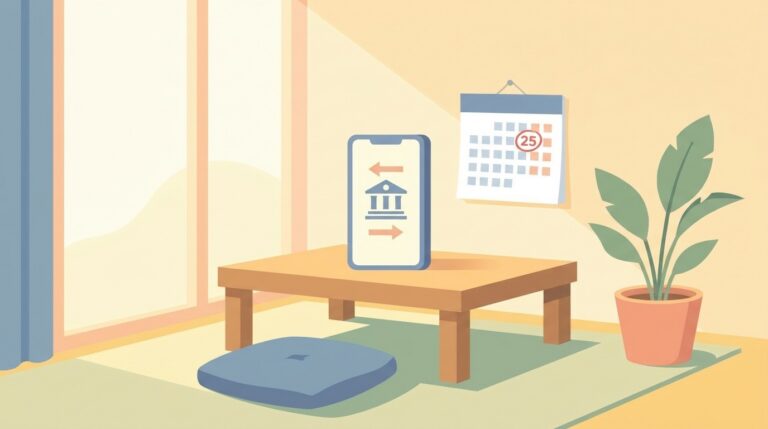
Phase 1: Why the 25th of Every Month Feels Like a K-Drama Thriller
안녕하세요! 매일한글 에디터입니다. (Annyeonghaseyo! Maeil Hangeul editeo-imnida.) — Hello! I’m your Daily Hangul editor. Have you ever felt that heart-stopping panic at 11:50 PM on the 25th while binge-watching a K-Drama, suddenly realizing you forgot to pay rent? Living in a cozy Korean oneroom sounds dreamy, until Korean mobile banking apps throw endless buttons and security certificates at you! Even worse, Korean banks often shut down transfers around midnight for maintenance. Based on real feedback from learners living in Seoul, I created this A2 survival guide so you can automate your rent, speak smoothly with your landlord, and finally sleep in peace every 25th!
Phase 2: Top 3 Core Expressions Deep Dive
1. 예약 이체를 설정했어요 (Yeyak iche-reul seoljeonghaesseoyo)
- Pronunciation: yeh-yahk ee-cheh-reul suhl-juhng-heh-ssuh-yo (Think of saying ‘yay-yak’, then ‘ee-chay’ like ‘each day’ without the ‘d’, and ending softly with ‘suh-yo’.)
- Meaning: Literally ‘I set a reservation transfer.’ Actual nuance: ‘I set up a scheduled bank transfer’ so the app sends money automatically on a chosen date.
- K-Culture Moment: In slice-of-life K-Dramas like Because This Is My First Life, young workers open their banking apps right after payday to schedule rent and bills before spending money on late-night chimaek (chicken and beer).
- Editor’s Insight: Koreans use
예약 이체 (yeyak iche)when you choose a specific future date or recurring day in your banking app, while자동 이체 (jadong iche)is often used for recurring utility or phone bills. Adding설정했어요 (seoljeonghaesseoyo)sounds super natural when talking about app settings!- Situation Spectrum: Casual ⚠️ (Drop
-요for friends:설정했어) / Semi-formal ✅ / Formal ✅ (Use설정했습니다in very formal settings)- 🤔 Think About It: In Korean, the word
예약 (yeyak)means ‘reservation’—the exact same word you use to book a K-BBQ table! Why do you think Korean treats future money transfers like making a reservation, compared to ‘scheduling’ in English?2. 매달 25일에 자동으로 나가요 (Maedal isip-oil-e jadong-euro nagayo)
- Pronunciation: meh-dahl ee-ship-oh-eel-eh jah-dong-eu-ro nah-gah-yo (‘meh-dahl’ rhymes with ‘pedal’, ‘ee-ship’ sounds like ‘e-ship’, and ‘nah-gah-yo’ flows smoothly.)
- Meaning: Literally ‘Every month on the 25th, it goes out automatically.’ Actual nuance: ‘My payment is automatically sent/deducted on the 25th of every month.’
- K-Culture Moment: On Korean solo-living YouTube vlogs (jachwi vlog), creators love showing their monthly budget and explaining which bills ‘go out’ (
나가요) automatically on rent day.- Editor’s Insight: Look at the verb
나가다 (nagada, to go out)! Just like cash leaving a wallet, Koreans describe expenses as ‘going out’ (돈이 나가요) and money arriving as ‘coming in’ (돈이 들어와요). It’s visual, easy to remember, and 100% natural!- Situation Spectrum: Casual ⚠️ (Drop
-요for close friends:나가) / Semi-formal ✅ / Formal ✅- 🤔 Think About It: In English, bills are ‘deducted’ or ‘charged’ to an account. In Korean, money simply ‘goes out’ (
나가요) as if it’s walking out the door! How does your native language describe automatic payments?3. 월세 확인해 주세요 (Wolse hwaginhae juseyo)
- Pronunciation: wuhl-seh hwah-geen-heh joo-seh-yo (‘wuhl-seh’ sounds like ‘wall-say’, and ‘hwah-geen’ starts with a gentle breathy H sound.)
- Meaning: Literally ‘Please check the monthly rent.’ Actual nuance: A polite, friendly message to your landlord saying, ‘I just sent the rent—please check that it arrived!’
- K-Culture Moment: In Korean reality shows like I Live Alone, stars living in rented studios send quick, polite KakaoTalk messages to their landlords on rent day before heading out for iced coffee.
- Editor’s Insight: Adding
-아/어 주세요 (a/eo juseyo)means ‘please do this for me’ and immediately makes your request warm. If you only say확인하세요 (hwaginhaseyo), it can sound a bit too bossy, like giving an order!- Situation Spectrum: Casual 🚫 (Too polite for close friends) / Semi-formal ✅ / Formal ✅
- 🤔 Think About It: In Korea, texting your landlord directly on KakaoTalk is super common, rather than using a faceless corporate portal. How do polite endings like
주세요help build trust in everyday housing?
Phase 3: Textbook Korean vs Real Korean
Situation 1: Telling a friend you automated your rent
- 📖 Textbook Korean: 매달 25일에 월세를 자동이체로 송금합니다. (Maedal isip-oil-e wolse-reul jadong-iche-ro songgeumhamnida.) — ‘I remit the monthly rent via automatic transfer on the 25th of every month.’
- 🗣️ Real Korean: 25일마다 월세 자동으로 나가게 해 놨어요! (Isip-oil-mada wolse jadong-euro nagage hae nwasseoyo!) — ‘I set it so my rent goes out automatically every 25th!’
- 💡 Why the difference?
송금합니다sounds like a bank commercial or a news anchor. In daily life, Koreans prefer돈이 나가다(money goes out) +-게 해 놓다(set something up in advance) because it sounds much warmer and more relaxed!
Situation 2: Talking about mobile currency exchange fees
- 📖 Textbook Korean: 모바일 뱅킹 애플리케이션으로 환전을 신청하시겠습니까? (Mobail baengking aepeullikeisyeon-euro hwanjeon-eul sincheonghasigetseumnikka?) — ‘Would you like to apply for currency exchange through the mobile banking application?’
- 🗣️ Real Korean: 앱으로 환전 신청하면 수수료 싸요! (Aep-euro hwanjeon sincheonghamyeon susuryo ssayo!) — ‘If you apply for currency exchange on the app, the fee is cheap!’
- 💡 Why the difference? Nobody says the full English loanword
애플리케이션in casual conversation—everyone just calls it앱 (aep). Also, Koreans always compare수수료 (susuryo, transaction/exchange fees)when choosing banking apps!
Phase 4: K-Culture Deep Dive & Non-Verbal Manners
4-1. Nunchi (눈치) & Gestures on Rent Day
When dealing with a Korean landlord (집주인, jipjuin), good nunchi (social awareness) goes a long way:
* KakaoTalk Etiquette: Send a polite daytime message between 9:00 AM and 6:00 PM. If it’s your first month using a scheduled transfer, attach a quick screenshot of your transfer confirmation (이체 확인증, iche hwaginjeung).
* In-Person Greetings: If you bump into your landlord in the hallway, offer a slight 15-to-30-degree bow (목례, mongnye) with friendly eye contact and a warm smile.
* Watch the Clock: Korean banks regularly run system maintenance (은행 점검 시간, eunhaeng jeomgeom sigan) around 11:30 PM to 12:30 AM. Avoid scheduling transfers at midnight so you don’t accidentally pay late!
4-2. Culture Code Analysis: Why the 25th Matters in K-Culture
If you watch K-Dramas like Misaeng or My Liberation Notes, you’ll hear characters excitedly talking about the 25th—the traditional Korean corporate payday (월급날, wolgeumnal). Because so many workers get paid on the 25th, landlords naturally set monthly rent (wolse 월세) for the 25th too! Also, Korea’s fintech boom (led by apps like Toss and KakaoBank) turned tedious bank visits into 3-tap mobile transfers—meaning young Koreans practically live inside their banking apps on the 25th.
Phase 5: Real-Life Roleplay Scenario
Setting: A sunny morning on the 25th in the lobby of your Seoul oneroom building. You’re holding an iced Americano and run into Landlord Kim (김 사장님, Kim sajangnim), a cheerful 50-something landlord watering the lobby plants.
- You: 안녕하세요, 사장님! 좋은 아침이에요. (Annyeonghaseyo, sajangnim! Joeun achim-ieyo.) — ‘Hello, Mr. Kim! Good morning.’ 🎭 (Bows slightly with a bright smile while holding your coffee)
- Landlord Kim: 어, 왔어요? 오늘 25일인데 잘 지냈어요? (Eo, wasseoyo? Oneul isip-oil-inde jal jinaesseoyo?) — ‘Oh, you’re here? Today is the 25th—have you been doing well?’ 🎭 (Smiles warmly and sets down the watering can)
- You: 네! 방금 은행 앱에서 월세 확인했어요. (Ne! Banggeum eunhaeng aep-eseo wolse hwaginhaesseoyo.) — ‘Yes! I just checked the monthly rent on my bank app.’ 🎭 (Taps your smartphone screen happily)
- Landlord Kim: 아, 벌써 보냈어요? 고마워요! (A, beolsseo bonaesseoyo? Gomawoyo!) — ‘Oh, you already sent it? Thank you!’ 🎭 (Nods pleasantly and reaches into his pocket for his phone)
- You: 집주인님께 매달 25일에 월세가 자동으로 나가게 예약 이체를 설정했어요! (Jipjuinnim-kke maedal isip-oil-e wolse-ga jadong-euro nagage yeyak iche-reul seoljeonghaesseoyo!) — ‘I set up a scheduled transfer so rent goes automatically to the landlord on the 25th of every month!’ 🎭 (Beams proudly like a true Seoul local)
- Landlord Kim: 오, 한국말도 잘하고 똑똑하네요! (O, hangungmal-do jalhago ttokttokhaneyo!) — ‘Oh, your Korean is great and you’re so smart!’ 🎭 (Laughs heartily and gives a big thumbs-up)
- You: 이제 늦지 않을 거예요. 혹시 확인해 주세요! (Ije neutji aneul geoyeyo. Hoksi hwaginhae juseyo!) — ‘Now I won’t be late. Please check it just in case!’ 🎭 (Tilts head politely with a warm expression)
- Landlord Kim: 네, 방금 입금됐어요. 좋은 하루 보내세요! (Ne, banggeum ipgeumdwaesseoyo. Joeun haru bonaeseyo!) — ‘Yes, it just came through. Have a great day!’ 🎭 (Waves cheerfully while looking at his phone)
🔀 Interactive Branching Point
Plot Twist! What if your scheduled transfer failed because your account was 10,000 won short, and Landlord Kim gently asks if you sent it yet? Choose your response:
* Option A: 죄송해요! 지금 바로 잔액 확인하고 다시 이체할게요. (Joesonghaeyo! Jigeum baro janaek hwaginhago dasi ichehalgeyo.) — ‘I’m sorry! I’ll check my balance right now and transfer it again.’
* Option B: 몰라요. 은행 앱이 이상해요. (Mollayo. Eunhaeng aep-i isanghaeyo.) — ‘I don’t know. The bank app is weird.’
* Option C: 내일 줄게요. 바빠요. (Naeil julgeyo. Bappayo.) — ‘I’ll give it tomorrow. I’m busy.’
Feedback:
* Option A (Best ✅): Polite, responsible, and uses clear A2 action verbs (확인하고, 다시 이체할게요). Your landlord will immediately trust you!
* Option B (Risk ⚠️): Blaming the app without offering a fix sounds a bit defensive. Always pair an explanation with what you’ll do next!
* Option C (Bad 🚫): Way too blunt! Saying ‘I’m busy’ on rent day without an apology breaks Korean nunchi and creates unnecessary tension.
Phase 6: 10-Second Emotion Shadowing Drill
Read these lines out loud! Pause at every / and match the emotion tag:
[😌 Polite and clear]매달 25일에 / 자동으로 / 나가요. (Maedal isip-oil-e / jadong-euro / nagayo.) — ‘It goes out / automatically / on the 25th of every month.’[😊 Relieved and proud]예약 이체를 / 설정했어요! (Yeyak iche-reul / seoljeonghaesseoyo!) — ‘I set up / a scheduled transfer!’[🥺 Warm and polite]사장님, / 월세 확인해 / 주세요! (Sajangnim, / wolse hwaginhae / juseyo!) — ‘Landlord, / please check / the monthly rent!’
Phase 7: K-Culture Mini Dictionary
- 월세 (wolse) | Monthly rent | Used everywhere in Korean housing, from real estate (budongsan) windows to chatting about living costs with friends.
- 계좌이체 (gyejwa-iche) | Bank account transfer | The standard menu word in every Korean banking app—and even at traditional markets or small cafes if you pay by transfer instead of card!
- 예약 이체 (yeyak iche) | Scheduled transfer | Your lifesaver button inside mobile banking apps for future rent, shared group dinner bills, or birthday gifts.
- 환전 (hwanjeon) | Currency exchange | Crucial when using banking apps to exchange USD or EUR into Korean Won at better rates before trips or big deposits.
Phase 8: Survival Kit for Travelers & New Residents
Top 3 Banking & Exchange Survival Phrases
- 수수료가 있어요? (Susuryo-ga isseoyo?) — ‘Is there a fee?’ (Pro Tip: Always ask this before transferring between different banks or exchanging cash!)
- 환전 신청하고 싶어요. (Hwanjeon sincheonghago sipeoyo.) — ‘I want to apply for currency exchange.’ (Pro Tip: Handy at a bank counter if your app doesn’t support foreign passports yet.)
- 이체 확인증 보내 드릴까요? (Iche hwaginjeung bonae deurilkkayo?) — ‘Shall I send you the transfer receipt?’ (Pro Tip: Landlords and Korean second-hand app sellers love when you offer this!)
Editor’s Travel Note
- Must-Have Apps: Once you have your Korean Alien Registration Card (ARC) and Korean phone number, Download KakaoBank Mobile Banking App or Download Toss Financial Super App for super clean interfaces and easy scheduled transfers. While you’re still learning banking menus, Download Naver Papago Korean Translator so you can screenshot and translate any tricky pop-ups in seconds!
- Local Payment Tip: Don’t schedule automatic transfers between 11:50 PM and 12:30 AM due to Korean bank maintenance. Also, remember that subway cards like T-money or the Seoul Climate Card usually need separate top-ups at convenience stores or station kiosks unless linked to a Korean ID-verified card.
Phase 9: One Step Deeper
Korea is famous for its ultra-fast ppalli-ppalli (빨리빨리, hurry-hurry) digital banking, where money flies across accounts in two seconds flat. Yet even in this hyper-digital world, human warmth—known as jeong (정)—still matters deeply. Setting up a scheduled transfer shows your landlord that you are reliable, while sending a polite KakaoTalk message with -요 endings keeps the relationship personal and respectful. In Korea, paying rent on time isn’t just a financial transaction; it’s a quiet way of maintaining harmony with the community around you.
💬 Your Turn: Have you ever tried using a Korean banking app or paying rent in another country? Drop a comment below and tell us the funniest or most confusing Korean banking word you’ve seen!
Phase 10: FAQ & Myth-Busting
Q: Can I use a Korean mobile banking app as a short-term tourist?
A: Full Korean mobile banking apps usually require an Alien Registration Card (ARC) and a Korean phone number registered under your name. If you are visiting short-term, prepaid travel cards like WOWPASS or NAMANE are much easier for payments and currency exchange.
Q: What is the difference between 예약 이체 (yeyak iche) and 자동 이체 (jadong iche)?
A: 예약 이체 (scheduled transfer) lets you choose a specific future date or recurring day directly inside your banking app for transfers like rent. 자동 이체 (automatic debit/transfer) is usually set up through a service provider for bills like mobile phone plans, electricity, or gym memberships.
Q: What happens if the 25th falls on a weekend or Korean holiday?
A: Most modern Korean banking apps process 예약 이체 normally even on weekends and public holidays! However, some company-linked 자동 이체 bills wait until the next business day, so always double-check your app settings.
🚨 Common Mistakes Alert
- Mistake: Mixing up
월세 (wolse)and전세 (jeonse). -> Correct Action: Remember월 (wol)means ‘month’! Always use월세when talking about monthly rent. - Mistake: Setting your scheduled transfer for 12:00 AM midnight. -> Correct Action: Set your scheduled transfer for 9:00 AM or 10:00 AM on the 25th to avoid midnight bank maintenance (
점검 시간). - Mistake: Dropping
-요when texting your landlord (월세 보냈어). -> Correct Action: Always keep polite-요endings (월세 보냈어요!) to stay respectful.
Phase 11: Action Mission & Engagement
- 🥉 Bronze Mission: Read the 3 core expressions out loud three times using the Phase 6 shadowing rhythm.
- 🥈 Silver Mission: Screenshot your favorite phrase from this guide and share it on Instagram Stories or with your Korean study buddy, tagging
@dailyhangul! - 🥇 Gold Mission: Open your notes app (or KakaoTalk chat with a friend) and type
매달 25일에 자동으로 나가게 설정했어요!completely from memory. - 🎮 K-Culture Mission: Watch a Korean jachwi vlog (solo-living vlog) on YouTube or a slice-of-life K-Drama and see if you can catch the words
월세 (wolse),이체 (iche), or월급날 (wolgeumnal)in the subtitles!
Phase 12: Interactive Quiz Challenge
Test your new Korean banking skills! Click the toggles below to reveal the answers.
1. Situation Judgment: Your landlord texts you on the 25th asking if you sent the rent. You already set up a scheduled transfer and want to tell them politely to check. What should you say?
* A) 월세 확인해! (Wolse hwaginhae!)
* B) 월세 확인해 주세요! (Wolse hwaginhae juseyo!)
* C) 예약 이체 몰라요. (Yeyak iche mollayo.)
Check Answer & Explanation
Correct Answer: B) 월세 확인해 주세요!
Using -해 주세요 makes your request polite and friendly. Option A drops 주세요 and sounds way too rude/bossy for a landlord, while Option C makes it sound like you don’t know what happened to the rent!
2. Fill in the Blank: Complete the sentence: 집주인에게 매달 25일에 월세가 자동으로 ( ___ ) 예약 이체를 설정했어요. (Hint: ‘so that it goes out’)
Check Answer & Explanation
Correct Answer: 나가게 (nagage)
In Korean, money ‘goes out’ (나가다) of an account, and adding -게 connects it to mean ‘so that it goes out automatically.’
3. True or False Culture Quiz: In Korea, scheduling your automatic rent transfer for 12:00 AM midnight is the smartest way to pay on time. (True / False)
Check Answer & Explanation
Correct Answer: False!
Many Korean banks perform daily system maintenance around 11:30 PM to 12:30 AM. Scheduling your transfer for 9:00 AM or 10:00 AM is much safer!
🎬 Watch Our Daily Videos! (Daily Hangul Official Instagram)
Review the expressions you learned in this article with our fun daily short videos! Check out native pronunciation and real-life nuances in action.
- Instagram @dailyhangul_en







