

The Art of the Late Bloomer: Why ‘Daegimanseong’ is the Ultimate Korean Consolation
Phase 1: Empathy (Opening Story)
안녕하세요! 매일한글 에디터입니다. (Annyeonghaseyo! It’s your Daily Hangul editor.)
Picture this: You are sitting at an open terrace café along the bustling alleys of Seongsu-dong or Gangnam’s Teheran-ro. Around you, stylish twenty-somethings are excitedly celebrating seed funding, showing off viral short-form reels, or discussing their promotions at top-tier conglomerates. Meanwhile, you might be grinding through complex research, rewriting a manuscript for the fifth time, or painstakingly mastering advanced Korean grammar while feeling like your progress has flatlined. Have you ever felt that sinking sensation in your stomach—that everyone else is riding a bullet train while you are stuck laying gravel by hand?
In South Korea’s hyper-accelerated society, often nicknamed the ‘Ppalli-Ppalli’ (빨리빨리, hurry-hurry) republic, the pressure to produce instant, dazzling results can be suffocating. But beneath this neon-lit urgency lies an ancient, deeply respected counter-philosophy. One of our C1-level learners, an architect working in Seoul, recently confessed: “Whenever my projects stalled, my Korean colleagues cheered me with ‘Fighting!’, but it only made me feel more rushed.” Everything changed when her team lead poured a cup of warm tea and said: “대기만성이라고 하잖아요. 큰 그릇일수록 빚는 데 시간이 오래 걸립니다.” (Daegimanseorago hajanayo. Keun geureusilsurok binneun de sigani orae geollimnida. / ‘They say great vessels take long to form. The bigger the bowl, the longer it takes to fire.’)
Today, we are taking your Korean beyond basic conversational banter and diving straight into the soul of Korean scholarship and growth: the profound Chengyu (사자성어, Sajaseong-eo) 대기만성 (大器晩成, Daegimanseong). Mastering this concept will transform how you offer comfort, carry executive presence, and comprehend Korean workplace resilience at a native C1 level.
Phase 2: Core Expressions Deep Dive
1. 대기만성 (大器晩成)
- Pronunciation: [Dae-gi-man-seong] (Think: Dae as in ‘Day’, gi as in ‘gear’, man as in ‘manners’, seong as in ‘song’)
- Meaning: Literally: “A great vessel takes a long evening (time) to complete.” / Real Nuance: “True greatness matures slowly; late bloomers who build deep roots achieve lasting eminence.”
- K-Culture Moment: Commonly heard in mentorship dramas (like Misaeng or Navillera) when an experienced master comforts a struggling apprentice who feels outshone by naturally gifted prodigies.
- Editor’s Insight: Do not use this casually for someone who simply woke up late or missed a submission deadline! It specifically honors the grueling, invisible groundwork that precedes monumental breakthrough. It implies high respect for the subject’s latent potential.
- Situation Spectrum: Casual (⚠️ – can sound overly grand among close teens unless used poetically) | Semi-formal (✅) | Formal / Business (✅)
- 🤔 Think About It: In modern Western hustle culture, being early to market is everything. Why does Korean culture preserve such reverence for the slow, agonizing process of an artisan?
2. 내실을 다지다 (Naesireul dajida)
- Pronunciation: [Nae-si-reul da-ji-da] (Nae like ‘net’, sil like ‘silk’, daji like ‘dodge-it’)
- Meaning: Literally: “To pack down internal substance.” / Real Nuance: “To strengthen one’s foundational competence away from the public spotlight; to build quiet inner depth.”
- K-Culture Moment: Often delivered by veteran agency CEOs in K-Pop documentaries when trainees spend years perfecting their vocal core before debut instead of seeking instant social media buzz.
- Editor’s Insight: ‘Dajida’ is the exact verb used when pounding down soil to make it solid before erecting a skyscraper. It indicates that stagnation is an illusion—you are actually anchoring the foundation.
- Situation Spectrum: Casual (⚠️) | Semi-formal (✅) | Formal (✅)
- 🤔 Think About It: How does your mother tongue describe the deliberate decision to focus on self-improvement rather than superficial vanity?
3. 일희일비하지 않다 (Ilhui-ilbihaji anta)
- Pronunciation: [Il-hui-il-bi-ha-ji an-ta] (Il like ‘ill’, hui like ‘wheat’ without ‘t’, bi like ‘bee’)
- Meaning: Literally: “Not rejoicing with one day of joy and weeping with one day of sorrow.” / Real Nuance: “Maintaining emotional composure without being swayed by short-term wins or momentary setbacks.”
- K-Culture Moment: A classic phrase used in corporate boardroom dramas like Reborn Rich when seasoned chairmen evaluate whether a successor has the mental endurance to withstand market volatility.
- Editor’s Insight: Pair this with Daegimanseong! Saying “대기만성을 믿고 일희일비하지 마세요” (Believe in slow mastery and don’t let daily swings rattle you) is the hallmark of sophisticated, C1-level emotional intelligence in Korean.
- Situation Spectrum: Casual (⚠️) | Semi-formal (✅) | Formal (✅)
- 🤔 Think About It: Why does Korean professional maturity place such a premium on stoic emotional steadiness?
Phase 3: Textbook Korean vs. Real Native Korean
Situation 1: Cheering up a colleague frustrated with slow career progression
- 📖 Textbook Korean:
포기하지 마세요. 열심히 하면 언젠가는 꼭 성공할 거예요. (Pogihaji maseyo. Yeolsimhi hamyeon eonjenganeun kkok seonggonghal geoyeyo. / Please do not give up. If you work hard, you will definitely succeed someday.) - 🗣️ Real Native Korean (C1):
너무 조급해하지 마요. 원래 대기만성형 인간이 나중에 판을 흔드는 법이에요. (Neomu jogeuphaehaji mayo. Wonrae daegimanseonghyeong ingani najunge paneul heundeuneun beobieyo. / Don’t be so anxious. Mark my words, it’s always the late bloomers who end up reshaping the entire board.) - 💡 Why the difference?: The textbook phrase sounds generic, like a motivational poster. The native C1 version acknowledges their unique rhythm (대기만성형 인간 – late-bloomer archetype) and validates their struggle with sophisticated cultural imagery (판을 흔들다 – shake the game board).
Situation 2: Praising someone working quietly without bragging on social media
- 📖 Textbook Korean:
그 사람은 소셜 미디어는 안 하지만 항상 열심히 일합니다. (Geu sarameun sosyeol midieoneun an hajiman hangsang yeolsimhi ilhamnida. / That person doesn’t do social media, but always works hard.) - 🗣️ Real Native Korean (C1):
남들 요란 떨 때 묵묵히 내실 다지는 모습이 정말 든든해요. (Namdeul yoran tteol ttae mungmukhi naesil dajineun moseubi jeongmal deundeunhaeyo. / While others make a noisy fuss, the way they quietly fortify their craft gives me such confidence.) - 💡 Why the difference?: Advanced Korean conversation relies heavily on expressive idiomatic contrast: juxtaposing noisy superficiality (요란 떨다) against quiet, anchored depth (묵묵히 내실을 다지다).
Phase 4: K-Culture Deep Dive & Non-Verbal Manners
4-1. Nunchi (눈치) & Body Language
When invoking 대기만성 (Daegimanseong), your physical demeanor must match the gravitas of the idiom. Offering this phrase with manic high energy or a fist-pumping “Fighting!” creates acute cognitive dissonance.
* The Eye Line: Lower your gaze slightly as you reflect on their hardship, then meet their eyes with steady, warm conviction. Avoid unblinking, aggressive eye contact.
* Posture: Lean forward slightly with both hands resting calmly on the table or cupping your tea. A slow, grounded vertical nod communicates: “I see how much effort you are expending beneath the surface, even if the world hasn’t noticed yet.”
* Vocal Pace: Drop your vocal pitch by a half-octave and deliberately slow down your cadence. Wisdom in Korean culture is conveyed through weighted pauses.
4-2. Cultural Code: The Joseon White Porcelain (백자) and Modern ‘Johnber’ (존버)
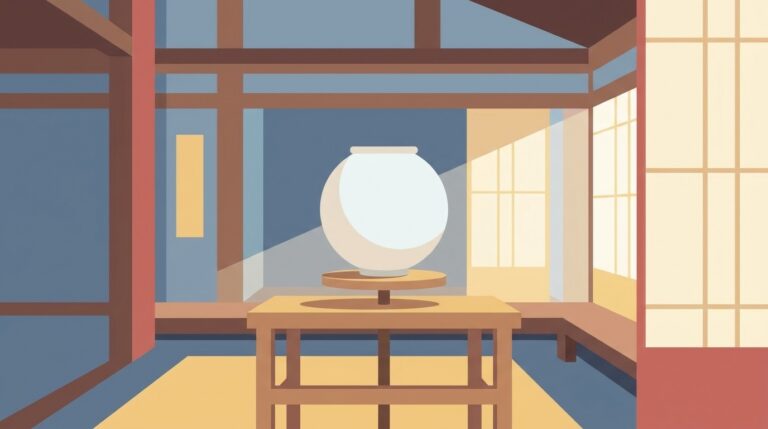
Why does a vessel (器, Gi) represent human character in Korea? Consider the iconic Joseon Moon Jar (달항아리, Dalhang-ari). It is not molded rapidly in a mechanical press; it is thrown in two separate rounded halves, slowly air-dried, fused together with patient touch, and subjected to days of blistering kiln fire. Its subtle asymmetry and luminous glaze represent beauty earned through enduring the flame.
Today, this historical reverence connects directly to modern youth slang: 존버 (Jonbeo)—the art of stubborn, relentless endurance through bear markets, grueling job searches, and creative droughts. While Jonbeo is coarse, everyday street slang for holding out, 대기만성 is its dignified, philosophical elder brother. Knowing when to transition between the two marks your true cultural fluency.
Phase 5: Real-Life Roleplay Scenario
Setting: A tranquil, dimly lit Hanok tea lounge in Bukchon. Rain is softly pattering against the wooden eaves.
Characters:
* Min-jun (민준): A 34-year-old game developer who spent 3 years crafting an indie game engine while younger rivals found overnight fame with trendy mobile apps.
* You: Min-jun’s respected mentor and colleague.
— Dialogue (8 Turns) —
- Min-jun: 요즘 후배들은 몇 달 만에 숏폼으로 대박을 터뜨리는데… 제 개발 속도는 너무 더딘 것 같아요. (Yojeum hubaedeureun myeot dal mane syot-pomeuro daebageul teotteurineunde… je gaebal sokdoneun neomu deodin geot gat-ayo.)
🎭 [He stares down at his teacup, nervously turning it with trembling fingers.]
(Younger peers hit the jackpot in months with short-form content… meanwhile my development pace feels painfully slow.) -
You: 화면 밖의 화려함만 보면 누구나 조급해지기 마련이죠. (Hwamyeon bakkui hwaryeohamman bomyeon nuguna jogeuphaejigi maryeon-ijyo.)
🎭 [Offering a soft, understanding smile, taking a measured sip of warm tea.]
(When you only look at the sparkle on the surface, anyone is bound to get anxious.) -
Min-jun: 솔직히 제가 헛발질을 하고 있는 건 아닌지, 매일 밤 자괴감이 듭니다. (Soljikhi jega heotbaljireul hago inneun geon aninji, maeil bam jagwaegami deumnida.)
🎭 [Sighs deeply, shoulders slouching under the weight of self-doubt.]
(To be honest, I wonder every night if I’ve just been taking useless missteps, drowning in self-doubt.) -
You: 민준 씨, 모래 위에 쌓은 성은 파도 한 번에 쓸려가요. 지금 하시는 건 암반을 깎아 기둥을 세우는 일입니다. (Min-jun ssi, morae wie ssaheun seongeun pado han beone sseullyeogayo. Jigeum hasineun geon ambaneul kkakka gFallbackgidungeul se-uneun irimnida.)
🎭 [Speaking with calm, deliberate weight, keeping steady eye contact.]
(Min-jun, a castle built on sand gets wiped away by a single wave. What you are doing right now is carving bedrock to plant a pillar.) -
Min-jun: 제 고집이 그저 미련한 시간 낭비는 아니라는 말씀이신가요? (Je gojibi geujeo miryeonhan sigan nangbineun aniraneun malsseum-isingayo?)
🎭 [Looks up with a flicker of vulnerability and searching eyes.]
(Are you saying my stubbornness isn’t just foolishly wasting time?) -
You: 당연하죠. 대기만성이라는 말이 괜히 천 년 넘게 전해졌겠어요? (Dangyeonhajyo. Daegimanseong-iraneun mari gwaenhi cheon nyeon neomge jeonhaejyeotgesseoyo?)
🎭 [Nodding reassuringly, resting both palms flat on the table.]
(Of course. Do you think the wisdom of ‘Daegimanseong’ would have endured for over a millennium for no reason?) -
Min-jun: …큰 그릇을 빚는 시간이라 생각하니, 숨통이 좀 트이네요. (Keun geureuseul binneun siganira saenggakhani, sumtongi jom teu-ineyo.)
🎭 [His shoulders drop visibly, letting out a long, grounded breath.]
(Thinking of it as the time required to mold a great vessel… I finally feel like I can breathe.) -
You: 그럼요. 남들 시선에 일희일비하지 말고 묵묵히 내실만 다져가요. 제가 끝까지 응원할게요. (Geureomyo. Namdeul sisone ilhui-ilbihaji malgo mungmukhi naesilman dajyeogayo. Jega kkeutkkaji eungwonhalgeyo.)
🎭 [Pouring more hot tea into his cup with both hands held with etiquette.]
(Precisely. Don’t let others’ gaze sway you from day to day; just quietly build your core substance. I’ll back you up all the way.)
🔀 Interactive Decision Point
How would you conclude your encouragement to Min-jun?
- Option A: “민준 씨의 깊이는 결과가 나왔을 때 온 세상이 알게 될 거예요. 지금은 담담하게 씨앗에 물을 줍시다.”
(Min-jun, the depth of your craft will be revealed to the world when the result appears. For now, let us quietly water the seeds.) - Option B: “맞아요! 그러니까 오늘 밤새서 코딩 한 줄이라도 더 짜고 이겨냅시다! 파이팅!”
(Right! So let’s pull an all-nighter, write one more line of code, and win! Fighting!) - Option C: “다른 사람들 신경 쓰지 마시고, 그냥 하던 대로 내버려 두세요. 알 바 아니잖아요.”
(Don’t care about other people, just leave it as it is. It’s none of our business anyway.)
Feedback Guide:
* Option A [BEST 🎉]: Perfect C1 elegance. It deepens the organic metaphor of patience, respects his agency, and aligns with Confucian perseverance without toxic positivity.
* Option B [BAD 🚫]: Relapses into toxic hustle culture! After comforting a soul about slow mastery, shouting at them to pull an all-nighter destroys the psychological safety you just created.
* Option C [RISK ⚠️]: Uses cynical, aloof phrasing (‘알 바 아니다’). It sounds dismissive and emotionally cold, which could leave someone in a slump feeling even more alienated.
Phase 6: 10-Second Emotional Shadowing Drill
Practice reading these out loud. Pay strict attention to breath pauses (/) and emotional tone indicators.
Line 1
- Emotion:
[😌 차분하고 확신에 차서 / Calm and filled with quiet conviction] - Drill: 너무 조급해하지 마요. / 큰 그릇은 / 빚어지는 데 원래 시간이 걸립니다.
(Neomu jogeuphaehaji mayo. / Keun geureuseun / bijeojineun de wonrae sigani geollimnida.)
(Don’t rush so much. / Great vessels / naturally take time to be shaped.)
Line 2
- Emotion:
[🤝 묵직하고 따스한 격려 / Grounded, heartfelt encouragement] - Drill: 남들 시선에 / 일희일비하지 말고 / 우리 묵묵히 / 내실을 다져봅시다.
(Namdeul sisone / ilhui-ilbihaji malgo / uri mungmukhi / naesireul dajyeobopsida.)
(Without being swayed by others’ eyes / from joy to grief, / let us quietly / pack down our true substance.)
Phase 7: K-Culture Mini Dictionary
- 내공 (Naegong)
Literal: Internal cultivation / Nuance: Deeply rooted, invisible mastery accumulated through decades of discipline. Frequently applied to veteran actors, chefs, and scholars whose quiet authority speaks for itself. - 존버 (Jonbeo)
Literal: Enduring tenaciously (slang) / Nuance: Modern street equivalent of survival perseverance. Highly colloquial; reserve for peer-level banter, never use in academic theses or client boardroom pitches. - 장인 정신 (Jangin jeongsin)
Literal: Artisan spirit / Nuance: The uncompromising commitment to quality over speed. The philosophical twin of Daegimanseong. - 일취월장 (Ilchwiwoljang / 日就月將)
Literal: Advancing by days and marching forward by months / Nuance: Rapid, visible leaps in progress. Often contrasted with Daegimanseong (steady, slow accumulation versus explosive, sudden growth).
Phase 8: Traveler’s Survival Kit
Top 3 Survival Expressions
- “시간이 걸려도 좋으니 정성껏 부탁드립니다.”
(Sigani geollyeodo joeuni jeongseongkkeot butakdeurimnida.)
Meaning: Take all the time you need, please just make it with utmost care.
Pro Tip: Say this to traditional tea masters, hanbok tailors, or custom craft workshops. It displays immense respect for their process. - “깊은 맛이 우러나네요.”
(Gipeun masi ureonaneyo.)
Meaning: The deep flavor has truly seeped out over long simmering.
Pro Tip: Essential compliment at heritage Gomtang (beef bone soup) or aged Kimchi dining spots. - “조급하게 생각하지 않으셔도 돼요.”
(Jogeuphage saenggakhaji aneusyeodo dwaeyo.)
Meaning: You don’t need to feel rushed at all.
Pro Tip: The kindest phrase you can offer elderly service staff, taxi drivers in narrow alleys, or artisan creators.
Editor’s Travel Note: Escaping Seoul’s Fast Lane
To truly grasp Daegimanseong, take a day trip outside Seoul’s neon pulse. Head to the Icheon Ceramic Village (이천 도예마을) or sit quietly in an antique tea room in Insadong (like Gyeongin Museum of Fine Art’s Traditional Tea House). Before you embark, navigate like a true local: install the Naver Map application instead of international map apps, as it provides real-time walking shortcuts through traditional alleys and bus arrival precision down to the second.
Phase 9: “One Step Deeper” (Critical Reflection)
In Western enlightenment traditions, self-actualization is often depicted as a heroic, linear ascent—overcoming obstacles and planting one’s flag atop the summit in triumphant glory. Korean Confucian culture, however, perceives personal cultivation (수신, 修身) as cyclical sedimentation. Like layers of clay deposited along the Han River basin over millennia, wisdom is valued not for how fast it sparkles in the sun, but for how much pressure it can withstand without crumbling. When a Korean tells you “대기만성입니다,” they are not merely excusing your delay; they are offering you the highest compliment possible: betting that your eventual ceiling is far higher than those who blossomed prematurely.
💬 Your Turn: Have you ever felt self-conscious about learning Korean slowly compared to peers memorizing K-pop lyrics overnight? How does the philosophy of Daegimanseong change your perspective on your own linguistic journey? Share your thoughts below in Korean or English!
Phase 10: FAQ & Avoiding Misconceptions
Q: Can I use ‘대기만성’ to comfort a friend who failed an exam today?
A: Be careful! If the failure just happened minutes ago, invoking Daegimanseong can sound like high-handed moralizing from an ivory tower. Immediate shock calls for raw emotional empathy (e.g., “정말 속상하겠다… 오늘 맛있는 거 먹자.”). Introduce Daegimanseong a few days later when they are ready to reflect on their long-term path.
Q: Is it okay to describe myself as ‘대기만성’ in a job interview?
A: Yes, but with humility. Do not say “저는 대기만성입니다” (I am a great vessel). Instead, say: “저는 당장의 화려한 성과보다 묵묵히 내실을 다져 나중에 큰 기여를 하는 ‘대기만성형 인재’입니다.” (I am an asset of the late-blooming type who builds deep foundations to create profound organizational value).
Q: How does ‘대기만성’ differ from simply being lazy or procrastinating?
A: Crucial distinction: Daegimanseong requires 내실 (inner substance). A student who sleeps all day and plays video games is not Daegimanseong; an independent researcher working 14 hours a day in silence without publishing for three years is.
🚨 Common Mistakes Warning Board
- ❌ Mistake 1: Saying “너는 대기만성이야” to a superior.
Correction: Idioms referencing personal capability shouldn’t be cast downward from a junior. Use it only for peers, juniors, or humbly of your own mindset. - ❌ Mistake 2: Confusing it with 일취월장 (Ilchwiwoljang).
Correction: Don’t say “대기만성으로 하루 만에 한국어가 늘었어요!” (That is logically contradictory!). For fast, daily progress, use 일취월장. - ❌ Mistake 3: Over-romanizing pronunciation like “Dae-Gi-Mahn-Sung” with sharp English breaks.
Correction: Connect the liaison smoothly: [대기만성].
Phase 11: Action Mission & Engagement
- 🥉 Bronze Mission (Solo Practice): Record yourself reciting Shadowing Drill Line 1 three times. Focus on the slow, low-pitch, comforting delivery.
- 🥈 Silver Mission (Social Connection): Write a one-line comment on a friend’s, study buddy’s, or creator’s post who is working hard on an unseen project: “대기만성을 믿어요! 묵묵히 내실을 다지는 모습이 멋집니다.”
- 🥇 Gold Mission (Real-Life Application): In your next Korean 1:1 tutoring session or conversation exchange, explain one long-term goal of yours using the sentence frame: “당장 성과가 나지 않아도, 대기만성이라 생각하고 내실을 다지고 있어요.”
- 🎮 K-Culture Mission: Watch an episode of a craft or career K-Drama (such as My Mister, Misaeng, or Chef’s Table: Jeong Kwan). Listen carefully for how veteran masters praise endurance over speed.
Phase 12: Interactive Quiz Challenge
Test your mastery of Korean idioms and nuances below!
Question 1: Situational Judgment
Your junior colleague at a Seoul architectural firm missed out on a design competition prize because their concept was too complex for a fast commercial panel. Which response demonstrates natural C1 cultural empathy?
* A) “거 봐요, 유행을 따랐어야죠! 다음엔 쇼츠 스타일로 가요!”
* B) “너무 실망하지 마요. 큰 그릇은 빚는 데 오랜 시간이 걸리는 법이니, 대기만성이라 생각하고 우리 내실을 더 다져봐요.”
* C) “축하해요! 일취월장하고 계시네요!”
Question 2: Fill-in-the-Blank
Fill in the missing idiom that matches the philosophy of not being shaken by daily stock price fluctuations or exam mocks:
“사소한 점수 변동에 ( ____________ ) 하지 말고, 길게 보고 기본기를 쌓으세요.”
Question 3: True / False Cultural Insight
True or False: In traditional Korean aesthetics, an asymmetrical moon jar that took months to bake is viewed as flawed compared to a perfectly identical ceramic bowl produced in minutes by a factory press.
👉 Click to reveal answers & explanations!
Answers
- Answer: B
Explanation: Option B uses 대기만성 alongside 내실을 다지다 perfectly to honor the deep artistic integrity of their design. Option A forces hasty trend-following, and Option C mistakenly uses 일취월장 (which denotes rapid, visible leaps). - Answer: 일희일비 (Ilhui-ilbi)
Explanation: The complete idiom is 일희일비하지 않다 (not swinging between joy and despair over minor, temporary changes). - Answer: False
Explanation: Traditional Korean aesthetics (such as Dobaegi and Joseon porcelain) value the organic, resilient marks of time and kiln fire far above mechanical, instantaneous perfection.
🎬 Watch Our Daily Videos! (Daily Hangul Official Instagram)
Review the expressions you learned in this article with our fun daily short videos! Check out native pronunciation and real-life nuances in action.
- Instagram @dailyhangul_en







