

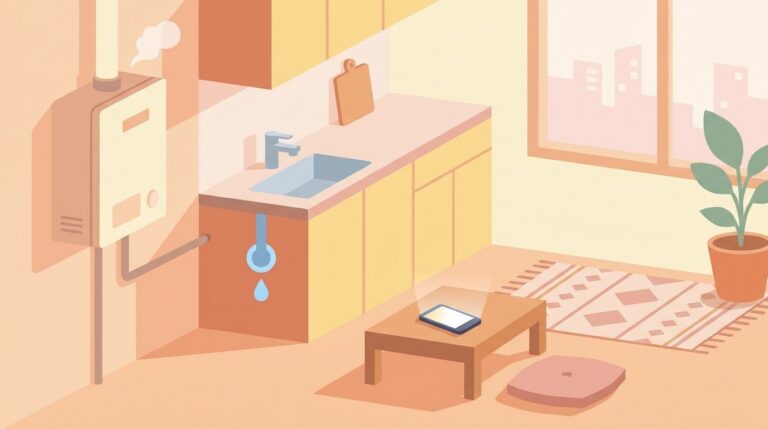
Phase 1: Why You Shouldn’t Pay for That Broken Boiler
안녕하세요! 매일한글 에디터입니다. (Annyeonghaseyo! Maeil Hangeul editeoimnida. – Hello! I am the Daily Hangul editor.) Imagine waking up in your Seoul studio like a scene from My Liberation Notes, only to get an ice-cold shower—or worse, water dripping from your ceiling! Your first panic? “Will this cost me 300,000 won?!” Many foreign learners pay out of pocket just to avoid awkward calls with their landlord. Take a breath! Built on real feedback from expat students surviving Korean winters, this B1 guide teaches you how to politely tell your landlord to cover aging boiler and pipe repairs—because by rule, that bill is on them!
Phase 2: Top 3 Core Expressions Deep Dive
1. 노후화로 인한 고장이라 수리비 부담 부탁드립니다. (Nohuhwaro inhan gojangira suribi budam butakdeurimnida. – Since this breakdown is due to aging, please cover the repair cost.)
- Pronunciation: [Nohuhwaro inhan gojangira suribi budam butakdeurimnida] (“no-hoo-hwa-ro” sounds like “no-who-wah-row”, and “boo-dam” sounds like “boo” + “dom” in kingdom)
- Meaning: Literal: “Because it is a breakdown caused by aging, I request the burdening of repair expenses.” / Real Nuance: A calm, objective, and legally grounded way to remind your landlord that covering wear-and-tear repairs is their responsibility.
- K-Culture Moment: Just like in Because This Is My First Life, where tenants must constantly protect their rights in Seoul apartments, you would text or say this when an old wall boiler suddenly dies.
- Editor’s Insight: Using the noun 노후화 (nohuhwa – aging/deterioration) removes personal blame. At a B1 level, you can also swap it for the softer 오래돼서 (oraedwaeseo – because it is old), though 노후화 carries much stronger weight in housing talks!
- Situation Spectrum: Casual 🚫 / Semi-formal ⚠️ / Formal ✅
- 🤔 Think About It: In English, you might directly ask, “Will you pay for this?” Why do you think Korean speakers prefer saying “please take on the burden (부담 부탁드립니다)” instead?
2. 보일러가 갑자기 작동이 안 돼서요. (Boilleoga gapjagi jakdongi an dwaeseoyo. – The boiler suddenly stopped working, so…)
- Pronunciation: [Boilleoga gapjagi jakdongi an dwaeseoyo] (“bo-il-leo” is like “boiler” spoken softly without a hard R, and “gap-ja-gi” sounds like “gob-ja-gee”)
- Meaning: Literal: “Because the boiler suddenly does not operate…” / Real Nuance: Ending the sentence with -아서요/어서요 (-aseoyo/eoseoyo) leaves an open pause, softening the bad news and politely inviting your landlord to step in with a solution.
- K-Culture Moment: Picture a classic winter K-Drama crisis—a character shivering in a long padded coat, calling the landlord on speakerphone while tapping the dead boiler screen.
- Editor’s Insight: That trailing -요 (-yo) ending is a B1 superpower! Instead of sounding demanding, it communicates mild distress and urgency while keeping the relationship warm.
- Situation Spectrum: Casual 🚫 / Semi-formal ✅ / Formal ✅
- 🤔 Think About It: How do you soften urgent bad news in your native language so it doesn’t sound like an accusation?
3. 제가 실수한 게 아니라 배관 자체가 오래된 것 같아요. (Jega silsuhan ge anira baegwan jachega oraedoen geot gatayo. – It’s not that I made a mistake; it seems the pipe itself is old.)
- Pronunciation: [Jega silsuhan ge anira baegwan jachega oraedoen geot gatayo] (“bae-gwan” sounds like “beh-gwon”, and “ja-che” sounds like “jah-cheh”)
- Meaning: Literal: “It is not that I made a mistake, it seems the pipe itself has become old.” / Real Nuance: Defensive yet diplomatic! You are protecting your security deposit (보증금 / bojeunggeum) without starting a fight.
- K-Culture Moment: Think of intense yet polite negotiation scenes in shows like Misaeng, where stating facts softly protects your position.
- Editor’s Insight: Combining ~가 아니라 (~ga anira – not A, but B) with ~것 같아요 (~geot gatayo – it seems) is peak intermediate Korean diplomacy. It states the truth firmly without sounding confrontational.
- Situation Spectrum: Casual ⚠️ / Semi-formal ✅ / Formal ✅
- 🤔 Think About It: Why do Koreans often say “it seems” (것 같아요) even when a rusty, leaking pipe is right in front of their eyes?
Phase 3: Textbook Korean vs. Real Korean
Situation 1: Reporting a Clogged Drain or Leak
- 📖 Textbook Korean: 화장실 배수관이 막혀서 물이 내려가지 않습니다. (Hwajangsil baesugwani makhyeoseo muri naeryeogaji anseumnida. – The bathroom drain is clogged, so water does not go down.)
- 🗣️ Real Korean: 여기 물이 아예 안 빠져요! 물바다 됐어요. (Yeogi muri aye an ppajyeoyo! Mulbada dwaesseoyo. – The water isn’t draining at all here! It’s totally flooded.)
- 💡 Why the difference?: Textbooks rely on stiff -습니다 (-seumnida) endings and literal verbs like 내려가다 (naeryeogada – go down). Real Koreans use 물이 빠지다 (muri ppajida – water drains) and dramatic idioms like 물바다 (mulbada – literally “water-sea”) to convey urgency!
Situation 2: Asking the Landlord to Cover the Cost
- 📖 Textbook Korean: 집주인께서 수리 비용을 지불해 주시기를 바랍니다. (Jipjuinkkeseo suri biyongeul jibulhae jusigireul baramnida. – I hope the landlord pays the repair fee.)
- 🗣️ Real Korean: 이거 원래 낡아서 그런 거니까 사장님 쪽에서 처리해 주셔야 할 것 같아요. (Igeo wollae nalgaseo geureon geonikka sajangnim jjogeoseo cheorihae jusyeoya hal geot gatayo. – Since this happened because it was already worn out, I think you’ll need to take care of it on your end.)
- 💡 Why the difference?: Mentioning “paying fees” (비용을 지불하다) directly sounds like a cold legal notice. Native speakers soften money talk by saying 처리해 주다 (cheorihae juda – take care of/handle it) and calling older landlords 사장님 (sajangnim – boss/owner).
Phase 4: K-Culture Deep Dive & Non-Verbal Manners
4-1. Nunchi (눈치) & Gestures
In Korea, speed equals responsibility. As soon as you spot a leak (누수 / nusu) or boiler error, take clear photos and a short video before calling or texting! If a ceiling leak ruins the neighbor’s unit downstairs, delaying the report could make you partially liable. When the landlord or repair technician (수리 기사님 / suri gisanim) arrives, greet them with a polite 15-degree bow and offer a bottle of water or canned coffee (물 한 잔 드실래요? / Mul han jan deusillaeyo? – Would you like a glass of water?). Point toward the broken boiler using an open palm rather than a single index finger—it immediately earns goodwill!
4-2. Cultural Code Analysis: K-Housing & Legal Principle
If you’ve ever watched housing-focused K-Dramas like Because This Is My First Life or variety shows like Where Is My Home (구해줘! 홈즈), you know Koreans take rental contracts seriously. Under Korean Civil Law (Article 623), landlords must keep the home livable. That means aging boilers, rusty pipes, and structural leaks are covered by the landlord. On the flip side, lightbulbs, showerheads, or drains clogged by your own hair or food waste fall under 소모품 (somopum – consumables) and tenant care—which is why proving 노후화 (aging) calmly is your golden ticket!
Phase 5: Real-Life Roleplay Scenario
- Setting: A freezing Tuesday night in a cozy Mapo-gu one-room (studio). Water is pooling under your kitchen sink, and the boiler controller blinks an error code. You call your thrifty but reasonable landlord, Mr. Kim (김 사장님).
- You: 여보세요, 사장님? 저 302호 세입자인데요. (Yeoboseyo, sajangnim? Jeo sam-baek-i-ho seipjaindeyo. – Hello, Mr. Kim? This is the tenant in Room 302.) 🎭 Speaking politely while holding a towel over the dripping pipe.
- Mr. Kim: 네, 안녕하세요. 무슨 일이세요? (Ne, annyeonghaseyo. Museun iriseoyo? – Yes, hello. What’s going on?) 🎭 Sounding slightly tired while watching TV.
- You: 싱크대 밑에서 누수가 생겨서요. 보일러도 갑자기 작동이 안 돼요. (Singkeudae miteseo nusuga saenggyeoseoyo. Boilleodo gapjagi jakdongi an dwaeyo. – There’s a leak under the sink. And the boiler suddenly stopped working too.) 🎭 Showing gentle urgency in your voice.
- Mr. Kim: 어이구, 왜 그렇죠? 혹시 배수관에 음식물 버리신 거 아니에요? (Eoigu, wae geureojyo? Hoksi baesugwane eumsingmul beorisin geo anieyo? – Oh dear, why is that? Could it be that you threw food waste down the drain?) 🎭 Testing whether it’s tenant negligence.
- You: 아니요, 제가 실수한 게 아니라 배관 자체가 너무 오래된 것 같아요. (Aniyo, jega silsuhan ge anira baegwan jachega neomu oraedoen geot gatayo. – No, it’s not that I made a mistake; the pipe itself seems really old.) 🎭 Sending a close-up photo of the rusted pipe via KakaoTalk.
- Mr. Kim: 음, 사진 보니까 배관이 많이 낡았네요. 보일러도 10년 넘었지… (Eum, sajin bonikka baegwani mani nalgatneyo. Boilleodo sip-nyeon neomeotji… – Hmm, looking at the photo, the pipe is really worn out. The boiler is over 10 years old too…)
- You: 네, 노후화로 인한 고장이라 수리비 부담 부탁드립니다. 내일 기사님 불러도 될까요? (Ne, nohuhwaro inhan gojangira suribi budam butakdeurimnida. Naeil gisanim bulleodo doelkkayo? – Yes, since it’s an aging breakdown, please cover the repair cost. Can I call a technician tomorrow?) 🎭 Using polite, clear phrasing.
- Mr. Kim: 알겠어요. 제가 아는 기사님께 연락할 테니 영수증 말고 직접 정산할게요. (Algesseoyo. Jega aneun gisanimkke yeollakhal teni yeongsujeung malgo jikjeop jeongsanhalgeyo. – Understood. I’ll contact a technician I know and settle the payment directly.)
🔀 Interactive Branching Point: What if Mr. Kim hesitates and says, “Repair costs are tight this month, can’t we split it 50/50?”
- Option A: “사장님, 저도 죄송하지만 노후화된 시설 수리는 집주인 의무라고 들었어요. 사진도 다 찍어뒀으니 전액 부담 부탁드립니다.” (Sajangnim, jeodo joesonghajiman nohuhwadoen siseol surineun jipjuin uimurago deureosseoyo. Sajindo da jjigeodwosseuni jeonaek budam butakdeurimnida. – Sir, I’m sorry too, but I heard repairing aged facilities is the landlord’s duty. I took all the photos, so please cover the full amount.)
- Feedback (🏆 Best): Brilliant! You expressed empathy (저도 죄송하지만) while firmly standing on your legal rights and mentioning photo evidence.
- Option B: “왜 저한테 내라고 하세요?! 법적으로 사장님이 다 내야 해요!” (Wae jeohante naerago haseyo?! Beopjeogeuro sajangnimi da naeya haeyo! – Why are you telling me to pay?! Legally you have to pay all of it!)
- Feedback (❌ Bad): Even though you’re legally right, yelling makes the landlord defensive and can turn getting your deposit back later into a nightmare.
- Option C: “아, 그래요? 그럼 그냥 반반 낼게요.” (A, geuraeyo? Geureom geunyang banban naelgeyo. – Oh, really? Then I’ll just pay half.)
- Feedback (⚠️ Risk): Too passive! Once you pay half for aging pipes, the landlord might expect you to split future structural repairs too.
Phase 6: 10-Second Emotional Shadowing Drill
Read these aloud, pausing briefly at every / mark and matching the emotion!
- [😰 Panicked & shivering] 보일러가 / 갑자기 작동이 안 돼서요. (Boilleoga / gapjagi jakdongi an dwaeseoyo. – Because the boiler / suddenly isn’t working.)
- [😌 Calm & objective] 제가 실수한 게 아니라 / 배관 자체가 오래된 것 같아요. (Jega silsuhan ge anira / baegwan jachega oraedoen geot gatayo. – It’s not my mistake / the pipe itself seems old.)
- [🙏 Polite & firm] 노후화로 인한 고장이라 / 수리비 부담 부탁드립니다. (Nohuhwaro inhan gojangira / suribi budam butakdeurimnida. – Since it’s an aging breakdown / please cover the repair cost.)
Phase 7: K-Culture Mini Dictionary
- 노후화 (Nohuhwa) | Aging / Deterioration | The magic word in Korean housing contracts to show a breakdown happened naturally over time, not because you broke it.
- 누수 (Nusu) | Water leak | Essential when water drips from walls, pipes, or ceilings—always report a 누수 immediately to avoid damage to downstairs neighbors.
- 원상복구 (Wonsangbokgu) | Restoration to original state | A common contract clause meaning you return the room as you found it—excluding normal aging!
- 부담 (Budam) | Burden / Covering costs | Used in business and housing to ask someone to pay (수리비 부담) gently without sounding greedy.
Phase 8: Survival Kit for Travelers & Long-Term Stayers
Whether you’re staying in a long-term Airbnb, a Goshiwon, or renting your first Seoul studio, keep these 3 lifelines ready:
* 물바다가 됐어요! (Mulbadaga dwaesseoyo! – It’s flooded!) -> Pro Tip: Shout or text this immediately if a pipe bursts so everyone understands the urgency.
* 사진 찍어서 보내드릴게요. (Sajin jjigeoseo bonaedeurilgeyo. – I’ll take a photo and send it to you.) -> Pro Tip: Always create a paper trail on KakaoTalk before any repair starts.
* 영수증 꼭 챙겨 주세요. (Yeongsujeung kkok chaenggyeo juseyo. – Please make sure to keep the receipt.) -> Pro Tip: If you pay the technician upfront with the landlord’s permission, you’ll need the receipt (영수증) for reimbursement!
✈️ Editor’s Travel Note
Before winter hits, make sure you have the right local tools on your phone! Use KakaoTalk Messenger Download to send timestamped repair photos directly to your landlord or Airbnb host—text records protect you in disputes. Need to find a nearby hardware store (철물점 / cheolmuljeom) for temporary leak tape or check emergency routes? Keep Naver Map App Download handy, and bookmark the Seoul Global Center Housing Support if you ever need free English legal advice on Korean rental contracts!
Phase 9: “One Step Deeper”
In Korea, housing culture revolves heavily around 관계 (gwangye – relationships) and 정 (jeong – warm mutual care). Even when Korean Civil Law clearly states that aging boiler and pipe breakdowns belong to the landlord, tenants rarely wave the law like a sword in the first message. By softening requests with phrases like ~것 같아요 (it seems) and 부담 부탁드립니다 (please take on the burden), you protect both your wallet and the fragile harmony between landlord and tenant—which becomes priceless when it’s time to get your full deposit back!
💬 Your Turn: Have you ever dealt with a broken boiler, AC, or leaky pipe in Korea (or your home country)? How did your landlord react? Share your story in the comments!
Phase 10: FAQ & Common Mistakes
Q: Do I have to pay if the boiler freezes and bursts in winter?
A: It depends! If the boiler broke simply because it is 10+ years old (노후화), the landlord pays. However, if you left for a winter trip and turned the boiler completely off instead of setting it to “away/out” mode (외출 모드 / oechul modeu), causing the pipes to freeze (동파 / dongpa), you could be held responsible!
Q: Should I call a repair technician first and ask the landlord for money later?
A: Never pay first without permission! Always inform your landlord with photos first and ask whether they will send their own technician or let you hire one and send the receipt.
Q: What if my drain is clogged with hair—does the landlord still pay?
A: Usually, no. Simple drain clogs caused by hair or food scraps are considered tenant maintenance. Only structural pipe damage or aging corrosion inside the wall is covered by the landlord.
🚨 Common Mistakes Warning Board
- Mistake: Throwing away old parts or fixing things secretly without telling the landlord -> Correct Action: Photograph everything first and get KakaoTalk confirmation before touching anything.
- Mistake: Using blunt textbook commands like “수리비 내세요 (Pay the repair cost)” -> Correct Action: Use “노후화로 인한 고장이라 수리비 부담 부탁드립니다” to stay polite yet firm.
- Mistake: Turning off the boiler completely during winter travel -> Correct Action: Always switch it to 외출 (oechul – away) mode so water keeps circulating and doesn’t freeze.
Phase 11: Action Mission & Engagement
- 🥉 Bronze (Solo Practice): Record a 15-second voice memo on your phone pretending to call your landlord using all 3 core expressions from Phase 2.
- 🥈 Silver (Share): Post your favorite phrase (like 물바다 됐어요!) on Instagram or Threads and tag a friend living in Korea!
- 🥇 Gold (Real Life): Next time something small breaks in your room, message your landlord or host using ~것 같아요 and 부담 부탁드립니다 instead of relying purely on a translator.
- 🎮 K-Culture Mission: Watch Episode 1 or 2 of Because This Is My First Life (이번 생은 처음이라) and spot how the characters discuss housing contracts, deposits, and living conditions in Korean!
Phase 12: Interactive Quiz Challenge
1. Situation Judgment: Your 12-year-old apartment boiler flashes an error code and won’t heat water. How should you text your landlord?
A) 사장님, 돈 주세요. 보일러 고장났어요.
B) 사장님, 보일러가 갑자기 작동이 안 돼서요. 노후화로 인한 고장이라 수리비 부담 부탁드립니다.
C) 제가 보일러를 고장 낸 것 같아요. 죄송해요.
Click to reveal Answer & Explanation
Answer: B
Option A is way too blunt and rude, and Option C wrongly takes blame for an aging appliance. Option B politely explains the sudden issue and requests repair coverage due to aging!
2. Fill in the Blank: Fill in the word meaning “water leak”:
“싱크대 밑에서 ( _____ )가 생겨서 물바다가 됐어요!”
Click to reveal Answer & Explanation
Answer: 누수 (nusu)
“Singkeudae miteseo nusuga saenggyeoseo mulbadaga dwaesseoyo!” means “A water leak started under the sink, so it’s flooded!”
3. True / False Culture Quiz:
In Korea, if your bathroom drain clogs because you washed long hair down the pipe without a strainer, the landlord must pay for the plumber in principle. (True / False)
Click to reveal Answer & Explanation
Answer: False
Landlords cover breakdowns caused by 노후화 (aging) or structural defects. Clogs caused by hair or food waste from daily use are the tenant’s responsibility!
🎬 Watch Our Daily Videos! (Daily Hangul Official Instagram)
Review the expressions you learned in this article with our fun daily short videos! Check out native pronunciation and real-life nuances in action.
- Instagram @dailyhangul_en







