

Phase 1: Empathy (Story Immersion Opening)
안녕하세요! 매일한글 에디터입니다. (Hello! This is your Daily Hangul editor!)
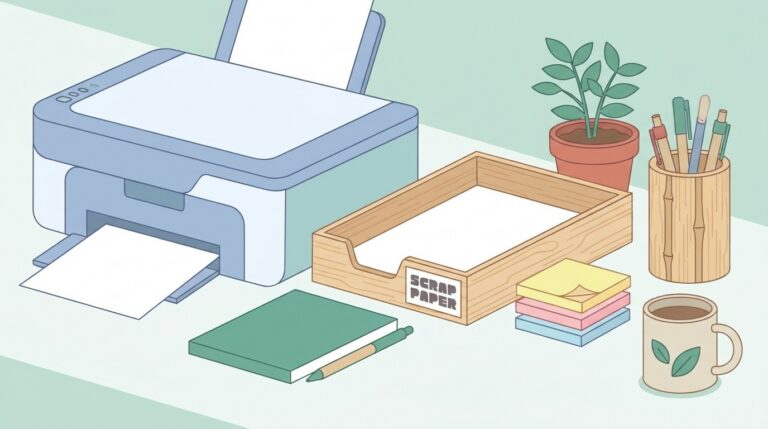
Picture this: It is your first week working at a sleek office in Yeouido or Gangnam. You just tried to print a one-page document, but because of a mysterious printer setting, the machine spits out twelve pages of blank sheets and giant formatting errors. Your heart beats fast. You look around, clutching a stack of warm, wasted paper. You want to throw it away, but right next to the massive office printer, there is a tall green recycling bin, a shredder, and a small plastic tray with a label you cannot read. A colleague walks up, smiles, and says something that ends with “…파지함에 넣으세요.”
You freeze. Do you throw it in the regular trash? Will your manager think you are wasting company money? Or worse, does this paper have sensitive client information?
If you have ever felt office panic in Korea, take a deep breath! You are definitely not alone. Many of our international students tell us that office recycling and desk organization in Korea feel like an unwritten social test. But once you know just two or three simple words, you will walk up to that office printer with total confidence. Let’s turn this stressful printing mishap into your smoothest Korean workplace flex!
Phase 2: 3 Core Expressions (A1 Level Deep-Dive)
1. 이면지 (Imyeonji)
- Pronunciation: [I-myeon-ji] (Sounds like: ee-myeon-jee, think of “e-mail” + “yum” without the m + “jeep”)
- Meaning: Scrap paper / One-sided scratch paper (Literally: “back-side paper”)
- K-Culture Moment: In the classic K-drama Misaeng (Incomplete Life), new interns spend hours carefully collecting single-sided misprints to cut into memo pads or restock printing trays.
- Editor’s Insight: Korean offices love eco-efficiency! If paper is only printed on one side and contains no confidential data, it is called 이면지 (imyeonji). It is saved to print informal drafts or take quick telephone notes.
- Situation Spectrum: Casual ✅ | Semi-formal ✅ | Formal ✅ (Standard term used everywhere from university libraries to corporate boardrooms)
- 🤔 Think About It: Why does Korean have a specific single noun for “paper only printed on one side,” while English usually needs a multi-word phrase like “scrap paper” or “single-sided used paper”?
2. 파지함 (Pajiham)
- Pronunciation: [Pa-ji-ham] (Sounds like: pah-jee-hahm, like “papa” + “jeans” + “ham”)
- Meaning: Scrap paper tray / Waste paper bin (Literally: “defective paper box”)
- K-Culture Moment: You will often spot a neat plastic or wooden box sitting directly next to or beneath the office printer labeled 파지함 in bold white stickers.
- Editor’s Insight: 파지 (paji) means discarded or misprinted paper, and 함 (ham) means a box or bin. Placing paper here means it will either be shredded or used as scratch paper.
- Situation Spectrum: Casual ✅ | Semi-formal ✅ | Formal ✅
- 🤔 Think About It: Notice the character 함 (ham)? You will see it in words like 우편함 (upyeonham – mailbox) and 보관함 (bogwanham – storage locker). Recognizing building blocks makes Korean vocab twice as fast to learn!
3. 여기에 넣어요 (Yeogie neo-eoyo)
- Pronunciation: [Yeo-gi-e neo-eo-yo] (Sounds like: yuh-gee-eh nuh-uh-yo)
- Meaning: Put it here / You put it in here.
- K-Culture Moment: A warm senior colleague helping a flustered newcomer points toward a box with a gentle smile and says: “여기에 넣어요!” (Put it in here!)
- Editor’s Insight: The base verb is 넣다 (neota – to put inside). In the polite everyday present tense (해요체), it becomes 넣어요. It works as both a statement (“I put it here”) and a friendly suggestion (“Put it here”).
- Situation Spectrum: Casual ✅ | Semi-formal (Polite) ✅ | Formal ⚠️ (For formal presentations, use 여기에 넣으십시오 or 넣으시면 됩니다)
- 🤔 Think About It: Notice how English requires “you” or “please,” but Korean politely drops the subject when the context and action are clear in front of you.
Phase 3: Textbook Korean vs. Real Korean
Situation 1: Telling someone where to discard the paper
- 📖 교과서 한국어 (Textbook): “이 종이를 재활용 상자에 버리십시오.” (I jong-ireul jaehwalyong sangja-e beorisipsio. / Please discard this paper into the recycling box.)
- 🗣️ 진짜 한국어 (Real-life Native): “이거 파지함에 넣으시면 돼요.” (I-geo pa-ji-ham-e neo-eu-si-myeon dwae-yo. / You can just put this in the scrap paper tray.)
- 💡 왜 다를까? (Why is it different?): Textbook phrases often sound like strict municipal warning signs. Real colleagues use softer phrasing with ~시면 돼요 (~si-myeon dwae-yo / you can just do this) to sound helpful and polite without being pushy.
Situation 2: Asking where to find scrap paper for quick notes
- 📖 교과서 한국어 (Textbook): “이면지 보관 장소가 어디에 위치합니까?” (I-myeon-ji bo-gwan jang-so-ga eo-di-e wi-chi-ham-nikka? / Where is the storage place for scrap paper situated?)
- 🗣️ 진짜 한국어 (Real-life Native): “혹시 이면지 어디 있어요?” (Hok-si i-myeon-ji eo-di it-sseo-yo? / Excuse me, where is the scrap paper?)
- 💡 왜 다를까? (Why is it different?): Adding 혹시 (hok-si / by any chance) at the start instantly softens your question, making you sound humble and naturally polite!
Phase 4: K-Culture Deep Dive & Non-Verbal Manners
4-1. 눈치 (Nunchi) & Office Gestures: The 3-Second Check
Before you toss any misprinted sheet into the 파지함 (pajiham), exercise your 눈치 (nunchi – situational awareness):
1. Check for Private Data: Does the paper have someone’s phone number, salary slip, or internal security code? In Korean companies, leaving confidential information exposed on single-sided scratch paper is a major security slip-up. If it has sensitive data, head straight to the 세단기 (sedangi – paper shredder)!
2. Two-Handed Placement: When putting paper into shared trays or handing blank scrap paper to a teammate, hold the sheet with both hands slightly or support your right forearm with your left hand. It shows great manners (ye-ui).
4-2. Culture Code: Korea’s Passion for Zero-Waste Offices
South Korea ranks among the world leaders in recycling and waste sorting (분리수거 – bunrisugeo). In tech-hub offices around Pangyo and corporate towers in Seoul, office desks are kept remarkably tidy, and recycling stations are strictly divided: plastic, paper cups, standard paper, and reusable 이면지. Participating enthusiastically in this small office ritual immediately labels you as considerate and team-oriented!
Phase 5: Real-World Roleplay Scenario
Setting: 10:30 AM at a design firm in Mapo, Seoul. You (Intern Alex) are standing by the office multifunction printer holding five misprinted color pages. Manager Kim walks over to pick up her freshly printed contract.
- Turn 1 (Alex):
“저… 대리님, 이거 잘못 출력했어요.”
(Jeo… dae-ri-nim, i-geo jal-mot chul-ryeok-hae-sseo-yo.)
“Um… Manager Kim, I printed this by mistake.”
🎭 Looking bashful while pointing to the paper stack. -
Turn 2 (Manager Kim):
“괜찮아요, 알렉스 씨! 개인 정보 있어요?”
(Gwaen-chan-a-yo, Al-rek-seu ssi! Gae-in jeong-bo it-sseo-yo?)
“It’s alright, Alex! Is there any personal information on it?”
🎭 Smiling kindly while checking the document. -
Turn 3 (Alex):
“아니요, 없어요. 그냥 이미지예요.”
(A-ni-yo, eop-seo-yo. Geu-nyang i-mi-ji-ye-yo.)
“No, there isn’t. It’s just images.”
🎭 Shaking head gently. -
Turn 4 (Manager Kim):
“그럼 다 쓴 종이는 파지함에 넣어요.”
(Geu-reom da sseun jong-i-neun pa-ji-ham-e neo-eo-yo.)
“Then put the used paper in the scrap paper tray.”
🎭 Pointing toward the blue box next to the printer. -
Turn 5 (Alex):
“파지함이요? 여기에 넣으면 돼요?”
(Pa-ji-ham-i-yo? Yeo-gi-e neo-eu-myeon dwae-yo?)
“The scrap paper tray? Do I just put it here?”
🎭 Carefully holding the paper over the blue box. -
Turn 6 (Manager Kim):
“네, 맞아요! 나중에 이면지로 다시 써요.”
(Ne, ma-ja-yo! Na-jung-e i-myeon-ji-ro da-si sseo-yo.)
“Yes, that’s right! We will reuse it as scrap paper later.”
🎭 Nodding approvingly. -
Turn 7 (Alex):
“아, 이면지! 알겠습니다. 감사합니다!”
(A, i-myeon-ji! Al-geot-seumnida. Gam-sa-ham-ni-da!)
“Ah, scratch paper! Understood. Thank you!”
🎭 Placing the paper down neatly with two hands. -
Turn 8 (Manager Kim):
“수고해요, 알렉스 씨! 커피 한잔 마시고 해요.”
(Su-go-hae-yo, Al-rek-seu ssi! Keo-pi han-jan ma-si-go hae-yo.)
“Keep up the good work, Alex! Grab a cup of coffee before continuing.”
🎭 Patting Alex's shoulder encouragingly.
🔀 Interactive Choice Point!
What should you do if your misprinted paper has a client’s private phone number printed on it?
- Choice A: Put it into the 파지함 (pajiham) anyway since nobody will notice.
- Choice B: Ask: “이거 파쇄해요?” (I-geo pa-swae-hae-yo? / Should I shred this?) and walk to the shredder.
- Choice C: Crumple it up in a ball and throw it into the regular under-desk trash can.
[Feedback Review]
- Choice A (Risk): Dangerous! Colleagues who take scrap paper later to write notes might see confidential data.
- Choice B (Best): 100 points! Showing that you care about data privacy will earn instant respect from any Korean boss.
- Choice C (Bad): In Korea, waste is strictly sorted. Paper in general trash is an office faux pas!
Phase 6: 10-Second Emotional Shadowing Drill
Practice these natural pacing pauses (/) and emotions aloud!
[🤔 조심스럽고 공손하게 / Cautious and polite]
“저기요, / 이 종이 / 파지함에 넣어요?”
(Jeo-gi-yo, / i jong-i / pa-ji-ham-e neo-eo-yo?)
“Excuse me, / do I put / this paper in the scrap tray?”-
[💡 깨달음을 얻고 명쾌하게 / Realization & bright]
“아! / 이면지는 / 여기에 넣으면 돼요!”
(A! / i-myeon-ji-neun / yeo-gi-e neo-eu-myeon dwae-yo!)
“Ah! / As for scrap paper, / I can just put it in here!” -
[😊 친절하고 든든하게 / Warm & helpful colleague tone]
“네, / 깨끗한 이면지는 / 다시 모아요.”
(Ne, / kkae-kkeut-han i-myeon-ji-neun / da-si mo-a-yo.)
“Yes, / clean scrap paper / we collect again.”
Phase 7: K-Culture Mini Dictionary
| # | 단어 (Word) | Pronunciation | Meaning & Real-World Usage |
|---|---|---|---|
| 1 | 이면지 | I-myeon-ji | Single-sided scratch paper. Always stocked near printers for memo writing. |
| 2 | 파지함 | Pa-ji-ham | Scrap paper collecting tray/box. Usually placed beside copiers or desks. |
| 3 | 복합기 | Bok-hap-gi | All-in-one office machine (printer + scanner + copier + fax combined). |
| 4 | 분리수거 | Bun-ri-su-geo | Separate waste disposal/sorting. Essential lifestyle habit throughout South Korea. |
Phase 8: Expat & Traveler Survival Kit
Survival Phrases TOP 3
- “이거 써도 돼요?” (I-geo sseo-do dwae-yo?)
- Meaning: Can I use this?
- Pro Tip: If you spot a pile of blank-looking paper near a printer and want to take notes, ask this before taking it!
- “종이 걸렸어요.” (Jong-i geol-lyeo-sseo-yo.)
- Meaning: The paper is jammed.
- Pro Tip: When the printer makes a scary beeping noise and stops midway, use this phrase to call for office backup.
- “파지함 어디 있어요?” (Pa-ji-ham eo-di it-sseo-yo?)
- Meaning: Where is the scrap paper bin?
- Pro Tip: Perfect when you’re cleaning up your desk at 6:00 PM before clocking out.
Editor’s Office Supply Note
Need fresh stationery, post-it notes, or desktop trays in Korea? Download the Naver Map App navigation guide and type “알파문구” (Alpha Mun-gu) or “드림디포” (Dream Depot). These are massive office supply superstores where you can find desk organizing trays and binders at budget prices!
Phase 9: “One Step Deeper” (Cultural Reflection)
In many Western workplaces, paper misprints are tossed straight into confidential shredding bins without a second thought. But in Korea, the habit of cherishing 이면지 (imyeonji) is tied to a historical community mindset known as the 아나바다 (Anabada) spirit: 아껴 쓰고, 나누어 쓰고, 바꿔 쓰고, 다시 쓰자 (Save resources, share resources, exchange resources, reuse resources). Reusing a single sheet of paper isn’t just about saving a company ten won; it shows that you respect collective resources and care for the shared environment.
💬 Your Turn: Does your workplace or school reuse one-sided paper as notes, or does everything go straight into the recycle bin? Let us know in the comments below!
Phase 10: FAQ & Avoiding Misunderstandings
Q: Can I put paper with staples into the 파지함?
A: No! Staples can severely damage the rollers inside the 복합기 (multifunction printer) if someone accidentally feeds the scrap paper back through the feeder. Always remove staples with a 제침기 (jechim-gi / staple remover) first!
Q: What is the difference between 쓰레기통 and 파지함?
A: 쓰레기통 (sseu-re-gi-tong) is a general trash bin for non-recyclable garbage (like tissues or food wrappers). 파지함 (pajiham) is exclusively for clean, recyclable or reusable misprinted paper sheets.
Q: Can any paper be used as 이면지?
A: Only paper that is completely blank on one side and totally free of private information (names, resident ID numbers, financial stats) can be repurposed as 이면지.
🚨 Common Mistakes Alert
- Mistake 1: Tossing confidential company documents into the open 파지함.
- Correct Action: If it has names, IDs, or company internal numbers, feed it into the 세단기 (sedangi – shredder).
- Mistake 2: Crumpling the paper before throwing it into the 파지함.
- Correct Action: Keep sheets flat! Misprints in the 파지함 are meant to be reused for printing drafts or memos.
- Mistake 3: Saying “이거 버려요?” (Do I throw this away?) for usable paper.
- Correct Action: Ask “이거 파지함에 넣어요?” (Do I put this in the scrap paper tray?) to sound like a seasoned insider.
Phase 11: Action Missions
- 🥉 Bronze Mission (Solo Practice): Stand by your home desk or printer, hold a spare sheet of paper, and say out loud three times: “다 쓴 종이는 파지함에 넣어요!”
- 🥈 Silver Mission (Social Challenge): Take a photo of your desk memo pad or scrap paper stash, and post it to Instagram Story with the sticker:
#이면지 #파지함! - 🥇 Gold Mission (Real-Life Mastery): The next time you visit a Korean office, university library, or community center printer, identify the 파지함 without asking anyone for help.
- 🎮 K-Culture Mission: Watch an episode of an office drama like Misaeng or Gaus Electronics. Spot how many times the printer area appears as the hot spot for workplace gossip!
Phase 12: Interactive Quiz Challenge
Test your new office super-powers! Pick your answers, then tap to check:
1. Situation Decision:
You printed a memo that contains your team’s lunch menu. The print is slightly crooked. What should you do?
* A) Shred it immediately in the 세단기.
* B) Flatten it and place it in the 파지함.
* C) Throw it into the food waste bin.
2. Fill in the Blank:
“다 쓴 종이는 ______에 넣어요.” (Put the used paper in the scrap paper tray.)
* Hint: Starts with 파!
3. True or False:
* In Korea, it is polite to crumple up single-sided clean paper before putting it in the 파지함. (True / False)
👉 Click to view answers and explanations!
Answers:
1. B) Flatten it and place it in the 파지함. (Since a lunch menu has no confidential data, it makes great scrap paper!)
2. 파지함 (Pajiham). Full sentence: 다 쓴 종이는 파지함에 넣어요. (Da sseun jong-i-neun pa-ji-ham-e neo-eo-yo.)
3. False! Paper in the 파지함 is collected to be reused. Always keep sheets flat and neat!
🎬 Watch Our Daily Videos! (Daily Hangul Official Instagram)
Review the expressions you learned in this article with our fun daily short videos! Check out native pronunciation and real-life nuances in action.
- Instagram @dailyhangul_en







