

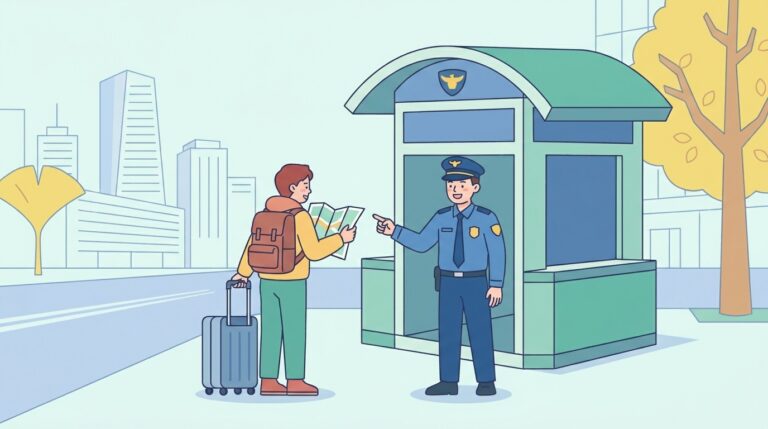
Phase 1: 공감 (스토리 몰입형 오프닝)
안녕하세요! 매일한글 에디터입니다. Have you ever felt that icy panic when you reach into your coat pocket after hopping off Seoul Subway Line 2, only to grab empty air? We all admire Korea’s cafe safety where laptops sit untouched on tables for hours, but misplacing your smartphone in transit or in a late-night taxi is a totally different story. When your digital lifeline vanishes, stepping into a local neighborhood police box (지구대, jigudae) can feel intimidating. But here is the golden secret: Korea runs an interconnected lost-and-found network called LOST112. By registering your phone’s unique 15-digit IMEI number and securing an official lost property receipt, you get contacted the instant someone turns it in. Based on real learner experiences, this practical B1 guide gives you the exact phrases and cultural etiquette to resolve this crisis smoothly!
Phase 2: 핵심 표현 3선 심층 분석
1. 스마트폰 분실 신고하러 왔어요. (Seumateupon bunsin singo-hareo wasseoyo.)
- Pronunciation: [Seu-mah-teu-pon boon-sheel sheen-goh-hah-reo wah-ssuh-yo] (Think of ‘seumateupon’ like ‘smart-phone’ said with bouncy Korean syllables, and ‘wasseoyo’ like ‘wa-saw-yo’)
- Meaning: “I came here to report a lost smartphone.” (Direct: Smartphone loss report-to come-did)
- K-Culture Moment: In the K-drama Signal, detectives sit behind retro wooden desks as troubled citizens rush in blurting out why they arrived. Saying this sentence immediately sets the agenda for the desk officer.
- Editor’s Insight: Notice the pattern
-러 왔어요(-reo wasseoyo), meaning “I came in order to [verb].” It cuts straight to the chase politely without sounding abrupt. - Situation Spectrum: Casual 🚫 | Semi-formal ✅ | Formal ✅
- 🤔 Think About It: In English, we often apologize first (“Excuse me, sorry to bother you, but I lost my phone”). In Korean administrative settings, stating your business clearly using polite
-요endings is seen as respectful and efficient.
2. 제 폰 고유 식별 번호(IMEI) 등록해 둘게요. (Je pon goyu sikbyeol beonho IMEI deungnokhae dulgeyo.)
- Pronunciation: [Jeh pon go-yoo sheek-byeol beon-ho IMEI deung-nok-hae dool-geh-yo] (Sounds like ‘goyu’ [go-you] and ‘deungnok’ where ‘ng’ flows seamlessly into ‘n’)
- Meaning: “I’ll register my phone’s unique identification number (IMEI) for future reference.”
- K-Culture Moment: In procedural series like tvN’s Live, officers input serial numbers into police monitors while assuring victims that their data is cross-referenced nationwide.
- Editor’s Insight: The grammar
-어/아 둘게요(-eo/a dulgeyo) means “I will do this in advance / leave it set up.” By saying this, you let the officer know you have the exact hardware identifier ready. - Situation Spectrum: Casual 🚫 | Semi-formal ✅ | Formal ✅
- 🤔 Think About It: Why specify IMEI? In Korea, millions of people use the exact same smartphone models and phone cases. Identifying your personal device by technical metadata shows practical savvy.
3. 습득 신고 들어오면 연락 주세요. (Seupdeuk singo deureo-omyeon yeollak juseyo.)
- Pronunciation: [Seup-deuk sheen-goh deu-reo-oh-myeon yeol-lak joo-seh-yo] (Pronounce ‘seupdeuk’ crisp like ‘soup-duck’ without the vowels dragged out, and ‘yeollak’ sounds like ‘yul-lahk’)
- Meaning: “Please contact me if a report of someone finding it comes in.”
- K-Culture Moment: That sigh-of-relief scene in K-dramas where a character bows respectfully at the door after leaving their phone number with the precinct officer.
- Editor’s Insight:
습득(seupdeuk) is the legal and administrative term for “picking up / finding lost property.” Pair it with-면(if) and연락 주세요(please contact me) for a crisp, natural request. - Situation Spectrum: Casual ⚠️ | Semi-formal ✅ | Formal ✅
- 🤔 Think About It: Notice the passive-inbound phrasing
들어오면(if it comes in). It recognizes that the officer must wait for an external citizen report rather than blaming them for not having it immediately.
Phase 3: 교과서 한국어 vs 진짜 한국어
Situation 1: Explaining what happened to your phone
- 📖 교과서 한국어: 저는 어제 저의 휴대전화를 분실하였습니다. (Jeoneun eoje jeoui hyudaejeonhwareul bunsilhayeotseumnida.)
- 🗣️ 진짜 한국어: 어제 택시에 핸드폰을 두고 내린 것 같아요. (Eoje taeksie haendeuponeul dugo naerin geot gatayo.)
- 💡 왜 다를까? Textbook Korean uses formal written terms like
휴대전화and stiff past-tense declarations. Native speakers prefer conversational terms like핸드폰and soften certainty with- 것 같아요(it seems like I left it behind).
Situation 2: Requesting the official receipt for insurance
- 📖 교과서 한국어: 저에게 분실 증명서를 발급하여 주십시오. (Jeoege bunsil jeungmyeongseoreul balgeuphayeo jusipsio.)
- 🗣️ 진짜 한국어: 여행자 보험 청구용으로 분실 접수증 좀 뗄 수 있을까요? (Yeohaengja boheom cheongguyongeuro bunsil jeopsujeung jom ttel su isseulkkayo?)
- 💡 왜 다를까? Officers rarely hear the rigid imperative
-십시오. Real Koreans use colloquial administrative verbs like떼다(to have a document issued/pulled) and mention the specific purpose like여행자 보험 청구용(for travel insurance claim).
Phase 4: K-Culture 딥다이브 & 비언어적 매너
4-1. 눈치(Nunchi) & 제스처
When entering a Korean jigudae (지구대), remember that officers deal with traffic disputes, drunken arguments, and emergencies simultaneously. Wait at the tape line on the floor until an officer looks up. Offer a 15-degree head nod (목례, mongnye). When handing over your passport, IMEI screenshot, or Korean friend’s contact number, always present documents using both hands (두 손으로 전달). Avoid pointing your index finger at screens or desk logs; instead, gesture with an open palm facing upward.
4-2. 문화 코드 분석: The “LOST112” Phenomenon
International tourists often marvel at Korea’s cafe honor system (yangsim, 양심), where personal items remain untouched. However, mobile devices left in public taxis or subway seats are often collected by transit cleaners or drivers and deposited directly into the Korean National Police Agency’s LOST112 system. Once an item enters this portal, its IMEI number becomes its digital fingerprint. If your reported IMEI matches the entered device, the system links the records automatically. Knowing this system turns an aimless search into an orderly process.
Phase 5: 실전 롤플레이 시나리오
Scene: Inside the brightly lit Yeonnam Police Substation (연남파출소) on a Friday evening. Officer Min (민 경장), a calm officer in his late 30s, looks up from his terminal.
- Officer Min: 어서 오세요. 어떻게 오셨어요? (Eoseo oseyo. Eotteoke osyeosseoyo?)
“Welcome. How can I help you today?”
🎭[친절하게 고개를 들며 컴퓨터 자판에서 손을 뗀다] -
Learner (You): 저… 스마트폰 분실 신고하러 왔어요. (Jeo… seumateupon bunsin singo-hareo wasseoyo.)
“Um… I came here to report a lost smartphone.”
🎭[가방에서 여권과 메모지를 꺼내며 두 손으로 공손히 선다] -
Officer Min: 아, 그러시군요. 언제 어디서 잃어버리셨는지 기억나세요? (A, geureosigunyo. Eonje eodiseo ireobeorisyeonneunji gieongnaseyo?)
“Ah, I see. Do you remember when and where you lost it?”
🎭[조서 양식을 모니터에 띄우며 마우스를 클릭한다] -
Learner (You): 1시간 전에 홍대입구역 근처 카페에서 두고 나온 것 같아요. (Han-sigan jeone Hongdae-ipguyeok geuncheo kape-eseo dugo naon geot gatayo.)
“About an hour ago, I think I left it at a cafe near Hongik University Station.”
🎭[휴대폰을 두고 온 위치를 손으로 가리키듯 설명한다] -
Officer Min: 혹시 스마트폰 기종이랑 통신사는 어떻게 되나요? (Hoksi seumateupon gijong-irang tongsinsaneun eotteoke doenayo?)
“By any chance, what model and mobile carrier is your phone?”
🎭[메모장을 펼쳐놓고 받아 적을 준비를 한다] -
Learner (You): 갤럭시 최신 기종인데요, 제 폰 고유 식별 번호(IMEI) 등록해 둘게요. (Gaelleoksi choesin gijong-inde-yo, je pon goyu sikbyeol beonho IMEI deungnokhae dulgeyo.)
“It’s the latest Galaxy model, and I’d like to register my phone’s IMEI number.”
🎭[미리 적어둔 15자리 IMEI 번호 메모지를 두 손으로 건넨다] -
Officer Min: 네, 시스템에 바로 등록했습니다. 분실 접수증도 한 장 뽑아드릴까요? (Ne, siseuteme baro deungnokaetseumnida. Bunsil jeopsujeungdo han jang ppobadeurilkkayo?)
“Yes, I’ve registered it in the system. Would you like me to print a lost property receipt as well?”
🎭[단말기에 번호를 입력하고 출력 버튼을 누른다] -
Learner (You): 네, 부탁드립니다! 습득 신고 들어오면 연락 주세요. (Ne, butakdeurimnida! Seupdeuk singo deureo-omyeon yeollak juseyo.)
“Yes, please! Please contact me if someone turns it in.”
🎭[가벼운 목례를 하며 안도하는 표정을 짓는다]
🔀 인터랙티브 분기점 (Officer Min asks for your contact details)
Officer Min: “한국 연락처나 머무시는 호텔 번호가 있나요?” (Do you have a Korean phone number or hotel contact?)
- Choice A: “친구 번호 적어드릴게요. 습득물 들어오면 여기로 문자 부탁드려요.” (Jeongu beonho jeogeodeurilgeyo. Seupdeungmul deureo-omyeon yeogiro munja butakdeuryeoyo.)
Feedback: Best! Giving an accessible local number ensures automated SMS alerts reach someone immediately. - Choice B: “핸드폰 없는데 어떻게 전화를 받아요? 메일로만 주세요.” (Haendeupon eomneunde eotteoke jeonhwareul badayo? Meilloman juseyo.)
Feedback: Bad. Asking “How can I answer without a phone?” sounds sarcastic and hostile in Korean. Police communication channels rely primarily on local calls and SMS. - Choice C: “미국 번호 있는데 국제 전화 해 주실 수 있나요?” (Miguk beonho inneunde gukje jeonhwa hae jusil su innayo?)
Feedback: Risk. Substation landlines cannot dial international numbers overseas. Always provide an email or an accommodation front desk contact instead.
Phase 6: 10초 감정 섀도잉 드릴
[🥺 다급하고 간절하게]
저기요… / 스마트폰을 잃어버려서 / 분실 신고하러 왔어요.
(Jeogiyo… / seumateuponeul ireobeoryeoseo / bunsil singohareo wasseoyo.)-
[📝 또박또박 차분하게]
여기 / 제 폰 고유 식별 번호(IMEI) 적어왔는데 / 등록해 둘게요.
(Yeogi / je pon goyu sikbyeol beonho IMEI jeogeowanneunde / deungnokhae dulgeyo.) -
[🙏 감사하며 신뢰를 담아]
접수증 발급해 주셔서 감사해요. / 습득 신고 들어오면 / 연락 꼭 주세요!
(Jeopsujeung balgeuphae jusyeoseo gamsahaeyo. / Seupdeuk singo deureo-omyeon / yeollak kkok juseyo!)
Phase 7: K-Culture 미니 사전 (핵심 키워드 4개)
-
지구대 / 파출소 (Jigudae / Pachulso)
Meaning: Police Substation / Police Box
Usage: A pachulso is a compact neighborhood police post, while a jigudae is a larger combined patrol district base. Both handle lost property claims 24/7. -
분실물 접수증 (Bunsilmul jeopsujeung)
Meaning: Lost Property Report Certificate / Receipt
Usage: The vital slip of paper issued by the police containing your report case number. Essential for submitting overseas travel insurance claims. -
고유 식별 번호 (Goyu sikbyeol beonho / IMEI)
Meaning: Unique Device Identification Number
Usage: The 15-digit hardware serial code embedded in cellular devices. In Korean tech circles and police paperwork, it is referred to simply as “아이엠이아이(IMEI)”. -
로스트112 (LOST112 – 경찰청 유실물 포털)
Meaning: Korean National Police Agency Lost and Found Integrated Portal
Usage: The nationwide online clearinghouse where items found on subways, buses, taxis, and public streets are cataloged with photos and serial numbers.
Phase 8: 여행자를 위한 생존 키트
서바이벌 표현 TOP 3
- 분실물 접수증 출력해 주세요. (Bunsilmul jeopsujeung chullyuk-hae juseyo.)
“Please print the lost property report receipt for me.”
Pro Tip: Use this exact phrase when your travel insurance company requires physical stamped proof of police filing. - 위치 추적이 안 돼요. (Wichi chujeog-i an dwaeyo.)
“Location tracking is not working.”
Pro Tip: South Korea’s strict map data regulations often restrict Apple’s “Find My” live location features, making IMEI registration even more critical. - 택시 영수증에 기사님 번호가 있어요. (Taeksi yeongsujeunge gisanim beonhoga isseoyo.)
“The taxi driver’s contact number is on this card receipt.”
Pro Tip: If you paid by credit card or T-Money, the printed receipt contains the taxi company’s license plate and dispatch phone number!
Editor’s Travel Note
Before stepping out into the city, check your device’s 15-digit serial code by dialing *#06# on your keypad and save a screenshot in your email cloud. Bookmark the official 경찰청 유실물 통합포털 웹사이트 on your laptop. If you left a device inside the subway, contact the Seoul Metro Lost and Found Center at City Hall Station or check subway transit storage lockers within the first 7 days before items transfer to the police!
Phase 9: “한 발 더 깊이” (생각 질문)
South Korea operates on a fascinating blend of collective trust (Jeong and civic conscience) coupled with hyper-digitized bureaucratic surveillance. While citizens routinely leave personal belongings unattended in cafes, public spaces are covered by comprehensive CCTV networks and automated administrative databases. When an item goes missing in transit, Koreans do not rely purely on luck; they enlist technical precision through serial identification and central police networks. Language reflects this balance: requests made to officers transition from human apology to structured technical data.
💬 Your Turn: How does the lost-and-found system work in your home country? Would police stations record your device’s hardware serial number for a misplaced phone? Share your experience in the comments below!
Phase 10: FAQ & 오해 방지 (FAQ Schema)
Q: What is the difference between a 경찰서 (Gyeongchalseo) and a 지구대 (Jigudae)?
A: A 경찰서 is a major district police headquarters where specialized criminal investigations take place. A 지구대 or 파출소 is a localized neighborhood branch office. For a lost phone or bicycle, always visit the nearest neighborhood 지구대 first—it is faster, friendly, and open 24 hours.
Q: Can I file a lost property report in English?
A: While major stations in tourist hotspots like Myeongdong or Hongdae may have multilingual officers or interpretation hotlines (dial 1330 for Korea Travel Helpline translation assistance), knowing basic phrases like “스마트폰 분실 신고하러 왔어요” speeds up the process drastically.
Q: Do I need to pay a fee to get a 분실물 접수증 (Lost Property Receipt)?
A: No! Issuing an official police lost property report receipt is completely free of charge in South Korea.
🚨 흔한 실수 (Common Mistakes) 경고판
- Mistake 1: Calling 112 for a simple lost phone query.
Correct Action: Emergency line 112 is reserved for crimes and imminent danger. For general police inquiries or non-emergency reports, visit the substation in person or call 182 (Police Non-Emergency Call Center). - Mistake 2: Only searching for the phone model name.
Correct Action: Tens of thousands of black iPhones and white Galaxy models are turned in each month. Without an IMEI number or distinctive lock screen photo, matching ownership takes weeks. - Mistake 3: Forgetting to take the physical printed receipt.
Correct Action: Before leaving the station desk, always confirm: “접수증 출력됐나요?” (Has the receipt been printed?). Insurance companies will reject handwritten notes.
Phase 11: 액션 미션 & 참여 유도
- 🥉 Bronze Mission (Solo Practice): Dial
*#06#right now on your smartphone. Locate the 15-digit IMEI number, write it in a safe travel notebook, and practice saying: “제 폰 고유 식별 번호(IMEI) 등록해 둘게요.” - 🥈 Silver Mission (Community Share): Leave a comment with the Korean sentence you would use to ask an officer to call you when your item is found!
- 🥇 Gold Mission (Real-Life Readiness): Download a transit map or visit your nearest Korean neighborhood pachulso exterior and identify the signage characters
지구대or파출소. - 🎮 K-Culture Mission: In the next K-drama episode you watch featuring a neighborhood scene, look for the blue police logo with the Korean eagle (참수리) on patrol cars!
Phase 12: 인터랙티브 퀴즈 챌린지
1. 상황 판단 (Situational Judgment)
You left your phone in a taxi 30 minutes ago and have the paper card payment receipt. You arrive at the local police box. Which sentence is the most effective?
a) “경찰관님, 택시 기사 좀 빨리 잡아주세요!”
b) “택시 영수증이 있고 IMEI 번호도 있어요. 분실 신고 도와주세요.”
c) “제 폰 비싼 건데 왜 안 찾아주세요?”
2. 빈칸 채우기 (Fill in the Blank)
Fill in the missing technical term:
“휴대폰 ( ________ ) 번호를 등록해 두면 습득 신고가 들어왔을 때 바로 확인할 수 있어요.”
3. True / False 문화 퀴즈
T / F: In South Korea, Apple’s “Find My” service always provides live real-time GPS tracking across every city street without restrictions.
Click to view answers and explanations!
- Answer: b) Explaining that you have both the payment receipt (which identifies the driver) and the IMEI number provides the police with actionable data without sounding rude or demanding.
- Answer: 고유 식별 (또는 IMEI) — “휴대폰 고유 식별(IMEI) 번호를 등록해 두면…” (Registering your phone’s unique identification number allows immediate matching).
- Answer: False. Due to national spatial data security regulations, live tracking features on certain international operating systems are restricted or limited in Korea, making direct police IMEI registration on LOST112 essential!
🎬 Watch Our Daily Videos! (Daily Hangul Official Instagram)
Review the expressions you learned in this article with our fun daily short videos! Check out native pronunciation and real-life nuances in action.
- Instagram @dailyhangul_en







