

Driving in Korea Without Panic: Handling Rental Car Accidents and Insurance Like a Local
Phase 1: 공감 (Story-Driven Opening)
안녕하세요! 매일한글 에디터입니다.
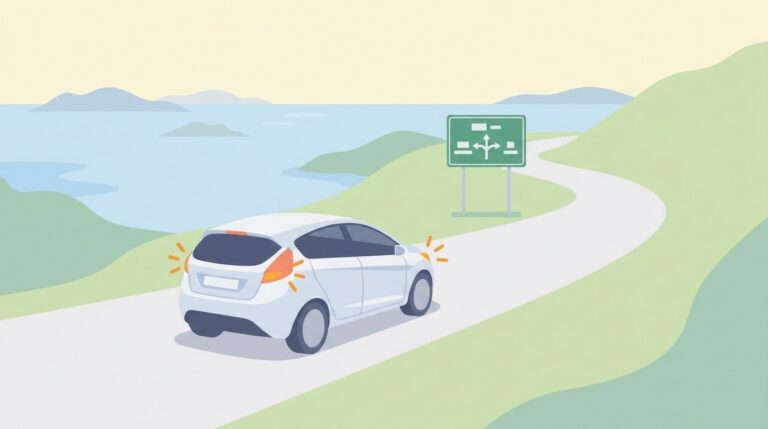
Imagine this picture-perfect scenario: You are cruising along the breezy coastal highway of Jeju Island or navigating the lush, winding mountain roads of Gangwon-do. Your favorite K-drama playlist is playing on the car speakers, the ocean is shimmering on your left, and your road trip feels like pure cinematic magic. But suddenly, as you enter a narrow rural alley or an unfamiliar roundabout, the car in front halts without warning. You tap the brakes, but thump—a minor fender bender.
Your heart drops into your stomach. Panic rushes in: “What do I say in Korean? Who do I even call? Am I going to get blamed because I’m a foreigner? Will my rental insurance cover this?”
Take a deep breath! As someone who has spent over a decade navigating Korean roads and helping hundreds of international drivers overcome travel emergencies, I can assure you: minor scrapes (접촉 사고 – jeopchok sago) happen every single day. In Korea, handling these incidents is practically an art form—calm, systematic, and surprisingly tech-driven. You do not need to memorize thick legal volumes. With just a few high-impact B1 phrases, clear knowledge of the dispatch protocol, and an understanding of Korean road etiquette, you will handle the situation smoothly and preserve your vacation peace of mind. Let’s master everything step by step!
Phase 2: 핵심 표현 3선 심층 분석 (3 Core Expressions Deep Dive)
1. 안전거리를 유지해야 해요
- Pronunciation: [Anjeon-geori-reul yuji-haeya haeyo] (Pronunciation tip: sounds like “ahn-jun-guh-ree-reul yoo-jee-hae-yah hae-yo”)
- Meaning: Literal: “Must maintain a safe distance” vs. Real Nuance: “Keep extra following distance between cars to stay safe.”
- K-Culture Moment: You will hear this exact phrase on Korean driving safety campaigns and variety shows like Omniscient Interfering View (전지적 참견 시점) whenever celebrity managers guide rookie drivers through congested Seoul expressways.
- Editor’s Insight: The pattern
-아/어야 해요(-a/eoya haeyo) indicates essential necessity (“must/have to”). In unfamiliar Korean tourist spots, traffic lights can change quickly, and delivery scooters frequently filter through lanes. Expressing this rule reminds yourself and your passengers to prioritize caution.- Situation Spectrum: Casual: ⚠️ | Semi-formal: ✅ | Formal: ✅
- 🤔 Think About It: In many Western countries, lane discipline and individual right-of-way dominate road culture. In Korea, collective attentiveness and mutual accommodation (
배려운전– baeryeo-unjeon) are prized. How does your native language express defensive driving?
2. 보험사 출동 기사님 좀 불러주세요
- Pronunciation: [Boheomsa chuldong gisanim jom bulleojuseyo] (Pronunciation tip: sounds like “bo-hum-sah chool-dong gee-sah-neem jom bool-luh-joo-seh-yo”)
- Meaning: Literal: “Please call the insurance company dispatch driver” vs. Real Nuance: “Please request your insurance road service agent to come inspect the scene.”
- K-Culture Moment: In K-dramas, when two drivers bump bumpers, nobody starts a fistfight. Instead, both drivers step out, inspect the paint, sigh, and immediately say: “보험사 부르셨어요?” (Did you call your insurance?). The on-site agent (
출동 기사님) acts as the neutral mediator.- Editor’s Insight: Notice the respectful title
기사님(gisanim) combined with the softener좀(jom – “please / kindly”). Calling service professionals기사님builds instant rapport and demonstrates your cultural fluency, even in stressful moments.- Situation Spectrum: Casual: 🚫 | Semi-formal: ✅ | Formal: ✅
- 🤔 Think About It: Why do Koreans avoid arguing about fault on the asphalt and leave everything to dispatch agents? It reflects the cultural desire to avoid direct public confrontation (
갈등 회피).
3. 사진 찍고 차를 갓길로 뺄게요
- Pronunciation: [Sajin jjikgo chareul gatgillo ppaelgeyo] (Pronunciation tip: sounds like “sah-jeen jjeek-goh chah-reul gaht-geel-loh bbael-geh-yoh”)
- Meaning: Literal: “I’ll take photos and pull the car to the shoulder” vs. Real Nuance: “Let’s document the scene quickly and move our vehicles aside to prevent a traffic jam or secondary accident.”
- K-Culture Moment: On traffic programs like Han Moon-chul’s Dashcam Review (한블리), road experts reiterate: take high-angle photos of the tires and paint contact, then immediately clear the lane to avoid dangerous secondary crashes (
2차 사고).- Editor’s Insight: The verb ending
-ㄹ/을게요(-l/eulgeyo) expresses a polite, proactive intention. The term갓길(gatgil) refers specifically to the road shoulder or curb.- Situation Spectrum: Casual: ⚠️ | Semi-formal: ✅ | Formal: ✅
- 🤔 Think About It: In some countries, moving cars before police arrive is strictly prohibited. Why do you think fast-paced Korean roads prioritize clearing the lane once evidence is photographed?
Phase 3: 교과서 한국어 vs 진짜 한국어 (Textbook vs. Real Korean)
Situation 1: Explaining you had a minor fender bender
- 📖 교과서 한국어: 자동차 접촉 사고가 발생했습니다. (Jadongcha jeopchok sagoga balsaenghaetseumnida.) – “A motor vehicle contact accident has occurred.”
- 🗣️ 진짜 한국어: 차를 살짝 긁었어요. / 살짝 부딪혔어요. (Chareul saljjak geulgeosseoyo. / Saljjak budithyeosseoyo.) – “I lightly scratched the car. / We had a gentle bump.”
- 💡 왜 다를까? Textbook Korean sounds like an official police report. Real Koreans use descriptive adverbs like
살짝(saljjak – lightly / gently) to clarify the scale of damage and reduce anxiety instantly.
Situation 2: Asking for the accident reference number
- 📖 교과서 한국어: 귀하의 보험 등록 번호가 무엇입니까? (Gwiha-ui boheom deungnok beonhoga mueosimnikka?) – “What is your insurance registration number?”
- 🗣️ 진짜 한국어: 보험 접수 번호 나오면 알려주세요. (Boheom jeopsu beonho naomyeon allyeojuseyo.) – “Please text or tell me the claim number once it comes out.”
- 💡 왜 다를까? In actual Korean accident settlements, drivers do not swap personal bank details or policy forms. They simply exchange the official
접수 번호(claim receipt number) generated via SMS.
Phase 4: K-Culture 딥다이브 & 비언어적 매너 (Non-Verbal Manners)
4-1. 눈치 (Nunchi) & Body Language on the Road
- Turn on Hazard Lights Instantly: The moment an incident occurs, hit the red triangle button (
비상등– bisangdeung). In Korea, hazard lights are the ultimate non-verbal apology and safety beacon. - The Sincere Nod-Bow: When stepping out of your car, do not cross your arms or wave your hands defensively. Give a quick, respectful 15-degree head bow and ask:
다치신 데는 없으세요?(Dachisin deneun eopseuseyo? – Is anyone hurt?). Showing concern for personal safety first disarms tension 90% of the time. - Smartphone Photo Strategy: Take four crucial angles: (1) Close-up of the bumper contact, (2) Both cars’ license plates, (3) The angle of the front tires, and (4) A wide shot showing road lane markings and nearby landmarks.
4-2. Culture Code: The Kingdom of Black Boxes (블랙박스)
In South Korea, over 95% of personal and rental vehicles have two-channel dashcams (블랙박스 – beullaekbakseu) running 24/7. This completely changes how accidents are resolved. You never have to shout, point fingers, or debate who was at fault. The insurance dispatchers will extract the memory card and calculate the legal fault ratio (과실 비율 – gwasil bi-yul) based on nationwide precedents. Stay calm and let the tech work for you!
Phase 5: 실전 롤플레이 시나리오 (Interactive Roleplay Scenario)
- Setting: A narrow coastal road in Aewol, Jeju. You gently grazed the side bumper of a local sedan while maneuvering around a blind corner. Both cars stop, and the other driver, Mr. Min-soo Park (a friendly local in his 40s), steps out.
Characters:
* You: Foreign traveler driving a rental car.
* Park: Local driver examining his vehicle.
Dialogue:
1. You: 🎭 (Bowing slightly with hands together) 죄송합니다! 다치신 곳은 없으세요? (Joesonghamnida! Dachisin goseun eopseuseyo? – I am so sorry! Are you hurt anywhere?)
2. Park: 🎭 (Looking down at his bumper, sighing relief) 아, 깜짝이야. 사람은 안 다쳤는데, 범퍼가 살짝 긁혔네요. (A, kkamjjagiya. Sarameun an dachyeotneunde, beompeoga saljjak geulkhyeotneyo. – Ah, what a surprise. Nobody is hurt, but the bumper got scratched a bit.)
3. You: 🎭 (Taking out phone calmly) 제가 초행길이라 서툴렀어요. 사진 먼저 찍어도 될까요? (Jega chohaenggirira seotulleosseoyo. Sajin meonjeo jjigeodo doelkkayo? – It is my first time on this road, so I was clumsy. May I take photos first?)
4. Park: 🎭 (Nodding approvingly) 네, 바퀴 돌아간 방향이랑 도로 선 잘 나오게 찍으세요. (Ne, bakwi doragan banghyang-irang doro seon jal naoge jjigeuseyo. – Sure, make sure the wheel direction and road lines show clearly.)
5. You: 🎭 (Snapping photos from multiple distances) 다 찍었습니다! 다른 차들 지나가게 갓길로 뺄까요? (Da jjigeotseumnida! Dareun chadeul jinagage gatgillo ppaelkkayo? – All done! Shall we pull over to the shoulder so other cars can pass?)
6. Park: 🎭 (Pointing to a flat shoulder area) 저기 편의점 앞 공터로 이동합시다. 렌터카 업체에는 전화하셨어요? (Jeogi pyeon-uijeom ap gongteoro idonghapsida. Renteoka eopche-eneun jeonhwahasyeosseoyo? – Let’s move to the open space in front of that convenience store. Did you call your rental agency?)
7. You: 🎭 (Holding the rental agreement key fob) 지금 바로 렌터카 고객센터랑 보험사에 연락할게요. (Jigeum baro renteoka gogaekseenteorang boheomsa-e yeonlakhalke-yo. – I will contact the rental customer desk and insurance dispatch right now.)
8. Park: 🎭 (Smiling reassuringly) 네, 저도 제 보험사에 접수할 테니 당황하지 마세요. (Ne, jeodo je boheomsa-e jeopsuhal teni danghwanghaji maseyo. – Okay, I will also file with my insurance, so do not panic.)
🔀 인터랙티브 분기점 (Interactive Decision Point)
When you dial the rental company’s 24-hour hotline, what should you say?
- Choice A: “여보세요, 렌터카 접촉 사고가 났어요. 출동 기사님 부탁드립니다.” (Hello, I had a minor rental car contact accident. Please dispatch an insurance agent.)
- Outcome (Best): 🌟 Excellent! You stated the rental vehicle status and requested dispatch clearly. The operator will ask for your location and send SMS tracking for the agent.
- Choice B: “상대방이 갑자기 멈췄어요! 제 잘못 아니에요!” (The other driver stopped suddenly! It’s not my fault!)
- Outcome (Bad): ❌ Unhelpful. Arguing fault with the call center operator delays emergency dispatch. Insurance adjusters evaluate fault later via dashcams.
- Choice C: “사고가 났는데, 그냥 우리끼리 현금으로 해결할게요.” (An accident happened, but we will just settle with cash between ourselves.)
- Outcome (Risk): 🚨 Dangerous! Settling with cash without notifying your Korean rental agency can completely void your CDW insurance policy, leaving you liable for hidden repair costs.
Phase 6: 10초 감정 섀도잉 드릴 (Emotion Shadowing Drill)
Practice reading these out loud with the assigned emotion and rhythmic pauses (/):
- [😟 Apologetic & Calming]
죄송합니다, / 다치신 곳은 / 없으세요?
(Joesonghamnida, / dachisin goseun / eopseuseyo?)
“I am so sorry, / is anyone hurt / anywhere?” -
[📸 Calm & Practical]
현장 사진 먼저 찍고 / 차를 갓길로 / 옮길게요.
(Hyeonjang sajin meonjeo jjikgo / chareul gatgillo / omgalke-yo.)
“I’ll take photos of the scene first, / and move the car / to the shoulder.” -
[📞 Polite & Clear Request]
렌터카 접촉 사고인데요, / 출동 기사님 좀 / 보내주세요.
(Renteoka jeopchok sago-indeyo, / chuldong gisanim jom / bonaejuseyo.)
“It’s a rental car fender bender, / please send / an insurance dispatch agent.”
Phase 7: K-Culture 미니 사전 (Core Mini Dictionary)
- 초행길 (Cho-haeng-gil): An unfamiliar road or route traveled for the first time. Saying
제가 초행길이라서요(Because this is my first time on this road) softens reactions to minor driving mistakes. - 방어운전 (Bang-eo-un-jeon): Defensive driving. Anticipating unexpected pedestrian movements, scooter lane-splits, or sudden braking.
- 접수 번호 (Jeop-su beon-ho): Insurance claim registration number. Once the dispatcher arrives, both drivers receive this 8-to-10-digit number via SMS.
- 완전자차 (Wanjeon-ja-cha): Super CDW (Collision Damage Waiver) with zero deductible. Always opt for this option when renting a car in Korea!
Phase 8: 여행자를 위한 생존 키트 (Traveler’s Survival Kit)
Survival Expressions TOP 3
- 블랙박스 영상 확인해 주세요. (Beullaekbakseu yeongsang hwaginhae juseyo.) – Please check the blackbox (dashcam) footage.
- Pro Tip: If language barriers arise, point to the mirror dashcam and say this sentence.
- 보험 접수 번호 문자로 보내주세요. (Boheom jeopsu beonho munjaro bonaejuseyo.) – Please send the claim number via text message.
- Pro Tip: Ensures you have written evidence before leaving the scene.
- 한국어가 서투르니 통역 서비스 부탁해요. (Hangugeoga seotureuni tong-yeok seobiseu butakhaeyo.) – My Korean is clumsy, so please connect me with a translation service.
- Pro Tip: Most major Korean insurance lines provide three-way English interpretation upon request.
Editor’s Travel Note
- Essential Navigation: Google Maps does not provide driving navigation in South Korea due to national security data laws. You must use 네이버 지도 앱 다운로드 or 카카오내비 앱 다운로드 for real-time speed camera alerts and lane guidance.
- Emergency Hotlines: Dial 112 for Police and 119 for Medical Emergencies. For non-injury fender benders involving rental cars, your first call should always be the rental agency hotline printed on your key ring.
Phase 9: “한 발 더 깊이” (Cultural Reflection)
On Korean roads, social harmony is mediated through unique non-verbal rituals. When a driver lets you merge into a busy lane, pressing your hazard lights for 2 to 3 flashes means “Thank you so much!” If you accidentally cut someone off, three quick flashes mean “I’m deeply sorry, please excuse me.” This tiny digital gesture preserves good will across millions of daily commutes. Driving in Korea is less about asserting individual legal territory and more about participating in an unspoken rhythm of shared consideration.
💬 Your Turn: How do drivers say “thank you” or “sorry” on the road in your home country? Share your stories in the comments below!
Phase 10: FAQ & 오해 방지 (FAQ & Common Mistakes)
Q: Do I need to call the police (112) for every minor scratch on a rental car?
A: No. If there are no injuries and both drivers are calm and cooperative, you do not have to call 112. However, you MUST immediately notify your rental car company and wait for the insurance dispatch agent (출동 기사님).
Q: What should I do if the other driver demands cash immediately?
A: Never pay cash on the spot! Private settlements (개인 합의) violate rental car terms in Korea and can void your insurance coverage. Politely repeat: “보험 접수할게요” (Boheom jeopsuhalke-yo – I will process it through insurance).
Q: Does Super CDW (완전자차) cover 100% of all damages?
A: Almost all vehicle damage is covered with zero deductible, but check your contract fine print: tire punctures, towing fees beyond a certain distance, and wheel scratches are often excluded from standard coverage.
🚨 흔한 실수 (Common Mistakes TOP 3)
- Leaving the scene before getting the claim number: Never drive away until both dispatchers have exchanged information and issued your
접수 번호. - Forgetting to record tire angles: Only taking close-ups of scratched paint makes it impossible to determine lane positioning later.
- Engaging in emotional blame arguments: Getting loud or confrontational won’t change the fault ratio. Keep quiet, polite, and let dashcam video speak for you.
Phase 11: 액션 미션 & 참여 유도 (Action Missions)
- 🥉 Bronze Mission: Stand in front of your mirror and practice the 3 core sentences from Phase 2 with a polite bow.
- 🥈 Silver Mission: Leave a comment below translating this sentence into Korean: “Please call the insurance agent and check the dashcam!”
- 🥇 Gold Mission: When planning your next Korea trip, bookmark your rental car company’s emergency phone number and download Naver Map beforehand!
- 🎮 K-Culture Mission: Watch an episode of a Korean travel vlog on YouTube and spot when the driver flashes their hazard lights (
비상등) as a courtesy.
Phase 12: 인터랙티브 퀴즈 챌린지 (Interactive Quiz Challenge)
Test your real-world readiness!
- Situational Judgment: You had a minor bump on a country road. What is the very first physical action you should take inside your car?
- a) Honk the horn loudly
- b) Turn on hazard warning lights (
비상등) - c) Step out immediately without looking at traffic
- Fill in the Blank: “제가 이 지역이 처음이라 길을 잘 몰라요. ( )길이라 조심해야 해요.”
- a) 고속 (Gosok)
- b) 초행 (Chohaeng)
- c) 골목 (Golmok)
- True or False: In Korea, if both cars have dashcams, you should argue loudly at the scene to convince the other driver they were wrong.
- (True / False)
👉 Click here to reveal answers & explanations!
- Answer: b) Turn on hazard warning lights (
비상등). Turning on hazard lights alerts drivers behind you, preventing dangerous secondary chain-reaction collisions. - Answer: b) 초행 (Chohaeng).
초행길means an unfamiliar road traveled for the first time. - Answer: False. In Korea, dashcam recordings (
블랙박스 영상) determine fault ratios scientifically through insurance adjusters. Shouting only escalates emotional stress!
🎬 Watch Our Daily Videos! (Daily Hangul Official Instagram)
Review the expressions you learned in this article with our fun daily short videos! Check out native pronunciation and real-life nuances in action.
- Instagram @dailyhangul_en







