

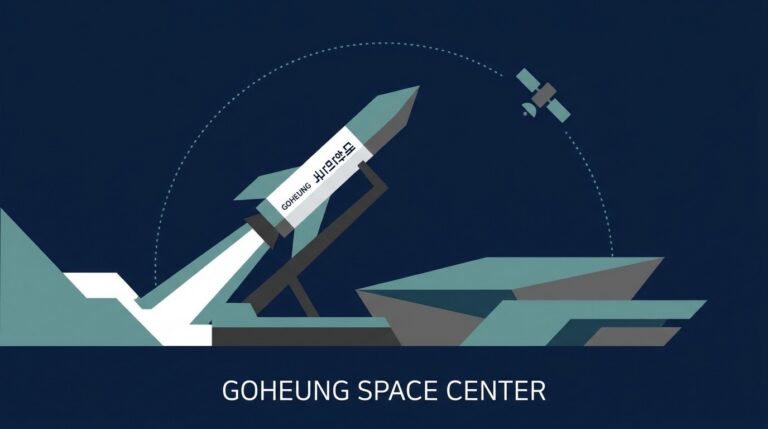
Phase 1: Empathy & Story Opening
안녕하세요! 매일한글 에디터입니다. Have you ever tuned into a high-stakes Korean defense and aerospace forum in Daejeon or Pangyo, only to realize that the conversational register sounds completely detached from everyday conversational Korean? A student of mine, Marcus—a seasoned defense analyst and aerospace engineer who already held a TOPIK level 6—sat in on a bilateral symposium in Seoul regarding South Korea’s burgeoning private space initiatives. While watching coverage of Hanwha Aerospace and KAI (Korea Aerospace Industries) alongside clips from cinematic sci-fi milestones like Space Sweepers (승리호) and The Silent Sea (고요의 바다), Marcus froze during a roundtable discussion. When a speaker remarked, “우주는 단순한 과학적 호기심의 영역을 넘어, 통신·국방·제조가 융합되는 독자적 우주 주권의 격전지입니다,” he understood the individual words, yet struggled to deploy the nuanced institutional vocabulary necessary to articulate his own company’s technical stance.
That awkward friction between textbook fluency and true executive discourse is precisely why we designed this guide. Today, outer space is no longer merely romanticized as a starry void of poetic wonder; in Korean industrial policy, it is framed as the 21st century’s most contested geopolitical domain. Mastering this C2-level conceptual apparatus allows you to navigate boardrooms, government R&D presentations, and specialized media discussions without sounding like a tourist quoting a science fiction movie. This guide is crafted using authentic feedback from high-level diplomats, defense liaisons, and aerospace tech leads who needed to master the art of articulating strategic sovereignty in Korean.
Phase 2: Core Expressions Deep Dive
1. 우주 주권을 확보하다 (Uju jugwon-eul hwakbohoda)
- Pronunciation: [U-ju ju-gwo-neul hwak-po-ha-da] (Imagine saying ‘oo-joo’ smoothly, then punching the ‘ju-gwon’ like the decisive assertiveness in the English word ‘sovereignty’, clipping the final ‘da’)
- Literal vs. Real Nuance: Literally “to secure space sovereignty.” In elite institutional settings, it signals an uncompromised, self-reliant capacity to launch, monitor, and defend space assets without relying on foreign launch vehicles or third-party allied intelligence.
- K-Culture Moment: Echoed passionately in real-life press conferences at the Naro Space Center (나로우주센터) and frequently dramatized in political thrillers where ministers debate national autonomy against foreign orbital surveillance.
- Editor’s Insight: The Sino-Korean root Ju-gwon (주권 / 主權) carries immense historical weight in Korea. Framing space as an arena of ju-gwon elevates launch capabilities from a purely commercial project to a non-negotiable national duty.
- Situation Spectrum: Casual 🚫 | Semi-formal ⚠️ | Formal/Executive ✅
- 🤔 Think About It: Does your native language view space primarily as a commercial frontier (“commercial space exploration”) or as a sovereign right intertwined with survival?
2. 저궤도 위성 통신망을 구축하다 (Jeogwedo wiseong tongsinmang-eul guchukhada)
- Pronunciation: [Jeo-gwe-do wi-seong tong-sin-mang-eul gu-chuk-ha-da] (Pronounce ‘jeo-gwe-do’ like a brisk ‘chaw-gway-doe’, flowing seamlessly into ‘tong-shin-mang’)
- Literal vs. Real Nuance: Literally “to construct a Low Earth Orbit (LEO) satellite communications network.” Rather than referring to a basic telecommunications rollout, it implies orchestrating mega-constellations essential for 6G, autonomous defense drones, and next-generation battle management systems.
- K-Culture Moment: Prominently featured in Korean tech documentaries covering private-sector players like Hanwha Systems launching telecommunication satellite arrays to rival Starlink.
- Editor’s Insight: Guchukhada (구축하다 / 構築하다) is an architectonic verb. You don’t just “make” or “plan” a network; you erect it systematically from the ground up against technological headwinds.
- Situation Spectrum: Casual 🚫 | Semi-formal ⚠️ | Formal/Executive ✅
- 🤔 Think About It: Why does Korean corporate culture prefer infrastructural verbs like guchuk over simpler terms like mandeulda when describing software or digital networks?
3. 재사용 발사체 기술을 내재화하다 (Jaesayong balsache gisul-eul naejaehwahada)
- Pronunciation: [Jae-sa-yong bal-sa-che gi-su-reul nae-jae-hwa-ha-da] (Think of ‘jae-sa-yong’ matching ‘re-use’, then ‘nae-jae-hwa’ pronounced crisply, rhyming with ‘internalize’)
- Literal vs. Real Nuance: Literally “to internalize reusable launch vehicle technology.” In high-level strategy, it means liberating domestic industry from foreign component dependency by mastering intellectual property and manufacturing in-house.
- K-Culture Moment: A staple phrase in Korean national assembly hearings regarding aerospace budgets, analyzing how to close the cost-parity gap with SpaceX’s Falcon 9.
- Editor’s Insight: Naejaehwa (내재화 / 內在化) is an indispensable C2 business concept. It means absorbing an external technology so deeply that it becomes part of the nation’s or firm’s organic DNA.
- Situation Spectrum: Casual 🚫 | Semi-formal ⚠️ | Formal/Executive ✅
- 🤔 Think About It: Reflect on how your native culture articulates domestic capability: do you say “build locally” or do you use conceptual equivalents of “internalizing technological ownership”?
Phase 3: Textbook Korean vs. Real Korean
Case 1: Discussing Constellation Urgency
- 📖 교과서 한국어: 우주에 많은 위성을 띄우는 것이 통신에 아주 유리합니다. (Ujue maneun wiseong-eul ttiuneun geosi tongsine aju yurihamnida. / Launching many satellites into space is very advantageous for telecommunications.)
- 🗣️ 진짜 한국어: 저궤도 군집위성 인프라의 조기 선점은 국가 안보 및 차세대 통신 패권과 직결됩니다. (Jeogwedo gunjibwiseong impeura-ui jogi seonjeom-eun gukga anbo mit chasaedae tongsin paegwon-gwa jikgyeol-doemnida. / Early preemption of low-Earth orbit constellation infrastructure directly dictates national security and next-generation telecommunication hegemony.)
- 💡 왜 다를까? In formal executive discourse, elementary causal markers like yurihada (advantageous) are replaced with consequential institutional framing such as ~gwa jikgyeol-doeda (directly tied to) and paegwon (hegemony).
Case 2: Explaining Reusable Rocket Economics
- 📖 교과서 한국어: 로켓을 다시 쓰면 비용을 절약할 수 있습니다. (Rokeseul dasi sseumyeon biyong-eul jeoryakhal su itseumnida. / If we reuse rockets, we can save costs.)
- 🗣️ 진짜 한국어: 발사체 재사용성 확보 없이는 상용 발사 서비스 시장에서 구조적 가격 경쟁력을 담보할 수 없습니다. (Balsache jaesayongseong hwakbo eopsineun sang-yong balsa seobiseu sijang-eseo gujojeok gagyeok gyeongjaengnyeog-eul dambohal su eopseumnida. / Without securing launch vehicle reusability, guaranteeing structural price competitiveness in the commercial launch market is fundamentally untenable.)
- 💡 왜 다를까? Professional Korean avoids colloquial verb compounding like dasi sseuda in favor of precise Sino-Korean abstract nouns (jaesayongseong) and rigorous financial verbs (dambohada).
Phase 4: K-Culture Deep Dive & Non-Verbal Nuance
4-1. Nunchi & Boardroom Gravitas in Aerospace
When debating space policy with senior officials from KARI (한국항공우주연구원 – Korea Aerospace Research Institute) or defense ministries, verbal assertiveness must be balanced with non-verbal composure. Direct contradiction is considered abrasive. Instead of interrupting an elder researcher or director with an abrupt “그건 다릅니다” (That’s different), professionals maintain an upright posture, offer a deliberate two-second contemplative nod, and open with, “박사님의 고견에 깊이 공감하며, 이에 더하여…” (Concurring deeply with the doctor’s profound insight, building upon this…). Keep your eye contact steady but soften your gaze to communicate intellectual deference while advancing sharp, uncompromising strategic data.
4-2. Cultural Code: The Leap from ‘Suri’ to ‘Nuri’
South Korea’s popular culture reflects an acute cultural awareness of national technological self-reliance. While sci-fi films like Space Sweepers envision an untamed commercial orbital wasteland where Korean crews survive via grit and makeshift tech, real-world Korea views the launch of the Nuri (누리호) rocket as a monumental collective milestone. In Korean society, space technology is celebrated alongside national prestige. Achieving an indigenous orbital ecosystem isn’t just an engineering milestone; it represents healing historical vulnerabilities by securing undisputed strategic autonomy in the sky.
Phase 5: Real-World Roleplay Scenario
Setting: A strategic partnership boardroom in Daejeon Daedeok Innopolis. Dr. Han Min-seok (Senior Chief Scientist at an aerospace agency) sits across from you, the Overseas Technology Director.
- Dr. Han: 이번 한미 우주 협력 포럼에서 제안하신 저궤도 위성 군집망 사업 계획서를 면밀히 검토했습니다. (Ibeon Han-Mi uju hyeopryeok poreom-eseo jean-hasin jeogwedo wiseong gunjibmang sa-eop gyehoekseo-reul myeonmilhi geomto-haetseumnida. / We have meticulously reviewed the low-Earth-orbit satellite constellation proposal you submitted at the Korea-US Space Cooperation Forum.)
- You: 🎭 Nodding slowly, placing hands flat on the conference folder 경청해 주셔서 감사합니다, 박사님. 현 시점에서 독자적 통신망 구축의 전략적 시급성에 초점을 맞췄습니다. (Gyeongcheonghae jusyeoseo gamsahamnida, baksanim. Hyeon sijeom-eseo dokjadeok tongsinmang guchuk-ui jeollyakjeok sigeupseong-e chojeom-eul matchwotseumnida. / Thank you for your careful consideration, Dr. Han. At this juncture, we placed our primary focus on the strategic urgency of establishing an autonomous communications constellation.)
- Dr. Han: 취지는 공감합니다만, 현행 해외 발사체 외주 용역 방식으로는 장기적 주권 확보에 한계가 있지 않겠습니까? (Chwijineun gonggamhamnidamam, hyeonhaeng hae-oe balsache oeju yong-yeok bangsigeuro-neun jang-gijeok jugwon hwakboe han-gye-ga itji ankessumnikka? / I sympathize with the intent, but wouldn’t relying on overseas launch outsourcing services pose structural limitations to our long-term sovereignty?)
- You: 🎭 Leaning forward slightly, lowering vocal pitch for authoritative gravitas 바로 그 지점 때문에, 발사체 재사용성 기술의 국내 라이선스 생산 및 기술 이전 로드맵을 선제적으로 병행하고자 합니다. (Baro geu jijeom ttaemune, balsache jaesayongseong gisul-ui gungnae raiseonseu saengsan mit gisul ijeon rodeumaeb-eul seonjejeog-euro byeonghaenghagoja hamnida. / Precisely because of that concern, we intend to preemptively run domestic licensed production and technology transfer roadmaps for reusable launch tech in parallel.)
- Dr. Han: 🎭 Taking off glasses, looking intently 기술 이전(Tech transfer)이라… 그 과정에서 발생할 수 있는 안보 규제 리스크는 어떻게 헷지(hedge)할 계획입니까? (Gisul ijeon-ira… Geu gwajeong-eseo balsaenghal su inneun anbo gyuje riseukeuneun eotteoke hejji-hal gyehoek-imnikka? / Technology transfer… How do you plan to hedge against national security compliance risks arising during that process?)
- You: 🎭 Displaying an executive slide on the display monitor 양국 국방 수출 통제 프레임워크를 준수하는 특수 목적 합작법인을 설립하여 규제 허들을 원천 차단할 방침입니다. (Yang-guk gukbang suchul tongje peureimweokeu-reul junsuhaneun teuksu mokjeok hapjakbeob-in-eul seollibhayeo gyuje heodeul-eul woncheon chadanhal bangchim-imnida. / We plan to decisively preempt regulatory hurdles by establishing a special-purpose joint venture complying with bilateral defense export control frameworks.)
- Dr. Han: 🎭 Nodding approvingly, stroking chin 일견 타당한 접근법이군요. 상용 우주 시장의 단가 경쟁력 확보 방안도 연계되어 있습니까? (Ilgyeon tadanghan jeopgeunbeob-igun-yo. Sang-yong uju sijang-ui danga gyeongjaengnyeok hwakbo bang-ando yeongye-doeo itseumnikka? / That appears to be a plausible approach. Does this also link directly into securing unit-cost competitiveness in the commercial space market?)
- You: 🎭 Smiling with calm confidence 물론입니다. 발사체 1단 엔진의 재사용 주기 단축을 통해 발사 단가를 60% 이상 절감하는 경제성을 확보했습니다. (Mollon-imnida. Balsache ildan enjin-ui jaesayong jugi danchug-eul tonghae balsa danga-reul yuksip peosenteu isang jeolgamhaneun gyeongjeseong-eul hwakbo-haetseumnida. / Absolutely. By drastically contracting the turnaround cycle of the first-stage engine, we have locked in economic viability, reducing launch costs by over 60%.)
🔀 Interactive Choice Junction
Dr. Han suddenly asks: “What happens if allied regulatory approval is delayed by more than 18 months?”
- Choice A: “기다리는 동안 국내 연구진 독자 개발로 바로 전환하면 큰 문제 없을 것입니다.”
- Choice B: “규제 지연 시나리오에 대비해 국내 독자 발사체 플랫폼과의 듀얼 트랙(Dual-track) 백업 프로토콜을 이미 수립해 두었습니다.”
- Choice C: “미국 정부에 로비를 더 적극적으로 해서 일정을 무조건 맞추겠습니다.”
Detailed Scenario Feedback:
* Choice A (Risk): Dismissing regulatory friction with naive optimism (“큰 문제 없을 것”) undermines your executive authority. Defense panels hate wishful thinking.
* Choice B (Best): Stellar. It demonstrates operational risk management using executive nomenclature (듀얼 트랙, 백업 프로토콜, 독자 발사체 플랫폼).
* Choice C (Bad): Relying on informal lobbying sounds unprofessional, disregards bilateral regulatory regimes, and triggers instant skepticism from veteran state researchers.
Phase 6: 10-Second Emotion Shadowing Drill
- [💼 단호하고 통찰력 있게 – Firm, measured, and strategically authoritative]
우주는 / 단순한 미지의 탐색지가 아니라, / 국가의 사활이 걸린 / 전략적 완충 지대입니다.
(Ujuneun / dansunhan miji-ui tamsaekjiga anira, / gukga-ui sahwal-i geollin / jeollyakjeok wanchung jidae-imnida.)
(Space is not merely an unexplored realm, but a strategic buffer zone upon which national destiny hinges.) -
[📈 확신에 차서 미래지향적으로 – Confident, visionary, and compelling]
재사용 발사체의 엔진 내재화 없이는, / 저궤도 위성망의 상용 수익 모델을 / 절대로 담보할 수 없습니다.
(Jaesayong balsache-ui enjin naejaehwa eopsineun, / jeogwedo wiseongmang-ui sang-yong suik moder-eul / jeoldaero dambohal su eopseumnida.)
(Without internalizing reusable rocket engines, we can never guarantee a viable commercial profit model for LEO networks.)
Phase 7: K-Culture Mini Dictionary
- 우주항공청 (Ujuhanggongcheong / KASA – Korea AeroSpace Administration):
Korea’s recently inaugurated national space agency headquartered in Sacheon. In executive conversation, refer to KASA to signify awareness of South Korea’s new unified command center for aerospace policy. - 독자 발사체 (Dokja Balsache – Indigenous Launch Vehicle):
A launch vehicle engineered entirely through domestic sovereign supply chains without restrictive foreign munitions licensing constraints. - 뉴 스페이스 (Nyu Seupeiseu – New Space):
The paradigm transition away from government-led space programs (Old Space) toward agile, private-sector-driven orbital commercialization. - 군집위성 (Gunjibwiseong – Satellite Constellation):
Multiple coordinated small-to-medium satellites deployed in low Earth orbit acting as an interconnected orbital mesh.
Phase 8: Traveler / Expat Pro Survival Kit
Survival Expressions for Aerospace Field Visits
- 보안 인가 절차가 완료되었는지 사전 확인 부탁드립니다.
(Boan inga jeolchaga wanryo-doeeonneunji sajeon hwag-in butakdeurimnida.)
Pro Tip: Defense and aerospace institutes (like KARI or Agency for Defense Development) have intense national security clearances. Use this when arriving at the security gate. - 연구동 내부의 기술 유출 방지 보안 규정을 준수하겠습니다.
(Yeongudong naebu-ui gisul yuchul bangji boan gyujeong-eul junsuhagetsumnida.)
Pro Tip: Signals to military and academic hosts that you respect strict ITAR-equivalent protocols. - 상용화 로드맵 관련 브리핑 자료를 수령할 수 있을까요?
(Sang-yonghwa rodeumaep gwanryeon beuriping jaryo-reul suryeonghal su isseulkkayo?)
Pro Tip: The most elegant way to request executive presentation packets from conference organizers.
Editor’s Travel Note: Visiting the Korean Space Cluster
When traveling to aerospace hubs such as Daejeon Daedeok Innopolis or the Naro Space Center in Goheung, foreign navigation systems frequently fail due to security mapping regulations. Ensure you utilize the Naver Map app download to navigate regional transit and high-tech research clusters reliably. Keep your physical passport accessible at all times; defense research campuses will deny badge access for digital scans.
Phase 9: 한 발 더 깊이 (Reflective Essay)
To understand Korean space policy, one must grasp how geography shaped modern Korean history. Surrounded historically by continental empires and maritime powers, the Korean Peninsula has always treated defense sovereignty as an existential condition. Consequently, when South Korean engineers discuss rockets and low-Earth-orbit communication webs, it is never treated merely as a venture-capital playground or romantic science. It is considered the ultimate modern fortress—an unassailable orbital defense canopy guaranteeing that the nation’s communications, defense deterrence, and digital supply chains can never be severed by regional geopolitical turmoil.
💬 Your Turn: How does your home country culturally frame outer space? Is it seen primarily as an entrepreneurial Gold Rush, or as a strategic sanctuary of national sovereignty? Share your perspective in the comments below!
Phase 10: FAQ & Common Mistakes
Q: Can I use “우주를 개발하다” instead of complex phrases like “우주 주권을 확보하다”?
A: In casual conversation, ujureul gaebalhada (developing space) is completely fine. However, in formal strategic contexts, gaebalhada sounds overly simplistic—similar to saying “making space things.” Use 우주 영토를 개척하다 (pioneering space territory) or 우주 주권을 확보하다 (securing space sovereignty) to command respect in professional settings.
Q: What is the exact nuance difference between 위성망 (wiseongmang) and 군집위성 (gunjibwiseong)?
A: Wiseongmang refers broadly to any satellite communications network. Gunjibwiseong specifically highlights the collective swarm architecture of dozens or thousands of small satellites operating as a synchronized orbital constellation.
Q: How do I address senior Korean aerospace researchers politely?
A: Always append 박사님 (Baksanim / Doctor) or their institutional title like 연구위원님 (Yeonguwiweon-nim) or 단장님 (Danjangnim / Head of Mission). Never address them merely as 선생님 or by their bare name.
🚨 Common Mistakes
- Mistake 1: Translating “reusable rocket” as 다시 쓰는 로켓 (Dasi sseuneun roket).
Correct Action: Always utilize the proper Sino-Korean technical term: 재사용 발사체 (Jaesayong balsache). - Mistake 2: Using 독립 (Dongnip) instead of 독자적 (Dokjadeok) when referring to domestic proprietary technology.
Correct Action: Dongnip evokes historical liberation from colonial rule. For independent technology or launch platforms, use 독자 기술 (Dokja gisul) or 자립화 (Jariphwa). - Mistake 3: Saying SpaceX처럼 우주를 장악하다 (Dominating space like SpaceX).
Correct Action: Jang-akhada sounds overly imperialistic and aggressive. Instead, use 우주 시장 점유율을 확대하다 (expanding space market share) or 우주 주도권을 선점하다 (preempting space initiative).
Phase 11: Action Missions
- Bronze Mission (Solo Practice): Read Phase 6’s Shadowing Sentences out loud three times, matching the gravitas of a senior aerospace executive delivering a keynote.
- Silver Mission (Social Engagement): Write a 2-sentence summary in Korean explaining why reusable rockets are critical for space economics, utilizing the terms 재사용 발사체 and 가격 경쟁력, and share it on your study feed.
- Gold Mission (Real-world Deployment): Tune into a live or recorded launch broadcast from KARI or a briefing by the Korea AeroSpace Administration (우주항공청). Identify at least three instances where the anchors use 독자, 주권, or 선점.
- 🎮 K-Culture Mission: Watch the movie Space Sweepers (승리호) or The Silent Sea (고요의 바다) with Korean subtitles enabled. Take notes on how orbital jurisdictions and corporate mining rights are discussed.
Phase 12: Interactive Quiz Challenge
1. Contextual Judgment
During a state council meeting regarding satellite communications, an advisor says: “우리는 외국 로켓을 빌려 타면 되기 때문에 독자 발사체가 급하지 않습니다.” Why does this trigger sharp criticism from Korean defense strategists?
* A) Foreign rockets are always cheaper than domestic ones.
* B) Relying entirely on foreign launch capacity forfeits independent space sovereignty and leaves national security exposed during geopolitical crises.
* C) Foreign launch sites do not allow Korean satellites to orbit over East Asia.
🔍 View Answer & Explanation
Correct Answer: B
In Korean strategic discourse, relying entirely on foreign commercial launch providers compromises 우주 주권 (space sovereignty). Without domestic launch capabilities, satellite deployment can be delayed or blocked during geopolitical emergencies.
2. Fill-in-the-Blank
우주 스타트업이 글로벌 경쟁력을 확보하기 위해서는 발사체 핵심 부품 기술의 국내 ( )가 필수적이다. (To secure global competitiveness, space startups must achieve domestic internalization of core launch vehicle components.)
* A) 일반화 (Generalization)
* B) 내재화 (Internalization)
* C) 사유화 (Privatization)
🔍 View Answer & Explanation
Correct Answer: B (내재화 – Naejaehwa)
내재화 specifically denotes domestic absorption and technical mastery of high-end proprietary engineering.
3. True / False Cultural Check
True or False: In contemporary South Korean public policy, the transition from ‘Old Space’ to ‘New Space’ means that government agencies like KARI are being completely abolished in favor of private corporations.
🔍 View Answer & Explanation
Correct Answer: FALSE
Under the New Space model, the government does not vanish; rather, KASA and KARI transition toward fundamental research, defense oversight, and civil infrastructure, while actively transferring core launch technologies over to private industrial anchors (such as Hanwha Aerospace and Korea Aerospace Industries).
🎬 Watch Our Daily Videos! (Daily Hangul Official Instagram)
Review the expressions you learned in this article with our fun daily short videos! Check out native pronunciation and real-life nuances in action.
- Instagram @dailyhangul_en







