

Phase 1: 공감 (Story-Immersive Opening)
안녕하세요! 매일한글 에디터입니다. (Hello! It’s your Daily Hangul editor.)
Picture this: It is a gorgeous spring afternoon in Seoul. The cherry blossoms along the Han River look like a scene straight out of a romance K-Drama, and you are ready to live your best life in Korea. But suddenly, your eyes begin to sting. Within an hour, they feel like someone tossed a handful of rough beach sand directly under your eyelids! Welcome to the infamous yellow dust (황사) and fine dust (미세먼지) season of Korea.
Like an idol desperately blinking through allergies during a live broadcast, you frantically rub your eyes with your sleeve. The next morning? You wake up with swollen, bright red eyelids. Panic sets in: “How on earth do I explain this at a Korean clinic? What if the doctor scolds me?”
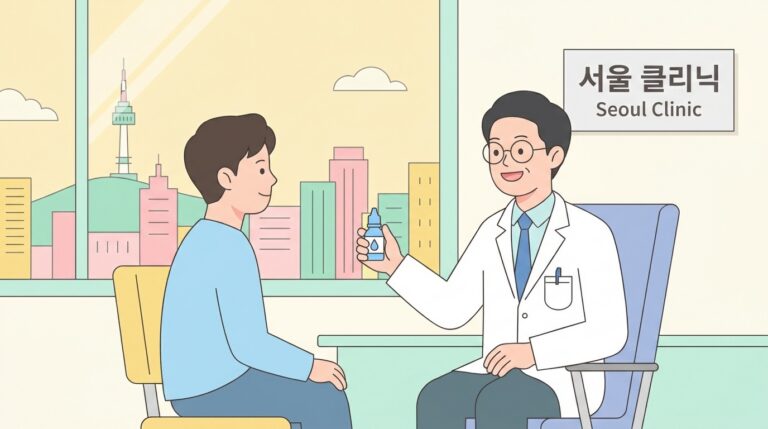
Visiting an eye clinic (안과) in a foreign country can be overwhelming when your vision is blurry and your medical Korean is limited. But take a deep breath! Today, we are mastering the single most important piece of advice every Korean ophthalmologist gives: “손으로 눈을 절대 비비지 마시고 처방해 드린 안약을 넣으세요” (Never rub your eyes with your hands, and apply the prescribed eye drops). Based on real-world experiences from expat students and travelers, this guide will turn your hospital stress into pure confidence.
Phase 2: 핵심 표현 3선 심층 분석 (Top 3 Core Expressions)
1. 손으로 눈을 절대 비비지 마세요 (Son-euro nuneul jeoldae bibiji maseyo)
- Pronunciation: [Son-eu-ro nu-neul jeol-dae bi-bi-ji ma-se-yo] (Sound analogy: Imagine “son” + “noon” + English “bee-bee” + “say yo”)
- Meaning: Literal: “With hands, eyes absolutely do not rub.” / Nuance: “Please, whatever you do, never rub your eyes with your bare hands!”
- K-Culture Moment: In medical dramas like Hospital Playlist, whenever a distressed patient touches their swollen eye, the attentive doctor immediately catches their wrist and says this line with firm, gentle concern.
- Editor’s Insight: The word ‘절대’ (jeoldae) means “absolutely / never.” When paired with ‘-지 마세요’ (-ji maseyo), it elevates a standard polite request into a crucial medical warning to prevent corneal scratches.
- Situation Spectrum: Casual ⚠️ | Semi-formal ✅ | Formal ✅
- 🤔 Think About It: Notice how Korean places the tool first: ‘손으로’ (with hands). In English, we usually just say “Don’t rub your eyes,” but Korean explicitly flags the vector of bacteria—dirty hands!
2. 처방해 드린 안약을 넣으세요 (Cheobanghae deurin anyageul neoeuseyo)
- Pronunciation: [Cheo-bang-hae deu-rin an-ya-geul neo-eu-se-yo] (Sound analogy: “cheo” like *churn, “an-yak” like on-yack, “neo” like nuh)*
- Meaning: Literal: “Put in the eye drops that I gave as a prescription.” / Nuance: “Make sure to apply the eye drops I have prescribed for you.”
- K-Culture Moment: In K-pop variety shows, you will often see idols carrying tiny individual plastic eye drop vials in their cosmetic bags, faithfully applying them before filming under bright studio lights.
- Editor’s Insight: The verb ‘넣다’ (neota) literally means “to put in / insert.” While English speakers say “apply eye drops” or “take drops,” Koreans say “put drops into (the eyes).” Notice also ‘처방해 드린’ uses the humble verb ‘드리다’ (deurida) instead of ‘주다’ (juda), showing polite respect from doctor to patient.
- Situation Spectrum: Casual 🚫 | Semi-formal ✅ | Formal ✅
- 🤔 Think About It: Why does the doctor use humble honorific language towards you, the patient? In Korea’s modern service culture, healthcare professionals honor patients as respected clients.
3. 눈이 간지러워요 (Nuni ganjireowoyo) / 눈이 가려워요 (Nuni garyeowoyo)
- Pronunciation: [Nu-ni gan-ji-reo-wo-yo] / [Nu-ni ga-ryeo-wo-yo]
- Meaning: Literal: “My eyes are ticklish / itchy.” / Nuance: “My eyes itch so badly!”
- K-Culture Moment: Whenever outdoor reality show cast members run through dusty fields on Running Man, they squint and whine this exact phrase to their staff.
- Editor’s Insight: Both verbs describe itching. ‘가렵다’ (garyeopda) is standard and medically precise, while ‘간지럽다’ (ganjireopda) is the go-to expressive word in everyday spoken Korean.
- Situation Spectrum: Casual ✅ | Semi-formal ✅ | Formal ⚠️
- 🤔 Think About It: In English, “ticklish” and “itchy” are separate concepts. In Korean, ‘간지럽다’ comfortably covers both allergic itch and feather tickling!
Phase 3: 교과서 한국어 vs 진짜 한국어 (Textbook vs. Real-Life Korean)
Situation 1: Describing your symptoms to the doctor
- 📖 교과서 한국어: “안구에 소양감이 심합니다.” (Angu-e soyanggami simhamnida. – “I am experiencing severe pruritus in the ocular area.”)
- 🗣️ 진짜 한국어: “눈이 너무 가렵고 뻑뻑해요.” (Nuni neomu garyeopgo bpeokbpeokhaeyo. – “My eyes are super itchy and feel dry and gritty.”)
- 💡 왜 다를까?: Real Koreans rarely use formal Sino-Korean medical terms like ‘소양감’ (pruritus). Instead, they use vivid descriptive words like ‘뻑뻑하다’ (bpeokbpeokhada – gritty/stiff/dry) to convey the exact physical sensation.
Situation 2: The doctor giving directions for your medicine
- 📖 교과서 한국어: “점안액을 1일 3회 점안하십시오.” (Jeoman-aegeul il-il sam-hoe jeomanhasipsio. – “Instill ophthalmic drops three times per day.”)
- 🗣️ 진짜 한국어: “이 안약 하루에 세 번 넣으시면 돼요.” (I anyak harue se beon neoeusimyeon dwaeyo. – “You can just put these eye drops in three times a day.”)
- 💡 왜 다를까?: Instead of issuing harsh clinical commands with ‘-십시오’, doctors speak comfortably with ‘~시면 돼요’ (-simyeon dwaeyo), meaning “doing it this way will be just right.”
Phase 4: K-Culture 딥다이브 & 비언어적 매너 (Culture & Manners)
4-1. 눈치 (Nunchi) & Clinic Body Language
When you step into the doctor’s consultation room (진료실), offer a light 15-degree head bow. When the doctor says, “턱 올려놓으세요” (Please place your chin here), pull your chair close and place your chin squarely on the slit-lamp microscope rest with your forehead pressed firmly against the top bar. Keep your hands resting in your lap. Never reach up to touch your eyes while talking to the doctor—blinking slowly is the polite way to demonstrate discomfort without touching unsterilized skin.
4-2. Cultural Code: The Fine Dust (미세먼지) Season & Eye Patches
In Korea, seasonal fine dust and yellow dust are national daily concerns. People check apps like MiseMise before even looking out the window! When eye allergies peak, you will frequently see office workers or K-Pop idols at the airport wearing stylish bucket hats paired with a clean white eye patch (안대). In Korean media, an eye patch isn’t seen as strange; it is viewed as a responsible, relatable sign of caring for allergic eyes.
Phase 5: 실전 롤플레이 시나리오 (Real-Life Roleplay)
Setting: ‘맑은안과’ (Clear Eye Clinic) in Sinchon, Seoul.
Characters: Dr. Min (a warm, sharp ophthalmologist) & Alex (an international student battling spring dust).
- Alex: 안녕하세요, 선생님. 눈이 너무 가렵고 빨개졌어요.
(Annyeonghaseyo, seonsaengnim. Nuni neomu garyeopgo bpalgaejyeosseoyo.)
🎭 [Squinting uncomfortably and blinking rapidly, holding hands together]
“Hello, doctor. My eyes are so itchy and have turned red.” -
Dr. Min: 어디 한번 봅시다. 여기에 턱 올려놓으세요.
(Eodi hanbeon bopsida. Yeogie teok ollyeoneoh-euseyo.)
🎭 [Adjusting the microscope gently with a reassuring nod]
“Let’s have a look. Please place your chin right here.” -
Alex: 네, 알겠습니다.
(Ne, algessumnida.)
🎭 [Carefully resting chin on the examination machine without pulling away]
“Yes, understood.” -
Dr. Min: 알레르기성 결막염이네요. 요즘 미세먼지가 심해서 그래요.
(Allereugiseong gyeolmagyeom-ineyo. Yojeum misemeonjiga simhaeseo geuraeyo.)
🎭 [Inspecting the inner eyelids under the blue light]
“It’s allergic conjunctivitis. It’s flaring up because the fine dust is severe lately.” -
Alex: 아, 그렇군요. 간지러워서 저도 모르게 계속 비비게 돼요.
(A, geureokgunyo. Ganjireowoseo jeodo moreuge gyesok bibige dwaeyo.)
🎭 [Looking apologetic and lowering hands to lap]
“Ah, I see. It’s so itchy that I keep rubbing them without realizing it.” -
Dr. Min: 손으로 눈을 절대 비비지 마시고 처방해 드린 안약을 넣으세요.
(Son-euro nuneul jeoldae bibiji masigo cheobanghae deurin anyageul neoeuseyo.)
🎭 [Shaking head gently with serious yet caring eyes]
“Never rub your eyes with your hands, and apply the prescribed eye drops.” -
Alex: 안약은 하루에 몇 번 넣어야 하나요?
(Anyageun harue myeot beon neoeoya hanayo?)
🎭 [Nodding attentively and listening for dosage instructions]
“How many times a day should I put the eye drops in?” -
Dr. Min: 아침, 저녁으로 하루 두 번 넣으시면 금방 가라앉을 거예요.
(Achim, jeonyeogeuro haru du beon neoeusimyeon geumbang garaanjeul geoyeyo.)
🎭 [Printing out the medical prescription with an encouraging smile]
“Put them in twice a day, morning and evening, and the swelling will go down quickly.”
🔀 인터랙티브 분기점 (Interactive Decision Point)
What should Alex say after receiving the printed prescription from Dr. Min?
- Choice A: “네, 감사합니다! 처방전 들고 아래 약국으로 가면 되죠?”
(Ne, gamsahamnida! Cheobangjeon deulgo arae yakgugeuro gamyeon doejo?)
👉 [Best Choice!] Shows you understand Korea’s healthcare flow: clinics write prescriptions, and local pharmacies dispense the medication. - Choice B: “약은 여기서 바로 주시면 안 돼요?”
(Yageun yeogiseo baro jusimyeon an dwaeyo?)
👉 [Bad Choice!] Under Korea’s medical system (의약분업), clinics cannot dispense prescription medicine directly. Asking this creates awkwardness. - Choice C: “그냥 참으면 약 안 넣어도 낫겠죠?”
(Geunyang chameumyeon yak an neoeodo natgetjyo?)
👉 [Risk Choice!] Untreated allergic conjunctivitis can lead to severe bacterial infections or corneal abrasions. Always take the prescribed drops!
Phase 6: 10초 감정 섀도잉 드릴 (10-Second Emotion Shadowing)
Practice reading these out loud with rhythm (/) and distinct emotional tones:
- [🥺 답답하고 괴로운 목소리로 / Frustrated & uncomfortable]
“선생님, / 눈이 너무 가렵고 / 모래가 들어간 것 같아요.”
(Seonsaengnim, / nuni neomu garyeopgo / moraega deureogan geot gat-ayo.)
“Doctor, / my eyes are so itchy / and it feels like sand is trapped inside.” -
[👨⚕️ 단호하지만 다정하게 / Firm yet genuinely caring]
“손으로 눈을 / 절대 비비지 마시고, / 안약 꼬박꼬박 넣으세요.”
(Son-euro nuneul / jeoldae bibiji masigo, / anyak kkobak-kkobak neoeuseyo.)
“Never rub your eyes / with your hands, / and apply your eye drops diligently.” -
[😌 안도하며 감사하는 태도로 / Relieved & polite]
“네, 알겠습니다! / 처방해 주신 안약 / 잘 챙겨 넣을게요.”
(Ne, algessumnida! / Cheobanghae jusin anyak / jal chaenggyeo neoeulgeyo.)
“Yes, understood! / The prescribed eye drops / I will make sure to apply regularly.”
Phase 7: K-Culture 미니 사전 (Mini Medical Dictionary)
- 안과 (An-gwa) | Ophthalmology / Eye Clinic
Usage: In Korea, you do not need a referral letter from a primary physician to visit an eye clinic. Look for signs with the letter ‘안’ on commercial buildings and walk right in! - 처방전 (Cheobangjeon) | Medical Prescription
Usage: The paper slip handed to you at the clinic reception desk when checking out. Hand this directly to the pharmacist next door. - 인공눈물 (In-gong-nun-mul) | Artificial Tears
Usage: Single-use saline tubes used universally across Korea. You can buy lubricating drops over-the-counter at any pharmacy without a prescription. - 알레르기성 결막염 (Allereugiseong Gyeolmagyeom) | Allergic Conjunctivitis
Usage: The most common diagnosis during pollen and dust season. Knowing this term helps you understand your printed receipt.
Phase 8: 여행자를 위한 생존 키트 (Traveler’s Survival Kit)
Survival Expressions TOP 3
- “근처에 안과나 약국이 어디에 있나요?”
(Geuncheoe an-gwana yakgugi eodie innayo?)
Pro Tip: Use this at your hotel reception or convenience store to locate medical help nearby. - “렌즈 낀 상태에서 안약 넣어도 되나요?”
(Renjeu kkin sangtae-eseo anyak neoeodo doenayo?)
Pro Tip: Crucial! Most medicated anti-allergy drops require taking your contact lenses out first. - “눈이 심하게 충혈됐어요.”
(Nuni simhage chunghyeoldwaesseoyo.)
Pro Tip: ‘충혈’ (chunghyeol) means bloodshot. Use this if your eyes look strikingly red.
Editor’s Travel Note
- Search for clinics easily using the Naver Map app download. Simply type “안과” (eye clinic) or “이비인후과” (ENT clinic) to see wait times and reviews.
- As a tourist without Korean National Health Insurance, walk-in consultations at local neighborhood clinics are very affordable (typically around 15,000 to 30,000 KRW). Always carry your passport!
Phase 9: “한 발 더 깊이” (Cultural Essay)
In Korean healthcare, doctor-patient interactions carry a unique cultural warmth known as Jeong (정). When an English-speaking doctor tells you, “Avoid rubbing your eyes,” the statement is phrased objectively and neutrally. However, when a Korean doctor says “손으로 눈을 절대 비비지 마세요”, the use of the caring prohibitive ending ‘~지 마세요’ carries the emotional weight of a caring older sibling or parent reminding you not to hurt yourself. This gentle scolding isn’t cold judgment; it is active medical empathy in Korean society.
💬 Your Turn: How do doctors in your home country phrase warnings? Do they sound strictly professional, or warm and familial like in Korea? Share your story in the comments below!
Phase 10: FAQ & 오해 방지 (FAQ Schema)
Q: Can I buy allergy eye drops at a Korean pharmacy without visiting a doctor?
A: Yes! You can walk into any pharmacy (약국) and say “알레르기 안약 주세요” (Allereugi anyak juseyo). However, over-the-counter drops are milder. If your eyes are severely swollen or painful, visiting an 안과 (which takes about 10 minutes) ensures you receive stronger, targeted prescription medication.
Q: Do I need an appointment before walking into a Korean eye clinic?
A: No! Over 90% of neighborhood eye clinics (동네 안과) operate on a first-come, first-served basis. Simply walk in, present your passport or Alien Registration Card at the reception desk (접수처), and wait for your name to be called.
Q: Where do I find the pharmacy to fill my prescription?
A: In Korea, pharmacies are almost always located on the first floor of the very same building as the clinic, or right next door. Look for the large red or green character “약”.
🚨 흔한 실수 (Common Mistakes) Warning Board
- Mistake 1: Instilling prescription allergy drops directly over contact lenses.
Correct Action: Remove contact lenses, administer the drops, and wait at least 15 minutes before putting lenses back in. - Mistake 2: Assuming ‘인공눈물’ (artificial tears) will cure allergic inflammation.
Correct Action: Artificial tears only rinse allergens away. You need antihistamine/steroid drops prescribed by the doctor to stop the itching. - Mistake 3: Walking out of the clinic expecting them to hand you bottles of eye drops.
Correct Action: Clinics only provide the examination and prescription paper (처방전). You must take the paper to a pharmacy (약국) to buy your medicine.
Phase 11: 액션 미션 & 참여 유도 (Action Missions)
- 🥉 Bronze Mission: Stand in front of your mirror and practice saying the doctor’s key rule out loud 3 times: “손으로 눈을 절대 비비지 마세요!”
- 🥈 Silver Mission: Write a comment below describing an eye issue using A2 grammar: “선생님, 눈이 너무 [가려워요 / 뻑뻑해요 / 빨개요]!”
- 🥇 Gold Mission: Walk into a Korean pharmacy or clinic and ask: “하루에 몇 번 넣어요?” (Harue myeot beon neoeoyo? – How many times a day do I apply this?).
- 🎮 K-Culture Mission: Watch an episode of a Korean drama and listen closely whenever a character visits a doctor. Count how many times the doctor uses ‘~지 마세요’ or ‘~세요’!
Phase 12: 인터랙티브 퀴즈 챌린지 (Quiz Challenge)
1. [Situation Judgment] Your eyes are stinging and bloodshot due to springtime fine dust in Seoul. What should you tell the clinic receptionist?
* A) 눈이 배고파요. (Nuni baegopayo.)
* B) 눈이 너무 가렵고 충혈됐어요. (Nuni neomu garyeopgo chunghyeoldwaesseoyo.)
* C) 안약을 비벼 주세요. (Anyageul bibyeo juseyo.)
2. [Fill-in-the-Blank] Choose the word that means “absolutely / never”:
“손으로 눈을 ( ) 비비지 마세요.”
* A) 절대 (jeoldae)
* B) 조금 (jogeum)
* C) 항상 (hangsang)
3. [True or False] In Korea, you must always schedule an appointment weeks in advance to visit a local neighborhood eye clinic.
* True / False
👉 Click here for Answers & Explanations!
- 1. Correct Answer: B (눈이 너무 가렵고 충혈됐어요 = My eyes are very itchy and bloodshot. A means “my eyes are hungry,” and C makes no sense!)
- 2. Correct Answer: A (절대 = absolutely/never. 조금 means “a little,” and 항상 means “always.”)
- 3. Correct Answer: False (Local clinics in Korea are walk-in friendly! Just show up with identification and register at the desk.)
🎬 Watch Our Daily Videos! (Daily Hangul Official Instagram)
Review the expressions you learned in this article with our fun daily short videos! Check out native pronunciation and real-life nuances in action.
- Instagram @dailyhangul_en







