

How to Enjoy Korean Museums Like a Local: Mastering QR Code Audio Guides
Phase 1: Empathy & Immersion Opening
안녕하세요! 매일한글 에디터입니다.
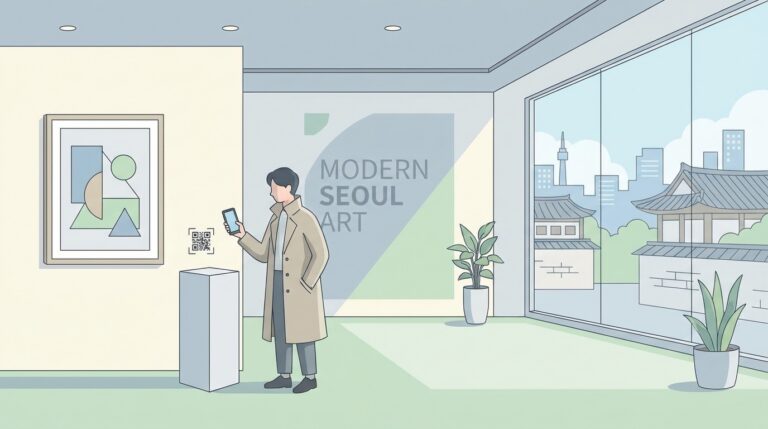
Picture this: You step into the sunlit, serene courtyard of the National Museum of Modern and Contemporary Art (MMCA) in Seoul. You see stunning contemporary paintings, and next to each artwork, stylish locals in minimalist outfits point their smartphones at small square codes mounted on the wall, slip in their wireless earbuds, and nod with deep appreciation. You walk over to the information counter expecting to receive a heavy, traditional audio guide device hanging from a lanyard. Instead, the smiling staff member gently tells you: “스마트폰으로 작품 옆에 있는 QR코드를 찍으면 해설을 들을 수 있어요.”
Suddenly, your mind freezes. “Wait, ‘찍으면’ (jjikmyeon)? Doesn’t that mean taking a photo? Do I need a special Korean app? What if my roaming data runs out?” Don’t worry at all! Over 90% of modern exhibitions in Korea have replaced clunky rental devices with super-fast, mobile-friendly QR audio guides. With just a few simple phrases, you can transform your gallery walk into a stress-free cultural journey. This lesson is built directly from real experiences shared by our global learners who visited Seoul’s art spots!
Phase 2: Top 3 Core Expressions In-Depth
1. QR코드를 찍다 (QR kodeureul jjikda)
- Pronunciation: [QR kodeureul jjikda] (Think of ‘jjik’ like the crisp click sound of a camera shutter snapping shut)
- Meaning: Literal: To stamp/snap a QR code | Actual: To scan a QR code with your smartphone camera
- K-Culture Moment: Seen frequently in K-dramas when trendy characters visit pop-up stores in Seongsu-dong or enter chic art exhibitions.
- Editor’s Insight: In Korean, the action verb
찍다(jjikda) is an all-purpose tactile word. You use it for taking photos (사진을 찍다), stamping ink seals (도장을 찍다), and tapping transit cards (교통카드를 찍다). In digital contexts, scanning a code is always찍다! - Situation Spectrum: Casual: ✅ | Semi-formal: ✅ | Formal: ✅
- 🤔 Think About It: In English, we use the technical word “scan,” but Korean prefers the physical, sensory action word “to stamp/snap” (
찍다). What does this reveal about how everyday language visualizes touch screen interactions?
2. 해설을 듣다 (haeseoreul deutda)
- Pronunciation: [haeseoreul deutda] (Pronounce ‘hae-seol’ smoothly, and ‘deut’ rhymes with ‘foot’ but with a shorter d-sound)
- Meaning: Literal: To hear the explanation | Actual: To listen to the audio guide commentary
- K-Culture Moment: In museum travel vlogs by K-pop idols, they often put on earbuds and remark how different a piece feels when listening to the artist’s
해설. - Editor’s Insight: While
설명(seolmyeong) means general explanation,해설(haeseol) specifically refers to thoughtful, artistic, or cultural commentary. When visiting galleries or sports matches, you will always hear해설. - Situation Spectrum: Casual: ✅ | Semi-formal: ✅ | Formal: ✅
- 🤔 Think About It: Why do you think museums curate “commentary” (
해설) rather than simply providing raw factual “information” (정보)?
3. ~으면 들을 수 있어요 (~eumyeon deureul su isseoyo)
- Pronunciation: [~eumyeon deureul su isseoyo] (Flow ‘deu-reul’ together without a harsh stop)
- Meaning: Literal: If you do…, you are able to listen | Actual: If you [action], you can listen to it
- K-Culture Moment: Museum docents and café staff in Seoul constantly use this structure to kindly guide visitors through automated ordering or digital guides.
- Editor’s Insight: This pattern combines condition
-(으)면(if/when) with capability-(으)ㄹ 수 있어요(can do). It is the friendliest, most polite way to give instructions in Korean without sounding commanding or pushy. - Situation Spectrum: Casual: ⚠️ (Use 들을 수 있어) | Semi-formal: ✅ | Formal: ✅ (들으실 수 있습니다)
- 🤔 Think About It: Rather than saying “Scan the code to listen!”, Korean service staff frame instructions as a gentle condition (“If you scan, you can listen”). How does this reflect Korean customer etiquette?
Phase 3: Textbook Korean vs. Real Korean
Situation 1: Inquiring about a rental audio device at the front desk
- 📖 교과서 한국어 (Textbook): “오디오 가이드 기기를 대여할 수 있습니까?” (Odio gaideu gigireul daeyeohal su isseumnikka? / Can I rent an audio guide device?)
- 🗣️ 진짜 한국어 (Real-world): “오디오 가이드 기기 따로 빌릴 수 있어요?” (Odio gaideu gigi ttaro billil su isseoyo? / Can I rent an audio guide device separately?)
- 💡 왜 다를까? (Why the difference?):
대여하다(daeyeohada) is a stiff Sino-Korean word seen on paperwork. Native speakers in daily conversation overwhelmingly prefer the pure Korean verb빌리다(billida) combined with the approachable ending-ㄹ 수 있어요.
Situation 2: Asking if you can just use your own smartphone
- 📖 교과서 한국어 (Textbook): “스마트폰으로 해설 청취가 가능합니까?” (Seumateuphoneuro haeseol cheongchwiga ganeunghamnikka? / Is commentary listening possible via smartphone?)
- 🗣️ 진짜 한국어 (Real-world): “폰으로 바로 들으면 돼요?” (Poneuro baro deureumyeon dwaeyo? / Can I just listen directly on my phone?)
- 💡 왜 다를까? (Why the difference?): Nobody says
청취(cheongchwi) in casual conversation. Using the shortened word폰(pon) and the super-useful grammar pattern~으면 돼요?(can I just…?) immediately marks you as an intuitive Korean speaker.
Phase 4: K-Culture Deep Dive & Non-Verbal Manners
4-1. 눈치 (Nunchi) & Quiet Etiquette in Korean Art Spaces
Korean art museums are sanctuaries of absolute quietness. When accessing audio commentary via QR code:
* Earbuds are Mandatory: Listening without earphones is a major breach of museum manners and will instantly trigger disapproving side glances (눈치, nunchi) from fellow gallery visitors.
* The Mindful Scan Gesture: Never block another visitor’s view while trying to scan the QR tag. Step forward quietly, bring your phone close to the placard, scan quickly, and step back with a small, courteous nod (목례, mongnye).
* The Shutter Sound: Korean smartphones have an automatic camera shutter sound due to privacy laws. When taking pictures of QR codes, you don’t need to take an actual photo; simply hovering your camera lens over the code will trigger the web link pop-up without a loud click!
4-2. The “Museum Date” Trend in K-Culture
Visiting contemporary art museums (like Leeum, MMCA, or Amorepacific Museum of Art) has become one of the hottest lifestyle trends for young Koreans. Often championed by art-loving celebrities like RM of BTS, museum outings are seen as refined cultural dates where taking quiet notes, listening to audio guides, and discussing artistic perspectives over a nearby café latte form an essential part of weekend leisure.
Phase 5: Real-World Roleplay Scenario
Setting: The information counter right in front of Exhibition Gallery 1 at MMCA Seoul.
Characters: Alex (Curious international traveler) & Minji (Welcoming museum guide).
- Alex: 실례합니다, 오디오 가이드 빌리고 싶은데요. (Sillyehamnida, odio gaideu billigo sipeundeyo. / Excuse me, I would like to rent an audio guide.)
🎭 [Approaches the counter holding a floor map with a friendly smile] - Minji: 아, 관람객님! 요즘은 기기를 따로 안 빌리셔도 돼요. (A, gwallamgaengnim! Yojeumeun gigireul ttaro an billisyeodo dwaeyo. / Ah, visitor! These days you don’t have to rent a device separately.)
🎭 [Smiles warmly and points toward the gallery entrance] - Alex: 그래요? 그럼 해설은 어떻게 들어요? (Geuraeyo? Geureom haeseoreun eotteoke deureoyo? / Really? Then how do I listen to the commentary?)
🎭 [Tilts head slightly with curious eyes] - Minji: 스마트폰으로 작품 옆에 있는 QR코드를 찍으면 해설을 들을 수 있어요. (Seumateuphoneuro jakpum yeope inneun QR kodeureul jjikmyeon haeseoreul deureul su isseoyo. / If you scan the QR code next to the artwork with your smartphone, you can listen to the commentary.)
🎭 [Mimes holding a phone to scan an imaginary code] - Alex: 아, 제 스마트폰 카메라로 바로 찍으면 되나요? (A, je seumateuphon kameraro baro jjikmyeon doenayo? / Ah, can I just scan it directly with my smartphone camera?)
🎭 [Takes smartphone out from pocket] - Minji: 네! 기본 카메라로 비추시면 웹페이지가 바로 열려요. (Ne! Gibon kameraro bichusimyeon wepppeijiga baro yeollyeoyo. / Yes! If you point your default camera at it, the web page opens right up.)
🎭 [Nods gently and hands over a pocket guide brochure] - Alex: 와, 정말 편하네요! 이어폰 챙겨오길 잘했어요. (Wa, jeongmal pyeonhaneyo! Ieopon chaenggyeogil jalhaesseoyo. / Wow, that is so convenient! I am glad I brought my earphones.)
🎭 [Shows wireless earbud case with a relieved expression] - Minji: 센스 만점이시네요! 즐거운 관람 되세요. (Senseu manjeomisineyyo! Jeulgeoun gwallam doeseyo. / You have full marks for common sense! Enjoy your visit.)
🎭 [Bows politely with hands clasped together]
🔀 Interactive Decision Point
Minji just finished explaining the QR system. How do you respond?
* Option A: “혹시 앱을 따로 설치해야 하나요?” (Hoksi aebeul ttaro seolchihaeya hanayo? / By any chance, do I need to install an app separately?)
* Feedback (Best): Perfect question! In most modern Korean museums, you do not need an app; it opens straight in your web browser. Asking this shows high practical awareness.
* Option B: “QR코드 귀찮은데 그냥 기계 주세요.” (QR kodeu gwichaneunde geunyang gigye juseyo. / QR code is annoying, just give me the machine.)
* Feedback (Risk): Be careful! Calling museum systems “귀찮다” (annoying) sounds blunt and rude to staff who are trying to help.
* Option C: “그냥 소리 켜고 들을게요.” (Geunyang sori kyeogo deureulgeyo. / I’ll just turn on the volume and listen out loud.)
* Feedback (Bad): High social penalty! Playing audio out loud violates gallery rules and ruins the peaceful environment for everyone.
Phase 6: 10-Second Emotion Shadowing Drill
Practice these natural rhythm pauses (/) while channeling each emotional nuance:
[😊 설레고 호기심 가득하게 - Excited and curious]
스마트폰으로 / 작품 옆 QR코드를 찍으면 / 해설을 들을 수 있어요!
(Seumateuphoneuro / jakpum yeop QR kodeureul jjikmyeon / haeseoreul deureul su isseoyo!)-
[🤔 차분하고 정중하게 확인하며 - Calm and politely checking]
제 스마트폰 기본 카메라로 / 바로 찍으면 되나요?
(Je seumateuphon gibon kameraro / baro jjikmyeon doenayo?) -
[💡 발견의 기쁨과 감탄을 담아 - Impressed with pleasant discovery]
와, / 앱 설치 없이 / 웹에서 바로 열리네요!
(Wa, / aep seolchi eopsi / wep-eseo baro yeollineyo!)
Phase 7: K-Culture Mini Dictionary
- 관람객 (Gwallamgaek) | Museum/Exhibition Visitor | The standard respectful term museum announcements and docents use to address you in public exhibitions.
- 작품 해설 (Jakpum Haeseol) | Artwork Commentary | The audio track or written guide explaining the artistic concept and historical background of an exhibit.
- 도슨트 (Doseunteu) | Docent / Tour Guide | A popular loanword in Korea referring to in-person guided tour times (e.g., “오후 2시에 도슨트 해설이 있어요”).
- 무료 와이파이 (Muryo Wa-i-pa-i) | Free Public Wi-Fi | Essential service in national museums to stream audio without burning international roaming data.
Phase 8: Survival Kit for Travelers
Survival Expressions TOP 3
- “무료 와이파이 어떻게 연결해요?” (Muryo wa-i-pa-i eotteoke yeongyeolhaeyo? / How do I connect to the free Wi-Fi?)
- Pro Tip: Look out for signage saying
Public WiFi Free. Connecting prevents audio streaming buffering!
- Pro Tip: Look out for signage saying
- “이어폰 빌릴 수 있어요?” (Ieopon billil su isseoyo? / Can I borrow earphones?)
- Pro Tip: If you forgot your headphones, museum info desks often lend basic wired sets or sell eco-friendly earbuds for around 1,000 KRW.
- “영어 해설도 나와요?” (Yeongeo haeseoldo nawayo? / Does an English commentary play too?)
- Pro Tip: Once the QR webpage opens, look at the top right corner for language switches (KO / EN / JA / ZH).
Editor’s Travel Note
When heading to Seoul’s major artistic hubs like Insadong or Hannam-dong, make sure to plan your transit route using the Naver Map App Navigation. Most national galleries offer locker storage near ticket counters for free; simply drop your heavy bags before scanning your first QR code!
Phase 9: “One Step Deeper” (Cultural Reflection)
Korea’s shift toward QR-driven museum guides is a quintessential reflection of Korea’s “Palli-palli” (fast and efficient) spirit meeting smart digital infrastructure. Rather than waiting in long lines to exchange passports for rented audio devices, visitors simply tap their screens and immerse themselves instantly in art. Yet, inside this hyper-connected landscape, absolute personal silence is expected to safeguard collective peace.
💬 Your Turn: Does your home country still use rental audio guide devices, or has it switched to mobile QR codes? Have you ever had a funny or confusing moment trying to use digital guides abroad? Share your story in the comments below!
Phase 10: FAQ & Avoiding Common Mistakes
Q: Do I need to download a special Korean app like KakaoTalk or Naver to read the QR code?
A: In almost all cases, no! Simply open your smartphone’s built-in camera app (iOS or Android) and point it at the code. A small link banner will appear instantly on screen.
Q: What if my phone’s camera doesn’t automatically recognize the QR code?
A: You can open your mobile browser (such as Safari or Chrome) and use the built-in QR scanner widget, or open the search bar in the Naver app and tap the small lens/QR icon.
Q: Is the audio commentary free of charge?
A: Yes, in national and municipal museums (such as the National Museum of Korea or Seoul Museum of Art), standard QR audio commentary is completely free for all exhibits!
🚨 Common Mistakes Alert
- Mistake 1: Tapping the photo shutter button repeatedly and making loud clicking noises.
- Correct Action: Simply hold the camera steady over the code; you do not need to take a photo.
- Mistake 2: Listening to audio on speaker mode because you forgot your earphones.
- Correct Action: Read the transcript text provided on the landing page if you don’t have earbuds, or ask the desk for rental earphones.
- Mistake 3: Standing right in front of the artwork while staring down at your phone.
- Correct Action: Scan the code, step back toward the open gallery floor, and listen comfortably while admiring the art from a distance.
Phase 11: Action Missions & Engagement
- 🥉 Bronze Mission (Solo Practice): Read the shadowing drill sentences aloud 3 times, focusing on natural pauses at
/. - 🥈 Silver Mission (Social Sharing): Screenshot your favorite Korean museum piece or post a photo of a gallery you want to visit on Instagram, tagging
#DailyHangul #MuseumKorean. - 🥇 Gold Mission (Real-world Challenge): On your next visit to a gallery or exhibition, walk up to the counter and ask: “오디오 가이드 기기 따로 빌릴 수 있어요?”
- 🎮 K-Culture Mission: Watch a vlog where your favorite K-drama actor or K-pop star visits an art museum. Spot if they are using their own smartphone to scan exhibition tags!
Phase 12: Interactive Quiz Challenge
1. Situational Judgment: You want to ask the museum staff how to listen to the art commentary using your phone. Which phrase is the most natural for an A2 learner?
* A) “작품 설명을 청취하여 주십시오.”
* B) “폰으로 해설 어떻게 들어요?”
* C) “QR코드를 도장 찍을 수 있습니까?”
Click to view Answer & Explanation
Correct Answer: B
Explanation: “폰으로 해설 어떻게 들어요?” (How do I listen to the commentary on my phone?) is natural, polite, and practical. Option A uses unnatural textbook terminology, and Option C misuses “도장” (ink stamp).
2. Fill-in-the-Blank: Complete the polite sentence: “스마트폰으로 QR코드를 ______ 해설을 들을 수 있어요.”
* A) 찍으면 (jjikmyeon)
* B) 먹으면 (meogeumyeon)
* C) 자르면 (jareumyeon)
Click to view Answer & Explanation
Correct Answer: A
Explanation: 찍으면 comes from 찍다 (to scan/snap). The full sentence means: “If you scan the QR code with your smartphone, you can listen to the commentary.”
3. True or False Cultural Quiz: In Korean museums, it is acceptable to listen to the QR audio commentary on low speaker volume without earphones as long as there is no crowd nearby.
* [ ] True
* [ ] False
Click to view Answer & Explanation
Correct Answer: False
Explanation: Earphones are strictly expected in Korean gallery spaces to uphold quiet exhibition manners (눈치/에티켓). If you don’t have earphones, read the transcript provided on the webpage instead!
🎬 Watch Our Daily Videos! (Daily Hangul Official Instagram)
Review the expressions you learned in this article with our fun daily short videos! Check out native pronunciation and real-life nuances in action.
- Instagram @dailyhangul_en







