

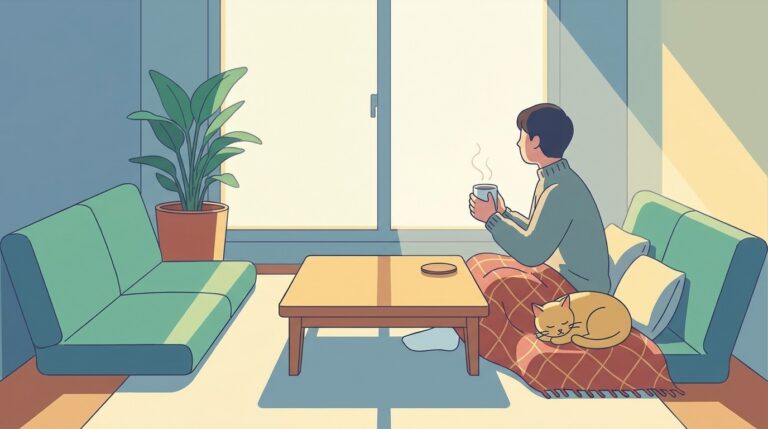
Master the Art of Catching Up in Korean: “푹 쉬었어요 (I Rested Well)”
Phase 1: Empathy (Story-driven Opening)
안녕하세요! 매일한글 에디터입니다.
Picture this: It is 9:00 AM on a crisp Monday morning in Seoul. You step into the pantry of your language academy or office, clutching an iced Americano. Your Korean classmate or coworker turns around, beams warmly, and asks: “주말 잘 보냈어요? (Jumal jal bonaesseoyo? / Did you have a good weekend?)”
Your brain instantly short-circuits. You spent forty-eight glorious hours curled up under your duvet watching K-dramas and recharging your social battery. You want to say “I rested so well!” but your mind scrambles through dictionary grammar tables. Did you sleep? Did you do “nothing”? If you say “아무것도 안 했어요 (Amugeotdo an haesseoyo – I didn’t do anything)”, do you sound miserable or lazy? You stammer, offer an awkward grin, and mutter a robotic “네, 좋았어요 (Ne, joasseoyo / Yes, it was good).”
Take a deep breath! Over the past ten years of coaching beginner learners, this exact pantry freeze-up is one of the top five social hiccups I witness every semester. In Korean culture, asking how someone spent their downtime is not a quiz about your productivity; it is an act of warmth and community care (정, Jeong). Today, we are mastering the ultimate, universally beloved phrase to answer this question with effortless charm: 푹 쉬었어요 (Puk swieosseoyo / I rested well). With this guide, you will transition from an anxious phrasebook reader to a confident, culturally attuned conversationalist.
Phase 2: Core 3 Expressions Deep Dive
1. 푹 쉬었어요 (Puk swieosseoyo)
- Pronunciation:
[Puk swi-eot-seo-yo](Think of a heavy, satisfying “pook” as you sink into a plush memory foam pillow, followed by a soothing sigh: “shwee-ut-suh-yo”). - Meaning: Literal: “I rested deeply/thoroughly” vs. Real Nuance: “I had a truly restorative break / I fully recharged my batteries.”
- K-Culture Moment: Seen in almost every slice-of-life drama when the exhausted main character finally gets a weekend off and returns to work with glowing skin.
- Editor’s Insight: The tiny magic adverb 푹 (puk) changes everything. Saying just 쉬었어요 (I rested) sounds factual and dry. Adding 푹 signals that your rest was deep, satisfying, and revitalizing.
- Situation Spectrum: Casual ⚠️ (Needs informal drop: 푹 쉬었어) | Semi-formal ✅ (
-요polite style, ideal for 90% of daily chats) | Formal ⚠️ (Use 푹 쉬었습니다 in job interviews). - 🤔 Think About It: In English, we often list accomplishments over the weekend (“I went hiking, cleaned the garage”). Why does Korean culture place such immense positive value on proudly declaring that you rested deeply?
2. 주말 잘 보냈어요? (Jumal jal bonaesseoyo?)
- Pronunciation:
[Ju-mal jal bo-nae-sseo-yo?](Sound metaphor: “Joo-mahl” flows like a slow Sunday stroll, “jahl bo-neh-ssuh-yo” sounds gentle and inquiring). - Meaning: Literal: “Did you spend the weekend well?” vs. Real Nuance: “How was your weekend? Hope you had a nice break!”
- K-Culture Moment: The mandatory opening line on Monday mornings across corporate Pangyo tech hubs, university lounges, and hair salons.
- Editor’s Insight: The verb 보내다 (bonaeda) literally means “to send” or “to spend time.” You are asking whether time was treated kindly.
- Situation Spectrum: Casual ⚠️ (주말 잘 보냈어?) | Semi-formal ✅ | Formal ✅ (주말 잘 보내셨습니까?).
- 🤔 Think About It: Notice how Koreans ask if you spent it well rather than demanding what you did. It respects personal privacy while expressing relational concern.
3. 집에서 푹 쉬었어요 (Jib-eseo puk swieosseoyo)
- Pronunciation:
[Ji-be-seo puk swi-eot-seo-yo](Smoothly connect ‘Jib’ and ‘eseo’ like “jee-beh-suh”). - Meaning: Literal: “At home, I rested deeply” vs. Real Nuance: “I had a cozy staycation / I spent the weekend chilling at home.”
- K-Culture Moment: Celebrities on variety shows like I Live Alone (나 혼자 산다) proudly answering interviewers about their holiday plans.
- Editor’s Insight: Adding 집에서 (at home) removes any awkwardness about not having glamorous weekend plans. Staying home to recharge is celebrated as peak wisdom in fast-paced Korea!
- Situation Spectrum: Casual ⚠️ (집에서 푹 쉬었어) | Semi-formal ✅ | Formal ✅.
- 🤔 Think About It: How does your native language describe staying home all weekend? Does it sound antisocial, or does it sound restful?
Phase 3: Textbook Korean vs. Real Korean
Situation 1: Asking how the other person spent their break
- 📖 교과서 한국어 (Textbook Korean): 주말 동안 무엇을 하셨습니까? (Jumal dongan mueoseul hasyeossseumnikka? / What did you do during the weekend?)
- 🗣️ 진짜 한국어 (Real Korean): 주말 잘 보냈어요? (Jumal jal bonaesseoyo? / Did you have a good weekend?)
- 💡 왜 다를까? (Why is it different?): Textbook Korean sounds like a formal cross-examination. Real Koreans prioritize asking about your overall well-being rather than demanding a laundry list of activities.
Situation 2: Replying that you relaxed without any major events
- 📖 교과서 한국어 (Textbook Korean): 저는 주말에 충분한 휴식을 취했습니다. (Jeoneun jumare chungbunhan hyusigeul chwihaetseumnida. / I took sufficient rest over the weekend.)
- 🗣️ 진짜 한국어 (Real Korean): 그냥 집에서 푹 쉬었어요! (Geunyang jibeseo puk swieosseoyo! / I just had a great rest at home!)
- 💡 왜 다를까? (Why is it different?): The textbook phrasing sounds like an official military medical report. Adding the casual word 그냥 (geunyang – just/simply) makes you sound friendly, honest, and completely at ease.
Phase 4: K-Culture Deep Dive & Non-verbal Manners
4-1. 눈치 (Nunchi) & Gestures
When saying “푹 쉬었어요”, your non-verbal cues carry half the meaning:
1. The Gentle Head Nod (목례, Mok-rye): Tilt your head down about 15 degrees as you say the phrase. It shows humility and politeness.
2. The Soft Eye Smile (눈웃음): Do not give an energetic, wide-eyed television grin. Rest is peaceful! Soften your eyes and let out a relaxed, contented smile to show you are truly refreshed.
3. Both Hands Holding Your Beverage: If you are holding a paper cup or water bottle, wrap both hands around it in front of your chest. This naturally prevents awkward fidgeting and conveys modest warmth.
4-2. Cultural Code: The Rise of “Healing (힐링)” Culture
Korea is internationally famous for its 빨리빨리 (Ppalli-ppalli / Hurry-hurry) lifestyle. With intense work ethics and competitive study environments, Koreans historically felt guilty when resting.
However, in recent years, the cultural counter-movement known as “힐링 (Healing)” has exploded. Resting well is no longer viewed as being unproductive; it is respected as essential self-care. When you tell a Korean coworker or friend “푹 쉬었어요”, they will often respond with genuine relief: “잘하셨어요! (You did well! / Good for you!)”. Validating each other’s rest is a modern Korean bonding ritual.
Phase 5: Real-World Roleplay Scenario
Setting: Monday morning by the coffee machine at a design studio in Seongsu-dong, Seoul.
Characters:
* Min-ji (민지): A warm, stylish Korean senior colleague holding an iced tumbler.
* You (A1 Korean Learner): Just arrived, ready to test your weekend catch-up skills.
- Turn 1 (Min-ji): 좋은 아침이에요! 주말 잘 보냈어요? (Joeun achim-ieyo! Jumal jal bonaesseoyo? / Good morning! Did you have a good weekend?)
🎭 Leans slightly against the counter, smiling warmly. - Turn 2 (You): 네, 민지 씨! 주말 잘 보냈어요. (Ne, Min-ji ssi! Jumal jal bonaesseoyo. / Yes, Min-ji! I had a good weekend.)
🎭 Giving a light 15-degree bow with both hands holding your coffee mug. - Turn 3 (Min-ji): 뭐 했어요? 어디 놀러 갔어요? (Mwo haesseoyo? Eodi nolleo gasseoyo? / What did you do? Did you go somewhere fun?)
🎭 Curious eyes, tilting her head slightly. - Turn 4 (You): 아니요, 그냥 집에서 푹 쉬었어요. (Aniyo, geunyang jibeseo puk swieosseoyo. / No, I just rested well at home.)
🎭 Smiling with a soft sigh of satisfaction. - Turn 5 (Min-ji): 와, 진짜요? 잘하셨어요! 요즘 너무 바빴잖아요. (Wa, jinjjayo? Jalhasyeosseoyo! Yojeum neomu bappatjanhayo. / Wow, really? Good for you! We’ve been so busy lately, you know.)
🎭 Nodding sympathetically in deep agreement. - Turn 6 (You): 맞아요. 민지 씨는 잘 쉬었어요? (Majayo. Min-ji ssineun jal swieosseoyo? / Exactly. Did you rest well, Min-ji?)
🎭 Turning the question back with a warm, caring tone. - Turn 7 (Min-ji): 저는 친구 만나서 맛있는 거 먹었어요! (Jeoneun chingu mannaseo masinneun geo meogeosseoyo! / I met a friend and ate delicious food!)
🎭 Laughing happily, clapping her hands once lightly. - Turn 8 (You): 좋았겠네요! 오늘도 파이팅해요. (Joatgetneyo! Oneuldo paitinghaeyo. / That sounds lovely! Let’s do our best today too.)
🎭 Exchanging a cheerful nod before walking to your desks.
🔀 Interactive Decision Point
How would you reply when Min-ji asks: “뭐 했어요? 어디 놀러 갔어요? (What did you do? Did you go out?)”?
* Option A: “아무것도 안 했어요. 심심했어요.” (Amugeotdo an haesseoyo. Simsimhaesseoyo. / I didn’t do anything. I was bored.)
* Feedback [Bad 🚫]: This sounds overly depressing and makes Min-ji feel awkward for asking. It implies your weekend was miserable.
* Option B: “공부만 했습니다. 피곤합니다.” (Gongbuman haetseumnida. Pigonhamnida. / I only studied. I am tired.)
* Feedback [Risk ⚠️]: Grammatically correct, but overly rigid textbook formal style (-습니다). It pours Monday morning gloom onto your friendly coworker.
* Option C: “그냥 집에서 푹 쉬었어요! 맛있는 것도 먹고요.” (Geunyang jibeseo puk swieosseoyo! Masinneun geotdo meokgoyo. / I just rested well at home! And ate delicious food too.)
* Feedback [Best 🎉]: Perfection! Natural, positive, humble, and perfectly aligned with Korean social empathy.
Phase 6: 10-Second Emotion Shadowing Drill
Read these aloud, pausing at the slashes (/) and feeling the emotional cues:
[😊 Relaxed & Peaceful]
네, / 주말에 / 집에서 / 푹 쉬었어요.
(Ne, / jumare / jibeseo / puk swieosseoyo.)
“Yes, / over the weekend / at home / I rested deeply.”-
[🤗 Caring & Friendly]
민지 씨도 / 주말 / 잘 보냈어요?
(Min-ji ssido / jumal / jal bonaesseoyo?)
“Did you also, Min-ji, / your weekend / spend well?” -
[😌 Relieved & Validated]
진짜 / 아무 생각 없이 / 푹 쉬었어요!
(Jinjja / amu saenggak eopsi / puk swieosseoyo!)
“Honestly / without thinking about anything / I rested deeply!”
Phase 7: K-Culture Mini Dictionary
- 푹 (Puk) | Adverb: Deeply, thoroughly, completely
- Usage: Used when sleep or rest is uninterrupted and pure. You can say 푹 잤어요 (Puk jasseoyo / I slept deeply) or 푹 쉬세요 (Puk swiseyo / Please get plenty of deep rest).
- 힐링 (Hilling / Healing) | Noun: Recharging mental and physical wellness
- Usage: Adopted from English into Korean Konglish. When you sit in a scenic cafe or stroll along the Han River, Koreans remark: “완전 힐링이에요! (This is pure healing!)”.
- 방콕 (Bang-kok) | Slang/Noun: Staying cooped up at home all weekend
- Usage: A pun on the Thai capital “Bangkok” and the Korean words 방 (room) + 콕 (stuck inside). If you stayed in your pajamas all Saturday, say: “주말에 방콕했어요! (I was on room-staycation all weekend!)”.
- 월요병 (Wol-yo-byeong) | Noun: Monday Blues (literally “Monday Sickness”)
- Usage: Used universally on Monday mornings to build camaraderie over shared fatigue. You can chuckle and say: “월요병 때문에 커피가 필요해요 (I need coffee because of Monday sickness)”.
Phase 8: Traveler’s Survival Kit
Top 3 Survival Expressions for Travelers
- 푹 쉬고 갈게요! (Puk swigo galgeyo!)
- Pronunciation:
[Puk swi-go gal-ge-yo] - Meaning: “I will rest well here before leaving!”
- Pro Tip: Say this with a bright smile to guesthouse hosts or cozy cafe owners in Jeju Island when they welcome you in.
- Pronunciation:
- 오늘 일정 끝나고 푹 쉬려고요. (Oneul iljeong kkeutnago puk swiryeogoyo.)
- Pronunciation:
[O-neul il-jeong kkeut-na-go puk swi-ryeo-go-yo] - Meaning: “I plan to rest deeply after today’s schedule.”
- Pro Tip: Great response when a tour guide or local friend asks about your evening plans.
- Pronunciation:
- 따뜻한 물로 푹 씻고 싶어요. (Ttatteut-han mullo puk ssitgo sipeoyo.)
- Pronunciation:
[Tta-tteut-han mul-lo puk ssit-go si-peo-yo] - Meaning: “I want to take a thorough, hot shower and unwind.”
- Pro Tip: Essential phrase after walking 20,000 steps exploring Bukchon Hanok Village.
- Pronunciation:
Editor’s Travel Note: Rest Well on the Move
- Navigate like a Local: Google Maps struggles with walking directions in South Korea due to national security map data laws. Make sure to download the Naver Map app on your phone to easily find peaceful hideaway tea houses in Insadong.
- Healing Cafes (힐링 카페): If jet lag hits you in the middle of Seoul, search for “힐링카페” (such as the franchise Mr. Healing). You can pay around 13,000 KRW for a 50-minute session in a luxury body-massage chair with herbal oxygen therapy, followed by an iced herbal tea. It is the ultimate spot to experience 푹 쉬었어요 on the road!
Phase 9: “One Step Deeper” (Reflective Essay)
In Western communication cultures, asking “How was your weekend?” is frequently treated as an elevator icebreaker—a transactional social pleasantry where both parties quickly bounce back upbeat highlights before diving into spreadsheets.
In Korea, however, asking about rest carries a deeper communal undertone known as 안부 (Anbu / inquiring after someone’s peace and safety). Korea underwent intense industrialization, where generations sacrificed personal time for collective growth. Because overworking was the societal norm, asking someone if they managed to rest deeply (푹 쉬었어요?) became an expression of genuine human compassion. When you reply “푹 쉬었어요”, you are reassuring the other person: “I took good care of myself, so you don’t need to worry about me.” It is a quiet declaration of balance in a society that never stops moving.
💬 Your Turn: In your home culture, do you feel pressured to sound busy and productive over the weekend, or is relaxing openly celebrated? Share your cultural perspective in the comments below!
Phase 10: FAQ & Common Mistakes
Q: Can I use “푹 쉬었어요” when talking to my company CEO or university professor?
A: Yes, but raise the formality level! Instead of the informal-polite ending -어요, use the honorific formal ending: “네, 주말 동안 푹 쉬었습니다 (Ne, jumal dongan puk swieotseumnida).” This maintains proper workplace hierarchy while sounding polite and healthy.
Q: What is the difference between “잘 쉬었어요” and “푹 쉬었어요”?
A: 잘 (Jal) simply means “well” (general satisfaction). 푹 (Puk) specifically emphasizes the intensity and depth of physical and mental rest—like uninterrupted, blissful sleep or zero-stress relaxation. Using 푹 sounds much more idiomatic and native!
Q: What should I say if I actually did NOT rest and worked all weekend?
A: You don’t have to lie! Say honestly and gently: “주말에도 바빴어요. 푹 못 쉬었어요 (Jumaredo bappasseoyo. Puk mot swieosseoyo / I was busy even on the weekend. I couldn’t rest well).” The other person will immediately offer comforting words like “어떡해요! (Oh no!)”.
🚨 Common Mistakes Warning Board
- Mistake 1: Saying “아무것도 안 했어요 (I did nothing)” with a deadpan face.
- Why it’s awkward: It sounds like you were lonely, bored, or resentful.
- Correct Action: Frame it positively as relaxation: “집에서 푹 쉬었어요! (I rested well at home!)”.
- Mistake 2: Pronouncing “푹” like English “Puck” (with an open ‘uh’).
- Why it’s awkward: The Korean vowel ㅜ (u) requires tightly rounded lips like “oo” in spooky. Say [Pook], not [Puhk].
- Mistake 3: Forgetting to return the question.
- Why it’s awkward: Answering only about yourself breaks the conversational rhythm. Always mirror back with: “OO 씨는 주말 잘 보냈어요? (How about you, OO? Did you have a good weekend?)”.
Phase 11: Action Missions
- 🥉 Bronze Mission (Solo Practice): Stand in front of your bathroom mirror. Hold a mug, nod your head gently, and say aloud three times with a contented smile: “네, 집에서 푹 쉬었어요! (Ne, jibeseo puk swieosseoyo!)”.
- 🥈 Silver Mission (Social Media): Post a photo of your cozy weekend setup (tea, sofa, Netflix) on Instagram Stories or Threads with the Korean caption: “이번 주말은 푹 쉬었어요 ☕🛋️ (I rested well this weekend)”.
- 🥇 Gold Mission (Real-life Execution): On your next encounter with a Korean friend, language partner, or tutor, ask them first: “주말 잘 보냈어요?” When they answer and ask you back, proudly deliver: “그냥 집에서 푹 쉬었어요!”.
- 🎮 K-Culture Mission: Watch any modern Korean office drama (like Misaeng or King the Land). In episodes where Monday morning begins, spot characters grabbing canned coffee and listen for the words “주말”, “쉬다”, or “푹”!
Phase 12: Interactive Quiz Challenge
1. Situational Judgment:
Your Korean coworker asks you on Monday: “주말 잘 보냈어요?” You spent the entire weekend binge-watching your favorite drama on the sofa and feel refreshed. What is the most natural reply?
* (A) 주말에 일했습니다.
* (B) 네, 집에서 푹 쉬었어요!
* (C) 저는 당신을 모릅니다.
👉 Click to reveal Answer & Explanation!
- Correct Answer: (B) 네, 집에서 푹 쉬었어요! (Yes, I rested well at home!)
- Explanation: Option (A) means you worked over the weekend (untrue and gloomy), and Option (C) means “I don’t know you” (downright hilarious and offensive!). Option (B) is the warmest, most authentic native response.
2. Fill-in-the-Blank:
Complete the sentence to mean: “I couldn’t rest deeply because of homework.”
* 숙제 때문에 [ ___ ] 못 쉬었어요.
* (A) 잘
* (B) 푹
* (C) 빨리
👉 Click to reveal Answer & Explanation!
- Correct Answer: (B) 푹
- Explanation: While 잘 못 쉬었어요 is understandable, 푹 못 쉬었어요 specifically highlights that you were unable to get that deep, restorative rest your body craved.
3. True or False Culture Quiz:
In modern Korea, telling your colleagues that you spent your weekend resting at home without going outside is considered impolite and lazy.
* [ True / False ]
👉 Click to reveal Answer & Explanation!
- Correct Answer: False!
- Explanation: Thanks to the widespread cultural appreciation for “힐링 (Healing)” and self-care, acknowledging that you rested deeply (푹 쉬었어요) is respected, celebrated, and considered completely socially appropriate.
🎬 Watch Our Daily Videos! (Daily Hangul Official Instagram)
Review the expressions you learned in this article with our fun daily short videos! Check out native pronunciation and real-life nuances in action.
- Instagram @dailyhangul_en







