

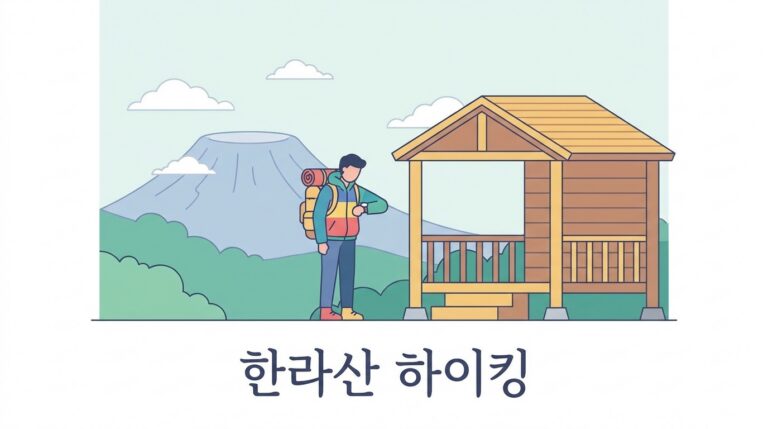
Phase 1: Empathy (Story-Driven Opening)
안녕하세요! 매일한글 에디터입니다. (Hello! This is your Daily Hangul editor.)
Picture this: You woke up at 5:30 AM in Jeju, laced up your hiking boots, packed your backpack with dried tangerines and kimbap, and proudly showed your QR code at the Seongpanak trail entrance. The crisp mountain air fills your lungs, and you can already taste the celebratory summit cup ramen. But by 11:45 AM, your legs feel like solid stone. You spot a wooden gate and a stern ranger with a megaphone: “진달래밭 대피소 통제 시간입니다! (Jindallaebat daepiso tongje sigan-imnida! – It is Jindallaebat Shelter cutoff time!)” Just 15 minutes past noon, the rope goes up, and your dream of touching the Baengnokdam crater lake evaporates. Hikers literally drop to their knees in dismay!
Don’t worry—you are not alone. Countless travelers miss out on Hallasan’s crown jewel simply because they don’t understand the strict Korean mountain curfew system or miss the time check warnings called out by hikers along the trail. Based on feedback from hundreds of our intermediate learners and seasoned Jeju hikers, this guide breaks down the exact survival Korean, cultural nuances, and pacing hacks you need to conquer Mount Hallasan comfortably before that strict 12:00 PM deadline.
Phase 2: Core 3 Expressions Deep Dive
1. 지금 통과 못 하면 하산해야 돼요
- Pronunciation: [Jigeum tong-gwa mot hamyeon hasanhaeya dwaeyo] (Pronunciation tip: sounds like “jee-geum tong-gwah mot ha-myeon ha-san-hae-ya dway-yo”)
- Meaning: Literal: “If you can’t pass now, you have to descend.” / Real nuance: “If you don’t cross the checkpoint right this minute, the rangers will turn you back immediately.”
- K-Culture Moment: Commonly heard in Korean outdoor reality shows (like I Live Alone or 2 Days & 1 Night) when celebrities race against the clock on winter mountain expeditions, hearing the dread alarm from national park wardens.
- Editor’s Insight: The verb 하산하다 (hasanhada) means specifically to walk down a mountain. It carries a heavy finality here—there are no second chances once the gate closes.
- Situation Spectrum: Casual (⚠️ With friends: 통과 못 하면 내려가야 돼) | Semi-formal (✅ 지금 통과 못 하면 하산해야 돼요) | Formal (✅ 지금 통과하지 못하시면 하산하셔야 합니다)
- 🤔 Think About It: Why does Korean have a dedicated word for descending a mountain (하산) instead of simply saying “going down” (내려가기)? Reflect on how mountainous geography shaped Korean daily vocabulary.
2. 정상까지 얼마나 더 걸려요?
- Pronunciation: [Jeongsangkkaji eolmana deo geollyeoyo?] (Pronunciation tip: “jung-sang-kkah-jee ul-mah-nah duh gull-lyuh-yo”)
- Meaning: Literal: “To the summit, how much more does it take?” / Real nuance: “How much further to the peak?”
- K-Culture Moment: You are panting heavily on the endless wooden staircase, and an agile 60-year-old Korean eomeoni (mother) in full colorful hiking gear zips past you with hiking poles.
- Editor’s Insight: When asking fellow hikers, adding “더” (deo – more/further) shows that you acknowledge you’ve already walked a long way. Beware: when Korean hikers say “Just 10 minutes!” (10분만 가면 돼요), it often means at least 30 more minutes of uphill climbing!
- Situation Spectrum: Casual (⚠️ 정상까지 얼마나 더 걸려?) | Semi-formal (✅ 정상까지 얼마나 더 걸려요?) | Formal (✅ 정상까지 시간이 얼마나 소요됩니까?)
- 🤔 Think About It: In your culture, do strangers talk openly to one another on hiking trails? In Korea, trail camaraderie breaks usual social barriers.
3. 서둘러야겠어요
- Pronunciation: [Seodulleoyagesseoyo] (Pronunciation tip: “suh-dool-luh-ya-get-ssuh-yo”)
- Meaning: Literal: “I must hurry.” / Real nuance: “We’re running out of time; we need to step up our pace right now.”
- K-Culture Moment: Looking at your smartwatch, seeing 11:30 AM while still 1.2 kilometers away from Jindallaebat Shelter.
- Editor’s Insight: The grammatical ending ~겠어요 (-gesseoyo) indicates intention or strong presumption based on current evidence. It sounds self-motivated and proactive rather than panicked.
- Situation Spectrum: Casual (⚠️ 서둘러야겠어) | Semi-formal (✅ 서둘러야겠어요) | Formal (✅ 서둘러야 할 것 같습니다)
- 🤔 Think About It: How does the famous Korean “Palli-palli” (hurry, hurry) mindset transform from a stressful work habit into a life-saving safety practice in the high mountains?
Phase 3: Textbook Korean vs. Real Korean
Situation 1: Warning someone about the checkpoint cutoff
- 📖 Textbook Korean: 12시까지 진달래밭 대피소에 도착하지 않으면 입산이 금지됩니다. (12-sikkanji Jindallaebat daepiso-e dochakhaji aneumyeon ipsan-i geumjidoemnida. / If you do not arrive at Jindallaebat Shelter by 12, mountain entry is prohibited.)
- 🗣️ Real Korean: 12시 넘으면 대피소에서 잘려요! 얼른 가세요! (Yeoldusi neomeumyeon daepiso-eseo jallyeoyo! Eolleun gaseyo! / If it’s past 12, you’ll get cut off at the shelter! Hurry up!)
- 💡 Why the difference?: Textbook phrasing uses Sino-Korean administrative jargon (금지됩니다), whereas hikers and rangers on the ground use vivid, urgent colloquial verbs like 잘리다 (to be cut off) to trigger immediate action.
Situation 2: Asking if you can still make it to the top
- 📖 Textbook Korean: 제가 지금 출발하면 정상에 갈 수 있습니까? (Jega jigeum chulbalhamyeon jeongsang-e gal su itsseumnikka? / If I depart now, can I reach the summit?)
- 🗣️ Real Korean: 지금 가도 정상 찍을 수 있을까요? (Jigeum gado jeongsang jjigeul su isseulkkayo? / Even if I go now, can I stamp/hit the summit?)
- 💡 Why the difference?: Korean hikers frequently use the verb 찍다 (literally “to stamp” or “take a photo”) to mean reaching a landmark or topping a peak. It reflects Korea’s vibrant certificate and verification culture.
Phase 4: K-Culture Deep Dive & Non-Verbal Manners
4-1. 눈치 (Nunchi) & Trail Etiquette
On Hallasan trails, etiquette is all about respecting safety cutoffs and sharing the narrow boardwalks smoothly. If you arrive after the cutoff, never argue or beg rangers to let you slip past—safety rules are enforced to the second. Instead, make calm eye contact, nod respectfully, and say “알겠습니다, 안전하게 내려갈게요” (“Understood, I’ll head down safely”). When passing slower hikers on wooden stairs, a cheerful “지나가겠습니다!” (Jinagagetseumnida!, “Passing through!”) keeps trail traffic friendly.
4-2. Culture Code: The Korean Deungsan (등산) Spirit
Hiking (등산) is a beloved national pastime in Korea, where hikers of all ages kit up in technical outdoor gear and greet strangers with “안녕하세요!” or “힘내세요!” (“Keep going!”). Earning the official GPS-verified Hallasan Summit Certificate (한라산 등정 인증서) is a badge of pride, which is why everyone watches the Jindallaebat clock so closely!
Phase 5: Real-Life Roleplay Scenario
Setting: It is 11:42 AM at the rocky approach right below Jindallaebat Shelter (진달래밭 대피소). Ranger Min-jun is monitoring hiker timestamps with a walkie-talkie.
- Ranger Min-jun: 🎭 Checking his watch and projecting his voice firmly across the boardwalk
“등산객분들, 12시 정각에 대피소 통제문 닫힙니다! 조금만 더 힘내세요!”
(Deunsang-gaek-bundeul, yeoldusi jeong-gage daepiso tongjemun dathimnida! Jogeumman deo himnaeseyo! / Hikers, the shelter checkpoint gate closes right at 12:00! Push a little more!) - You: 🎭 Wiping sweat and stepping up to the wooden deck, out of breath
“저기요, 대피소까지 얼마나 더 남았어요?”
(Jeogiyo, daepisokkaji eolmana deo namasseoyo? / Excuse me, how much further is left until the shelter?) - Ranger Min-jun: 🎭 Pointing up the wooden steps with a warm but firm expression
“저기 쉼터 건물 보이죠? 5분만 더 올라가시면 됩니다.”
(Jeogi swimteo geonmul boijyo? Obunman deo ollagasimyeon doemnida. / See that shelter building over there? You just need to climb up for 5 more minutes.) - You: 🎭 Looking anxious at your smartphone watch
“지금 11시 45분인데 통과할 수 있을까요?”
(Jigeum yeol-hansi sasibo-bun-inde tong-gwahal su isseulkkayo? / It’s 11:45 now, can I pass through?) - Ranger Min-jun: 🎭 Nodding encouragingly while keeping the flow moving
“네, 지금 바로 올라가시면 안전하게 통과해요. 쉬지 말고 바로 가세요!”
(Ne, jigeum baro ollagasimyeon anjeonhage tong-gwahaeyo. Swiji malgo baro gaseyo! / Yes, if you go right up now, you will pass safely. Don’t rest, head straight up!) - You: 🎭 Bowing slightly and adjusting your trekking poles
“감사합니다! 정상까지 서둘러서 가볼게요.”
(Gamsahamnida! Jeongsangkkaji seodulleoseo gabolgeyo. / Thank you! I will hurry up towards the summit.) - Ranger Min-jun: 🎭 Calling out as you pass the gate cord
“정상에서도 1시 반에는 하산하셔야 합니다! 안전 산행하세요!”
(Jeongsang-eseodo hansi bane-neun hasanhasyeoya hamnida! Anjeon sanhaenghaseyo! / You must also start descending from the summit by 1:30 PM! Have a safe hike!) - You: 🎭 Smiling and taking a deep breath at the open summit trail gate
“네, 조심히 다녀오겠습니다!”
(Ne, josimhi danyeo-ogetseumnida! / Yes, I will make the trip safely!)
🔀 Interactive Choice Point
You reach the shelter gate at 11:58 AM. Your hiking partner wants to stop and unpack snacks for 10 minutes before passing through the gate scanner. What do you do?
- Choice A: “배고프니까 여기서 컵라면 먹고 12시 10분에 가자.” (Let’s eat cup noodles here and go at 12:10.)
- Outcome (Bad 🚫): The gate locks at exactly 12:00:00 PM. Rangers draw the line. You will be forced to turn back down without ever reaching the summit.
- Choice B: “일단 통과부터 하고, 저 위에서 쉬면서 먹자!” (Let’s pass through first, then rest and eat up higher!)
- Outcome (Best ✅): Perfect decision! Once you pass the scanner checkpoint before 12:00 PM, you are safely on the summit path and can take a brief water breather.
- Choice C: “관리원님한테 외국인이라고 부탁하면 12시 넘어도 봐주실 거야.” (If we beg the ranger and say we’re foreigners, they’ll let it slide after 12.)
- Outcome (Risk ⚠️): Hallasan checkpoints are strictly monitored by automated systems and CCTV for mountain rescue liability. Begging will only cause embarrassment and won’t work.
Phase 6: 10-Second Emotion Shadowing Drill
Practice these lines out loud with the indicated pausing (/) and emotional tone:
[😰 숨차고 다급하게 / Breathless and urgent]
“지금 몇 시예요? / 12시 전에 / 대피소 가야 돼요!”
(Jigeum myeot siyeyo? / Yeoldusi jeone / daepiso gaya dwaeyo! / What time is it now? / Before 12 / we must reach the shelter!)-
[😮💨 안도하며 지친 목소리로 / Relieved yet exhausted]
“다행이다… / 딱 10분 남기고 / 통과했어요!”
(Dahaeng-ida… / Ttak sip-bun namgigo / tong-gwahaesseoyo! / What a relief… / With just 10 minutes left / we passed!) -
[🏔️ 비장하고 결연하게 / Determined and energized]
“조금만 더 힘내서 / 정상 찍고 / 하산해요!”
(Jogeumman deo himnaeseo / jeongsang jjikgo / hasanhaeyo! / Let’s muster a bit more energy / hit the summit / and head down!)
Phase 7: K-Culture Mini Dictionary
- 대피소 (Daepiso – Mountain Shelter): On Hallasan, this is not a hotel; it is an emergency checkpoint, first-aid base, and strict curfew gate (e.g., Jindallaebat on Seongpanak Trail, Samgakbong on Gwaneumsa Trail).
- 입산 통제 (Ipsan Tongje – Mountain Entry Control/Curfew): Official safety regulation limiting entry times depending on seasonal daylight hours to prevent hikers from getting stranded after dark.
- 정상 등정 인증서 (Jeongsang Deungjeong Injeungseo – Summit Ascent Certificate): A government-issued official certificate that proves you stood atop Baengnokdam, obtained via the national park app using mobile GPS verification.
- 하산 (Hasan – Mountain Descent): Walking down from the peak. In Korea, descending safely before twilight is treated as the true completion of hiking, not merely touching the peak.
Phase 8: Traveler’s Survival Kit
Top 3 Survival Phrases
- 한글: 화장실이 대피소에만 있나요?
Romanization: Hwajangsiri daepiso-eman innayo?
Pro Tip: Seongpanak trail has very few restrooms. Always ask this before leaving the lower rest areas! - 한글: 탐방 예약 QR 코드 어디서 찍어요?
Romanization: Tambang yeyak QR kodeu eodiseo jjigeoyo?
Pro Tip: Keep your reservation QR code screenshot saved on your phone’s lock screen before you reach the trailhead scanner. - 한글: 하산길은 관음사 코스로 내려갈게요.
Romanization: Hasangireun Gwaneumsa koseuro naeryeogalke-yo.
Pro Tip: Going up Seongpanak (gentler incline) and descending via Gwaneumsa (steep but dramatic cliff views) is the ultimate Jeju trekking route.
Editor’s Travel Note
- Permits are mandatory: Hallasan’s summit trails (Seongpanak & Gwaneumsa) require reservations. Secure your free permit on the official Hallasan National Park Reservation Portal on the first day of the preceding month at 9:00 AM KST sharp.
- Seasonal cutoff changes: The 12:00 PM cutoff at Jindallaebat Shelter is standard for Spring/Autumn (March-April, September-October). In Winter (November-February), it moves earlier to 11:30 AM, and in Summer (May-August) it extends to 12:30 PM. Check current seasonal times on the Jeju Tourism Organization Information Page.
Phase 9: “One Step Deeper” (Cultural Reflection)
In many Western hiking cultures, mountaineering is experienced as an individual wilderness journey where you set your own pace and bear personal risk. In Korea, however, national parks treat mountain safety as a shared communal duty. Strict shelter cutoffs, loud speaker announcements, and trail volunteers are not meant to restrict your personal freedom; they represent a collective culture designed to ensure that every single visitor returns home safely before sunset to enjoy warm black pork soup with family.
💬 Your Turn: Have you ever experienced a strict curfew or checkpoint while hiking in your home country or while traveling? How would you handle the stress of watching the countdown clock tick down toward 12:00 PM?
Phase 10: FAQ & Myth-Busting
Q: Will rangers let me pass if I arrive at the shelter just 1–2 minutes after the cutoff?
A: No—Hallasan shelter cutoffs are enforced to the exact second under national park safety regulations. Plan your pace to arrive at least 20–30 minutes early!
Q: Can I hike to the Baengnokdam summit without an advance reservation?
A: No, both summit routes (Seongpanak and Gwaneumsa) strictly require a QR permit from visithalla.jeju.go.kr. If permits are sold out, the scenic Eorimok and Yeongsil trails do not require reservations.
Q: Can I buy cup noodles or snacks at Jindallaebat Shelter?
A: No! Food sales and trash cans were removed from Hallasan shelters to protect the volcanic ecosystem. Pack your own kimbap, water (1–1.5L), and a trash bag to carry everything back down.
🚨 Common Mistakes TOP 3
- Stopping for a long snack break right before the 12:00 PM gate -> Pass the checkpoint first, then catch your breath on the upper trail!
- Forgetting to turn on GPS location for summit photos -> Your summit certificate requires a GPS-tagged photo at Baengnokdam.
- Hiking in thin sneakers -> Hallasan’s volcanic basalt rocks are sharp; wear sturdy hiking boots (and crampons in winter).
Phase 11: Action Mission & Engagement
- 🥉 Bronze Mission (Solo Practice): Practice saying “지금 통과 못 하면 하산해야 돼요” and “서둘러야겠어요” aloud three times cleanly.
- 🥈 Silver Mission (Social Share): Bookmark the Hallasan reservation portal and share the seasonal cutoff times with your Jeju travel buddy!
- 🥇 Gold Mission (Real-Life Use): Greet fellow hikers on any Korean trail with a cheerful “안녕하세요!” and ask “정상까지 얼마나 더 걸려요?”
- 🎮 K-Culture Mission: Search “한라산 브이로그” on YouTube and listen for the ranger announcements at Jindallaebat Shelter!
Phase 12: Interactive Quiz Challenge
- Situational Judgment: It’s 11:57 AM and you just reached Jindallaebat Shelter. What is the smartest move?
- A) Stop for a 10-minute rest before walking through the gate.
- B) Pass through the checkpoint gate immediately before 12:00 PM, then rest briefly afterward.
- C) Ask the ranger for a 10-minute tourist exception.
- Fill-in-the-Blank: Complete the sentence meaning “We’re running out of time; I must hurry”:
시간이 없어서 ( )!- A) 서둘러야겠어요 (seodulleoyagesseoyo)
- B) 하산했어요 (hasanhaesseoyo)
- C) 잤어요 (jasseoyo)
- True or False (Cultural Quiz): You can still buy hot cup ramen at Hallasan’s Jindallaebat Shelter today. (True / False)
Click to Reveal Quiz Answers & Detailed Explanations
- Answer: B.
- Explanation: Once the gate locks at 12:00 PM sharp, nobody is allowed up. Cross the scanner first, then catch your breath!
- Answer: A (서둘러야겠어요).
- Explanation: 서둘러야겠어요 (“I must hurry”) expresses proactive urgency without sounding panicked.
- Answer: False.
- Explanation: Cup ramen sales at Hallasan shelters were discontinued to protect the mountain’s soil and water from leftover broth and waste—always pack your own food and water!
🎬 Watch Our Daily Videos! (Daily Hangul Official Instagram)
Review the expressions you learned in this article with our fun daily short videos! Check out native pronunciation and real-life nuances in action.
- Instagram @dailyhangul_en







