

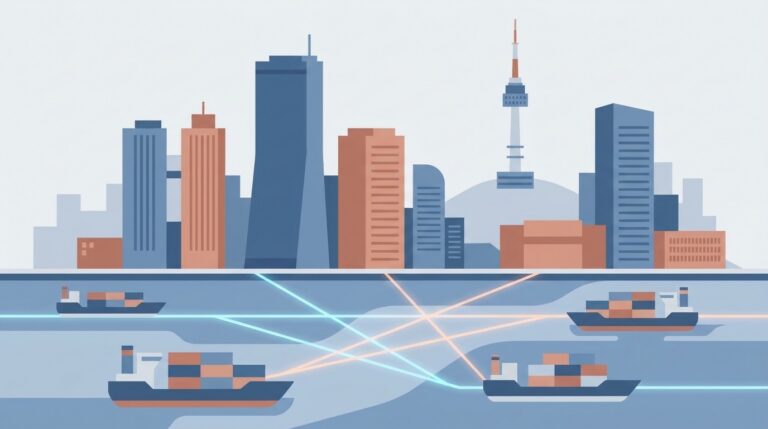
Deciphering Geopolitics in Seoul: The C2 Guide to Economic Security and Critical Minerals in Korean
Phase 1: Empathy & Immersion Opening
안녕하세요! Welcome back, I am your Daily Hangul editor.
Picture this scene straight out of a high-stakes corporate K-drama like Agency or Reborn Rich: You are sitting in a mahogany-paneled boardroom overlooking the Han River in Yeouido. The executive team from an electric vehicle battery titan is frantically analyzing the latest news alerts. Overnight, a major mineral-exporting superpower announced sudden export quotas on refined lithium, graphite, and rare earths. Across the table, the Chief Risk Officer looks grim: “핵심 광물 보유국들의 수출 통제로 인해 교역 분절화 비용이 눈덩이처럼 불어나고 있습니다.” (Due to critical mineral nations’ export controls, trade fragmentation costs are snowballing.)
If you felt a sudden spike in cognitive load just reading that, take a deep breath. At the C2 level, Korean moves far beyond conversational fluency; it transitions into the realm of strategic diplomacy, statecraft, and executive boardroom discourse. As Korea sits at the critical geopolitical junction of global semiconductor and battery supply chains, terms surrounding secondary sanctions (세컨더리 보이콧), weaponized interdependence (상호의존성의 무기화), and geoeconomic fragmentation (지경학적 분절화) are no longer confined to academic journals—they appear daily in executive meetings and leading newspapers.
Today’s guide is crafted directly from field debriefs with foreign executives, policy researchers, and advanced interpreters who needed more than a dictionary. Let us break down how to command these complex trade and economic security narratives in refined, natural, and persuasive Korean.
Phase 2: Core Expressions Deep Dive
1. 자원 무기화에 맞서 공급망 다변화가 시급합니다 (Jae-won mu-gi-hwa-e mat-seo gong-geup-mang da-byeon-hwa-ga si-geup-ham-ni-da)
- Pronunciation: [Jae-won mu-gi-hwa-e mat-seo gong-geup-mang da-byeon-hwa-ga si-geup-ham-ni-da] (Think: Jae-won rhymes with ‘day-one’, mu-gi like ‘movie’ with a hard g, si-geup crisp like ‘sea-goop’).
- Meaning: “Faced with the weaponization of resources, diversifying our supply chains is of utmost urgency.”
- K-Culture Moment: Frequently heard during emergency business task-force meetings in business thrillers when a raw material blockade threatens domestic plant operations.
- Editor’s Insight: Notice the compound noun 자원 무기화 (resource weaponization). In elite policy discourse, 다변화 (multilateral diversification) is preferred over simple 바꾸기 (switching), as it signals strategic, multi-tiered redundancy.
- Situation Spectrum: Casual 🚫 | Semi-formal ⚠️ | Formal ✅
- 🤔 Think About It: Why does Korean administrative discourse lean heavily on Sino-Korean nominal clauses (-화, -성) rather than verbal constructions? How does this elevate the perceived objectivity of your risk assessment?
2. 통상 마찰로 인한 교역 분절화 비용을 결코 무시할 수 없습니다 (Tong-sang ma-chal-lo in-han gyo-yeok bun-jeol-hwa bi-yong-eul gyeol-ko mu-si-hal su eop-seum-ni-da)
- Pronunciation: [Tong-sang ma-chal-ro in-han gyo-yeok boon-jeol-hwa bi-yong-eul gyol-ko moo-si-hal soo eop-seum-ni-da] (Pronounce ma-chal-lo smoothly connecting the ‘l’ sounds).
- Meaning: “We can by no means overlook the trade fragmentation costs stemming from trade frictions.”
- K-Culture Moment: The signature dialogue of a pragmatic trade negotiator in a political drama urging conservative board members not to underestimate regulatory ripple effects.
- Editor’s Insight: 분절화 (fragmentation) implies breaking down a unified global market into disconnected, isolated blocs. Pairing it with 결코 ~ 수 없다 provides absolute, authoritative gravitas without appearing emotional.
- Situation Spectrum: Casual 🚫 | Semi-formal ⚠️ | Formal ✅
- 🤔 Think About It: In English, we often say “we can’t ignore fragmentation costs.” Does using 결코 무시할 수 없습니다 sound more defensive or more strategic in Korean corporate culture?
3. 규범 기반 질서 속 세컨더리 보이콧 리스크를 선제적으로 관리해야 합니다 (Gyu-beom gi-ban jil-seo sok se-keon-deo-ri bo-i-kot ri-seu-keu-reul seon-je-jeok-eu-ro gwan-ri-hae-ya ham-ni-da)
- Pronunciation: [Gyu-beom gi-ban jeel-suh sok seh-kun-duh-ri boh-ee-kot ree-seu-keu-reul suhn-jeh-juhk-eu-roh gwan-ree-hae-yah hahm-nee-dah]
- Meaning: “We must preemptively manage secondary boycott risks within the rules-based order.”
- K-Culture Moment: Used by legal compliance heads advising tech conglomerates navigating simultaneous US export controls and trade countermeasures from supplier states.
- Editor’s Insight: 선제적으로 (preemptively) is an executive buzzword in Korea. Rather than just 미리 (beforehand), 선제적 conveys proactive, strategic anticipation.
- Situation Spectrum: Casual 🚫 | Semi-formal ⚠️ | Formal ✅
- 🤔 Think About It: Notice the balance between pure Sino-Korean concepts (선제적 관리) and adopted global regulatory jargon (세컨더리 보이콧). How does Korean business smoothly harmonize both worlds?
Phase 3: Textbook Korean vs. Real Native Korean
Scenario 1: Discussing Supply Chain Shock Countermeasures
- 📖 교과서 한국어: 원자재 수입이 어려워지면 다른 나라에서 사 오도록 계획을 변경해야 합니다. (Won-ja-jae su-im-i eo-ryeo-wo-ji-myeon da-reun na-ra-e-seo sa o-do-rok gye-hoek-eul byeon-gyeong-hae-ya ham-ni-da.)
- 🗣️ 진짜 한국어: 자원 무기화 추세에 발맞춰 공급망 다변화 및 대체선 확보를 서둘러야 합니다. (Jae-won mu-gi-hwa chu-se-e bal-mat-chwo gong-geup-mang da-byeon-hwa mit dae-che-seon hwak-bo-reul seo-dul-leo-ya ham-ni-da.)
- 💡 왜 다를까? Textbook Korean explains procedures mechanically using conversational verbs (사 오다). Executive business Korean condenses abstract strategy into high-density Sino-Korean compounds (대체선 확보, 다변화), signaling intellectual mastery.
Scenario 2: Warning About Trade Sanctions & Regulatory Fallouts
- 📖 교과서 한국어: 제재를 받으면 벌금을 내거나 거래를 못 하게 되어 손해가 큽니다. (Je-jae-reul bad-eu-myeon beol-geum-eul nae-geo-na geo-rae-reul mot ha-ge doe-eo son-hae-ga keum-ni-da.)
- 🗣️ 진짜 한국어: 세컨더리 제재에 노출될 경우 발생할 교역 분절화와 컴플라이언스 비용을 감당하기 어렵습니다. (Se-keon-deo-ri je-jae-e no-chul-doel gyeong-u bal-saeng-hal gyo-yeok bun-jeol-hwa-wa keom-peul-ra-i-eon-seu bi-yong-eul gam-dang-ha-gi eo-ryeop-seum-ni-da.)
- 💡 왜 다를까? Real-world strategy documents distinguish direct economic penalties from broader structural liabilities like 컴플라이언스 비용 (compliance costs) and market isolation.
Phase 4: K-Culture Deep Dive & Non-Verbal Manners
4-1. Nunchi & Boardroom Body Language in Strategic Consultations
When handling contentious topics like resource nationalism and trade compliance in Korea, body language must convey profound deliberation. Never deliver severe risk projections with upbeat or overly expressive vocal variations.
* Maintain a calm, neutral gaze, slightly inclining your upper torso forward when presenting grave projections.
* Use cautious hedging grammar, such as ~할 우려가 상존합니다 (“the concern remains persistent”) or ~로 사료됩니다 (“it is considered that…”) instead of declarative ultimatums. This demonstrates deference to collective executive harmony (눈치) while maintaining firm intellectual rigor.
4-2. Culture Code: The “Sandwich Crisis” (샌드위치 위기론) & Strategic Autonomy
Korea’s industrial history has long been defined by overcoming raw material deficits through rapid innovation and technological leverage. In modern Korean corporate culture, mineral export curbs are viewed through the lens of historical vulnerability—a nation navigating between competing trade hegemons. In Korean boardroom dramas (such as Midas or Designated Survivor: 60 Days), you will notice that resource vulnerability is not just an operational bump; it is portrayed as an existential test of national and industrial autonomy (산업 안보).
Phase 5: Real-World Roleplay Scenario
Setting: A strategic planning session on the 32nd floor of an industrial headquarters in Gangnam. Director Park (박 이사) looks over a supply forecast for neodymium and synthetic graphite.
- Director Park: 최근 핵심 광물 보유국들이 수출 쿼터제를 대폭 강화하면서 우리 공장의 원자재 조달에 비상이 걸렸습니다. (Choe-geun haek-sim gwang-mul bo-yu-guk-deul-i su-chul kwo-teo-je-reul dae-pok gang-hwa-ha-myeon-seo u-ri gong-jang-ui won-ja-jae jo-dal-e bi-sang-i geol-ryeot-seum-ni-da.)
🎭 [Frowning with furrowed brows, tapping his fountain pen against a dossier]
“With key mineral-rich states drastically tightening export quotas, our plants raw material procurement is in crisis mode.” -
You: 자원 무기화가 본격화됨에 따라 단순한 가격 상승을 넘어 공급망 블록화가 고착되는 형국입니다. (Jae-won mu-gi-hwa-ga bon-gyeok-hwa-doem-e tta-ra dan-sun-han ga-gyeok sang-seung-eul neo-meo gong-geup-mang beul-lok-hwa-ga go-chak-doe-neun hyeong-guk-im-ni-da.)
🎭 [Nodding gravely, aligning your analytical report neatly before the committee]
“As the weaponization of resources enters full swing, we are facing an entrenched bloc supply chain, going well beyond simple price hikes.” -
Director Park: 맞습니다. 게다가 서방의 수출통제 체제와 상대국의 맞대응 조치가 충돌하면서 교역 분절화 비용이 눈덩이처럼 커지고 있어요. (Mat-seum-ni-da. Ge-da-ga seo-bang-ui su-chul-tong-je che-je-wa sang-dae-guk-ui mat-dae-eung jo-chi-ga chung-dol-ha-myeon-seo gyo-yeok bun-jeol-hwa bi-yong-i nun-deong-i-cheo-reom keo-ji-go it-seo-yo.)
🎭 [Sighing lightly, removing his reading glasses]
“Precisely. On top of that, Western export control regimes and the host countrys retaliatory actions are colliding, causing trade fragmentation costs to snowball.” -
You: 자칫하면 세컨더리 제재의 그물망에 휘말릴 위험도 배제할 수 없는 상황입니다. (Ja-chit-ha-myeon se-keon-deo-ri je-jae-ui geu-mul-mang-e hwi-mal-ril wi-heom-do bae-je-hal su eop-neun sang-hwang-im-ni-da.)
🎭 [Keeping a composed yet resolute tone, maintaining steady eye contact]
“If we make a misstep, we cannot rule out the risk of getting caught in the web of secondary sanctions.” -
Director Park: 그렇다면 법무 및 통상팀과 연계하여 즉각적인 리스크 스크리닝을 진행해야겠군요. (Geu-reoh-da-myeon beop-mu mit tong-sang-tim-gwa yeon-gye-ha-yeo jeuk-gak-jeok-in ri-seu-keu seu-keu-ri-ning-eul jin-haeng-hae-ya-get-gun-yo.)
🎭 [Making a brief memo on his iPad, nodding appreciatively]
“Then we must immediately initiate risk screening in coordination with legal and trade affairs teams.” -
You: 예, 공급망 다각화와 더불어 규범 기반 질서에 부합하는 철저한 컴플라이언스 체계 구축이 선행되어야 합니다. (Ye, gong-geup-mang da-gak-hwa-wa deo-bu-reo gyu-beom gi-ban jil-seo-e bu-hap-ha-neun cheol-jeo-han keom-peul-ra-i-eon-seu che-gye gu-chuk-i seon-haeng-doe-eo-ya ham-ni-da.)
🎭 [Speaking with authoritative calm, gesturing subtly toward the action item chart]
“Yes, alongside supply chain diversification, establishing a rigorous compliance architecture aligned with the rules-based order must take precedence.” -
Director Park: 타당한 지적입니다. 단기적 비용 상승이 따르더라도 공급선 대체안을 조속히 보고서로 올려주십시오. (Ta-dang-han ji-jeok-im-ni-da. Dan-gi-jeok bi-yong sang-seung-i tta-reu-deo-ra-do gong-geup-seon dae-che-an-eul jo-sok-hi bo-go-seo-ro ol-ryeo-ju-sip-si-o.)
🎭 [Closing the folder decisively, looking directly at you]
“A valid point. Even if short-term cost spikes are inevitable, please submit a formal report outlining alternative supply routes immediately.” -
You: 면밀히 검토하여 이사회 전까지 최적의 공급망 재편 로드맵을 수립해 보고드리겠습니다. (Myeon-mil-hi geom-to-ha-yeo i-sa-hoe jeon-kka-ji choe-jeok-ui gong-geup-mang jae-pyeon ro-deu-maep-eul su-rip-hae bo-go-deu-ri-get-seum-ni-da.)
🎭 [Giving a measured, 15-degree executive bow of confirmation]
“I will review it scrupulously and formulate the optimal supply chain realignment roadmap for your review prior to the board meeting.”
🔀 Interactive Decision Point
How do you advise responding to an imminent secondary sanction inquiry on an overseas supplier?
* Option A: “단기 이익을 위해 일단 제재를 우회하여 우회 수입 경로를 탐색합시다.” (Dan-gi i-ik-eul wi-hae il-dan je-jae-reul u-hoe-ha-yeo u-hoe su-ip gyeong-ro-reul tam-saek-hap-si-da. / Let us bypass sanctions for short-term profit and explore circumvention routes.)
* Option B: “규범 기반 질서에 부합하도록 즉각 거래 내역을 실사하고 대체 공급처로 단계적 전환을 추진해야 합니다.” (Gyu-beom gi-ban jil-seo-e bu-hap-ha-do-rok jeuk-gak geo-rae nae-yeok-eul sil-sa-ha-go dae-che gong-geup-cheo-ro dan-gye-jeok jeon-hwan-eul chu-jin-hae-ya ham-ni-da. / We must immediately audit transactions to adhere to the rules-based order and pursue a phased transition to alternative suppliers.)
* Option C: “문제 될 때까지 지켜보고 아무런 공식 대응을 하지 않는 편이 낫겠습니다.” (Mun-je doel ttae-kka-ji ji-kyeo-bo-go a-mu-reon gong-sik dae-eung-eul ha-ji an-neun pyeon-i nat-get-seum-ni-da. / We should just wait and see until problems arise without taking any official stance.)
Feedback:
* Choice A (Risk 🚨): Catastrophic mistake. Suggesting deliberate circumvention (우회 수입) in a Korean executive environment compromises institutional compliance and risks triggering secondary sanctions against your own entity.
* Choice B (Best ✅): Flawless C2 executive posture. 실사 (due diligence) and 단계적 전환 (phased transition) showcase operational realism and regulatory maturity.
* Choice C (Bad ⚠️): Passive and irresponsible. In Korean corporate crisis management, failure to preemptively mitigate trade disruption reflects poor strategic leadership.
Phase 6: 10-Second Emotional Shadowing Drill
Repeat these sentences with the exact emotional intonation and rhythmic cadence indicated by the slash marks (/).
[💼 단호하고 신중하게 / Firm & Cautious]
핵심 광물 보유국들의 수출 통제로 인해 / 공급망 블록화와 교역 분절화 비용이 / 기하급수적으로 커지고 있습니다.
(Haek-sim gwang-mul bo-yu-guk-deul-ui su-chul tong-je-ro in-hae / gong-geup-mang beul-lok-hwa-wa gyo-yeok bun-jeol-hwa bi-yong-i / gi-ha-geup-su-jeok-eu-ro keo-ji-go it-seum-ni-da.)-
[⚖️ 분석적이고 확신에 차서 / Analytical & Resolute]
세컨더리 보이콧 리스크를 선제 차단하기 위해 / 대체 공급선 발굴과 / 규범 기반 실사 체계 구축을 / 서둘러야 합니다.
(Se-keon-deo-ri bo-i-kot ri-seu-keu-reul seon-je cha-dan-ha-gi wi-hae / dae-che gong-geup-seon bal-gul-gwa / gyu-beom gi-ban sil-sa che-gye gu-chuk-eul / seo-dul-leo-ya ham-ni-da.) -
[👔 보고하듯 정중하고 정연하게 / Formal Executive Briefing]
면밀한 리스크 평가를 바탕으로 / 분절화 충격을 최소화할 / 공급망 재편 로드맵을 / 보고드리겠습니다.
(Myeon-mil-han ri-seu-keu pyeong-ga-reul ba-tang-eu-ro / bun-jeol-hwa chung-gyeok-eul choe-so-hwa-hal / gong-geup-mang jae-pyeon ro-deu-maep-eul / bo-go-deu-ri-get-seum-ni-da.)
Phase 7: K-Culture Mini Dictionary
- 핵심 광물 (Haek-sim-gwang-mul) | Critical Minerals
Essential mineral commodities (lithium, cobalt, nickel, rare earth elements) vital for national strategic industries. In Korea’s tech ecosystem, securing these equates to ensuring survival in high-tech manufacturing. - 공급망 블록화 (Gong-geup-mang Beul-lok-hwa) | Supply Chain Blocs / Regionalization
The economic phenomenon where multilateral global trade fractures into exclusive geopolitical clubs based on security partnerships rather than pure economic efficiency. - 통상 안보 (Tong-sang An-bo) | Economic Security / Trade Security
The synthesis of trade (통상) and national security (안보), recognizing that economic dependencies and export restrictions are now used as weapons of geopolitical leverage. - 규범 기반 질서 (Gyu-beom Gi-ban Jil-seo) | Rules-Based Order
The diplomatic standard emphasizing transparent, multilateral legal conventions over coercive unilateral economic actions or bilateral resource blackmail.
Phase 8: Survival Kit for Travelers & Expatriate Professionals
Survival TOP 3 Executive Phrases
- 통상 리스크 점검이 선행되어야 합니다. (Tong-sang ri-seu-keu jeom-geom-i seon-haeng-doe-eo-ya ham-ni-da.)
Trade risk reviews must take precedence. (Pro Tip: Use this to politely pause an impetuous investment idea during strategy sessions). - 규제 준수 여부를 재확인해 주십시오. (Gyu-je jun-su yeo-bu-reul jae-hwak-in-hae ju-sip-si-o.)
Please re-verify our regulatory compliance status. (Pro Tip: Indispensable when vetting foreign suppliers). - 공급선 다각화 방안을 검토 중입니다. (Gong-geup-seon da-gak-hwa bang-an-eul geom-to jung-im-ni-da.)
We are reviewing plans to diversify our supply sources. (Pro Tip: Perfect answer when journalists or board members probe raw material stability).
Editor’s Travel & Business Note
For professionals visiting Seoul’s economic diplomacy hubs in Gwanghwamun, Yeouido, or the Pangyo Techno Valley:
* Media & Research Tools: Download the official 네이버 뉴스 앱 (Naver News App) to customize alerts under the 경제 (Economy) and 글로벌 통상 (Global Trade) tabs.
* Corporate Mobility: Use 카카오 T 앱 (Kakao T App) for seamless executive transit between governmental ministries in Sejong and corporate headquarters in Seoul. Note that foreign credit cards are widely integrated when registered through global app accounts.
Phase 9: “한 발 더 깊이” (Deep Cultural Reflection)
In classical Korean historiography, the proverb “고래 싸움에 새우 등 터진다” (Shrimp get crushed in a clash of whales) summarized Korea’s defensive positioning between continental empires and maritime powers. However, in the contemporary era of economic security, Korea has shifted from a passive observer to an indispensable linchpin—an essential manufacturing superpower anchored in semiconductors, advanced batteries, and secondary materials.
Consequently, the language of Korean trade discourse has evolved. Modern professionals avoid victimhood vocabulary, favoring terms of proactive resilience like 초격차 역량 (hyper-gap capability) and 공급망 복원력 (supply chain resilience). To master Korean at the C2 level, you must realize that speaking about economic security is not just about translating technical jargon—it is an exercise in conveying strategic sovereignty and sophisticated multilateral balancing.
💬 Your Turn: How does your home country conceptualize “economic security” versus “free market principles”? Has resource nationalism altered your domestic industries? Share your perspectives below in formal Korean!
Phase 10: FAQ & Common Pitfalls
Q: What is the difference between 제재 (Je-jae) and 통제 (Tong-je)?
A: 제재 translates to “sanctions” or punitive measures imposed in response to international law or norm violations (e.g., 대북 제재, 세컨더리 제재). On the other hand, 통제 refers to regulatory oversight or restriction (e.g., 수출통제 – export controls). Export controls are regulatory regimes, while sanctions are punitive enforcement instruments.
Q: Can I use 분절화 (Bun-jeol-hwa) in everyday casual situations?
A: No. 분절화 is a high-register term meaning “fragmentation” in academic, geopolitical, or sociological contexts. If you are casually talking about a broken friendship or split groups among peers, use natural terms like 갈라지다 (to split) or 쪼개지다 (to break into pieces).
Q: How do I distinguish 공급망 (Gong-geup-mang) from 유통망 (Yu-tong-mang)?
A: 공급망 is the “supply chain” encompassing raw material extraction, refining, component production, and assembly. 유통망 refers specifically to the distribution, retail, and logistics network that delivers finished products to end consumers.
🚨 Common Mistakes Warning Board
- Mistake: Using 세컨더리 보이콧 (Secondary Boycott) when referring to a simple consumer boycott.
Correct Action: Use 불매 운동 (Bul-mae un-dong) for grassroots consumer boycotts. Reserve 세컨더리 보이콧 / 세컨더리 제재 exclusively for third-party extraterritorial sanctions. - Mistake: Overusing colloquial 바꾸다 in formal board presentations.
Correct Action: Upgrade your vocabulary to 다변화하다 (diversify) or 재편하다 (realign / restructure). - Mistake: Pronouncing 핵심 광물 with an exaggerated pause between words.
Correct Action: Pronounce it smoothly as a single institutional phrase: [Haek-sim-gwang-mul].
Phase 11: Action Missions
- 🥉 Bronze Level: Read aloud the Phase 6 shadowing drills 5 times, practicing proper pausing at the slash (
/) markers. - 🥈 Silver Level: Find an article about supply chains or critical minerals on Korean financial news portals and summarize one paragraph using the phrase “교역 분절화 비용이 커지고 있는 가운데…”
- 🥇 Gold Level: Deliver a 60-second voice memo in formal Korean analyzing the impact of secondary sanction risks on battery or tech supply chains, utilizing at least 3 terms from Phase 7.
- 🎮 K-Culture Mission: Watch an episode of a Korean business/political drama (e.g., Midas or Reborn Rich) and spot at least one instance where characters debate corporate vulnerability to global regulations.
Phase 12: Interactive Quiz Challenge
Test your mastery of C2 economic security Korean. Try answering before opening the spoilers!
1. Situational Judgment
Which statement is the most professional response during an executive audit reviewing secondary sanctions exposure?
* (A) “귀찮은 제재 조항은 그냥 눈감고 넘어갑시다.”
* (B) “세컨더리 제재 위험을 불식시키기 위해 공급망 전반의 컴플라이언스 실사를 선행하겠습니다.”
* (C) “문제가 생기면 그때 가서 해외 지사를 닫으면 그만입니다.”
2. Fill in the Blank
핵심 광물 보유국들이 자원 수출을 제한함에 따라, 글로벌 시장의 ( ) 비용과 공급망 단절 리스크가 가중되고 있다.
(Hint: A 4-syllable Sino-Korean word meaning “geoeconomic fragmentation”.)
3. True / False Culture & Policy Quiz
- Statement: In official Korean state documents and corporate strategies, 자원 무기화 is treated solely as a private business risk, unrelated to national sovereignty.
🔍 Click here to check Answers & Explanations
- Answer: (B)
Explanation: (B) utilizes sophisticated executive Korean (불식시키기 위해 – in order to dispel/eliminate; 실사를 선행하겠습니다 – will prioritize due diligence). (A) and (C) show negligent compliance attitudes and unprofessional, colloquial phrasing. -
Answer: 교역 분절화 (Gyo-yeok bun-jeol-hwa)
Explanation: 교역 분절화 accurately denotes trade fragmentation across borders under export control pressures. -
Answer: False (X)
Explanation: In Korean policy discourse, resource weaponization (자원 무기화) is fundamentally treated as an existential 경제 안보 (economic security) matter directly intersecting with national sovereignty and public-private strategy.
🎬 Watch Our Daily Videos! (Daily Hangul Official Instagram)
Review the expressions you learned in this article with our fun daily short videos! Check out native pronunciation and real-life nuances in action.
- Instagram @dailyhangul_en







