

Navigating Tertiary Hospital Results in Korea: Finding Relief After Your MRI/CT Scan
Phase 1: Empathy (Story-Driven Opening)
안녕하세요! 매일한글 에디터입니다.
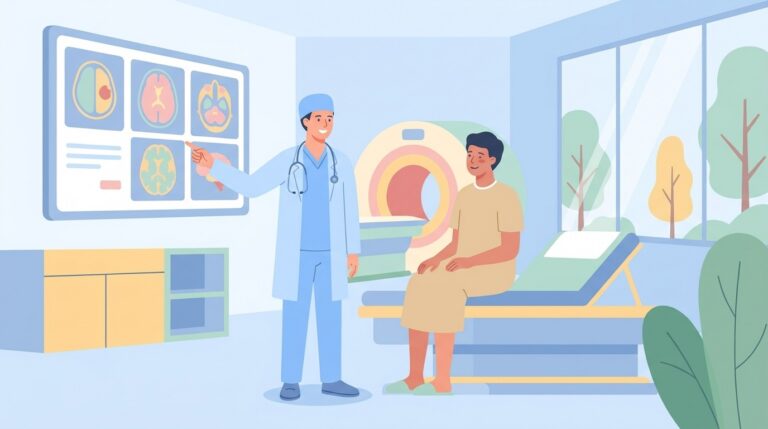
Imagine this: You are sitting in the bustling waiting hall of a premier Korean tertiary university hospital (상급종합병원), clutching a crumpled referral slip (진료의뢰서) and a disc containing your MRI scan. The sterile smell, the quiet whir of automated ticket kiosks, and doctors in pristine white coats rushing past can make your stomach twist into knots. If you have watched medical K-dramas like Hospital Playlist (슬기로운 의사생활), you know how intense those consultation rooms look. When the automated monitor chimes your queue number, you sit before the specialist, holding your breath while they study your scans on a vertical dual-screen monitor.
Then, the physician turns to you with a reassuring nod: “다행히 수술할 정도는 아니에요. 약물 치료랑 물리치료 받으시면 괜찮아집니다.” (Thankfully, it’s not severe enough to require surgery. You will recover with medication and physical therapy.) A mountain of tension melts off your shoulders.
Receiving complex medical results in another language can be daunting, but navigating specialized consultations is an empowering milestone in intermediate Korean. This guide is crafted directly from clinical consultation data and expat experiences to give you the precise phrases, cultural etiquette, and confidence needed to understand diagnostic outcomes at Korean university hospitals.
Phase 2: Top 3 Core Expressions in Depth
1. 다행히 수술할 정도는 아니에요 (Dahaenghi susulhal jeongdoneun anieyo)
- Pronunciation: [Da-haeng-i su-sul-hal jeong-do-neun a-ni-e-yo] (Think of ‘da-haeng’ sounding like a sigh of relief, followed by ‘soo-sool’ for surgery)
- Meaning: Literal: “Fortunately, it is not to the degree of doing surgery.” / Actual Nuance: “Thankfully, your condition isn’t severe enough to warrant an operation.”
- K-Culture Moment: The iconic Hospital Playlist scene where Dr. Chae Song-hwa smiles gently at an anxious caregiver before explaining that non-surgical treatment is the preferred route.
- Editor’s Insight: The word “정도” (jeongdo) means “degree” or “extent.” Doctors frequently use “~할 정도는 아니다” to temper anxiety without giving absolute guarantees, striking a professional balance between reassurance and clinical caution.
- Situation Spectrum: Casual: ⚠️ (Use ‘다행히 수술 안 해도 돼’) | Semi-formal: ✅ | Formal: ✅ (다행히 수술하실 단계는 아닙니다)
- 🤔 Think About It: Notice how Korean medical professionals often start their diagnosis with an empathetic adverb like “다행히” (fortunately) before delivering clinical facts. How does this compare to bedside manners in your home country?
2. 약물 치료와 물리치료를 병행하면 충분히 호전될 수 있습니다 (Yakmul chiryowa mullichiryoreul byeonghaenghamyeon chungbunhi hojeondoel su itseumnida)
- Pronunciation: [Yang-mul chi-ryo-wa mul-li-chi-ryo-reul byeong-haeng-ha-myeon chung-bun-hi ho-jeon-doel su it-seum-ni-da] (Note nasalization: ‘yak-mul’ blends into ‘yang-mul’)
- Meaning: Literal: “If you carry out drug therapy and physical therapy in parallel, it can sufficiently improve.” / Actual Nuance: “Combining your prescription medication with physical therapy will lead to a full recovery.”
- K-Culture Moment: A consultation scene in a drama where the protagonist learns an injury will heal conservatively without ending their athletic or corporate career.
- Editor’s Insight: The Sino-Korean verb “병행하다” (byeonghaenghada – to do concurrently) and “호전되다” (hojeondoeda – to turn for the better/improve) are hallmark B2-level terms typical of formal medical reports (소견서).
- Situation Spectrum: Casual: 🚫 | Semi-formal: ✅ | Formal: ✅
- 🤔 Think About It: Why do you think Korean doctors specify “병행” (combining treatments) rather than prescribing one singular course of action?
3. 의사 소견을 듣고 나니 마음이 푹 놓이네요 (Uisa sogyeoneul deutgo nani maeumi puk noineyo)
- Pronunciation: [Ui-sa so-gyeo-neul deut-go na-ni ma-eu-mi puk no-i-ne-yo] (Pronounce ‘puk’ like a soft, heavy drop onto a plush feather pillow)
- Meaning: Literal: “After listening to the doctor’s opinion, my mind is placed deeply down.” / Actual Nuance: “Hearing the doctor’s expert assessment has completely put my mind at ease.”
- K-Culture Moment: What a patient says to their companion outside the clinic doors while walking to the hospital pharmacy.
- Editor’s Insight: “마음이 놓이다” literally means one’s anxious heart has been put down to rest. The mimetic adverb “푹” intensifies this, conveying deep, total alleviation of worry.
- Situation Spectrum: Casual: ✅ (마음이 푹 놓인다) | Semi-formal: ✅ | Formal: ⚠️
- 🤔 Think About It: Contrast the English expression “a weight off my chest” with the Korean idea of “placing one’s heart down.” Both use physical weight analogies for emotional relief!
Phase 3: Textbook Korean vs. Real-World Korean
Situation 1: Expressing Relief After Scan Results
- 📖 교과서 한국어 (Textbook): 저는 수술을 받지 않아도 된다는 소견에 매우 만족하고 안도했습니다. (Jeoneun susureul batji anado doendaneun sogyeone maeu manjokhago andohaetseumnida. / “I was very satisfied and relieved at the opinion that I did not need surgery.”)
- 🗣️ 진짜 한국어 (Real-World): 수술 안 해도 된다고 하시니 진짜 다행이에요. (Susul an 해도 doendago hasini jinjja dahaengieyo. / “Hearing that I don’t need surgery is such a massive relief.”)
- 💡 왜 다를까? (Why the difference?): Native speakers use the reported speech honorific suffix “~고 하시니” to politely credit the doctor’s assessment while naturally framing their gratitude.
Situation 2: Confirming Treatment Plan
- 📖 교과서 한국어 (Textbook): 제가 처방받은 약을 성실히 복용하고 물리치료에 참석하겠습니다. (Jega cheobangbadeun yageul seongsilhi bogyonghago mullichiryoe chamseokhagetseumnida. / “I will faithfully ingest the prescribed medicine and attend physical therapy.”)
- 🗣️ 진짜 한국어 (Real-World): 말씀대로 약 잘 챙겨 먹고, 물리치료 꾸준히 다녀볼게요. (Malsseumdaero yak jal chaenggyeo meokgo, mullichiryo kkujunhi danyeobolgeyo. / “I’ll make sure to take the pills as instructed and keep up with physical therapy.”)
- 💡 왜 다를까? (Why the difference?): “챙겨 먹다” (to make sure to take/eat) and “꾸준히 다니다” (to attend consistently) sound far more natural and conversational than rigid dictionary terms like “복용하다” and “참석하다”.
Phase 4: K-Culture Deep Dive & Non-Verbal Manners
4-1. 눈치 (Nunchi) & Clinic Body Language
In Korea’s tertiary university hospitals (3차 상급종합병원), consultations are famously efficient—often averaging three to five minutes due to heavy patient volumes. Demonstrating proper non-verbal etiquette helps establish immediate mutual respect:
* Receiving Documents: When the doctor or nurse hands you your prescription (처방전), MRI/CT disc, or medical summary (진료소견서), always receive it with both hands (두 손으로 받기) while giving a subtle 15-degree bow.
* Attentive Nodding: Maintain eye contact and nod gently (고개 끄덕임) while saying “네, 선생님” (Yes, Doctor/Teacher). In Korean medical settings, addressing doctors as “선생님” (Teacher) rather than “의사님” is standard.
* Expressing Relief Appropriately: It is completely fine to take a gentle breath and smile to show your relief, but avoid overly boisterous exclamations; Korean university clinics maintain a composed atmosphere.
4-2. Understanding the Korean Hospital Hierarchy System
Under Korea’s National Health Insurance (NHIS), you cannot simply walk into a tertiary general hospital (상급종합병원 like Seoul National University Hospital or Asan Medical Center) for non-emergency scans without a formal referral form (진료의뢰서) issued by a primary clinic (1차 의원) or secondary hospital (2차 병원). If you skip this, your insurance coverage will not apply, leaving you with massive out-of-pocket costs. When a specialist at this tertiary tier confirms that conservative management (보존적 치료) like medication and rehab suffices, it is considered definitive good news because tertiary hospitals specialize in acute surgical interventions.
Phase 5: Real-World Roleplay Scenario
Setting: Consultation Room 3 at the Orthopedic Department of a Seoul University Hospital. Professor Min is reviewing high-resolution MRI scans on a dual display while Alex sits across the desk.
- Turn 1 (Dr. Min):
🎭 Looking closely at the monitor and pointing with a pen cursor
“알렉스 님, 지난주에 촬영하신 요추 MRI 영상인데요, 디스크 탈출이 조금 보이지만 신경을 심하게 누르고 있지는 않습니다.”
(Alex nim, jinanjue chwaryeonghasin yochu MRI yeongsang-inde-yo, diseukeu talchuri jogeum bo-i-ji-man sin-gyeong-eul sim-ha-ge nu-ru-go it-ji-neun an-seum-ni-da.)
“Alex, here is the lumbar spine MRI from last week. There is a slight disc herniation, but it is not severely impinging on the nerve.” -
Turn 2 (Alex):
🎭 Leaning forward with hands together on lap, voice cautious
“선생님, 그러면 혹시 수술이나 시술을 따로 받아야 할까요?”
(Seonsaengnim, geureomyeon hoksi susurina sisureul ttaro badaya halkkayo?)
“Doctor, in that case, will I need to undergo surgery or a procedure?” -
Turn 3 (Dr. Min):
🎭 Turning his chair around to face Alex with a relaxed smile
“다행히 수술이나 입원이 필요한 단계는 전혀 아닙니다. 정밀 검사 결과가 생각보다 아주 양호해요.”
(Dahaenghi susurina ibwoni piryohan dangyeneun jeonhyeo animnida. Jeongmil geomsa gyeolgwaga saenggakboda aju yanghohaeyo.)
“Thankfully, you are not at a stage requiring surgery or hospitalization at all. The detailed scan results look quite favorable.” -
Turn 4 (Alex):
🎭 Exhaling with deep relief and nodding
“정말 다행이네요… 검사받고 결과 기다리는 내내 걱정이 많았거든요.”
(Jeongmal dahaeng-ineyo… Geomsabatgo gyeolgwa gidarineun naenae geokjeong-i manatgeodeunyo.)
“What a relief… I was so worried the entire time while waiting for the results after the scan.” -
Turn 5 (Dr. Min):
🎭 Typing the electronic prescription onto his screen
“충분히 이해합니다. 우선 2주간 소염진통제 복용하시고, 주 2회 도수치료와 물리치료를 병행해 보세요. 그것만으로도 충분히 호전될 수 있습니다.”
(Chungbunhi ihaehamnida. Useon ijugan soyeomjintongje bogyonghasigo, ju ihoe dosuchiryowa mullichiryoreul byeonghaenghae boseyo. Geu-geonman-eurodo chungbunhi hojeondoel su itseumnida.)
“I completely understand. First, take anti-inflammatory painkillers for two weeks, and combine that with manual physical therapy twice a week. That alone will suffice for recovery.” -
Turn 6 (Alex):
🎭 Taking notes on a memo app
“네, 처방해 주신 약 잘 챙겨 먹고 물리치료도 빠짐없이 받겠습니다. 일상생활에서 주의할 점이 있을까요?”
(Ne, cheobanghae jusin yak jal chaenggyeo meokgo mullichiryodo ppajimeopsi batgetseumnida. Ilsangsaenghwareseo ju-uihal jeomi isseulkkayo?)
“Understood, I will take the prescribed medicine faithfully and attend every therapy session. Is there anything I should be mindful of in daily life?” -
Turn 7 (Dr. Min):
🎭 Handing over the printed treatment recommendation and referral feedback form
“오래 앉아 있는 자세만 피하시고 가벼운 평지 걷기를 추천합니다. 호전 경과를 3주 뒤에 다시 확인해 보죠.”
(Orae anja inneun jaseman pihasigo gabyeoun pyeongji geotgireul chucheonhamnida. Hojeon gyeonggwareul samju dwi-e dasi hwaginhae bojyo.)
“Just avoid prolonged sitting and try light walking on flat ground. Let’s check your progress in three weeks.” -
Turn 8 (Alex):
🎭 Standing up, bowing courteously, and receiving the papers with both hands
“선생님 자세한 소견 덕분에 마음이 푹 놓입니다. 3주 뒤에 뵙겠습니다. 감사합니다!”
(Seonsaengnim jasehan sogyeon deokbune maeumi puk noimnida. Samju dwi-e boepgetseumnida. Gamsahamnida!)
“Hearing your thorough opinion has completely put my mind at ease, Doctor. See you in three weeks. Thank you!”
🔀 Interactive Choice Point
At Turn 4, what is the best way for Alex to confirm whether surgery is needed?
* Option A: “수술 안 해도 된다니 진짜 다행이네요. 그럼 약물 치료랑 물리치료만으로 회복 가능한가요?” (Hearing no surgery is needed is a relief. Can I recover with just medication and physical therapy?)
* Option B: “수술 안 할 거니까 처방전만 빨리 주세요!” (Since I won’t have surgery, just hurry up and give me the prescription!)
* Option C: “선생님, 수술 안 하면 혹시 나중에 마비가 오나요?” (Doctor, if I don’t get surgery, will I be paralyzed later?)
Feedback:
* Option A [BEST]: Polite, natural, and directly confirms the conservative treatment plan with warm professional courtesy.
* Option B [BAD]: Blunt and impatient, violating clinic etiquette and sounding disrespectful to the doctor.
* Option C [RISK]: Catastrophizes the situation unnecessarily, creating awkward tension when the doctor has already confirmed the mild status.
Phase 6: 10-Second Emotion Shadowing Drill
Practice these pauses (/) and emotional cues aloud:
[😌 안도하며 가슴을 쓸어내리듯 / Relieved & exhaling]
다행히 수술할 상태는 / 아니라고 하시니 / 마음이 푹 놓여요.
(Dahaenghi susulhal sangtaeneun / anirago hasini / maeumi puk noyeoyo.)-
[🩺 차분하고 명확하게 / Calm & reassuring]
약물 조절과 / 물리치료를 병행하시면 / 충분히 호전될 수 있습니다.
(Yakmul jojeolgwa / mullichiryoreul byeonghaenghasimyeon / chungbunhi hojeondoel su itseumnida.) -
[🙏 정중하고 감사한 태도로 / Polite & grateful]
선생님 소견 듣고 나니 / 안심이 되네요. / 치료 열심히 받겠습니다.
(Seonsaengnim sogyeon deutgo nani / ansimi doeneyo. / Chiryo yeolsimhi batgetseumnida.)
Phase 7: K-Culture Mini Dictionary
- 진료의뢰서 (Jinryo-uiraeseo) | Medical Referral Slip | A formal requisition issued by a primary clinic allowing a patient to book appointments at tertiary hospitals covered by the National Health Insurance.
- 정밀 검사 (Jeongmil geomsa) | Detailed/Advanced Diagnostic Scan | In-depth testing methods including MRI, CT, PET scans, or comprehensive blood panels.
- 소견서 (Sogyeonseo) | Doctor’s Written Assessment | The official clinical summary detailing diagnostic findings, treatment trajectory, and physician remarks.
- 병행하다 (Byeonghaenghada) | To Implement Concurrently | Combining two modalities at once, such as combining oral medication with physical rehabilitation.
Phase 8: Traveler’s Survival Kit
Survival TOP 3 Phrases
- 결과가 언제 나오나요? (Gyeolgwaga eonje naonayo?)
- When will the scan results be ready?
- Pro Tip: Use this at the radiology reception desk right after changing out of your hospital gown.
- 영상 CD 복사해 갈 수 있나요? (Yeongsang CD boksahae gal su innayo?)
- Can I get a copy of my scan on a CD?
- Pro Tip: Always obtain this if you plan to get a second opinion or transfer back to a local neighborhood clinic.
- 실비보험 청구용 서류 떼어 주세요. (Silbiboheom cheongguyong seoryu tteeo juseyo.)
- Please issue documentation for private health insurance claims.
- Pro Tip: Request this at the settlement counter (수납/원무과) to get itemized receipts (진료비 세부내역서).
Editor’s Travel Note
- App Recommendation: Download the official 건강e음 앱 다운로드 및 비급여 진료비 확인 service from the Health Insurance Review & Assessment Service (HIRA) to look up standard hospital fee benchmarks and verify medical referral requirements.
- Hospital Settlement Flow: In major tertiary hospitals, you first settle fees (수납) at an automated kiosk or counter before receiving prescriptions. Kiosks support major credit cards and provide multilingual menus (English, Chinese, Japanese).
Phase 9: One Step Deeper (Reflection)
In Korea, calling a medical doctor “선생님” (Teacher) rather than using formal organizational titles reveals how deeply Confucian reverence for expertise remains embedded in modern life. The phrase “마음이 놓이다” (for one’s heart to be set down) mirrors a cultural philosophy where wellness is not merely physical homeostasis, but emotional settledness in relation to one’s environment and community. When you tell a doctor that their words helped you rest your heart, you validate their care as both healer and mentor.
💬 Your Turn: Have you ever experienced receiving medical advice abroad? How does your native language express the sudden feeling of relief when bad news turns out to be minor?
Phase 10: FAQ & Avoiding Misunderstandings
Q: Can I visit a tertiary university hospital (상급종합병원) without a referral letter?
A: You can make a booking, but without a valid 진료의뢰서 (issued within the last 7 to 30 days depending on hospital regulations), your National Health Insurance benefit will be denied, resulting in 100% out-of-pocket billing for the entire consultation and testing.
Q: What is the difference between 진료소견서 (Sogyeonseo) and 진단서 (Jindanseo)?
A: A 진료소견서 is an informal medical opinion sharing clinical thoughts with another doctor or clinic. A 진단서 is a legally binding medical certificate used for legal disputes, employment sick leave, or insurance compensation, and it incurs a higher administrative fee.
Q: What does “도수치료” (Dosu chiryo) mean during physical therapy consultations?
A: It refers to hands-on manual physical therapy performed by a licensed physical therapist. It is widely prescribed alongside standard heat and ultrasound therapies, though it is usually classified as non-covered (비급여) by national insurance.
🚨 Common Mistakes Warning Board
- Mistake: Addressing the doctor as “의사님” (Uisanim).
- Correct Action: Always call them “선생님” (Seonsaengnim) or “교수님” (Gyosunim) if they are university professors.
- Mistake: Saying “수술 안 해도 돼서 기분이 좋아요” (I feel in a good mood because I don’t need surgery).
- Correct Action: Use “마음이 놓여요” (My mind is at ease) or “안심이 됩니다” (I am relieved). In Korean, relief from serious anxiety is not described as generic happiness (“기분 좋음”).
- Mistake: Forgetting to request your MRI disc (영상 CD) before leaving the university hospital.
- Correct Action: Request the disc at the automated kiosk or document window so your local doctor can monitor follow-up rehabilitation.
Phase 11: Action Missions
- 🥉 Bronze Mission (Solo Shadowing): Practice saying “다행히 수술할 정도는 아니라고 해서 안심했어요” three times with a deep, relieved sigh.
- 🥈 Silver Mission (Social Practice): Share a short Korean post or comment: “정밀 검사 결과 이상 없대요! 마음이 푹 놓이네요.” (The doctor said the detailed scan is normal! What a relief!)
- 🥇 Gold Mission (Real-world Application): The next time you visit a pharmacy or clinic in Korea, say “선생님 설명 덕분에 마음이 푹 놓입니다” when receiving your instructions.
- 🎮 K-Culture Mission: Watch an episode of Hospital Playlist or Dr. Romantic and listen for how many times doctors begin their diagnostic advice with the words “다행히” or “검사 결과상”.
Phase 12: Interactive Quiz Challenge
1. Situational Judgment:
The specialist tells you your CT scan shows no fracture and you only need mild medication. Which response is most natural and polite?
* A) 기분이 너무 짱입니다! (I feel totally awesome!)
* B) 수술할 정도는 아니라니 정말 안심되네요. 감사합니다. (Hearing it’s not severe enough for surgery is such a relief. Thank you.)
* C) 제가 약은 안 먹고 싶으니 패스하겠습니다. (I don’t feel like taking medicine so I’ll pass.)
2. Fill-in-the-Blank:
“약물 치료와 물리치료를 __________ 충분히 호전될 수 있습니다.”
* A) 무시하면 (musihamyeon – if you ignore)
* B) 병행하면 (byeonghaenghamyeon – if you combine concurrently)
* C) 후회하면 (huhoehamyeon – if you regret)
3. True or False:
In Korean, you can address your university hospital attending doctor as “의사님”. (True / False)
👉 Click to view Answers & Explanations
- Correct Answer: B | Explaining your relief with “안심되네요” fits clinical politeness, whereas “짱입니다” is street slang unsuitable for a hospital.
- Correct Answer: B (병행하면) | “병행하다” is the formal term for executing two treatments (medication and physical therapy) in tandem.
- Correct Answer: False | In Korea, doctors are addressed as “선생님” (Teacher) or “교수님” (Professor), never “의사님”.
🎬 Watch Our Daily Videos! (Daily Hangul Official Instagram)
Review the expressions you learned in this article with our fun daily short videos! Check out native pronunciation and real-life nuances in action.
- Instagram @dailyhangul_en







