

Phase 1: Empathy & Storytelling Opening
안녕하세요! 매일한글 에디터입니다.
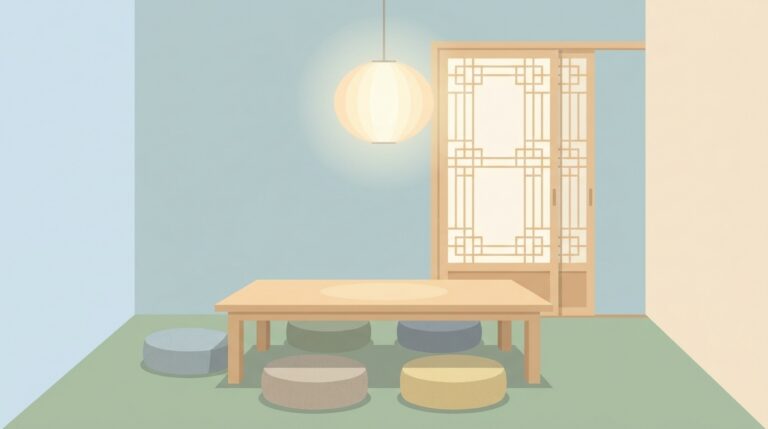
Picture this: You have spent weeks finalizing a high-stakes partnership proposal with a major Korean firm. The big day finally arrives, not in a glass-walled boardroom, but at a serene, traditional Korean restaurant (hanjeongsik) in Seoul. You step out of your shoes, slide open the delicate paper door, and step onto the polished wooden floor. But the moment you cross the threshold, an invisible tension fills the air. Everyone hesitates. Eyes subtly dart across the room. Where should you sit? Where should the VIP partner sit?
In that split second of panic, you might be tempted to pull out the first chair you see or walk casually to the closest cushion next to the sliding door. But in Korean corporate culture, that innocent move could unintentionally send the wrong message. You have probably seen this exact high-stress dynamic in iconic K-dramas like Misaeng (Incomplete Life) or Agency, where an ambitious rookie’s career hangs by the thread of a single business dinner. Knowing where to seat your guest is not just about table manners; it is the ultimate test of your professional respect and cultural fluency. In this guide, backed by a decade of coaching global professionals in Seoul, you will master the art of seating hierarchy (sangseok etiquette) and glide through executive dinners with effortless poise.
Phase 2: Core Expressions Deep Dive
1. 대표님, 편하신 안쪽 자리로 모시겠습니다. (Dae-pyo-nim, pyeon-ha-sin an-jjok ja-ri-ro mo-si-get-seum-ni-da.)
- Pronunciation: [Dae-pyo-nim, pyeon-ha-shin ahn-jjok jah-ree-ro moh-shee-get-seum-nee-dah] (Sounds like “an-jjok” where “jj” has a tense pop like the ‘ck’ in ‘black cat’ combined with ‘j’)
- Meaning: Literal: “CEO, I will guide you to the comfortable inside seat.” / Real Nuance: “Please take the seat of honor deepest inside the room; we have prepared the best spot for you.”
- K-Culture Moment: Seen in corporate K-dramas when an account manager opens a private dining door and smoothly extends an open palm toward the focal seat.
- Editor’s Insight: Combining “편하신” (comfortable) with the deferential verb “모시다” (to escort/serve) transforms a simple instruction into top-tier executive hospitality.
- Situation Spectrum: Casual 🚫 | Semi-formal ⚠️ | Formal ✅
- 🤔 Think About It: In many Western contexts, sitting wherever is convenient shows casual friendliness. Why does Korean business dining treat designated seating as the primary expression of respect?
2. 상석에 먼저 앉으시지요. (Sang-seog-e meon-jeo an-jeu-si-ji-yo.)
- Pronunciation: [Sahng-seoh-geh meon-jeo ahn-jeu-shee-jee-yo] (Soft rolling ‘g’ transitioning into ‘e’)
- Meaning: Literal: “Please sit in the seat of honor first.” / Real Nuance: “We defer to your rank; please do us the honor of taking the central head seat.”
- K-Culture Moment: Used when the client modestly hesitates at the entryway, waiting for the host’s clear social cue to claim the prime seat.
- Editor’s Insight: The ending “-시지요” is softer and far more sophisticated than the textbook command “앉으세요.” It gently nudges the guest while maintaining supreme deference.
- Situation Spectrum: Casual 🚫 | Semi-formal ⚠️ | Formal ✅
- 🤔 Think About It: Does your native culture have an equivalent word for sangseok, or do seating hierarchies depend solely on who sits at the ‘head of the table’?
3. 오늘 귀한 시간 내주셔서 진심으로 감사드립니다. (O-neul gwi-han si-gan nae-ju-syeo-seo jin-sim-eu-ro gam-sa-deu-rim-ni-da.)
- Pronunciation: [Oh-neul gwee-hahn shee-gahn nae-joo-syeo-seo jeen-sheem-eu-roh gahm-sah-deu-reem-nee-dah]
- Meaning: Literal: “Thank you sincerely for giving your precious time today.” / Real Nuance: “We deeply value your presence and are honored to host you tonight.”
- K-Culture Moment: The standard opening icebreaker delivered immediately after the VIP is comfortably settled before menus or drinks are distributed.
- Editor’s Insight: Using “귀한 시간” (precious/noble time) elevates the meeting from a transactional meal to a meaningful professional relationship.
- Situation Spectrum: Casual 🚫 | Semi-formal ✅ | Formal ✅
- 🤔 Think About It: How does verbally acknowledging someone’s time establish psychological safety and goodwill before high-stakes negotiations begin?
Phase 3: Textbook Korean vs. Real Korean
Situation 1: Guiding a Client to Their Seat
- 📖 교과서 한국어 (Textbook): 여기에 앉으십시오. (Yeo-gi-e an-jeu-sip-si-o. / “Sit here.”)
- 🗣️ 진짜 한국어 (Real Korean): 대표님, 안쪽 자리가 조용하고 아늑합니다. 이쪽으로 모실게요. (Dae-pyo-nim, an-jjok ja-ri-ga jo-yong-ha-go a-neuk-ham-ni-da. I-jjo-geu-ro mo-sil-ge-yo. / “CEO, the inner seat is quiet and cozy. Allow me to escort you right here.”)
- 💡 왜 다를까? (Why the difference?): Textbook imperatives sound stiff, robotic, and almost commanding. Native business professionals soften their directives by emphasizing the comfort, quietness, and exclusivity of the guest’s designated spot.
Situation 2: Encouraging the Guest to Make Themselves Comfortable
- 📖 교과서 한국어 (Textbook): 편안히 계세요. (Pyeon-an-hi gye-se-yo. / “Be comfortable.”)
- 🗣️ 진짜 한국어 (Real Korean): 바깥 날씨가 많이 쌀쌀하죠? 편하게 앉으셔서 따뜻한 차 먼저 드세요. (Ba-kkat nal-ssi-ga man-i ssal-ssal-ha-jyo? Pyeon-ha-ge an-jeu-syeo-seo tta-tteut-han cha meon-jeo deu-se-yo. / “Chilly outside today, isn’t it? Please settle in comfortably and have some warm tea first.”)
- 💡 왜 다를까? (Why the difference?): Natural Korean hospitality seamlessly bridges environment-based small talk (chilly weather) with an actionable, comforting gesture (warm tea).
Phase 4: K-Culture Deep Dive & Non-Verbal Manners
4-1. 눈치 (Nunchi) & Spatial Body Language
When stepping into a private room (room-sikdang), your nunchi (situational awareness) must activate immediately:
* The Open-Palm Gesture: Never point with an index finger when showing someone to their seat. Place your fingers together, turn your palm upward at a 45-degree angle, and slightly tilt your upper torso forward.
* The Door Rule: The seat directly facing the door or closest to the entrance is known as malseok (말석) or haseok (하석)—the lowest seat. That seat belongs to the host, junior employee, or organizer. Why? Because that person handles the sliding door, orders refills, speaks to servers, and discreetly settles the bill.
* The Golden Anchor: The sangseok (상석) is always located furthest from the doorway, facing the entrance with a solid wall or picturesque view behind it. This ensures the VIP is shielded from hallway traffic, foot drafts, and kitchen commotion.
4-2. Cultural Code Analysis: The Legacy of Ondol and Court Dinners
Why is the deepest inner seat the seat of honor? This etiquette originates from traditional Korean heating architecture—ondol (온돌). Historically, the section of the floor closest to the furnace hearth (araetmok, 아랫목) remained warm all day, while the areas near the door (wit-mok, 윗목) caught chilly drafts. Offering someone the inner spot was quite literally offering them warmth, health, and physical protection. In modern corporate dining, this protective instinct has evolved into sheltering your guest from noise and kitchen traffic.
Phase 5: Real-Life Roleplay Scenario
Setting: An upscale private dining room in Gwanghwamun, Seoul. Traditional wooden lattices line the walls. You are hosting Managing Director Park (박 대표님), a pivotal client from a prominent logistics corporation.
- [Turn 1] 🎭 Opening the sliding wooden door and stepping to the side
- You: 대표님, 안쪽으로 들어가시죠. 오늘 날씨가 꽤 쌀쌀했습니다. (Dae-pyo-nim, an-jjog-eu-ro deul-eo-ga-si-jyo. O-neul nal-ssi-ga kkwae ssal-ssal-haet-seum-ni-da. / “Director Park, please head inside. The weather was quite chilly today.”)
- [Turn 2] 🎭 Stepping inside, scanning the room, and pausing politely near the center
- Director Park: 그러게요, 바람이 매섭네요. 방이 아주 정갈하고 아늑합니다. (Geu-reo-ge-yo, ba-ram-i mae-seop-ne-yo. Bang-i a-ju jeong-gal-ha-go a-neuk-ham-ni-da. / “Indeed, the wind is biting. This room is very tidy and cozy.”)
- [Turn 3] 🎭 Gesturing toward the deep central seat with an open palm and a gentle bow
- You: 마음에 드셔서 다행입니다. 대표님, 편하신 안쪽 상석으로 모시겠습니다. (Ma-eum-e deu-syeo-seo da-haeng-im-ni-da. Dae-pyo-nim, pyeon-ha-sin an-jjok sang-seog-eu-ro mo-si-get-seum-ni-da. / “I am glad you like it. Director Park, allow me to guide you to the comfortable seat of honor inside.”)
- [Turn 4] 🎭 Hesitating with a humble smile, testing your confidence
- Director Park: 에이, 제가 여기 앉아도 됩니까? 김 팀장이 안쪽에 앉지 그래요? (E-i, je-ga yeo-gi an-ja-do doem-ni-kka? Kim tim-jang-i an-jjo-ge an-jji geu-rae-yo? / “Oh come on, is it okay for me to sit here? Why don’t you take the inner seat, Team Leader Kim?”)
- [Turn 5] 🎭 Smiling warmly while maintaining humble eye contact
- You: 아닙니다. 오늘 귀한 걸음 해주셨는데 상석에 앉으셔야 저희 마음이 편합니다. (A-nim-ni-da. O-neul gwi-han geol-eum hae-ju-syeot-neun-de sang-seog-e an-jeu-syeo-ya jeo-hui ma-eum-i pyeon-ham-ni-da. / “Not at all. You made such a precious journey to see us today; our minds are at ease only if you take the seat of honor.”)
- [Turn 6] 🎭 Pleased by your tactful insistence, sitting down comfortably
- Director Park: 하하, 배려해 주셔서 고마워요. 그럼 감사히 앉겠습니다. (Ha-ha, bae-ryeo-hae ju-syeo-seo go-ma-wo-yo. Geu-reom gam-sa-hi an-get-seum-ni-da. / “Haha, thank you for your consideration. I will gratefully take this seat then.”)
- [Turn 7] 🎭 Sitting down near the door and placing the menu closer to Director Park
- You: 오늘 식사는 이 집에서 가장 정갈하게 나오는 코스로 준비했습니다. (O-neul sik-sa-neun i jib-e-seo ga-jang jeong-gal-ha-ge na-o-neun ko-seu-ro jun-bi-haet-seum-ni-da. / “Tonight’s meal has been prepared with this restaurant’s most refined course.”)
- [Turn 8] 🎭 Nodding approvingly with a relaxed expression
- Director Park: 기대되는군요. 오늘 좋은 대화 나눠봅시다. (Gi-dae-doen-eun-gun-yo. O-neul jo-eun dae-hwa na-nwo-bop-si-da. / “I look forward to it. Let’s have a great conversation tonight.”)
🔀 Interactive Choice Point
What do you do if Director Park asks you to sit first before he decides?
* Option A: Sit immediately in the inner seat since he insisted, saying: “네, 그럼 제가 먼저 앉겠습니다.” (Ne, geu-reom je-ga meon-jeo an-get-seum-ni-da.)
* Option B: Gently decline with an open palm toward the inner seat, saying: “대표님께서 먼저 자리해 주시면 감사히 모시겠습니다.” (Dae-pyo-nim-kke-seo meon-jeo ja-ri-hae ju-si-myeon gam-sa-hi mo-si-get-seum-ni-da.)
* Option C: Stand frozen and wait until an awkward silence fills the room.
- Feedback:
- Option A (Risk): Taking the VIP seat, even upon polite insistence, breaches professional hierarchy and may make you appear socially oblivious.
- Option B (Best): Perfect! In Korea, polite refusal (yangbo, 양보) often happens once or twice. Firmly and gracefully offering the seat a second time demonstrates impeccable manners.
- Option C (Bad): Excessive hesitation creates awkward friction. Business dining requires calm, reassuring navigation.
Phase 6: 10-Second Emotional Shadowing Drill
Master the intonation and emotional delivery of executive Korean. Slanted slashes (/) indicate brief pauses:
[✨ 정중하고 부드럽게 - Polished & Courteous]
대표님, / 편하신 안쪽 자리로 / 모시겠습니다.
(Dae-pyo-nim, / pyeon-ha-sin an-jjok ja-ri-ro / mo-si-get-seum-ni-da.)-
[🤝 확신에 차고 배려 깊게 - Confident & Warmly Hospitable]
오늘 귀한 걸음 해주셨는데, / 상석에 편히 앉으시지요.
(O-neul gwi-han geol-eum hae-ju-syeot-neun-de, / sang-seog-e pyeon-hi an-jeu-si-ji-yo.) -
[😊 겸손하고 정갈하게 - Humble & Refined]
바깥 날씨가 많이 춥죠? / 따뜻한 물 먼저 준비해 드리겠습니다.
(Ba-kkat nal-ssi-ga man-i chup-jyo? / Tta-tteut-han mul meon-jeo jun-bi-hae deu-ri-get-seum-ni-da.)
Phase 7: K-Culture Mini Dictionary
- 상석 (Sangseok) | The Seat of Honor
- The central, prime seat located furthest from entrance doors, noise, and visual distractions. Reserved strictly for clients, senior executives, or honored guests.
- 말석 / 하석 (Malseok / Haseok) | The Subordinate Seat
- The seat closest to the doorway or service pathway. Traditionally occupied by the host, youngest member, or designated event coordinator to facilitate smooth service.
- 접대 (Jeopdae) | Business Hospitality / Entertaining
- A fundamental aspect of Korean corporate relationship-building (daein-gwangye), where trust and camaraderie are nurtured through meticulous dining experiences.
- 수저 세팅 (Sujeo Setting) | Chopstick & Spoon Table Arrangement
- The customary act performed by the junior host of setting down napkins, chopsticks, and spoons for senior guests before the meal commences.
Phase 8: Traveler’s Survival Kit
Top 3 Survival Expressions for Restaurant Bookings
- 안쪽 조용한 룸으로 부탁드립니다. (An-jjok jo-yong-han rum-eu-ro bu-tak-deu-rim-ni-da.)
- Pro Tip: Use this when booking via phone to secure a private room shielded from bustling dining hall noise.
- 거래처 대표님 모시는 자리라서 신경 써주세요. (Geo-rae-cheo dae-pyo-nim mo-si-neun ja-ri-ra-seo sin-gyeong sseo-ju-se-yo.)
- Pro Tip: Tell this to restaurant staff upon arrival; Korean restaurants frequently assign their most experienced servers to client tables.
- 계산서는 이쪽으로 주시면 감사하겠습니다. (Gye-san-seo-neun i-jjo-geu-ro ju-si-myeon gam-sa-ha-get-seum-ni-da.)
- Pro Tip: Whisper this quietly to the server midway through dinner so the bill is never placed in front of your guest.
Editor’s Travel Note
When organizing an executive dinner in Seoul, avoid walk-ins at all costs. Secure private room reservations (room-sikdang) at least one week in advance. Check out curated reservation platforms like the CatchTable App Download Guide to filter specifically for private rooms (룸 완비) in business districts like Yeouido, Gangnam, and Gwanghwamun. If taking a taxi with VIPs, ensure the senior executive enters the rear curbside seat first while you take the seat behind the driver.
Phase 9: “One Step Deeper” (Reflective Essay)
In Western individualist contexts, seating is frequently perceived as arbitrary—whoever gets to the chair first sits down, or everyone sits casually wherever they like. In Korea, however, space is relational. Seating is not an accident of geometry; it is an active physical manifestation of baeryeo (배려—attentive consideration). By guiding your guest away from the drafty door to the central anchor of the room, you are physically creating a sanctum of safety and comfort for them. Korean business etiquette does not seek to flatter with empty words; it demonstrates respect through spatial guardianship.
💬 Your Turn: Have you ever experienced an awkward seating situation while traveling or working abroad? What visual cues does your native culture use to honor an executive guest? Share your story in the comments below!
Phase 10: FAQ & Common Mistakes
Q: What should I do if a private room has a rectangular table perpendicular to the door?
A: If the table runs lengthwise toward the door, the sangseok is the seat on the side facing the door, positioned at the deep end furthest inside. Avoid placing the guest with their back to the door if possible, as looking directly at incoming servers can be disruptive.
Q: What if the client insists on sitting by the door because they need to leave early?
A: Defer once with respect: “안쪽 자리가 편하실 텐데요.” (An-jjok ja-ri-ga pyeon-ha-sil ten-de-yo. / “The inside seat would be more comfortable, though.”) If they explicitly mention needing a quick exit for another commitment, graciously respect their preference immediately without pressing further.
Q: Who enters the private room first when arriving at the restaurant?
A: The host slides the door open, holds it open, and gestures the VIP guest to step inside first. Never walk in ahead of your guest unless you need to turn on lights or inspect table readiness.
🚨 Common Mistakes (흔한 실수)
- Mistake: Sitting down before the senior client sits down.
- Correct Action: Remain standing near the door until your guest of honor has settled into their cushion or chair.
- Mistake: Placing the menu directly into your own hands to review first.
- Correct Action: Open the menu and position it respectfully with two hands directly in front of the client’s place setting.
- Mistake: Pouring your own drink before attending to the client.
- Correct Action: Keep a sharp eye on their glass. When it drops below one-third, refill it using both hands before touching your own cup.
Phase 11: Action Missions
- 🥉 Bronze Mission (Solo Practice): Stand in front of your mirror and practice the open-palm gesture while reciting: “대표님, 편하신 안쪽 자리로 모시겠습니다.” until it feels completely effortless.
- 🥈 Silver Mission (Social Sharing): Screenshot your favorite K-drama dining scene showing executive seating and tag us on Instagram
@DailyHangulwith the hashtag#KoreanBusinessEtiquette. - 🥇 Gold Mission (Real-World Application): At your next lunch or meeting with colleagues or Korean acquaintances, consciously identify the sangseok and haseok in the room before anyone sits down.
- 🎮 K-Culture Mission: Watch Episode 1 or 2 of the classic office drama Misaeng (Incomplete Life). Observe where Manager Oh sits compared to Chief Executive Go during client entertainment scenes.
Phase 12: Interactive Quiz Challenge
Question 1 (Situational Judgment): You enter a traditional Korean restaurant with Director Han (거래처 한 대표님). The room has a low table on an ondol floor. Cushion A is closest to the sliding door, Cushion B is in the middle facing away from the door, and Cushion C is in the back center facing the door and a beautiful framed landscape painting. Where should you seat Director Han?
* A) Cushion A
* B) Cushion B
* C) Cushion C
Click to reveal answer & explanation
Correct Answer: C
Explanation: Cushion C is the quintessential sangseok (상석). It is furthest from the drafts and noise of the entrance, provides a dignified view of the room and artwork, and faces the door without feeling vulnerable to hallway foot traffic.
Question 2 (Fill in the Blank): Complete the deferential phrase to invite a VIP to sit comfortably:
“대표님, 편하신 안쪽 자리로 __________.”
* A) 가세요 (ga-se-yo)
* B) 모시겠습니다 (mo-si-get-seum-ni-da)
* C) 오십시오 (o-sip-si-o)
Click to reveal answer & explanation
Correct Answer: B
Explanation: 모시겠습니다 is the humble/deferential form of “to guide/escort,” making it the most appropriate and polished verb for executive hospitality.
Question 3 (True or False): If you are hosting a business dinner, you should sit directly in the sangseok so that you can control the conversation easily.
* A) True
* B) False
Click to reveal answer & explanation
Correct Answer: B (False)
Explanation: As the host, your duty is to take the haseok (하석) near the door to attend to servers, manage orders, and ensure the guest remains peaceful and undisturbed throughout the evening.
🎬 Watch Our Daily Videos! (Daily Hangul Official Instagram)
Review the expressions you learned in this article with our fun daily short videos! Check out native pronunciation and real-life nuances in action.
- Instagram @dailyhangul_en







