

Level Up Your Korean Tech Talk: How to Discuss App Usability Tests Like a Seoul UX Pro
Phase 1: 공감 (Story Immersion Opening)
안녕하세요! 매일한글 에디터입니다. (Annyeonghaseyo! It’s your Daily Hangul editor here!)
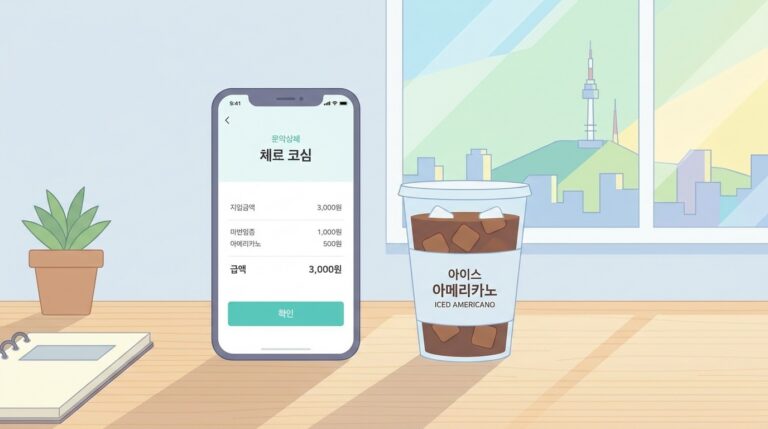
Picture this: You are sitting in a sleek, glass-walled conference room in Pangyo Techno Valley—South Korea’s vibrant Silicon Valley. Your laptop is plugged into the main screen displaying Figma boards, and on the desk rests a sweating plastic cup of A-A (iced Americano, 아이스 아메리카노). If you’ve watched K-dramas like Start-Up (스타트업) or Search: WWW (검색어를 입력하세요 WWW), you already know the high-stakes, fast-moving energy of Korean tech offices.
Yesterday, your team ran a high-priority usability test (UT) with five real target users on the newly revamped checkout screen (결제 화면). Everything seemed ready for launch, but the video playback revealed unexpected friction: three out of the five users froze right before clicking the final payment confirmation button!
Now, your team lead (팀장님) turns to you and asks: “이번 테스트 결과 어땠어요?” (Ibeon teseuteu gyeolgwa eottaesseoyo? – How did this test turn out?)
Panic sets in. You know standard Korean from textbooks, but saying stiff textbook phrases like “사용자 5인의 사용성을 측정하였습니다” sounds like you are reading a government whitepaper from 1995. How do you explain user drop-offs, UX friction, and wireframe redesigns with warmth, professional tact, and natural office flow? This guide is built directly from real feedback sessions with foreign product designers and developers working in Seoul’s top tech hubs. Let’s master the exact phrases that will make your Korean colleagues nod in admiration!
Phase 2: 핵심 표현 3선 심층 분석 (Core Expressions Deep Dive)
1. 실제 사용자 다섯 명을 초대해서 사용성 테스트를 진행했어요
- Pronunciation: Silje sayongja daseot myeong-eul chodaehaeseo sayongseong teseuteu-reul jinhaenghaesseoyo. (Think: Sheel-jeh sa-yong-ja dah-seot myeong-eul cho-dae-hae-seo sa-yong-seong teh-seu-teu-reul jeen-haeng-haess-uh-yo)
- Meaning: “We invited five real users and conducted a usability test.”
- K-Culture Moment: Just like when Nam Do-san in Start-Up presents the demo metrics of the ‘NoonGil’ app to venture capitalists, tech teams in Seoul love backing up their ideas with “실제 사용자” (actual users) rather than theoretical assumptions.
- Editor’s Insight: Notice the combination of “초대해서” (invited and…) with “진행했어요” (proceeded/conducted). In Korean business culture, framing user recruitment as an invitation (초대) highlights hospitality and deliberate research care rather than cold mechanical testing.
- Situation Spectrum: Casual: ⚠️ | Semi-formal: ✅ | Formal: ✅
- 🤔 Think About It: Why do you think Korean professionals prefer specifying the exact count of participants (다섯 명) right next to the action verb? How does this establish credibility in your language?
2. 결제 화면에서 이탈하는 사용자가 꽤 있었어요
- Pronunciation: Gyeolje hwamyeon-eseo italhaneun sayongjaga kkwae isseosseoyo. (Think: Gyuhl-jeh hwa-myeon-eh-suh ee-tal-ha-neun sa-yong-ja-ga kkwae eess-uh-ss-uh-yo)
- Meaning: “Quite a few users dropped off on the checkout screen.”
- K-Culture Moment: E-commerce in Korea moves at lightning speed with services like Coupang’s Rocket Pay or Toss 1-click transfers. When a screen lags or confuses users, Koreans immediately “이탈하다” (drop out / bounce).
- Editor’s Insight: The adverb “꽤” (quite / fairly) acts as a cultural shock absorber. Rather than saying “너무 많았어요” (there were way too many—which might sound like an attack on the UI designer’s work), “꽤 있었어요” flags the critical issue while maintaining team harmony.
- Situation Spectrum: Casual: ⚠️ | Semi-formal: ✅ | Formal: ✅
- 🤔 Think About It: Direct negative evaluations can create defensiveness in collectivist work cultures. How do tech teams in your country soften bad news about product performance?
3. 버튼 위치랑 동선을 좀 더 직관적으로 손봐야 할 것 같아요
- Pronunciation: Beoteun wichi-rang dongseon-eul jom deo jikgwanjeog-euro sonbwaya hal geot gat-ayo. (Think: Buh-teun wee-chee-rang dong-suhn-eul jom duh jeek-gwan-juhg-eu-ro sohn-bwah-yah hal guht gah-tah-yo)
- Meaning: “I think we need to tweak the button placement and user flow to make it more intuitive.”
- K-Culture Moment: When tech leads review wireframes over late-night coffee in Gangnam, they frequently use the idiomatic verb “손보다” (literally ‘to see with hands’, meaning to adjust, refine, or tweak).
- Editor’s Insight: Ending with “~할 것 같아요” (I think / It seems like…) is the gold standard of polite professional assertion in Korea. It signals: “I am confident in this direction, but I respect the room and welcome your collaborative input.”
- Situation Spectrum: Casual: ✅ | Semi-formal: ✅ | Formal: ⚠️ (In boardrooms, use ‘개선해야 할 것으로 보입니다’)
- 🤔 Think About It: Is hedging considered a sign of hesitation or a sign of emotional intelligence in your work culture?
Phase 3: 교과서 한국어 vs 진짜 한국어 (Textbook vs. Real Korean)
Situation 1: Reporting Collected User Feedback
- 📖 교과서 한국어: 사용자들의 의견을 수집하였습니다. (Sayongjadeur-ui uigyeon-eul sujiphayeossseumnida. – We collected the opinions of users.)
- 🗣️ 진짜 한국어: 실사용자 피드백을 모아봤어요. (Silsayongja pideubaek-eul moabwasseoyo. – We gathered feedback from actual users.)
- 💡 왜 다를까?: In modern Korean IT and startups, “실사용자” (real active users) is preferred over the generic “사용자들”. Furthermore, the combination “-아/어 봤어요” frames the work as an active, exploratory initiative rather than a sterile chore.
Situation 2: Suggesting UI Adjustments
- 📖 교과서 한국어: 결제 버튼의 위치를 수정해야 합니다. (Gyeolje beoteun-ui wichi-reul sujeonghaeya hamnida. – The position of the payment button must be modified.)
- 🗣️ 진짜 한국어: 결제 버튼 위치를 살짝 손봐야 할 것 같아요. (Gyeolje beoteun wichi-reul saljjak sonbwaya hal geot gat-ayo. – I think we should slightly tweak the checkout button position.)
- 💡 왜 다를까?: Saying “수정해야 합니다” implies someone made a mistake that requires correction. Using colloquial startup idioms like “살짝 손보다” (to tweak slightly) frames UI optimization as a natural iterative experiment.
Phase 4: K-Culture 딥다이브 & 비언어적 매너 (Culture & Mannerisms)
4-1. 눈치 (Nunchi) & Body Language in Korean Tech Reviews
When presenting usability test recordings where users fail to complete a purchase, watch the room’s nunchi:
* The Tilt & Nod: Don’t point your finger directly at the UX designer or developer who built the screen. Instead, look together at the monitor, tilt your head slightly in sympathetic contemplation, and say: “아, 이 부분에서 살짝 헷갈리셨나 봐요” (Ah, it looks like they got a bit confused right here).
* Two-Hand Gestures on Devices: If demonstrating the mobile screen test live on a prototype phone, hold the device gently with both hands or gesture towards the screen using an open palm rather than a single pointing finger.
* The Validation Buffer: Always validate the design effort before dropping the usability flaw: “전체적인 디자인은 깔끔한데…” (The overall design is really clean, but…).
4-2. The Culture Code: Why Speed & Zero Friction Rule Korean UX
South Korea possesses some of the most seamless fintech and delivery platforms globally (think Toss, Baemin, and KakaoPay). Korean mobile consumers value “초간편” (ultra-simple) workflows. If an authentication step takes more than three taps or a coupon dropdown hides the main action button, users consider it a bug rather than a feature. When discussing checkout screens, remember that the benchmark is always “원클릭” (one-click convenience).
Phase 5: 실전 롤플레이 시나리오 (Roleplay Scenario)
Setting: A modern sprint room at a startup in Seongsu-dong. You (Alex, UX Designer) are debriefing the morning usability test with Minji (민지 팀장님, Product Lead).
- Turn 1 (Minji): Alex 씨, 아침에 진행한 결제 화면 UT 결과 나왔어요?
(Alex-ssi, achime jinhaenghan gyeolje hwamyeon UT gyeolgwa nawasseoyo? – Alex, did the results from this morning’s checkout screen UT come out?)
🎭 Looking up from her laptop with an expectant smile -
Turn 2 (You): 네, 팀장님! 실제 사용자 다섯 명을 모시고 결제 화면 테스트를 마쳤어요.
(Ne, timjangnim! Silje sayongja daseot myeong-eul mosigo gyeolje hwamyeon teseuteu-reul machyeosseoyo. – Yes, Team Lead! We hosted five real users and finished testing the checkout screen.)
🎭 Connecting your tablet to the mirror screen calmly -
Turn 3 (Minji): 오, 반응이 어땠나요? 이번 개편안은 결제 정보 입력이 훨씬 편해졌잖아요.
(Oh, baneung-i eottaennayo? Ibeon gaepyeon-an-eun gyeolje jeongbo ipryeog-i hwolssin pyeonhaejyeotjanh-ayo. – Oh, how was the reaction? In this redesign, entering payment info became much easier, right?)
🎭 Leaning forward with high hopes -
Turn 4 (You): 전반적인 레이아웃은 좋아하셨는데, 결제 단계에서 이탈률이 꽤 높았어요.
(Jeonbanjeog-in reiyauseun joahashyeonneunde, gyeolje dangye-eseo itallyuri kkwae nopasseoyo. – They liked the overall layout, but the drop-off rate at the payment step was quite high.)
🎭 Highlighting the analytics chart gently with a stylus -
Turn 5 (Minji): 어머, 진짜요? 어디서 막힌 거죠?
(Eomeo, jinjjayo? Eodiseo makin geojyo? – Oh dear, really? Where did they get stuck?)
🎭 Furrowing her brow in surprise -
Turn 6 (You): 포인트 적용 창이 뜨면서 결제 버튼이 아래로 밀려나더라고요.
(Pointeu jeok-yong chang-i tteumyeonseo gyeolje beoteun-i araero milryeonadeoragoyo. – When the point application window popped up, the payment button got pushed downwards.)
🎭 Playing back the screen recording at 0.5x speed -
Turn 7 (Minji): 아… 스크롤을 내려야 버튼이 보이는 구조였군요!
(Ah… seukeuror-eul naeryeoya beoteun-i boineun gujoyeotgun-yo! – Ah… so it was structured so they had to scroll down to see the button!)
🎭 Nodding in sudden realization -
Turn 8 (You): 네, 그래서 결제 버튼 위치와 동선을 좀 더 직관적으로 손봐야 할 것 같아요.
(Ne, geuraeseo gyeolje beoteun wichiwa dongseon-eul jom deo jikgwanjeog-euro sonbwaya hal geot gat-ayo. – Yes, so I think we should tweak the button position and flow to make it more intuitive.)
🎭 Smiling reassuringly while proposing the wireframe fix
🔀 인터랙티브 분기점 (Interactive Decision Point)
How should you close the conversation to align next steps with Minji?
- Option A: “제가 바로 버튼 올릴 테니까 그냥 배포하죠.” (I will just raise the button now, so let’s just deploy.)
- Option B: “내일 오전까지 수정 와이어프레임을 준비해서 공유해 드려도 될까요?” (Could I prepare and share the revised wireframe by tomorrow morning?)
- Option C: “이건 프론트엔드 개발팀이 잘못 만든 것 같아요.” (I think the frontend dev team built this incorrectly.)
Feedback:
* Option A (Risk): Too unilateral. Even in modern startups, unilateral deployment without designer-PM cross-checking skips proper QA.
* Option B (Best ✅): Professional, proactive, and establishes a clear timeline while asking politely for consent.
* Option C (Bad 🚫): Blaming another department ruins team cohesion instantly and ignores that UT evaluates UX design, not code integrity.
Phase 6: 10초 감정 섀도잉 드릴 (Emotional Shadowing Drill)
Read these lines aloud using the indicated pause points (/) and emotional cues!
[🤔 진지하고 분석적인 톤 / Serious & Analytical]
“실제 사용자 다섯 명을 초대해서 / 결제 화면 사용성 테스트를 진행했어요.”
(Silje sayongja daseot myeong-eul chodaehaeseo / gyeolje hwamyeon sayongseong teseuteu-reul jinhaenghaesseoyo.)-
[💡 조심스럽지만 명확하게 발견점을 공유하며 / Tactful & Clear]
“포인트 적용 단계에서 / 이탈하는 사용자가 꽤 있었어요.”
(Pointeu jeok-yong dangye-eseo / italhaneun sayongjaga kkwae isseosseoyo.) -
[🤝 협력적이고 자신감 있는 제안으로 / Collaborative & Solution-Oriented]
“버튼 위치랑 동선을 / 좀 더 직관적으로 손봐야 할 것 같아요.”
(Beoteun wichi-rang dongseon-eul / jom deo jikgwanjeog-euro sonbwaya hal geot gat-ayo.)
Phase 7: K-Culture 미니 사전 (Key UX Vocabulary)
- 이탈률 (Itallyul)
- Translation: Drop-off rate / Bounce rate
- Usage: Essential metric when discussing funnels. e.g., “결제 완료 전 이탈률이 30%나 줄었어요!” (The drop-off rate before checkout dropped by 30%!).
- 동선 (Dongseon)
- Translation: User flow / Movement path
- Usage: Originally referring to physical choreography or architectural flow, in tech it refers to how a user navigates screens without mental fatigue.
- 직관적이다 (Jikgwanjeog-ida)
- Translation: Intuitive / Self-explanatory
- Usage: The ultimate compliment for any app in Korea. e.g., “설명서 없이도 쓸 수 있을 만큼 직관적이에요.” (It is intuitive enough to use without any manual).
- 손보다 (Sonboda)
- Translation: To refine, tweak, or fix
- Usage: Softer than ‘수정하다’ (to modify). It indicates crafting improvements with your own hands.
Phase 8: 여행자와 실무자를 위한 생존 키트 (Survival Kit)
TOP 3 Tech & Payment Expressions
- 이거 결제 화면에서 자꾸 오류가 나요. (Ige gyeolje hwamyeon-eseo jakku oryuga nayo.) – “An error keeps occurring on this payment screen.”
- Pro Tip: Use this at a pop-up store or cafe kiosk when your app fails to process.
- 간편결제 지원되나요? (Ganpyeon-gyeolje jiwondoenayo?) – “Do you support simple 1-click mobile payments (like Apple Pay, Naver Pay)?”
- Pro Tip: Korea’s mobile payment ecosystem relies heavily on QR codes and NFC.
- 화면 넘김이 왜 이렇게 버벅거리죠? (Hwamyeon neomgim-i wae ireoke beobeokgeorijyo?) – “Why is the screen transition stuttering/lagging like this?”
- Pro Tip: ‘버벅거리다’ is the ultimate native slang for UI lag or system buffering.
Editor’s Travel & Tech Note
When conducting fieldwork or testing local apps in Korea, download the Naver Map navigation app and set up local payment tools. Korean domestic checkout pages often require identity verification (본인인증 via SMS), so foreign travelers and remote UX testers should test through foreigner-friendly modes or global credit card pathways!
Phase 9: “한 발 더 깊이” (Reflective Essay)
In Western tech environments, blunt feedback like “This button flow fails because users can’t see it” is often welcomed as objective efficiency. In Korea, however, product development is fundamentally viewed as a collaborative craft where each screen reflects someone’s dedication and long overtime hours. When you frame feedback with expressions like “~할 것 같아요” (it seems we might need to…) and “손보다” (let’s polish this together), you aren’t being insecure or indecisive—you are honoring the collective effort of your peers and building social capital.
💬 Your Turn: How are UX feedback sessions handled in your country? Do people prefer straight-to-the-point critiques or padded, consensus-driven suggestions? Share your experiences below!
Phase 10: FAQ & 오해 방지 (FAQ & Common Mistakes)
Q: Can I use the English word ‘Feedback’ instead of Korean words in tech meetings?
A: Absolutely! In fact, “피드백” (pideubaek) is standard corporate Korean. You will regularly hear: “피드백 공유해 드릴게요” (I will share the feedback with you) or “피드백 반영했어요” (I reflected your feedback).
Q: Is ‘사용성 테스트’ always abbreviated as ‘UT’?
A: Yes, Korean IT professionals, PMs, and UX researchers almost universally call it UT (유티). Saying “이번 주에 결제 플로우 UT 돌려요” (We are running checkout flow UT this week) sounds 100% native.
Q: Does saying ‘~것 같아요’ make me sound unprofessional or weak as an expert?
A: Quite the opposite! In Korean corporate pragmatics, excessive certainty can come across as stubborn or arrogant (독선적). Adding ‘~것 같아요’ demonstrates professional composure and creates space for cross-functional consensus.
🚨 Common Mistakes Warning Board
- Mistake: Saying “당신 디자인이 불편해요” (Your design is uncomfortable/inconvenient).
- Why it fails: Never use “당신” (it sounds confrontational, like an argument on the street) and avoid directly attacking the designer.
- Correct Action: Say “사용자 관점에서 이 부분이 조금 헷갈릴 수 있을 것 같아요” (From the user’s perspective, this part might be a bit confusing).
- Mistake: Translating ‘User Experience’ as ‘사용자의 경험’ literally in every sentence.
- Why it fails: It sounds overly academic.
- Correct Action: Simply say “사용자 경험” or more commonly “UX” (유엑스).
- Mistake: Using “고치세요” (Fix it) to colleagues.
- Why it fails: Imperative commands sound condescending unless you are the CEO giving an urgent order.
- Correct Action: Use “개선해 보면 어떨까요?” (How about we improve this?) or “손보면 좋을 것 같아요” (It would be great to tweak this).
Phase 11: 액션 미션 & 참여 유도 (Action Missions)
- 🥉 Bronze Mission: Record yourself reading the 3 core expressions from Phase 2 with natural pausing and the ‘~것 같아요’ cadence.
- 🥈 Silver Mission: Write a one-sentence comment below proposing how to fix your favorite app’s checkout screen in Korean using the word 직관적으로.
- 🥇 Gold Mission: Next time you encounter a bug or clunky UI in a Korean mobile app, write an app store review or support ticket in polite Korean using: “결제 화면 동선이 조금 더 직관적이면 좋겠어요!”
- 🎮 K-Culture Mission: Watch Episode 5 of the K-drama Start-Up. Spot the moment the characters test their prototype with users, and see if you can hear them say “사용자” (user) and “피드백” (feedback)!
Phase 12: 인터랙티브 퀴즈 챌린지 (Interactive Quiz Challenge)
1. Context Judgment
You are presenting usability test results to senior designers. Which sentence strikes the perfect balance of professional respect and clear critique?
* (A) 이 화면은 완전히 실패작입니다. (This screen is an absolute failure.)
* (B) 사용자들이 결제 버튼을 바로 찾지 못해서, 동선을 좀 더 직관적으로 손봐야 할 것 같아요. (Users couldn’t immediately find the payment button, so I think we need to tweak the flow to make it more intuitive.)
* (C) 다 바꿀 필요 없으니 그냥 개발자한테 시키세요. (No need to change everything, just tell the developer to do it.)
🔍 Click here for the Answer & Explanation
Correct Answer: (B)
Explanation: Option (B) highlights the user observation objectively (“사용자들이 결제 버튼을 바로 찾지 못해서”) and offers an iterative, polite solution using the startup idiom “손봐야 할 것 같아요”. Option (A) is unnecessarily harsh, and (C) is disrespectful to team members.
2. Fill-in-the-Blank
Complete the sentence to mean: “We invited five real users and conducted a test.”
“실제 사용자 다섯 명을 초대해서 사용성 테스트를 _________.”
🔍 Click here for the Answer & Explanation
Correct Answer: 진행했어요 (or 진행했습니다)
Explanation: The verb ‘진행하다’ (to proceed / conduct) is the standard professional pairing with ‘테스트’ (test) or ‘프로젝트’ (project).
3. True / False Cultural Check
True or False: When sharing critical UI usability flaws with your team in Korea, stating errors as direct individual mistakes is the preferred startup etiquette.
🔍 Click here for the Answer & Explanation
Correct Answer: False!
Explanation: Korean tech culture values psychological safety and collective refinement. Constructive critiques are attributed to user behavior patterns (e.g., “Users seemed confused here”) rather than individual designer faults.
🎬 Watch Our Daily Videos! (Daily Hangul Official Instagram)
Review the expressions you learned in this article with our fun daily short videos! Check out native pronunciation and real-life nuances in action.
- Instagram @dailyhangul_en







