

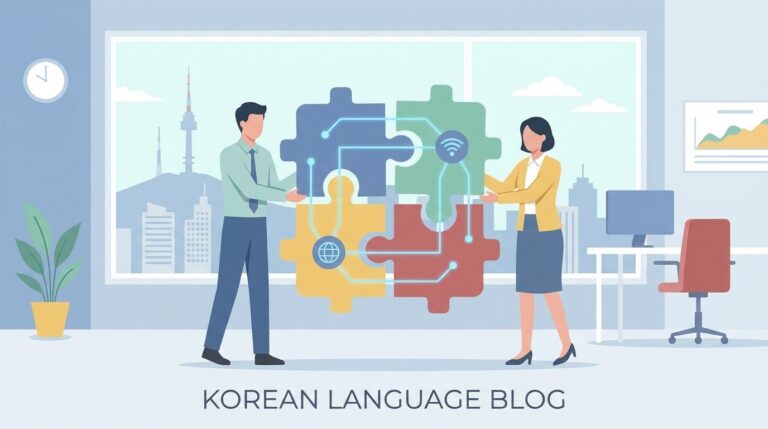
Mastering Post-Merger Integration: Harmonizing Differing HR, Compensation, and IT Systems Without Friction
Phase 1: 공감 (Story-Driven Opening)
안녕하세요! 매일한글 에디터입니다.
Have you ever watched a high-stakes corporate K-drama like Agency (대행사) or Numbers (넘버스: 빌딩숲의 감시자들) where a major corporate acquisition takes place? On paper, the deal is signed with celebratory champagne, but the next morning, the real battlefield begins. The acquired team whispers anxiously by the pantry about restructured salary bands, while IT engineers clash over whether to migrate to a brand-new cloud platform or keep legacy servers. In Korea, M&A is rarely just about financial consolidation; it is fundamentally about people, relationships, and organizational pride.
Many of our advanced C1 learners who work as corporate strategists, project leads, or consultants in Seoul share a common pain point: “I know all the standard M&A jargon in English, but when I step into a Korean steering committee meeting, direct translations like ‘system integration’ or ‘friction reduction’ sound either too robotic or overly aggressive.”
Navigating Post-Merger Integration (PMI) in Korea requires a deep understanding of corporate hierarchy, organizational psychology, and nuanced phrasing. Mastering these expressions will help you earn immediate credibility among executive stakeholders and successfully guide differing teams toward harmony without triggering territorial backlash. Let us dive into the executive-level Korean expressions that make complex PMI transitions smooth and respected.
Phase 2: 핵심 표현 3선 심층 분석
1. 화학적 결합을 이끌어내다 (Hwahakjeok gyeorhabeul ikkeureonaeda)
- Pronunciation: [Hwahakjeok gyeorhabeul ikkeureonaeda] (Sounds like hwa-hak-jeok gyeol-ha-beul ee-kew-reo-nae-da, rhyming softly like ‘hwa-hak’ in ‘quick clap’).
- Meaning: Literally “to lead/produce a chemical combination.” Nuance: Achieving true cultural and emotional integration between organizations rather than a mere surface-level mechanical union.
- K-Culture Moment: Seen in executive boardrooms in dramas like Reborn Rich (재벌집 막내아들), where leaders emphasize that combining balance sheets means nothing if employees don’t feel like “한 가족” (one family).
- Editor’s Insight: Korean business culture heavily emphasizes hwa-hak (화학; chemical) over mullijeok (물리적; physical/mechanical). Use this expression to show executive maturity—it signals that you prioritize employee morale and retention during mergers.
- Situation Spectrum: Casual 🚫 | Semi-formal ⚠️ | Formal ✅
- 🤔 Think About It: Western business terminology often uses “organizational synergy,” but Korean prefers “chemical bonding.” What does this metaphor reveal about how Korean companies view interpersonal chemistry?
2. 인사·보상 체계의 형평성을 맞추다 (Insa-bosang chegye-ui hyeongpyeongseongeul matchuda)
- Pronunciation: [Insa-bosang chegye-ui hyeongpyeongseongeul matchuda] (Pronounce hyeong-pyeong-seong with a crisp, balanced tempo, akin to balancing scales).
- Meaning: Literally “to align the equity of the HR and compensation system.” Nuance: Harmonizing salary structures, bonuses, and promotion tracks fairly so neither the acquiring nor the acquired company feels alienated or downgraded.
- K-Culture Moment: Reminiscent of Misaeng (미생) dynamics, where contract vs. permanent workers or different division packages create unspoken workplace tension.
- Editor’s Insight: Korean corporate culture is hyper-sensitive to gongjeong (공정; fairness) and hyeongpyeong (형평; balance across comparable peers). Stating that you are “adjusting” (조정) pay can trigger defensive unions; stating that you are “ensuring equity” (형평성을 맞추다) sets a constructive tone.
- Situation Spectrum: Casual 🚫 | Semi-formal ⚠️ | Formal ✅
- 🤔 Think About It: Why is “equity” (형평성) often prioritized over simple “performance-driven differentiation” during initial integration phases in Korean organizations?
3. 레거시 시스템을 점진적으로 통합하다 (Regeosi siseutemeul jeomjinjeogeuro tonghap-hada)
- Pronunciation: [Regeosi siseutemeul jeomjinjeogeuro tonghap-hada] (Jeom-jin-jeok sounds rhythmic, emphasizing steady, step-by-step evolution rather than abrupt change).
- Meaning: Literally “to gradually integrate legacy systems.” Nuance: Modernizing disparate IT infrastructures and database pipelines incrementally to avoid workflow disruptions and operational panic.
- K-Culture Moment: Often uttered by weary tech leads in Pangyo IT headquarters when bridging old enterprise ERP software with agile, modern startup setups.
- Editor’s Insight: Using the word jeomjinjeogeuro (점진적으로; progressively/step-by-step) reassures conservative Korean executives who dread service outages and sudden systemic changes.
- Situation Spectrum: Casual ⚠️ | Semi-formal ✅ | Formal ✅
- 🤔 Think About It: How does prioritizing stability over rapid disruption reflect traditional Korean risk-management approaches in enterprise environments?
Phase 3: 교과서 한국어 vs 진짜 한국어
Situation 1: Handling staff pushback during harmonization meetings
- 📖 교과서 한국어: 우리는 직원들의 불만을 줄이고 시스템을 합칠 것입니다. (Urineun jigwondeurui bulmaneul jurigo siseutemeul hapchil geosimnida. – We will reduce employees’ complaints and combine the systems.)
- 🗣️ 진짜 한국어: 양사 구성원들의 현장 피로도를 고려하여, 제도 통합 과정의 잡음을 최소화하겠습니다. (Yangsa guseongwondeurui hyeonjang pirodoreul goryeohayeo, jedo tonghap gwajeongui jabeumeul choesohwahagessseumnida. – Considering the on-the-ground operational fatigue of both teams, we will minimize friction throughout the system harmonization process.)
- 💡 왜 다를까? C1-level business executives rarely use blunt terms like bulman (불만; complaints). Instead, they frame issues with empathetic corporate terms like hyeonjang pirodo (현장 피로도; operational fatigue) and jabeum (잡음; systemic friction/noise).
Situation 2: Proposing an IT infrastructure migration timeline
- 📖 교과서 한국어: IT 프로그램을 빨리 바꾸면 문제가 생깁니다. (IT peurogeuraemeul ppalli bakkumyeon munjega saenggimnida. – If we change the IT program quickly, problems will arise.)
- 🗣️ 진짜 한국어: 인프라 전환은 업무 공백을 방지하기 위해 단계별 마이그레이션 전략으로 접근해야 합니다. (Inpeura jeonhwaneun eommu gongbaegeul bangjihagi wihae dangyebyeol ma-igeure-isyeon jeollyageuro jeopgeunhaeya hamnida. – Infrastructure transition must be approached via a phased migration strategy to prevent operational disruption.)
- 💡 왜 다를까? In executive presentations, vague words like munje (problems) are replaced by clear corporate consequences such as eommu gongbaek (업무 공백; operational void or downtime).
Phase 4: K-Culture 딥다이브 & 비언어적 매너
4-1. 눈치 (Nunchi) & Corporate Body Language
During a PMI town hall or Steering Committee (스티어링 커미티), non-verbal cues carry enormous weight.
* The Two-Handed Document Presentation: When distributing revised HR compensation roadmaps, always pass documents with both hands while slightly dipping your chin. This shows institutional respect to acquired team managers who may feel threatened by the takeover.
* Active Attentive Nodding (경청의 고개 끄덕임): When an executive from the acquired firm vents concerns about legacy tech debt, maintain eye contact and offer deliberate, steady micro-nods. Cutting them off mid-sentence to offer a technical solution is seen as domineering and dismissive.
4-2. Cultural Code Analysis: “한솥밥” (Hansotbap) Mindset
In modern Korean business sagas, true merger success hinges on whether employees feel they are now “eating rice from the same pot” (한솥밥을 먹는 식구). While Western M&A often focuses heavily on rapid synergy realization and immediate headcount rationalization, top Korean conglomerates prioritize psychological integration. If leadership moves too aggressively on IT deprecation or slashing historical allowances, it triggers collective emotional boycotts. Successful PMI leaders in Korea balance analytical rigor with deep emotional validation.
Phase 5: 실전 롤플레이 시나리오
Setting: A sleek executive conference room in Pangyo Techno Valley. You are the PMI Director for a leading Korean platform company integrating an acquired fintech startup. You are meeting Director Park (박 이사), the veteran operations head of the acquired startup.
- 박 이사: 이번 개편안을 보니, 저희 개발팀의 기존 직급 체계와 인센티브 기준이 대폭 수정되었더군요. 내부 반발이 심각합니다. (Ibeon gae-pyeon-aneul boni, jeohui gaebaltim-ui gijon jikgeup chegyewa insenteibu gijuni daepok sujeongdo-eotdeogunyo. Naebu banbari simgakamnida.)
🎭 (Frowning slightly, tapping the printed presentation slides with his pen)
“Looking at this restructuring proposal, our development team’s existing rank structure and incentive metrics have been drastically revised. Internal pushback is severe.” -
You: 박 이사님, 현장에서 느끼시는 우려에 전적으로 공감합니다. (Bak Isanim, hyeonjang-eseo neukkisineun urye-e jeonjeogeuro gonggamhamnida.)
🎭 (Leaning forward slightly with an empathetic gaze, palms open on the table)
“Director Park, I fully empathize with the concerns felt by your team on the ground.” -
박 이사: 특히 10년간 안정적으로 운영해 온 자체 서버와 IT 인프라를 본사 클라우드로 전면 교체한다는 점도 납득하기 어렵습니다. (Teukhi simnyeongan anjeongjeogeuro un-yeonghae on jache seobeowa IT inpeurareul bonsa keullaudeuro jeonmyeon gyocehandaneun jeomdo napdeukhagi eoryeopseumnida.)
🎭 (Crossing arms, defensive body posture)
“In particular, it is hard to accept completely replacing our private servers and IT infrastructure—which we have operated stably for a decade—with headquarters’ cloud.” -
You: 급격한 변화로 인한 현장 구성원들의 불안감을 결코 가볍게 여기지 않고 있습니다. (Geupgyeokhan byeonhwaro inan hyeonjang guseongwondeurui burangameul gyeolko gabyeopge yeogiji ankko itseumnida.)
🎭 (Nodding solemnly, lowering vocal pitch to project calm reassurance)
“We by no means take lightly the anxiety felt by your team members due to sudden changes.” -
박 이사: 그렇다면 이 격차를 어떻게 좁힐 계획이십니까? (Geureotdamyeon i gyeokchareul eotteoke jophil gyehoe-gisimnikka?)
🎭 (Looking directly into your eyes, waiting for a tangible compromise)
“Then how do you plan to bridge this gap?” -
You: 양사의 형평성을 맞추는 완충 기간을 두고, 레거시 시스템은 단계별 마이그레이션을 통해 업무 리스크를 통제하고자 합니다. (Yangsaui hyeongpyeongseongeul matchuneun wanchung giganeul dugo, regeosi siseutemeun dangyebyeol ma-igeure-isyeoneul tonghae eommu riseukeureul tongjehagojo hamnida.)
🎭 (Calmly bringing up the transition timeline roadmap on the display)
“We propose a transitional buffer period to align equity between both companies, while managing operational risks through phased migration for legacy systems.” -
박 이사: 완충 기간 동안 기존 개발진의 보상 수준이 보전된다면, 팀 리더들을 설득해 볼 여지는 있겠네요. (Wanchung gigan dongan gijon gaebaljinui bosang sujuni bojeondoendamyon, tim rideodeureul seoldeukhae bol yeojineun itgenneyo.)
🎭 (Relaxing his shoulders, slowly leaning back into his chair)
“If our current developers’ compensation levels are safeguarded during the buffer period, there might be room for me to persuade the team leads.” -
You: 화학적 결합이 전제되지 않은 통합은 의미가 없습니다. 이사님과 긴밀히 소통하며 잡음을 최소화하겠습니다. (Hwahakjeok gyeorhabi jeonjedoeji aneun tonghabeun uimiga eopseumnida. Isanimkwa ginmilhi sotonghamyeo jabeumeul choesohwahagessseumnida.)
🎭 (Offering a firm, respectful nod with hands neatly clasped)
“An integration without chemical synergy is meaningless. I will communicate closely with you to minimize all friction.”
🔀 인터랙티브 분기점 (Interactive Decision Point)
How would you frame the IT server migration when talking to the startup’s stubborn lead architect?
- Option A: “본사 방침상 보안 규정을 준수해야 하므로 이번 분기 내로 서버를 무조건 이전해 주십시오.” (HQ policy dictates security compliance, so migrate all servers within this quarter unconditionally.)
- Feedback: [Bad] Triggers immediate territorial defense and potential mass resignations of key developers. Violates collaborative PMI etiquette.
- Option B: “현행 시스템의 안정성을 인정하며, 데이터 정합성을 검증하기 위한 파일럿 프로젝트부터 점진적으로 추진하겠습니다.” (Recognizing the stability of your current system, we will proceed incrementally, starting with a pilot project to verify data integrity.)
- Feedback: [Best] Validates the legacy team’s technical achievements while proposing an objective, risk-mitigated technical roadmap.
- Option C: “클라우드로 바꾸지 않으면 연말 인사 평가에서 개발팀 고과가 깎일 수 있습니다.” (If you don’t switch to cloud, your development team’s year-end performance rating may suffer.)
- Feedback: [Risk] Heavy-handed coercion. Destroys trust and instantly ruins the prospect of “화학적 결합” (chemical integration).
Phase 6: 10초 감정 섀도잉 드릴 (10-Second Emotional Shadowing Drill)
Practice these lines with accurate pacing. The slash marks (/) indicate natural breath and emphasis pauses.
[🤝 정중하고 신뢰감 있게 - Courteous & Reassuring]
양사의 인사 제도 차이를 존중하며, / 구성원들의 박탈감을 최소화하는 방향으로 / 제도를 보완해 나가겠습니다.
(Yangsaui insa jedo chairreul jonjunghamyeo, / guseongwondeurui baktalgameul choesohwahaneun banghyangeuro / jedoreul bowanhae nagagessseumnida.)
“Respecting the differences in HR systems between both firms, / we will adjust our policies in a direction / that minimizes any sense of alienation among team members.”-
[💼 확고하면서도 유연하게 - Firm Yet Flexible]
인프라 통합은 속도보다 안정성이 핵심입니다. / 업무 공백이 발생하지 않도록 / 단계별 전환 프로세스를 수립하겠습니다.
(Inpeura tonghabeun sokdoboda anjeongseongi haeksimimnida. / Eommu gongbaegi balsaenghaji antorok / dangyebyeol jeonhwan peuroseseureul suriphagessseumnida.)
“Stability is key over speed for infrastructure integration. / To ensure no operational disruption occurs, / we will establish a phased transition process.”
Phase 7: K-Culture 미니 사전 (Core Vocabulary)
- 화학적 결합 (Hwahakjeok gyeorhap) | Noun | Chemical integration / Organic cultural bonding. Used widely in Korean corporate M&A analysis to evaluate how successfully two disparate work cultures have merged into one harmonious identity.
- 박탈감 (Baktalgam) | Noun | Sense of deprivation or alienation. A critical organizational psychology metric in Korea; if acquired workers feel their status has dropped, productivity plummets.
- 마이그레이션 (Ma-igeure-isyeon) | Noun | System migration. Commonly spoken in Korean tech corridors (Pangyo/Yeouido) when transferring on-premise databases to enterprise clouds.
- 현장 피로도 (Hyeonjang pirodo) | Noun | Operational fatigue experienced by frontline workers. Frequently cited by senior managers when arguing against sudden process overhauls.
Phase 8: 여행자 & 비즈니스 파견자를 위한 생존 키트
TOP 3 Executive Survival Phrases
- 소통 채널을 상시 열어두겠습니다. (Sotong chaeneoreul sangsi yeoreodugessseumnida.)
Pro Tip: Use this at the end of town halls to signal that you are an open, reachable leader who welcomes bottom-up feedback. - 상호 존중을 바탕으로 조율해 나가겠습니다. (Sangho jonjungeul batangeuro joyulhae nagagessseumnida.)
Pro Tip: The ultimate phrase to defuse heated compensation debates without committing rashly on the spot. - 현장의 목소리를 본사 경영진에 가감 없이 전달하겠습니다. (Hyeonjangui moksorireul bonsa gyeong-yeongjine gagameopsi jeondalhagessseumnida.)
Pro Tip: Reassures acquired teams that you will honestly report their realities up the chain without filtering.
Editor’s Travel & Business Expats Note
If you are visiting Seoul for executive PMI assignments, base yourself near modern transit hubs. You will likely shuttle between Yeouido financial towers and Pangyo IT tech headquarters. Check out the comprehensive resources on the official Seoul Global Business Center support platform for corporate expat administrative services and networking. For commuting between Pangyo and Gangnam, avoid rush-hour taxis; the Shinbundang Line subway is incomparably faster and accepts contactless local T-money or registered business cards effortlessly.
Phase 9: “한 발 더 깊이” (Deep Cultural Reflection)
In Korean corporate life, an enterprise is historically conceptualized as an extended community rather than a loose collection of transactional contracts. When an M&A occurs, acquired staff often experience feelings akin to emotional displacement. For many employees, corporate restructuring is not merely an analytical formula of titles and base compensations; it directly impacts their sense of belonging, familial pride, and face (chemyeon, 체면). Harmonizing IT systems and compensation grids therefore requires emotional statesmanship as much as technical expertise.
💬 Your Turn: In your home country, how are differing corporate cultures reconciled after an acquisition? Is the primary focus on rapid financial rationalization, or is equal weight given to emotional and cultural harmony? Share your thoughts below!
Phase 10: FAQ & 오해 방지 (FAQ Schema)
Q: Why do Korean executives hesitate to use the direct word “통합” (Integration) during early PMI stages?
A: In many organizational contexts, tonghap (통합) sounds like a unilateral absorption where the acquiring company swallows the acquired firm. Sophisticated leaders prefer terms like sangsaeng (상생; mutual coexistence) or hwahakjeok gyeorhap (화학적 결합; organic bonding) to alleviate defensive anxieties.
Q: Is it acceptable to debate compensation discrepancies directly during an open town hall?
A: Rarely. Publicly comparing salaries or bonuses causes deep loss of face (chemyeon) for both sides. Compensation adjustments are almost universally negotiated through closed representative working groups (silmu hyub-ui-che) before formal announcements are made.
Q: How should I address technical debt without offending the acquired engineering team?
A: Frame legacy systems not as “outdated” (naguhwadoen), but as “systems that served business growth remarkably well during their era” (geuganui seongjangeul gyeon-inhan siseutem). Then propose modernization as an inevitable evolutionary step to support expanded scale.
🚨 Common Mistakes (흔한 실수 TOP 3)
- Saying “불만을 말씀해 주세요” (Please tell me your complaints): Invites conflict and negative framing.
Correct Action: Use “개선이 필요한 부분이나 현장의 애로사항을 청취하겠습니다” (I will listen to areas needing improvement or on-the-ground bottlenecks). - Ignoring Korean seniority titles (직급 호칭): Calling senior members simply by their name followed by “-ssi” (-씨) in formal steering meetings.
Correct Action: Stick to corporate title honorifics (e.g., Isanim, Teamjangnim, Suseoknim). - Rushing IT migration with hard ultimatums: Demanding migration within days causes internal passive-aggressive delays.
Correct Action: Propose a “병행 운영 기간” (parallel run period) to verify data safety.
Phase 11: 액션 미션 & 참여 유도
- Bronze Level: Read Phase 6’s Shadowing sentences aloud 3 times, paying attention to the breath pauses (
/) and keeping a calm, reassuring vocal cadence. - Silver Level: Leave a comment below introducing your role using advanced corporate Korean (e.g., “저는 IT 인프라 통합을 담당하는 PM입니다”).
- Gold Level: Roleplay an executive scenario with your language exchange partner where you defend a phased timeline using the phrase “업무 공백을 최소화하기 위해 단계별로 진행하겠습니다.”
- 🎮 K-Culture Mission: Watch Episode 1 of Agency (대행사) or Misaeng (미생) and identify when characters use indirect, face-saving corporate language rather than blunt confrontation!
Phase 12: 인터랙티브 퀴즈 챌린지
Test your mastery of advanced executive Korean and corporate PMI strategies!
1. Situational Judgment
During an integration town hall, employees from the acquired startup express strong anxiety about their job security and altered promotion ladders. What is the most executive, culturally adept response?
* (A) 본사의 방침이 확정되었으니 더 이상의 이견은 수용하기 어렵습니다.
* (B) 양사 간의 형평성을 충분히 고려하여 완충 장치와 공정한 평가 기준을 마련하겠습니다.
* (C) 불만이 있는 인원은 개별 면담을 신청하여 퇴사 절차를 논의하십시오.
2. Fill-in-the-Blank
조직 간의 진정한 시너지를 내기 위해서는 물리적 통합을 넘어 직원들 간의 (____)을/를 이끌어내는 것이 필수적입니다.
3. Cultural True or False
In Korean PMI operations, immediately migrating all IT systems without a transition period is appreciated as decisive, high-performing leadership. (True / False)
🔍 View Answer & Detailed Explanations (클릭하여 정답 확인)
- Answer: (B)
Explanation: Option (B) demonstrates emotional statesmanship and institutional balance by assuring hyeongpyeongseong (equity) and buffer mechanisms. Option (A) is authoritarian, and Option (C) is destructive. -
Answer: 화학적 결합 (Hwahakjeok gyeorhap)
Explanation: As learned in Phase 2, “화학적 결합” (chemical integration) refers to genuine cultural and emotional alignment beyond superficial structural unity. -
Answer: False
Explanation: Forcing an immediate migration without validation triggers immense operational anxiety and resistance. In Korean enterprise culture, risk mitigation via dangyebyeol ma-igeure-isyeon (phased migration) and honoring existing stability is seen as true executive maturity.
🎬 Watch Our Daily Videos! (Daily Hangul Official Instagram)
Review the expressions you learned in this article with our fun daily short videos! Check out native pronunciation and real-life nuances in action.
- Instagram @dailyhangul_en







