

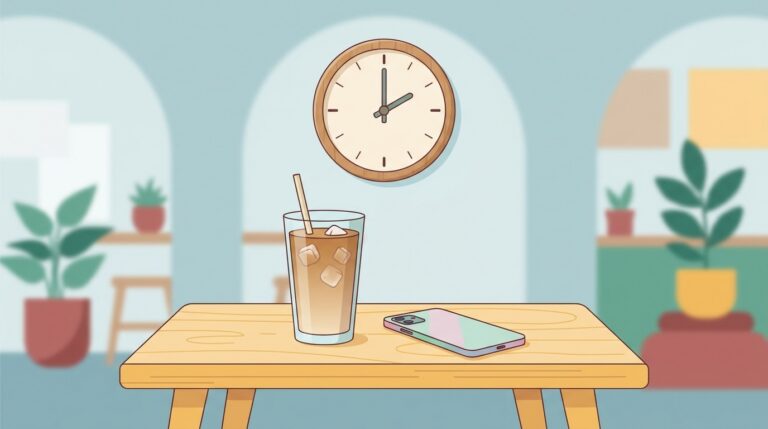
Master Korean Time: Why 2:30 PM Trips Up Beginners (And How to Nail It!)
Phase 1: 공감 (Story-Driven Opening)
안녕하세요! 매일한글 Daily Hangul editor here!
Picture this: You are standing in the vibrant, trendy alleyways of Seongsu-dong, Seoul. The aroma of freshly baked salt bread drifts from a famous bakery cafe. You sprint to the front door, phone in hand, hoping to get onto the digital waiting list before the afternoon break. The friendly cafe host smiles politely, points toward the digital tablet, and says: “죄송합니다, 오후 두 시 삼십 분에 마감해요 (Joesonghamnida, ohu du si sam-sip bun-e magamhaeyo – Sorry, we close the queue at 2:30 PM).”
Your brain instantly freezes. Wait… was that ‘du’ or ‘i’? Did they say ‘sam-sip’ or ‘seoreun’? Am I late or right on time?
If you have ever felt a wave of mild panic trying to decode numbers in Korean, take a deep breath: you are not alone! Telling time is notoriously the #1 stumbling block for beginner learners because Korean mixes two distinct numbering systems in a single sentence: Native Korean numbers for hours, and Sino-Korean numbers for minutes. But once you crack the rhythm behind 오후 두 시 삼십 분이에요 (It is 2:30 PM), you unlock the superpower to book K-Pop pop-up tickets, meet Korean friends on time, and order before cafe break-times without sweating. Let’s conquer it together today, step by step!
Phase 2: 핵심 표현 3선 심층 분석 (Top 3 Key Expressions)
1. 오후 두 시 삼십 분이에요 (Ohu du si sam-sip bun-i-e-yo)
- Pronunciation: [O-hu du-si sam-ship-bun-ee-eyo] (Think: “Oh-who do-see some-ship-boon-ee-eh-yo”)
- Meaning: Literal: “Afternoon two hour thirty minute is.” / Actual: “It is 2:30 PM.”
- K-Culture Moment: The classic line spoken by receptionists, train station announcers, or your favorite K-Drama protagonist confirming their afternoon coffee meeting.
- Editor’s Insight: Notice the secret formula here! Hour = Native Korean (두 – du), while Minute = Sino-Korean (삼십 – sam-sip). Mixing these up is the most common mistake, but remembering “Native Hour, Sino Minute” will make you sound instantly fluent.
- Situation Spectrum: Casual: ⚠️ | Semi-formal: ✅ | Formal: ✅
- 🤔 Think About It: Why did Korean culture preserve Native numbers specifically for the passing of daily hours, while using imported Sino-Korean numbers for exact mathematical minutes? What does this say about ancient daily rhythms versus modern precision?
2. 두 시 반이에요 (Du si ban-i-e-yo)
- Pronunciation: [Du-si ban-ee-eyo] (Rhymes with “do see bun-ee-eh-yo”)
- Meaning: Literal: “Two hour half is.” / Actual: “It is half past two / It’s 2:30.”
- K-Culture Moment: When texting friends in KakaoTalk: “우리 몇 시에 만나? (What time do we meet?)” – “두 시 반! (Two-thirty!)”
- Editor’s Insight: Just like in English where we say “half past two” instead of “two thirty,” Korean speakers love efficiency! The character
반 (ban)means “half.” It is quicker, softer, and far more conversational in daily life.- Situation Spectrum: Casual: ✅ | Semi-formal: ✅ | Formal: ⚠️
- 🤔 Think About It: Many cultures use a word for “half” when telling time. Do you find saying “half past” more relaxing than calculating numerical minutes?
3. 몇 시에 만날까요? (Myeot si-e man-nal-kka-yo?)
- Pronunciation: [Myut-shi-eh man-nal-kka-yo?] (Imagine: “Mutt-she-eh mahn-nahl-kkah-yo”)
- Meaning: Literal: “What hour at shall we meet?” / Actual: “What time shall we meet?”
- K-Culture Moment: The turning point in romance K-Dramas where the main leads finally arrange their first private date outside of work or university.
- Editor’s Insight:
몇 (myeot)asks “how many / which,” and~ㄹ까요? (~lkka-yo?)suggests doing something together gently. It is polite, respectful, and leaves the decision open to the listener.- Situation Spectrum: Casual: ⚠️ (Use ‘몇 시에 만날까?’) | Semi-formal: ✅ | Formal: ✅
- 🤔 Think About It: Notice how Korean creates soft suggestions through question endings rather than blunt demands. How does your native language propose appointment times?
Phase 3: 교과서 한국어 vs 진짜 한국어 (Textbook vs. Real-World Korean)
Situation 1: Telling someone the time right now
- 📖 교과서 한국어 (Textbook): 지금은 오후 두 시 삼십 분입니다. (Jigeumeun ohu du si sam-sip bun-imnida.)
- 🗣️ 진짜 한국어 (Real-World): 지금 두 시 반이에요! (Jigeum du si ban-i-e-yo!)
- 💡 왜 다를까? (Why is it different?): While the textbook form with
~입니다 (~imnida)is grammatically immaculate, native speakers reserve it for military briefings or broadcast news. In 99% of real situations, drop the heavy오후 (afternoon)if the sun is already up, and use the friendly반 (ban)!
Situation 2: Checking what time to meet a friend
- 📖 교과서 한국어 (Textbook): 몇 시에 약속 장소에 오실 것입니까? (Myeot si-e yaksok jangso-e osil geosimnikka?)
- 🗣️ 진짜 한국어 (Real-World): 우리 몇 시에 볼까? / 몇 시에 봐요? (Uri myeot si-e bolkka? / Myeot si-e bwayo?)
- 💡 왜 다를까? (Why is it different?): Instead of using rigid words like “arrive at the promise venue,” natural Korean uses the light verb
보다 (boda - to see each other). It feels warm, spontaneous, and close.
Phase 4: K-Culture 딥다이브 & 비언어적 매너 (K-Culture & Manners)
4-1. 눈치 (Nunchi) & Gestures for Telling Time
- The Discreet Wrist Tap: When asking for the time non-verbally across a noisy cafe or classroom, lightly tap your left wrist with two fingers of your right hand while tilting your head with a questioning eyebrow raise.
- The Two-Hand Phone Check: If an elder or a coworker asks you the time, don’t just glance casually at your smartwatch. Pick up your phone with both hands or steady your wrist politely as you check: “두 시 반입니다! (It is 2:30!)”
- Korean Punctuality (
코리안 타임vs. Reality): While the slang phrase “Korean Time” used to imply running slightly late in the 1980s, modern Korea runs on lightning-fast speed and fierce punctuality. Arriving 5 to 10 minutes before the agreed time (especially for business or reservations) shows supreme manners and high Nunchi.
4-2. Culture Code: The 3:00 PM Break-Time Hazard
- In South Korea’s bustling food spots—from Hongdae pasta bars to Gangnam BBQ joints—many kitchens have a mandatory Break Time (브레이크 타임) between 3:00 PM and 5:00 PM. The final order is almost always cut off at 오후 두 시 삼십 분 (2:30 PM). If you know how to hear and say this phrase, you will never get turned away hungry!
Phase 5: 실전 롤플레이 시나리오 (Real-Life Roleplay)
Setting: Outside a viral cafe in Yeonnam-dong. You are meeting your Korean language buddy, Min-jun (민준).
- 민준 (Min-jun):
🎭 [폰을 보며 발을 동동 구르며]지우 씨! 지금 어디예요? (Jiwoo-ssi! Jigeum eodi-yeyo? / “Jiwoo, where are you right now?”) - 나 (You):
🎭 [숨을 헐떡이며 빠른 걸음으로]거의 다 왔어요! 지금 몇 시예요? (Geoui da wasseoyo! Jigeum myeot si-yeyo? / “I’m almost there! What time is it now?”) - 민준 (Min-jun):
🎭 [손목시계를 확인하며]지금 오후 두 시 이십 분이에요. (Jigeum ohu du si i-sip bun-i-e-yo. / “It’s 2:20 PM right now.”) - 나 (You):
🎭 [미안한 표정으로 손을 모으며]버스가 막혔어요. 두 시 반까지 갈게요! (Beoseu-ga makyeosseoyo. Du si ban-kkaji gal-geyo! / “The bus got stuck. I’ll be there by 2:30!”) - 민준 (Min-jun):
🎭 [밝게 웃으며 손을 내젓는다]괜찮아요! 제가 먼저 대기 등록할게요. (Gwaenchana-yo! Je-ga meonjeo daegi deungnok-hal-geyo. / “No worries! I’ll register on the waitlist first.”) - 나 (You):
🎭 [안도하며 활짝 웃는다]정말 고마워요! 제가 커피 살게요! (Jeongmal gomawoyo! Je-ga keopi sal-geyo! / “Thank you so much! Coffee is on me!”) - 민준 (Min-jun):
🎭 [장난기 어린 미소]좋아요. 천천히 조심히 와요. (Joayo. Cheoncheonhi josimhi wayo. / “Deal! Take your time and be careful.”) - 나 (You):
🎭 [지하철 출구 계단을 뛰어올라가며]네, 십 분 뒤에 만나요! (Ne, sip-bun dwi-e man-nayo! / “Yes, see you in 10 minutes!”)
🔀 인터랙티브 분기점 (Choose Your Response!)
When Min-jun asks where you are at 2:20 PM, how do you reply?
- Option A:
두 시 삼십 분에 봐요! (Du si sam-sip bun-e bwayo!)- Outcome (Best): ⭐⭐⭐ Clear, polite, and gives an exact target time that sets Min-jun at ease!
- Option B:
이 시 삼십 분이에요! (I si sam-sip bun-i-e-yo!)- Outcome (Bad): ❌ Using Sino-Korean
이 (i)for hours will confuse Min-jun for a split second. Remember, hours take Native Korean:두 시 (du si)!
- Outcome (Bad): ❌ Using Sino-Korean
- Option C:
몰라요, 늦어요. (Mollayo, neujeoyo.)- Outcome (Risk): ⚠️ Grammatically understandable, but sounds dismissive and blunt without an estimated arrival time or polite apology.
Phase 6: 10초 감정 섀도잉 드릴 (10-Second Emotion Shadowing Drill)
Practice saying these aloud with rhythm, breathing at each / mark!
[🏃 숨차고 다급하게 - Hurried & apologetic]- 죄송해요! / 지금 / 거의 다 왔어요! (Joesonghaeyo! / Jigeum / geoui da wasseoyo!)
[🤔 고개 갸우뚱하며 - Inquiring politely]- 지금 / 몇 시예요? (Jigeum / myeot si-yeyo?)
[😊 안도하며 시원하게 - Cheerful & clear]- 지금은 / 오후 / 두 시 반이에요! (Jigeumeun / ohu / du si ban-i-e-yo!)
Phase 7: K-Culture 미니 사전 (Mini Vocabulary Dictionary)
- 오후 (O-hu) | PM / Afternoon | Used formally before the hour (e.g.,
오후 2시). In casual talk, people often say낮 (nat - daytime). - 오전 (O-jeon) | AM / Morning | Derived from Chinese roots (
午noon,前before). In casual chat, people often substitute아침 (achim - morning). - 반 (Ban) | Half / 30 Minutes | The lifesaver word! Saying
두 시 반 (du si ban)is 10 times easier than두 시 삼십 분 (du si sam-sip bun). - 약속 (Yak-sok) | Plan / Appointment / Promise | Used for everything from dinner with friends to dentist checkups. Having a plan is always called an
약속.
Phase 8: 여행자를 위한 생존 키트 (Traveler’s Survival Kit)
Top 3 Survival Expressions
지금 몇 시예요? (Jigeum myeot si-yeyo?)- Pro Tip: Ask this when your phone battery dies while wandering Bukchon Hanok Village.
몇 시까지 해요? (Myeot si-kkaji hae-yo?)- Pro Tip: Perfect for asking shop owners what time they close before you start browsing.
두 시 예약이에요. (Du si ye-yak-i-e-yo.)- Pro Tip: Say this with a polite bow when walking into hair salons, cafes, or themed photo booths.
Editor’s Travel Note
Always install and set up the Naver Map app download before landing at Incheon Airport. Google Maps does not provide walking routes in Korea! Naver Map displays real-time subway arrival times down to the exact second (e.g., “오후 2시 32분 도착”). Notice how minutes are always in Sino numbers on transit screens!
Phase 9: “한 발 더 깊이” (Cultural Essay)
Have you ever wondered why Korean demands two number systems for time? Hours reflect ancient, organic cycles of daily human life—hunting, farming, and resting—which lived in Native Korean words (한 시, 두 시, 세 시). Minutes, however, arrived later with precision clocks and astronomy influenced by classical Chinese scholarship, embedding Sino-Korean words (일 분, 이 분, 삼십 분). When you tell the time in Korean, you are speaking a living bridge between ancestral rhythm and scientific precision.
💬 Your Turn: What time is it right now wherever you are reading this? Leave a comment below saying the time in Korean (e.g., 오후 3시 반이에요!)!
Phase 10: FAQ & 오해 방지 (FAQ Schema)
Q: Can I use Sino-Korean numbers for hours, like “이 시 (i si)”?
A: No! Native speakers will understand you from context, but it sounds jarringly incorrect. Hours are strictly Native Korean: 한 시 (1:00), 두 시 (2:00), 세 시 (3:00), 네 시 (4:00).
Q: What is the difference between ‘오후 두 시 삼십 분’ and ‘두 시 반’?
A: They mean the exact same time (2:30 PM). However, 오후 두 시 삼십 분 is formal and precise, whereas 두 시 반 is warm, colloquial, and used 90% of the time among friends and acquaintances.
Q: How do I tell 2:30 in the morning (AM)?
A: Simply swap 오후 (PM) with 오전 (AM): 오전 두 시 삼십 분이에요 (Ojeon du si sam-sip bun-i-e-yo). In casual speech, Koreans often say 새벽 두 시 반 (saebyeok du si ban - 2:30 at dawn).
🚨 흔한 실수 (Common Mistakes TOP 3)
- Mistake: Saying “둘 시 (dul si)” instead of “두 시 (du si)”.
- Correct Action: Native numbers 1, 2, 3, 4 drop their final sounds before counting units:
하나 -> 한 시,둘 -> 두 시,셋 -> 세 시,넷 -> 네 시.
- Correct Action: Native numbers 1, 2, 3, 4 drop their final sounds before counting units:
- Mistake: Using Native Korean for minutes (e.g., “서른 분 – seoreun bun”).
- Correct Action: Minutes ALWAYS use Sino-Korean:
삼십 분 (sam-sip bun).
- Correct Action: Minutes ALWAYS use Sino-Korean:
- Mistake: Placing AM/PM after the hour (e.g., “두 시 오후”).
- Correct Action: Korean time moves from large to small:
오후 두 시(PM 2 o’clock).
- Correct Action: Korean time moves from large to small:
Phase 11: 액션 미션 & 참여 유도 (Action Missions)
- 🥉 Bronze Mission (Solo): Look at your phone clock right now. Say the exact time out loud three times in Korean using
~시 ~분이에요. - 🥈 Silver Mission (Social): Open your voice notes or Instagram Stories and record yourself asking: “지금 몇 시예요? (What time is it now?)”
- 🥇 Gold Mission (Real Life): Next time you watch a K-Drama or a K-Pop vlog, listen carefully for whenever someone mentions a meeting time. Write down the numbers you hear!
- 🎮 K-Culture Mission: Search for a K-Pop idol schedule post on Weverse or X (Twitter). Spot the time labeled
PM 02:30and read it out as오후 두 시 삼십 분!
Phase 12: 인터랙티브 퀴즈 챌린지 (Interactive Quiz)
Q1. Which of the following is the most natural way to say “2:30 PM” to a friend?
* A) 오전 둘 시 서른 분이에요
* B) 오후 두 시 반이에요
* C) 오후 이 시 삼십 분이에요
👉 Click to reveal answer & explanation
Correct Answer: B) 오후 두 시 반이에요
* Explanation: Hours use Native Korean (두), minutes can be simplified to 반 (half), and 오후 correctly indicates PM!
Q2. Fill in the blank:
* “지금 세 시 _________이에요. (It is 3:30 right now.)”
👉 Click to reveal answer & explanation
Correct Answer: 반 (or 삼십 분)
* Explanation: Both 반 (half) and 삼십 분 (30 minutes) fit, but 반 is the most common in conversation!
Q3. True or False:
* In Korean, minutes (분) are counted using Native Korean numbers (하나, 둘, 셋).
👉 Click to reveal answer & explanation
Correct Answer: False!
* Explanation: Minutes are strictly counted with Sino-Korean numbers (일, 이, 삼, 사…). Hours use Native Korean!
🎬 Watch Our Daily Videos! (Daily Hangul Official Instagram)
Review the expressions you learned in this article with our fun daily short videos! Check out native pronunciation and real-life nuances in action.
- Instagram @dailyhangul_en







