

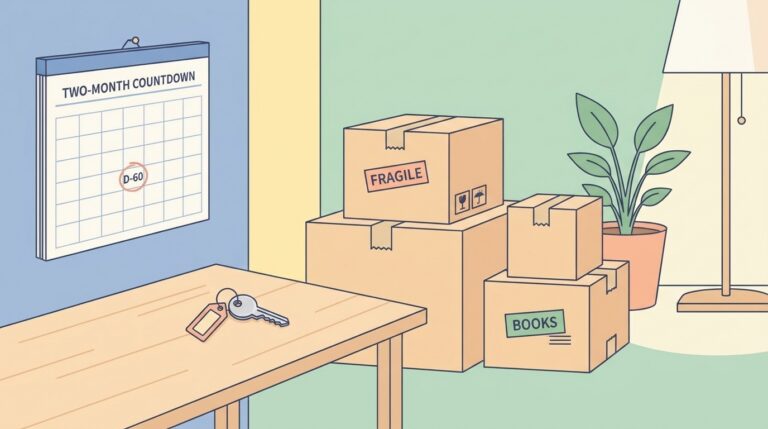
Phase 1: Empathy (Story Opening)
안녕하세요! 매일한글 에디터입니다.
Picture this: You are living in a sleek, sunny officetel in Mapo-gu, Seoul. You love your neighborhood, you grab your morning iced Americano from the corner mega-coffee shop, and your 1-year rental lease wraps up on December 31st. In mid-November, feeling proud and organized, you send a cheerful KakaoTalk message to your landlord: “Hello! My lease ends next month, so I will be moving out!”
Five minutes later, your landlord replies with a gut-wrenching message: “Under Article 6 of the Korean Housing Lease Protection Act, you must notify the landlord at least two months before contract expiration. Since you didn’t give notice by October 31st, your lease has implicitly auto-renewed (묵시적 갱신, Muksijeok Gaengsin) under the exact same terms for another contract period.”
Panic sets in. Are you trapped? Will you get your precious security deposit (보증금, bojeunggeum) back on time? Can you still move out?
At Daily Hangul, our team of local cultural navigators has coached hundreds of international students, digital nomads, and expats through this exact high-stress scenario. Dealing with housing contracts in a foreign country is intimidating, but once you master the legal timeline and natural Korean expressions to communicate clearly with landlords, you will navigate this process like a seasoned Seoulite. In this guide, we break down the critical 2-month rule, provide real-world phrases that strike the perfect balance between politeness and firm legal clarity, and ensure your deposit returns safely to your bank account!
Phase 2: 3 Core Expressions for Moving Out
Here are three essential expressions you need when negotiating your move-out and avoiding unintended lease extensions.
1. 만기일에 맞춰 방을 빼려고 합니다 (Mangiri-e matchwo bangeul ppaeryeogo hamnida)
- Pronunciation: Mang-il-e matchwo bang-eul ppae-ryeo-go ham-ni-da (Sounds like: mahn-geel-eh maht-chwo bahng-eul bbeh-ryuh-go hahm-nee-dah)
- Meaning: Literal: “I intend to take out the room matching the expiration date.” / Actual Nuance: “I am planning to vacate the apartment on the contract expiration date.”
- K-Culture Moment: Frequently heard in slice-of-life K-Dramas when young professionals prepare to relocate to another studio apartment after finding a new job.
- Editor’s Insight: In Korea, vacating a room is colloquially called ‘방을 빼다’ (bangeul ppaeda, literally ‘to pull out the room’). Using this phrase shows your landlord that you understand everyday Korean housing customs without sounding overly stiff.
- Situation Spectrum: Casual: 🚫 | Semi-formal: ⚠️ | Formal: ✅
- 🤔 Think About It: In English, we say “vacate the lease.” Why do you think Korean uses the visceral, physical verb 빼다 (to pull out / withdraw) to describe moving out of a rented room?
2. 계약 연장 의사가 없어서 미리 연락드렸어요 (Geyak yeonjang uisaga eopseoseo miri yeollakdeuryeosseoyo)
- Pronunciation: Gye-yak yeon-jang ui-sa-ga eop-seo-seo mi-ri yeon-rak-deu-ryeot-seo-yo (Sounds like: geh-yahk yuhn-jahng wee-sah-gah up-suh-suh mee-ree yul-lahk-deu-ryuht-suh-yo)
- Meaning: Literal: “I have no intention of contract extension, so I contacted you in advance.” / Actual Nuance: “I’m reaching out early to let you know that I won’t be renewing my lease.”
- K-Culture Moment: Used in professional KakaoTalk correspondence when tenants confirm move-out intentions well before the legal cutoff to create written proof.
- Editor’s Insight: The phrase 의사가 없다 (uisaga eopda) clearly signals no intention to renew, while 미리 연락드렸어요 (miri yeollakdeuryeosseoyo) softens the delivery with respectful humility (드리다, the honorific form of 주다).
- Situation Spectrum: Casual: 🚫 | Semi-formal: ✅ | Formal: ✅
- 🤔 Think About It: Notice how polite honorific endings allow you to be legally firm without sounding rude or confrontational in Korean business communication.
3. 보증금 반환 일정 확인 부탁드립니다 (Bojeunggeum banhwan iljeong hwagin butakdeurimnida)
- Pronunciation: Bo-jeung-geum ban-hwan il-jeong hwa-gin bu-tak-deu-rim-ni-da (Sounds like: boh-jeung-geum bahn-hwahn eel-juhng hwah-geen boo-tahk-deu-reem-nee-dah)
- Meaning: Literal: “Deposit return schedule confirmation request.” / Actual Nuance: “Please confirm the date and time when the security deposit will be refunded.”
- K-Culture Moment: The tense moment in Korean entertainment shows like I Live Alone (나 혼자 산다) where cast members check their mobile banking apps on moving day morning awaiting the deposit transfer.
- Editor’s Insight: Korean landlords traditionally do not return your security deposit until the exact morning of move-out day, often after an on-site inspection. Securing written agreement on the return timeline beforehand prevents last-minute delays.
- Situation Spectrum: Casual: 🚫 | Semi-formal: ⚠️ | Formal: ✅
- 🤔 Think About It: Korean deposits often represent a person’s life savings. How does discussing large financial transactions directly impact conversational tone in your culture compared to Korea?
Phase 3: Textbook Korean vs. Real-World Korean
Situation 1: Notifying the Landlord You Are Not Renewing
- 📖 교과서 한국어: 임대차 계약 해지를 통고합니다. (Imdaecha geyak haeji-reul tonggohamnida.) — “I hereby notify you of the termination of the lease contract.”
- 🗣️ 진짜 한국어: 계약 만료일에 맞춰 퇴실하려고 미리 연락드렸어요. (Geyak mallyoir-e matchwo toesilharyeogo miri yeollakdeuryeosseoyo.) — “I’m reaching out in advance to let you know I plan to move out on the lease expiration date.”
- 💡 왜 다를까? The textbook phrase sounds like an aggressive legal summons from a bailiff. Native speakers communicate clearly and formally via text message, preserving an amicable relationship with the landlord.
Situation 2: Requesting Room Inspection on Move-Out Day
- 📖 교과서 한국어: 원상복구 여부를 실사해 주십시오. (Wonsangbokgu yeobu-reul silsahae jusipsio.) — “Please conduct an on-site inspection regarding original state restoration.”
- 🗣️ 진짜 한국어: 이사 당일에 방 상태 같이 확인하고 보증금 정산해 주시면 돼요. (Isa dang-ir-e bang sangtae gachi hwaginhago bojeunggeum jeongsanhae jusimyeon dwaeyo.) — “We can check the room condition together on move-out day and settle the deposit then.”
- 💡 왜 다를까? Phrases like ‘실사’ (official investigation) put landlords on the defensive. Using ‘같이 확인하고’ (check together) creates a collaborative tone while protecting your inspection rights.
Phase 4: K-Culture Deep Dive & Non-Verbal Manners
4-1. Nunchi & Move-Out Etiquette
In Korea, written records are king. While phone calls are common, smart tenants always follow up with a text message (문자) or KakaoTalk (카카오톡) to secure timestamped evidence.
* Timing Matters: Never message your landlord late at night or during Sunday dinners. The optimal window for formal notices is weekday mornings between 10:00 AM and 11:30 AM.
* The Tone Balance: Be unfailingly polite yet crystal clear. Ambiguous phrases like “I might look for another place” (다른 집 알아볼 수도 있어요) can be interpreted by landlords as indecision, leaving you exposed to implicit auto-renewal.
* Non-verbal inspection etiquette: On move-out day, accompany the landlord during the walkthrough. Carry your original move-in photos on your smartphone. When pointing out pre-existing wear-and-tear, speak softly, bow slightly when greeting, and present photos calmly without raising your voice.
4-2. Cultural Code: The High-Stakes World of Jeonse and Wolse
Korea has a unique rental ecosystem featuring high security deposits (보증금). Even for monthly rent (월세, Wolse), deposits often range from $5,000 to $20,000 USD (or millions in 전세, Jeonse). Because landlords often repay your deposit using funds received from the incoming tenant, notifying them at least 2 to 3 months early allows the local real estate office (부동산) to list the apartment immediately. This ensures your money is ready on the day you pack your boxes.
Phase 5: Real-World Roleplay Scenario
Setting: You are on a phone call with your officetel landlord, Mr. Kim (김 사장님), exactly 2.5 months before your 1-year contract ends.
- You: 안녕하세요, 사장님! 302호 세입자 마이클입니다. 통화 가능하신가요? (Annyeonghaseyo, sajangnim! Sambek-i-ho seipja Ma-i-keur-imnida. Tonghwa ganeunghasingayo?)
🎭 Polite, clear tone, holding phone upright.
“Hello, Mr. Kim! This is Michael, tenant in unit 302. Do you have a moment to talk?” -
Landlord Kim: 네, 마이클 씨. 무슨 일이에요? 집에 문제 있어요? (Ne, Ma-i-keul ssi. Museun irieyo? Jibe munje isseoyo?)
🎭 Curious but relaxed tone.
“Yes, Michael. What is going on? Is there an issue with the unit?” -
You: 아, 다름이 아니라 12월 15일 계약 만기일에 맞춰 퇴실하려고 미리 연락드렸어요. (A, dareumi anira sibi-wol sibo-il geyak mangiir-e matchwo toesilharyeogo miri yeollakdeuryeosseoyo.)
🎭 Calm, respectful, firm statement.
“Oh, nothing bad, I am just contacting you in advance to let you know I plan to move out on my lease end date, December 15th.” -
Landlord Kim: 아, 그래요? 벌써 1년이 다 됐네. 연장 안 하고 이사 가시는 거죠? (A, geuraeyo? Beolsseo il-nyeoni da dwaenne. Yeonjang an hago isa gasineun geojyo?)
🎭 Surprised, verifying details.
“Ah, really? A year has passed already. So you are not renewing and moving out, right?” -
You: 네, 직장 위치 때문에 이사를 결정하게 되었습니다. 묵시적 갱신이 되지 않게 미리 말씀드립니다. (Ne, jikjang wichi ttaemune isareul gyeoljeonghage doe-eotsseumnida. Muksijeok gaengsini doeji anke miri malsseumdeurimnida.)
🎭 Professional explanation with legal awareness.
“Yes, I decided to relocate due to my job location. I wanted to let you know early so there is no implicit renewal.” -
Landlord Kim: 알겠습니다. 미리 알려줘서 고마워요. 바로 부동산에 방 내놓을게요. (Algetseumnida. Miri allyeojwoseo gomawoyo. Baro budongsane bang naenoeulgeyo.)
🎭 Appreciative tone.
“Understood. Thank you for letting me know early. I will list the room at the real estate agency right away.” -
You: 네, 감사합니다. 통화 끝나고 문자 메시지로 퇴실 날짜 다시 남겨놓겠습니다. (Ne, gamsahamnida. Tonghwa kkeutnago munja mesijiro toesil naljja dasi namgyeonokeotseumnida.)
🎭 Ensuring written record documentation.
“Yes, thank you. After we hang up, I will leave the move-out date in a text message as well.” -
Landlord Kim: 그래요, 문자 확인하고 답장 줄게요! (Geuraeyo, munja hwaginhago dapjang julgeyo!)
🎭 Warm and confirming.
“Sounds good, I will check your text and send a reply!”
🔀 Interactive Decision Point
Suppose your landlord says: “I need to find a new tenant first. If no tenant comes in by December 15th, your deposit return might be delayed.” How do you respond?
- Option A: “그건 사장님 사정이고요, 법적으로 만기일에 보증금 무조건 전액 돌려주셔야 합니다.” (Geugeon sajangnim sajeong-igoyo, beopjeogeuro mangiir-e bojeunggeum mujogeon jeonaek dollyeojusyeoya hamnida. – “That’s your personal problem. By law you must unconditionally return the full deposit on move-out day.”)
- Feedback (Risk): While legally true, this confrontational phrasing destroys goodwill. The landlord may become stubborn and deduct unreasonable restoration fees for microscopic scuffs.
- Option B: “아… 그러면 다음 세입자 들어올 때까지 기다려야 하나요? 알겠습니다.” (A… geureomyeon daeum seipja deureool ttaekkaji gidaryeoya hanayo? Algetseumnida. – “Oh… so do I have to wait until the next tenant moves in? Okay.”)
- Feedback (Bad): Passive acceptance puts you at severe financial risk. You could wait months without receiving your money, jeopardizing your next apartment.
- Option C: “새 세입자 구하는 데 적극적으로 협조하겠습니다. 다만 저도 다음 집 잔금을 치러야 해서 만기일 당일 보증금 반환 꼭 부탁드립니다.” (Sae seipja guhaneun de jeokgeukjeogeuro hyeopjohagessseumnida. Daman jeodo daeum jip jangeumeul chireoya haeseo mangiil dang-il bojeunggeum banhwan kkok butakdeurimnida. – “I will cooperate actively with prospective tenant viewings. However, I must pay the remaining balance on my new home, so I kindly request the deposit return strictly on the expiration day.”)
- Feedback (Best): Cooperative, respectful, yet completely unyielding on your legal rights. Korean landlords understand the pressure of paying the balance (잔금, jangeum) on a new apartment.
Phase 6: 10-Second Emotion Shadowing Drill
Practice these natural rhythm pauses marked by / with the indicated emotions!
[💼 진지하고 명확하게 / Serious & Clear]
계약 만기 / 2개월 전이라 / 연장 의사가 없음을 / 미리 알려드립니다.
(Geyak mangi / i-gae-wol jeon-i-ra / yeonjang uisaga eopseumeul / miri allyeodeurimnida.)
“Since it is two months before the lease expiration / I am letting you know in advance / that I have no intention to renew.”-
[🤝 정중하고 협조적으로 / Polite & Cooperative]
새로운 세입자분이 / 방 보러 오실 때 / 최대한 시간 맞춰드릴게요.
(Saeroun seipjabuni / bang boreo osil ttae / choedaehan sigan matchwodeurilgeyo.)
“When prospective new tenants / come to view the room / I will accommodate the schedule as much as possible.” -
[🔎 꼼꼼하고 차분하게 / Attentive & Calm]
이사 당일 오전에 / 공과금 정산하고 / 바로 방 상태 확인하시죠.
(Isa dang-il ojeone / gong-gwageum jeongsanhago / baro bang sangtae hwaginhasijo.)
“On the morning of moving day / let us settle utility bills / and inspect the room condition right away.”
Phase 7: K-Culture Mini Dictionary
-
묵시적 갱신 (Muksijeok Gaengsin)
Translation: Implicit Lease Renewal / Automatic Renewal.
Context: If neither the landlord nor the tenant provides formal notice of termination between 6 months and 2 months prior to contract expiration, the lease automatically extends under identical terms. -
원상복구 (Wonsangbokgu)
Translation: Restoration to Original State.
Context: The tenant’s contractual duty to return the property to its baseline move-in state. Does not include natural wear and tear (자연적 마모), but covers significant wall damage, stains, or fixture breaks. -
보증금 반환 (Bojeunggeum Banhwan)
Translation: Return / Refund of Security Deposit.
Context: The crucial financial transfer where the landlord refunds the tenant’s deposit upon handing over keys and inspecting the apartment. -
내용증명 (Naeyongjeungmyeong)
Translation: Certified Mail / Proof of Contents.
Context: A legal letter sent through Korea Post documenting that notice was delivered to a non-responsive landlord. It is an official prerequisite before legal remedies.
Phase 8: Resident’s Survival Kit
Top 3 Survival Phrases
- 오늘 퇴실 통보 문자 보냈으니 확인해 주세요. (Oneul toesil tongbo munja bonaesseuni hwaginhae juseyo.)
Pro Tip: Call the landlord right after texting to ask them to confirm receipt: “I sent a move-out notice text today, please check it.” - 벽에 못질한 적 없습니다. (Byeog-e motjilhan jeok eopseumnida.)
Pro Tip: Use this during the restoration walkthrough: “I never hammered nails into the walls.” - 보증금 입금 확인 후 비밀번호 알려드릴게요. (Bojeunggeum ipgeum hwagin hu bimilbeonho allyeodeurilgeyo.)
Pro Tip: Never disclose your digital door lock passcode or return physical keys until the deposit money reflects in your bank balance!
Editor’s Survival Note
Looking for new apartments or verifying rental market rates? Explore the 네이버 부동산 웹사이트 확인하기 to check current officetel market deposits. When settling utility bills on move-out day, remember to call the city gas provider (도시가스) and electricity hotline (KEPCO at 123) early that morning to get the exact meter reading amount.
Phase 9: One Step Deeper
In Korean society, business contracts live inside human relationships (정, Jeong and 눈치, Nunchi). While legal protections like the Housing Lease Protection Act strictly govern timelines, presenting information with polite consideration rather than blunt ultimatums preserves the landlord’s willingness to return your full deposit promptly. Knowing the law gives you security; speaking with empathetic Korean etiquette gives you leverage.
💬 Your Turn: Have you ever experienced an apartment inspection or rental lease dispute outside your home country? Share your stories or questions in the comments below!
Phase 10: FAQ & Common Mistakes
Q: What is the exact deadline to prevent automatic renewal (묵시적 갱신)?
A: Under current South Korean housing law, notice must reach the landlord at least 2 months before the contract expiration date. For instance, if your contract ends on August 31st, your notice must be received and acknowledged on or before June 30th.
Q: What if I notify the landlord only 1 month before my contract ends?
A: The contract will have already implicitly renewed. If you request termination after an implicit renewal, the termination takes legal effect 3 months from the date the landlord receives your notice. You may remain liable for rent during those 3 months unless a replacement tenant is found.
Q: Does the landlord have to pay for small wall scratches or normal wallpaper discoloration?
A: No. Korean court precedents state that natural aging and minor wear and tear (통상적인 손모) from ordinary living do not warrant restoration deductions. However, nail holes, deep wallpaper rips, or pet damage must be restored.
🚨 Common Mistakes Warning Board
- Calling on the phone without text proof: Always send a follow-up KakaoTalk or SMS and get a confirmation reply (“네, 확인했습니다”). Keep screenshots!
- Waiting for the landlord to ask first: Landlords rarely ask if you plan to move out. If you stay silent, the law presumes you want to stay.
- Handing over keys before checking deposit receipt: Never vacate the premises or give your door passcode until the deposit is confirmed in your bank account.
Phase 11: Action Missions
- 🥉 Bronze Mission (Solo Drill): Check your current rental contract right now. Calculate your 2-month notification deadline and add an alarm on your phone calendar 2.5 months prior.
- 🥈 Silver Mission (Community Share): Practice reading the Phase 6 Shadowing Drill aloud. Record your voice and compare your intonation with Korean drama dialogue.
- 🥇 Gold Mission (Real-World Ready): Draft a mock KakaoTalk move-out notification in natural Korean using expressions learned in Phase 2 and save it in your notes app.
🎮 K-Culture Media Mission: Watch an episode of a Korean real estate or house-hunting variety show like Where is My Home (구해줘! 홈즈). Listen for words like 보증금 (deposit), 관리비 (maintenance fees), and 만기 (expiration)!
Phase 12: Interactive Quiz Challenge
1. Situation Judgment
Your lease ends on November 30th. You want to move out without triggering implicit renewal. What is the latest date by which your landlord should have confirmed your notification?
A) November 29th
B) October 31st
C) September 30th
2. Fill in the Blank
계약 만료일에 맞춰 퇴실하겠습니다. 묵시적 _______ 이 되지 않도록 미리 연락드립니다.
(Word hint: implicit renewal)
3. True or False
True or False: In Korea, it is standard practice to hand over your door lock passcode to the landlord before checking if the deposit money has arrived in your bank account.
👉 Click to view answers and explanations!
Answers:
1. C) September 30th (Notice must be acknowledged at least two full months prior to the expiration date).
2. 갱신 (Gaengsin) — The full term is 묵시적 갱신 (implicit renewal).
3. False — You must verify that the security deposit has entered your bank account before surrendering digital door codes or physical keys!
🎬 Watch Our Daily Videos! (Daily Hangul Official Instagram)
Review the expressions you learned in this article with our fun daily short videos! Check out native pronunciation and real-life nuances in action.
- Instagram @dailyhangul_en







