

Phase 1: 공감 (Story-Immersive Opening)
안녕하세요! 매일한글 (Daily Hangul) 에디터입니다.
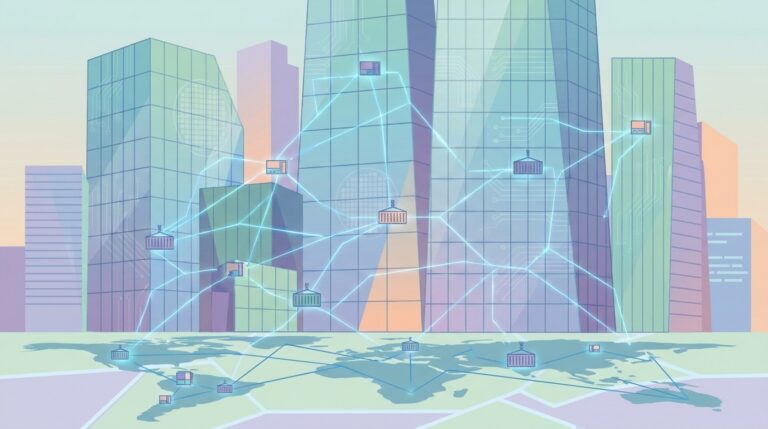
Imagine this scene: You are sitting in an executive boardroom in Gangnam, or perhaps watching an intense scene from an elite K-drama like Reborn Rich or Queen of Tears. A high-ranking trade director slaps a confidential report onto the marble table. The atmosphere turns ice-cold. Critical mineral-producing nations have just clamped down on rare-earth exports overnight. Global supply chains are fracturing, compliance teams are panicking over secondary sanctions, and everyone is scrambling to recalibrate their international contracts. Someone turns to you and asks: “우리 공급망 분절화 리스크에 어떻게 대응할 겁니까?” (How will we respond to our supply chain fragmentation risk?)
At the C2 level, textbook Korean like “경제가 어렵습니다” simply will not cut it. You need the precision, gravitas, and strategic vocabulary of high-stakes corporate diplomacy. Many advanced learners stumble here because diplomatic and geoeconomic Korean blends vivid historical idioms with technical regulatory jargon. Today, drawing from years of coaching multinational executives and trade analysts in Seoul, we will break down the exact rhetorical armor you need to navigate weaponized interdependence, counter-export controls, and fragmented global markets like a true industry insider.
Phase 2: 핵심 표현 3선 심층 분석
1. 맞불을 놓다 (Mat-bur-eul no-ta)
- Pronunciation: [Mat-bbu-reul no-ta] (Sounds like maht-bool-eul no-tah — imagine lighting a controlled counter-fire to stop an approaching wildfire)
- Meaning: Literal: To set a backfire / Contextual: To launch a retaliatory countermeasure or wage a tit-for-tat retaliation
- K-Culture Moment: Frequently heard in corporate thrillers when a competitor files a sudden patent infringement suit, and the protagonist board decides to unleash a regulatory audit in response.
- Editor’s Insight: In trade conflicts, when resource-rich nations enact export limits against international sanctions, Korean economic dailies invariably write: “자원 보유국들이 수출 제한으로 맞불을 놓았다” (Resource-rich states launched a retaliatory strike with export bans).
- Situation Spectrum: Casual: ✅ | Semi-formal: ✅ | Formal: ✅
- 🤔 Think About It: Why does Korean use fire imagery (맞불) rather than military metaphors like “striking back” when depicting strategic deterrence?
2. 빗장을 걸어 잠그다 (Bit-jang-eul geo-reo jam-geu-da)
- Pronunciation: [Bit-jang-eul geo-reo jam-geu-da] (Think of sliding a heavy wooden traditional gate latch: beet-jahng)
- Meaning: Literal: To bolt the wooden latch shut / Contextual: To close borders, impose extreme export blockades, or enforce strict protectionism
- K-Culture Moment: Evokes historical sageuk dramas where fortress gates are slammed against siege forces, now repurposed in financial news describing critical mineral embargoes.
- Editor’s Insight: It vividly conveys the physical cutoff of vital resources. When lithium or gallium shipments are halted, analysts announce: “핵심 원자재 수출에 빗장을 걸어 잠갔다.”
- Situation Spectrum: Casual: ⚠️ | Semi-formal: ✅ | Formal: ✅
- 🤔 Think About It: How does your native language describe unilateral protectionism? Does it sound administrative or physical?
3. 고래 싸움에 새우 등 터지다 (Go-rae ssa-um-e sae-u deung teo-ji-da)
- Pronunciation: [Go-rae ssa-um-e sae-u deung teo-ji-da] (Think go-reh sah-oom-eh seh-oo deung tuh-jee-dah)
- Meaning: Literal: A shrimp’s back breaks in a fight between whales / Contextual: Innocent third parties suffer collateral damage when superpowers clash
- K-Culture Moment: The quintessential proverb cited by South Korean business leaders navigating secondary sanctions between global superpowers.
- Editor’s Insight: In formal C2 settings, this idiom is often transformed into sophisticated noun phrases like “새우등 국면” or paired with strategic autonomy discussions.
- Situation Spectrum: Casual: ✅ | Semi-formal: ✅ | Formal: ✅
- 🤔 Think About It: What cultural worldview assumes that mid-tier powers are inevitably vulnerable like shrimps unless they build collective resilience?
Phase 3: 교과서 한국어 vs 진짜 한국어
Situation 1: Highlighting supply chain bottlenecks
- 📖 교과서 한국어: “핵심 광물의 수출 제한으로 부품 조달이 다소 지연되고 있습니다.” (Component procurement is somewhat delayed due to export restrictions on critical minerals.)
- 🗣️ 진짜 한국어: “자원국들이 수출에 빗장을 걸면서, 핵심 부품 수급 라인이 완전히 마비될 판입니다.” (As resource-rich nations bolt down their exports, our vital component procurement lines are on the verge of total paralysis.)
- 💡 왜 다를까?: Native C2 speakers in strategy meetings bypass bland euphemisms like “지연” (delay) and opt for vivid crisis terms like “마비될 판” (on the verge of paralysis) to spur urgent executive action.
Situation 2: Discussing mounting compliance costs
- 📖 교과서 한국어: “국제 무역 규제 준수를 위한 비용 지출이 증가하고 있습니다.” (Expenditures for compliance with international trade regulations are increasing.)
- 🗣️ 진짜 한국어: “진영 간 편 가르기가 노골화되면서 컴플라이언스 비용을 감당하기가 벅찬 지경입니다.” (With cross-bloc factionalism turning blatant, compliance costs have reached an unbearable threshold.)
- 💡 왜 다를까?: “편 가르기” (dividing into factions) captures the geoeconomic fragmentation much more incisively than academic terminology, emphasizing relational polarization.
Phase 4: K-Culture 딥다이브 & 비언어적 매너
4-1. 눈치 (Nunchi) & Corporate Gestures
In Korean geopolitical and corporate strategy sessions, high-stakes trade friction demands an understated posture. When discussing retaliatory mineral embargoes, seasoned executives maintain a composed, neutral poker face (포커페이스). Rather than pointing aggressively at PowerPoint slides, senior negotiators point with an open hand, palm angled upward toward the data charts. When acknowledging a severe risk factor, a slow, single nod accompanied by a brief lowering of the eyes demonstrates deep situational gravity (엄중함).
4-2. The Chaebol Trade Drama Dynamic
In Korean business culture, as reflected in popular economic dramas, international supply chain dilemmas are framed as existential survival crises (생존권의 문제). Korea’s export-driven manufacturing base relies heavily on imported raw minerals. Therefore, when resource nationalism causes trade fragmentation, Korean professionals discuss strategic inventory (전략 비축유) and partner diversification (다변화) with patriotic urgency.
Phase 5: 실전 롤플레이 시나리오
Setting: Executive Crisis Operations Room at a multinational battery tech firm in Pangyo Silicon Valley.
Characters: Managing Director Min (민 상무), a veteran trade strategist, and You (Lead Compliance Officer).
- 민 상무: “이번 핵심 광물 보유국들의 수출 통제 조치, 단순 엄포는 아닌 것 같습니다.” (Ibeon haek-sim gwang-mul bo-yu-guk-deur-ui su-chul tong-je jo-chi, dan-sun eom-po-neun a-nin geot gat-seum-ni-da.)
🎭 Furrowing his brows while tapping the executive risk assessment folder.
“This export control measure from critical mineral-rich nations doesn’t seem like an empty threat.” -
You: “네, 상무님. 주요 자원국들이 연쇄적으로 맞불을 놓으면서 공급망 분절화가 가속화되고 있습니다.” (Ne, sang-mu-nim. Ju-yo ja-won-guk-deu-ri yeon-swae-jeok-eu-ro mat-bur-eul no-eu-myeon-seo gong-geup-mang bun-jeol-hwa-ga ga-sok-hwa-doe-go it-seum-ni-da.)
🎭 Presenting the supply disruption dashboard with a steady, confident posture.
“Yes, Director Min. As major resource states launch retaliatory restrictions in chain reactions, supply chain fragmentation is accelerating.” -
민 상무: “결국 우리 기업들이 세컨더리 보이콧의 유탄을 맞을 위험도 배제할 수 없겠군요.” (Gyeol-guk u-ri gi-eop-deu-ri se-keon-deo-ri bo-i-kot-ui yu-tan-eul ma-jeul wi-heom-do bae-je-hal su eop-get-gun-yo.)
🎭 Taking off his glasses with a somber expression.
“In the end, we can’t rule out the risk of our firms catching stray shrapnel from secondary sanctions.” -
You: “맞습니다. 규범 기반 질서가 흔들리면서 컴플라이언스 비용 부담이 눈덩이처럼 불어나고 있습니다.” (Mat-seum-ni-da. Gyu-beom gi-ban jil-seo-ga heun-deul-li-myeon-seo keom-peul-ra-i-eon-seu bi-yong bu-dam-i nun-deong-i-cheo-reom bul-eo-na-go it-seum-ni-da.)
🎭 Pointing with an open palm toward the surging regulatory penalty projections.
“Precisely. As the rules-based order destabilizes, our compliance cost burden is snowballing.” -
민 상무: “공급처를 다변화하자니 단가 상승이 발목을 잡고, 가만히 있자니 리스크가 너무 큽니다.” (Gong-geup-cheo-reul da-byeon-hwa-ha-ja-ni dan-ga sang-seung-i bal-mok-eul jap-go, ga-man-hi it-ja-ni ri-seu-keu-ga neo-mu keum-ni-da.)
🎭 Sighing softly while folding his arms in deep contemplation.
“Diversifying vendors holds us back with soaring unit costs, yet staying idle exposes us to catastrophic risk.” -
You: “단기적으로는 우회 경로를 모색하되, 중장기적으로는 대체 소재 R&D에 속도를 내야 합니다.” (Dan-gi-jeok-eu-ro-neun u-hoe gyeong-ro-reul mo-saek-ha-doe, jung-jang-gi-jeok-eu-ro-neun dae-che so-jae R&D-e sok-do-reul nae-ya ham-ni-da.)
🎭 Nodding firmly with an unflinching gaze.
“In the short term, we must identify alternative routes, while in the mid-to-long term, we accelerate alternative material R&D.” -
민 상무: “정부 차원의 통상 교섭 라인과 공조는 어떻게 진행되고 있습니까?” (Jeong-bu cha-won-ui tong-sang gyo-seop ra-in-gwa gong-jo-neun eo-tteo-ke jin-haeng-doe-go it-seum-ni-kka?)
🎭 Leaning forward intently.
“How is our coordination with government trade negotiation channels progressing?” -
You: “민관 합동 핫라인을 통해 실시간 통상 마찰 징후를 모니터링 중입니다.” (Min-gwan hap-dong hat-ra-in-eul tong-hae sil-si-gan tong-sang ma-chal jing-hu-reul mo-ni-teo-ring jung-im-ni-da.)
🎭 Submitting the inter-agency liaison schedule with two hands.
“We are monitoring real-time signs of trade friction via a public-private joint hotline.”
🔀 인터랙티브 분기점 (Interactive Decision Point)
Director Min asks whether the firm should completely suspend operations with suppliers in sanctioned regions immediately:
* Option A: “리스크 회피를 위해 즉시 모든 공급 계약을 파기하고 전면 철수해야 합니다.” (To eliminate risk, we must cancel all contracts and withdraw immediately.)
* Feedback (Bad): Too reckless. Abrupt unilateral contract termination triggers astronomical breach-of-contract liabilities and immediate manufacturing shutdowns.
* Option B: “제재 가이드라인의 예외 조항을 면밀히 검토한 뒤, 단계적 공급망 다변화 플랜을 가동해야 합니다.” (We should scrutinize safe-harbor exemptions within sanction guidelines, then activate a phased diversification plan.)
* Feedback (Best): Demonstrates textbook C2 strategic leadership—balancing strict compliance with operational continuity.
* Option C: “상황이 진정될 때까지 아무런 조치를 취하지 말고 관망하시죠.” (Let us do nothing and adopt a wait-and-see approach until things cool down.)
* Feedback (Risk): Exposes the enterprise to devastating secondary sanctions and supply cutoffs without defensive buffers.
Phase 6: 10초 감정 섀도잉 드릴
Repeat these lines out loud, honoring the emotional tone cues and pausing at each / mark:
[😰 심각하고 단호하게 - Grave & Resolute]
자원 보유국들이 / 빗장을 걸어 잠그기 시작하면 / 우리 공급망은 / 순식간에 마비됩니다. (Ja-won bo-yu-guk-deu-ri / bit-jang-eul geo-reo jam-geu-gi si-jak-ha-myeon / u-ri gong-geup-mang-eun / sun-sik-gan-e ma-bi-doem-ni-da.)-
[🔥 결단력 있고 긴박하게 - Decisive & Urgent]
상대국이 맞불을 놓은 이상 / 단순한 외교적 수사로는 / 이번 분절화 위기를 / 돌파할 수 없습니다. (Sang-dae-guk-i mat-bur-eul no-eun i-sang / dan-sun-han oe-gyo-jeok su-sa-ro-neun / i-beon bun-jeol-hwa wi-gi-reul / dol-pa-hal su eop-seum-ni-da.) -
[⚖️ 이성적이고 설득력 있게 - Analytical & Persuasive]
세컨더리 보이콧의 위험을 분산하려면 / 민관 합동 채널을 가동해 / 선제적 대응책을 마련해야 합니다. (Se-keon-deo-ri bo-i-kot-ui wi-heom-eul bun-san-ha-ryeo-myeon / min-gwan hap-dong chae-neor-eul ga-dong-hae / seon-je-jeok dae-eung-chaek-eul ma-ryeon-hae-ya ham-ni-da.)
Phase 7: K-Culture 미니 사전 (핵심 키워드 4개)
- 무기화 (Mu-gi-hwa) | Weaponization | The strategic practice of transforming economic interdependence—such as rare earths or semiconductor microcode—into geopolitical leverage.
- 공급망 다각화 (Gong-geup-mang da-gak-hwa) | Supply Chain Diversification (De-risking) | The core corporate buzzword in Seoul boardroom briefings aimed at avoiding total reliance on a single foreign raw material exporter.
- 세컨더리 보이콧 (Se-keon-deo-ri bo-i-kot) | Secondary Sanctions | Secondary boycott mechanisms penalizing third-party corporations that conduct commercial trade with sanctioned regimes.
- 규범 기반 질서 (Gyu-beom gi-ban jil-seo) | Rules-Based International Order | Standard diplomatic terminology used by Korea’s Ministry of Foreign Affairs (MOFA) to champion multilateralism over unilateral trade coercion.
Phase 8: 여행자를 위한 생존 키트
Top 3 Executive & Business Survival Expressions
- “통상 규제 관련 최신 가이드라인이 나왔습니까?” (Tong-sang gyu-je gwan-ryeon choe-sin ga-i-deu-ra-in-i na-wat-seum-ni-kka?)
- Pro Tip: Use this when meeting trade attorneys or logistics partners in Seoul to ask if updated regulatory compliance notices have dropped.
- “원산지 증명 절차를 다시 한 번 확인해 주십시오.” (Won-san-ji jeung-myeong jeol-cha-reul da-si han beon hwag-in-hae ju-sip-si-o.)
- Pro Tip: Indispensable when auditing bills of lading to ensure raw materials do not trigger secondary boycott flags.
- “비축 물량 확보 방안을 긴급 안건으로 상정합니다.” (Bi-chuk mul-ryang hwak-bo bang-an-eul gin-geup an-geon-eu-ro sang-jeong-ham-ni-da.)
- Pro Tip: Use this in executive committees to elevate emergency resource stockpiling to an urgent board agenda.
Editor’s Travel & Business Note
If you are traveling to Seoul for trade negotiations or industry symposiums at COEX, keep essential digital tools ready. Review trade advisories on the KOTRA 무역투자24 공식 포털 to stay ahead of sudden export license revisions. For seamless transport across government complexes in Sejong or corporate campuses in Pangyo, install the 카카오 T 택시 호출 앱 and navigate metro lines effortlessly via the 네이버 지도 길찾기 앱.
Phase 9: “한 발 더 깊이” (생각 질문)
Korea’s modern geopolitical strategy has historically been shaped by its geographic realities, often described through the lens of “샌드위치 위기론” (the sandwich crisis theory)—caught between industrial manufacturing giants and technologically dominant neighbors. When critical mineral exporters withhold lithium, nickel, or graphite in retaliation against multilateral sanctions, Korea must navigate between contractual compliance and economic security. This experience has turned Korean corporate culture into an ultra-fast, adaptive crisis-management organism where terms like “속도전” (speed warfare) and “초격차” (super-gap advantage) are treated as matters of national survival.
💬 Your Turn: How does your country balance foreign policy obligations with domestic industrial security when global trade corridors fragment? Share your perspective in the comments below!
Phase 10: FAQ & 오해 방지 (FAQ Schema)
Q: Does “맞불을 놓다” sound too informal for a formal corporate trade presentation?
A: Not at all! While it originates from a folk idiom, it is thoroughly accepted across elite journalistic, political, and corporate discourse in Korea. However, if you are writing an official legal affidavit or a statutory treaty document, choose formal Sino-Korean expressions such as “상응 조치를 단행하다” (to enforce corresponding countermeasures) or “보복 관세를 부과하다” (to impose retaliatory tariffs).
Q: What is the difference between “공급망 단절” and “공급망 분절화”?
A: “공급망 단절” (Dan-jeol) refers to an acute, total severing or blackout of a specific supply pipeline. In contrast, “공급망 분절화” (Bun-jeol-hwa / Geoeconomic Fragmentation) refers to the systemic fracturing of global trade into competing geopolitical blocs, creating structural friction, duplicate supply networks, and elevated compliance overhead.
Q: How do Korean trade lawyers refer to compliance risks in conversation?
A: Korean lawyers and compliance officers typically borrow the English term directly as “컴플라이언스 리스크” (Keom-peul-ra-i-eon-seu ri-seu-keu) or use the Sino-Korean equivalent “규제 준수 위험” (Gyu-je jun-su wi-heom). Both are universally recognized in boardroom discussions.
🚨 흔한 실수 (Common Mistakes) 경고판
- Mistake 1: Translating “countermeasure” literally as “반대 측정” (Ban-dae cheuk-jeong).
- Correction: In trade conflicts, always use 대응책 (Dae-eung-chaek) or 맞대응 조치 (Mat-dae-eung jo-chi).
- Mistake 2: Using “부러지다” (to snap) when describing supply chain disruptions.
- Correction: Use 공급망이 마비되다 (Gong-geup-mang-i ma-bi-doe-da) or 차질을 빚다 (Cha-jir-eul bit-da).
- Mistake 3: Pronouncing “맞불” with a soft ‘b’ sound like [mat-bul].
- Correction: It undergoes tensification (경음화); pronounce it forcefully as [맞뿔 / Mat-ppul] to reflect strategic resolve.
Phase 11: 액션 미션 & 참여 유도
- Bronze Mission: Record yourself reciting the 3 Shadowing Drill sentences in Phase 6, paying close attention to the tense consonant in “맞불” and the dramatic cadence in “마비될 판입니다”.
- Silver Mission: Write a 3-sentence risk summary in Korean analyzing a recent critical mineral export control update in your home country, using at least two core phrases learned today.
- Gold Mission: Participate in an online business forum or write an analytical LinkedIn post discussing geoeconomic fragmentation using the phrase “진영 간 편 가르기와 공급망 분절화”.
- 🎮 K-Culture Mission: Watch an episode of a Korean business-themed drama (such as Misaeng, Agency, or Reborn Rich) and spot at least one instance where characters debate trade barriers, raw material shortages, or emergency vendor meetings!
Phase 12: 인터랙티브 퀴즈 챌린지
1. Situation Judgment Quiz:
A raw-mineral-rich nation has just declared sudden quota cutoffs against semiconductor manufacturing economies. As an executive director, which statement best captures the geoeconomic dynamic in formal Korean?
* (A) 자원국이 우리에게 선물을 주려고 수출을 멈췄습니다.
* (B) 자원 보유국들이 수출 규제로 맞불을 놓으면서 공급망 분절화 비용이 급증하고 있습니다.
* (C) 공급망이 너무 길어져서 이제 아무도 무역을 하지 않습니다.
2. Fill-in-the-Blank:
“주요 광물 수출국들이 자원 보호를 명분으로 국경에 ( )을/를 걸어 잠그고 있습니다.”
* Hint: Think of the traditional wooden gate latch metaphor from Phase 2.
3. True or False Cultural Quiz:
True or False: In high-stakes Korean trade meetings, slamming your fist on the table and raising your voice is considered an admirable show of business passion and executive negotiation prowess.
👉 Click here to reveal the Quiz Answers & Explanations!
Answers & Explanations:
- Answer: (B)
Explanation: Option (B) accurately conveys the retaliatory nature (“맞불을 놓으면서”) and the geoeconomic compliance consequence (“공급망 분절화 비용이 급증하고 있습니다”). Option (A) absurdly suggests it was a gift, and (C) is overly simplistic. -
Answer: 빗장 (Bit-jang)
Explanation: “빗장을 걸어 잠그다” is the idiomatic phrase describing protectionist trade lockouts and sudden embargoes. -
Answer: False
Explanation: In Korean executive meetings, emotional outbursts are seen as a severe lack of self-control (자제력 부족). A calm, stoic, and data-driven delivery exemplifies true executive gravitas (무게감).
🎬 Watch Our Daily Videos! (Daily Hangul Official Instagram)
Review the expressions you learned in this article with our fun daily short videos! Check out native pronunciation and real-life nuances in action.
- Instagram @dailyhangul_en






