

Phase 1: Empathy (Story-Driven Opening)
안녕하세요! (Annyeonghaseyo!) It’s your Daily Hangul editor here.
Imagine this: It is 11:45 PM on a quiet Tuesday in your cozy Seoul officetel or apartment. You have an early morning meeting, your head hits the pillow, and suddenly—THUMP. THUMP. DRAG. It sounds like your upstairs neighbor is training for an Olympic marathon or rearranging a solid oak wardrobe. In many Western countries, your natural instinct might be to stomp up the stairs, rap firmly on their door, or even dial the non-emergency police line.
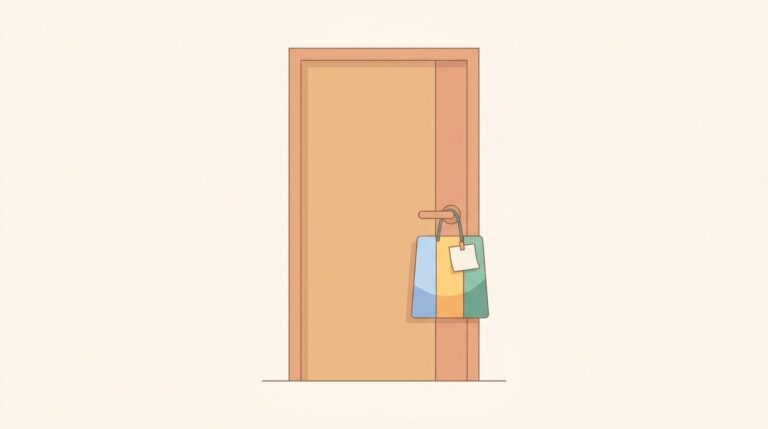
Stop right there! In Korea, direct confrontations between neighbors are considered extremely confrontational and can quickly turn an innocent misunderstanding into an uncomfortable hallway feud. Have you ever noticed in slice-of-life K-dramas how neighbors resolve grievances? They do not pick fights; they deploy the legendary “Door Note & Snack Protocol.” By hanging a polite handwritten note paired with a sweet treat—like a warm pouch of bakery buns or a box of juice—on the neighbor’s doorknob, you bridge the gap with warmth rather than anger. Over my decade of coaching international residents in Korea, learners who adopted this gentle cultural tactic solved their noise issues over 80% of the time without a single heated argument! Let’s master the art of being a thoughtful, respected neighbor in Korea.
Phase 2: Core 3 Expressions In-Depth
1. 작은 간식과 함께 쪽지 남겨요 (Jageun gansik-gwa hamkke jjokji namgyeoyo)
- Pronunciation: Jah-geun gahn-sheek-gwah hahm-kkeh jjohk-jee nahm-gyuh-yoh (Sounds like “choke-ji” for note)
- Meaning: “I am leaving a short note along with a small snack.”
- K-Culture Moment: You’ll see this classic visual in dramas like Hospital Playlist or modern webtoons, where a character hangs a cute paper bag from Paris Baguette onto an apartment door handle to soften a request.
- Editor’s Insight: This phrase sets a disarming tone. Instead of starting with an accusation, you explicitly frame your contact around a gift. In Korean psychology, accepting food creates an instinctive subconscious obligation to reciprocate with kindness (Jeong, 정).
- Situation Spectrum: Casual ⚠️ | Semi-formal ✅ | Formal ✅
- 🤔 Think About It: In your home culture, would giving a snack alongside a complaint be seen as passive-aggressive, or as a peace offering? Why do you think food works so effectively in Korea?
2. 조금만 배려해 주시면 감사하겠습니다 (Jogeumman baeryeohae jusimyeon gamsahagessseumnida)
- Pronunciation: Joh-geum-mahn beh-ryuh-heh joo-shee-myun gahm-sah-hah-get-seum-nee-dah
- Meaning: “I would be deeply grateful if you could show a little consideration.”
- K-Culture Moment: Seen often in community notices posted in apartment elevators asking residents not to run washing machines after 10 PM.
- Editor’s Insight: Notice the word 배려 (baeryeo – mutual consideration/thoughtfulness). Koreans rarely say “Be quiet” (조용히 하세요). Saying “Please show consideration” appeals to collective harmony rather than policing the other person’s individual freedom.
- Situation Spectrum: Casual 🚫 | Semi-formal ✅ | Formal ✅
- 🤔 Think About It: How does phrasing a boundary as “mutual consideration” change the power dynamic compared to issuing a rule?
3. 늦은 시간에 죄송하지만 부탁드립니다 (Neujeun sigane joesonghajiman butakdeurimnida)
- Pronunciation: Neoo-jeun shee-gahn-eh jweh-sohng-hah-jee-mahn boo-tahk-deoo-reem-nee-dah
- Meaning: “I apologize for bringing this up, but I kindly ask for your favor.”
- K-Culture Moment: Characters delivering an earnest plea in workplace dramas or neighborhood councils.
- Editor’s Insight: Why apologize (죄송하지만) when they are the ones making noise? In Korean communication, apologizing for causing an uncomfortable situation lowers the listener’s defensive guard instantly.
- Situation Spectrum: Casual ⚠️ | Semi-formal ✅ | Formal ✅
- 🤔 Think About It: Why does beginning with an apology empower the speaker rather than making them seem weak in Korean culture?
Phase 3: Textbook Korean vs. Real Korean
Situation 1: Asking the neighbor to walk lightly at night
- 📖 교과서 한국어 (Textbook Korean): 시끄러우니 조용히 해 주십시오. (Sikkeureouni joyonghi hae jusipsio. – It is noisy, so please be quiet.)
- 🗣️ 진짜 한국어 (Real Korean): 밤에는 조금만 발소리를 낮춰주실 수 있을까요? (Bameneun jogeumman balsorireul natchwojusil su isseulkkayo? – Could you mind heavy footsteps a little at night?)
- 💡 왜 다를까? (Why the difference?): The textbook sentence sounds like a cold military command! Real Koreans specify the exact sound gently (like 발소리, footsteps) and end with an open-ended question ending in -ㄹ 수 있을까요? to keep it friendly.
Situation 2: Explaining why the noise affects you
- 📖 교과서 한국어 (Textbook Korean): 소음 때문에 잠을 못 잡니다. (Soeum ttaemune jameul mot jamnida. – I cannot sleep due to noise.)
- 🗣️ 진짜 한국어 (Real Korean): 제가 요즘 출근 준비로 잠귀가 많이 밝아서요. (Jega yojeum chulgeun junbiro jamgwiga mani balk-aseoyo. – I have been a very light sleeper lately due to my early work schedule.)
- 💡 왜 다를까? (Why the difference?): Using an “I-statement” where you frame yourself as a “light sleeper” (잠귀가 밝다) prevents the neighbor from feeling attacked, making them naturally feel empathetic instead of defensive.
Phase 4: K-Culture Deep Dive & Non-verbal Etiquette
4-1. Nunchi (눈치) & Gestures
If you decide to leave a note, timing and delivery matter just as much as your handwriting:
* The Invisible Delivery: Never knock or ring the bell at midnight to hand deliver the note. Place it quietly in a small paper bag hung on their exterior doorknob between 7:00 PM and 9:00 PM when they are likely awake and relaxed at home.
* The Elevator Encounter: If you accidentally run into your upstairs neighbor the next day, do not confront them about the note right away! Offer a polite 15-degree head bow (목례, mokrye) with a warm smile. Let them bring it up first. This preserves their face (체면, chemyeon).
4-2. Cultural Code: The Ondol Reality of 층간소음 (Inter-floor Noise)
Over 60% of Koreans live in apartments or villas. Korean homes use 온돌 (ondol – radiant floor heating), meaning floors are concrete slabs carrying heating pipes with minimal sound-buffering carpets. The structure transfers vibration directly downwards! Because of this, “층간소음” (cheung-gan-soeum) is a national social topic. Leaving a small treat like dduk (rice cakes), bakery cookies, or fruit juice shows that you understand the architectural reality of living together rather than holding a personal grudge.
Phase 5: Real-World Roleplay Scenario
Setting: You are sitting in your living room with your Korean flatmate, Min-woo (민우), preparing a gift bag to hang on your upstairs neighbor’s door after three days of loud late-night pacing.
- You: 민우 씨, 어젯밤에도 위층 소리 때문에 거의 못 잤어요.
(Min-woo ssi, eojetbam-edo wicheung sori ttaemune geoui mot jasseoyo.)
“Min-woo, I barely slept again last night because of the noise upstairs.”
🎭 (Sighing and rubbing tired eyes) -
민우 (Min-woo): 저도 들었어요. 직접 올라가기보다는 문 앞에 쪽지를 남기는 게 좋겠어요.
(Jeodo deureosseoyo. Jikjeop ollagagibodaneun mun ape jjokjireul namgineun ge jokesseoyo.)
“I heard it too. Rather than going up directly, it’s better to leave a note by their door.”
🎭 (Nodding sympathetically and grabbing a pastel memo pad) -
You: 뭐라고 쓰면 기분 안 나쁘게 전달될까요?
(Mworago sseumyeon gibun an nappeuge jeondaldoelkkayo?)
“What should I write so it doesn’t hurt their feelings?”
🎭 (Holding a pen hesitatingly) -
민우 (Min-woo): 먼저 인사하고, 빵이나 음료수 같은 작은 간식도 같이 걸어둬요.
(Meonjeo insahago, ppang-ina eumryosu gateun jageun gansikdo gachi georeodwoyo.)
“Greet them first, and let’s hang a little snack like bread or drinks along with it.”
🎭 (Pointing toward a neat bakery box on the table) -
You: ‘작은 간식과 함께 쪽지 남겨요’라고 시작하면 될까요?
(Jageun gansik-gwa hamkke jjokji namgyeoyo-rago sijakhamyeon doelkkayo?)
“Can I start by saying, ‘I’m leaving a note with a small snack’?”
🎭 (Writing down the first sentence on the note) -
민우 (Min-woo): 완벽해요! 그리고 밤에 발소리를 조금만 배려해 달라고 덧붙여요.
(Wanbyeokhaeyo! Geurigo bame balsorireul jogeumman baeryeohae dallago deotbuchyeoyo.)
“Perfect! Then add a gentle line asking for consideration regarding footsteps at night.”
🎭 (Giving an encouraging thumbs-up) -
You: 늦은 시간에 죄송하지만 부탁드린다고 마무리할게요.
(Neujeun sigane joesonghajiman butakdeurindago mamurihalgeyo.)
“I’ll wrap it up by saying sorry for the inconvenience and asking for their kind favor.”
🎭 (Carefully sealing the note into the bakery gift bag) -
민우 (Min-woo): 좋아요. 이 정도면 이웃분도 기분 좋게 이해해 주실 거예요.
(Joayo. I jeongdomyeon iutbundo gibun joke ihaehae jusil geoyeyo.)
“Great. With this tone, the neighbor will understand with an open heart.”
🎭 (Smiling warmly and grabbing the door key)
🔀 Interactive Choice Point
How will you deliver your message?
- Choice A: Knock on their door at 1:00 AM in your pajamas and tell them to keep it down.
- Choice B: Leave an anonymous red-marker note on their door stating: “Be quiet or I will report you to the police.”
- Choice C: Place a handwritten note in a clean gift bag with a small box of cookies and hang it gently on the door handle before bedtime.
Click here to see the outcome analysis!
- If you chose A (Bad): You risk triggering an immediate defensive reaction. In Korea, opening the door late at night to an angry neighbor causes extreme anxiety and may cause them to become hostile.
- If you chose B (Risk): Leaving aggressive or threatening notes can escalate matters legally or cause retaliation. Red ink also carries negative superstitious connotations in Korea!
- If you chose C (Best!): This is the gold standard of apartment etiquette in Korea. It resolves the problem without humiliating the neighbor, opening the door for peaceful neighborly relations.
Phase 6: 10-Second Emotional Shadowing Drill
Practice reading these out loud, observing the slash marks (/) for natural breath pauses and matching the emotional cues!
[😊 따뜻하고 정중하게 - Warm & Respectful]
안녕하세요! / 아래층 주민입니다. / 작은 간식과 함께 쪽지 남겨요.
(Annyeonghaseyo! / Araecheung jumin-imnida. / Jageun gansik-gwa hamkke jjokji namgyeoyo.)
“Hello! / I am your downstairs neighbor. / I am leaving a note along with a little snack.”-
[🥺 조심스럽고 배려심 넘치게 - Polite & Cautious]
제가 요즘 잠귀가 밝아서요, / 밤에는 조금만 배려해 주시면 / 정말 감사하겠습니다.
(Jega yojeum jamgwiga balk-aseoyo, / bameneun jogeumman baeryeohae jusimyeon / jeongmal gamsahagessseumnida.)
“I have been a light sleeper lately, / so if you could be a little considerate at night, / I would be so grateful.” -
[🤝 공손하고 진심 어린 어조 - Sincere & Conciliatory]
항상 따뜻한 이웃이 되어주셔서 감사드려요, / 편안한 밤 보내세요!
(Hangsang ttatteutan iusi doeeojusyeoseo gamsadeuryeoyo, / pyeon-anhan bam bonaeseyo!)
“Thank you for always being a great neighbor, / please have a restful night!”
Phase 7: K-Culture Mini Dictionary
- 층간소음 (Cheung-gan-soeum) | Inter-floor noise: The formal and colloquial term for footstep thuds, vacuuming, and chair dragging heard between apartment levels.
- 쪽지 (Jjokji) | Memo / Short handwritten note: A small, friendly note often used among friends, colleagues, or neighbors to deliver a quick personal thought.
- 관리사무소 (Gwalli-samuso) | Apartment Management Office: The administrative body in Korean residential complexes responsible for mediating neighbor disputes, building maintenance, and parking.
- 배려 (Baeryeo) | Thoughtfulness / Mutual consideration: The cornerstone cultural value of putting yourself in another’s shoes to preserve collective harmony in shared spaces.
Phase 8: Living & Travel Survival Kit
Top 3 Survival Phrases
- 관리사무소 연락처가 어떻게 되나요?
(Gwalli-samuso yeollakcheoga eotteoke doenayo?)
“What is the phone number for the building management office?”
Pro Tip: Use this at the front security desk if noise persists even after trying the note method. - 슬리퍼를 신어주시면 소음이 덜 들려요.
(Seullipeoreul sineojusimyeon soeumi deol deullyeoyo.)
“Wearing soft indoor slippers helps dampen the noise significantly.”
Pro Tip: Many Koreans give a cute pair of cushioned room slippers as part of their neighbor gift! - 주차 자리 때문에 연락드렸습니다.
(Jucha jari ttaemune yeollakdeuryeotseumnida.)
“I am contacting you regarding the parking spot.”
Editor’s Living Note
If you rent an officetel or apartment in Korea, never call the police over normal living noises. Instead, check your building entrance for the management office phone number. Many modern Korean complexes also utilize dedicated resident apps for building notices and anonymous mediation requests. You can explore resident services on the 네이버 부동산 포털 or download your apartment complex’s resident portal app if your landlord provides building access credentials.
Phase 9: “One Step Deeper” (Reflective Essay & Thought)
In Western societies, asserting one’s rights within private property is often viewed as straightforward and contractual. In Korea, however, shared living spaces are still influenced by the traditional ideal of 이웃사촌 (I-ut-sachon), which translates to “a neighbor is as close as a cousin.” While urbanization has made city life more anonymous, the underlying expectation to protect another person’s social dignity remains paramount. Direct verbal confrontation forces someone into public shame, which naturally makes them defensive. In contrast, wrapping a boundary inside a gift transforms conflict into a cooperative relationship.
💬 Your Turn: How are apartment disputes normally handled in your home country? Would leaving a snack with a note work well, or would neighbors find it unusual? Share your thoughts in the comments below!
Phase 10: FAQ & Common Mistakes
Q: What should I do if the upstairs neighbor ignores my note?
A: Do not escalate directly by knocking on their door repeatedly. Contact your building’s 관리사무소 (Gwalli-samuso – Management Office). The security chief or building manager will act as an impartial mediator, often making a gentle building-wide announcement or speaking to the resident discreetly on your behalf.
Q: What kind of snack is appropriate to leave?
A: Choose simple, individually wrapped items that are universally liked and don’t spoil quickly: a small box of cookies from a bakery, packaged madeleines, or a couple of bottled juices/energy tonics like Bacchus. Avoid home-cooked food or items that require refrigeration.
Q: Can I post a note on the elevator notice board instead?
A: Only the apartment management office has the official authority to post notices on the public elevator bulletin board. Posting an unapproved complaint sheet naming specific units can actually violate Korean civil defamation regulations.
🚨 Common Mistakes Warning Board
- Mistake 1: Banging on the ceiling with a broom handle. In Korea, ceiling banging (천장 치기) is legally categorized as a retaliatory action and can backfire on you if mediation gets involved.
- Mistake 2: Writing the note in aggressive red ink. Red ink in Korea traditionally carries taboos associated with death or severe curses. Stick to blue, black, or pencil!
- Mistake 3: Forgetting to specify your unit number politely. If you don’t mention who you are (e.g., “아래층 402호 주민 드림” – From the 402 resident downstairs), the note can feel like an eerie anonymous threat rather than a warm neighborly greeting.
Phase 11: Action Mission & Engagement
- 🥉 Bronze Level: Practice writing the phrase
조금만 배려해 주시면 감사하겠습니다by hand in your Korean study notebook three times. - 🥈 Silver Level: Next time you hear a friend complain about roommate or neighbor friction, explain the Korean “Door Note & Snack” strategy to them in English and teach them the word 배려 (Baeryeo).
- 🥇 Gold Level: Draft a complete 3-sentence polite note in Korean using our template, and share your draft in the comments for feedback from the Daily Hangul team!
- 🎮 K-Culture Mission: Watch any episode of a contemporary Korean apartment drama (like Strangers from Hell or Mad for Each Other) and spot how inter-floor noise issues trigger character interactions!
Phase 12: Interactive Quiz Challenge
Test how well you navigate Korean apartment manners!
1. Situation Judgment: The person upstairs has been vacuuming every night at 11:30 PM. What is the most culturally savvy first response?
(a) Call the emergency hotline 112 immediately.
(b) Bang loudly on the pipes with a metal spoon.
(c) Leave a warm note with a snack asking to mind late hours, or contact the 관리사무소.
2. Fill in the Blank:
“I would appreciate it if you could show a little consideration.”
조금만 [ _______ ]해 주시면 감사하겠습니다.
(Hint: Starts with ㅂ)
3. True or False:
It is completely fine to stick an angry complaint letter naming your neighbor’s exact apartment unit on the common elevator mirror. (True / False)
Click to reveal answers & explanations!
- 1. Answer: (c) Leaving a gentle note and snack or contacting the management office keeps harmony and resolves issues without legal drama.
- 2. Answer: 배려 (Baeryeo) – The ultimate Korean buzzword for mutual consideration.
- 3. Answer: False – Naming and shaming individual units on communal boards can lead to defamation issues under Korean civil standards. Keep it private and mediated!
🎬 Watch Our Daily Videos! (Daily Hangul Official Instagram)
Review the expressions you learned in this article with our fun daily short videos! Check out native pronunciation and real-life nuances in action.
- Instagram @dailyhangul_en







