

Phase 1: Empathy (Story-Driven Opening)
안녕하세요! 매일한글 에디터입니다. (Hello! This is your Daily Hangul editor.)
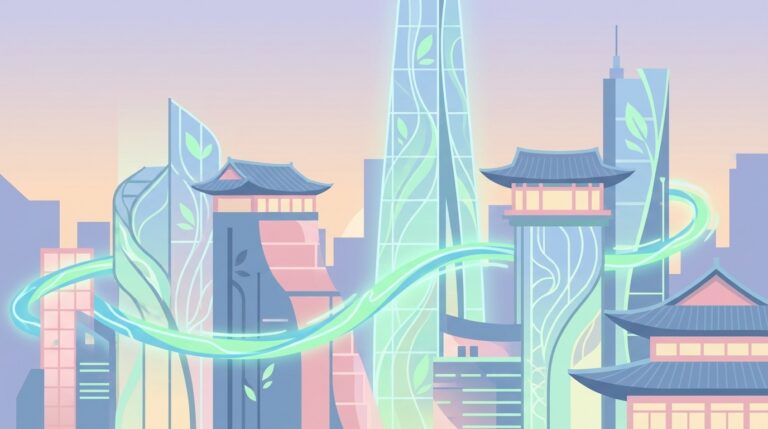
Picture this: You are sitting in an atmospheric rooftop café overlooking the neon-drenched silhouette of Teheran-ro in Gangnam—Korea’s Silicon Valley. You and your Korean intellectual circle just finished watching an episode of an evocative sci-fi drama exploring anti-aging gene therapies. The conversation suddenly veers into deep waters: What happens when eternal youth and cognitive upgrades become commodities reserved exclusively for the top 0.1%?
You have passionate, nuanced thoughts on transhumanism, biological inequality, and the erosion of human dignity. In your native English, you could easily quote Harari or Bostrom. But as the table turns to you with curious eyes, you find yourself hesitant. How do you articulate the slippery slope of genetic stratification without sounding like an archaic translated philosophy textbook, and without clumsily oversimplifying the socio-cultural fabric of modern Korea?
This is the ultimate benchmark of the C2 level: expressing razor-sharp critique on existential issues with linguistic fluidity, emotional weight, and cultural resonance. Today, based on feedback from hundreds of advanced Korean learners and debate moderators, we will break down how to commandingly unpack the ethics of transhumanism in authentic Korean.
Phase 2: 3 Core Expressions In-Depth Analysis
1. 본말이 전도되다 (Bonmari jeondodoeda)
- Pronunciation: [Bon-ma-ri jeon-do-dwe-da] (Think of ‘bone-mar-ee’ followed by ‘jun-doh-dwe-dah’—a resonant, rhythmic four-character idiom flow)
- Meaning: Literally “the root and the branches are inverted.” It conveys that the ends and the means have been fundamentally swapped, or that priorities are catastrophically backward.
- K-Culture Moment: Heard frequently in Korean investigative journalism and thought-provoking dramas like SF8 or Dr. Brain, when scientists compromise ethics to preserve life, only to lose their humanity in the process.
- Editor’s Insight: At the C2 level, instead of repeatedly saying “주객이 전도되다” (host and guest are flipped), using 본말이 전도되다 showcases a refined mastery of classic Hanja-based idiomatic rhetoric. It critiques systemic inversions with authoritative elegance.
- Situation Spectrum: Casual: ⚠️ | Semi-formal: ✅ | Formal: ✅
- 🤔 Think About It: In English, we say “putting the cart before the horse.” Does the Korean metaphor of ‘root vs. branches’ (nature and balance) reveal a more holistic view of organic order?
2. 유전적 계급화를 심화시키다 (Yujeonjeok gyegeup-hwareul simhwisikida)
- Pronunciation: [Yoo-jeon-jeok gye-geup-hwa-reul sim-hwa-si-ki-da] (Pronounce ‘yoo-jeon’ crisply like ‘you-john’, then ‘gye-geup’ with a sharp, tense /k/ sound)
- Meaning: “To exacerbate/deepen genetic stratification.”
- K-Culture Moment: Essential vocabulary when discussing the socio-technological critique embedded in Bong Joon-ho’s filmography or the satirical commentary on the notorious Korean “Spoon Class Theory” (수저계급론).
- Editor’s Insight: This phrase elevates a casual complaint about rich people buying gene-hacks into a structural sociological critique. Combining 유전적 (genetic), 계급화 (stratification), and the causative verb 심화시키다 instantly signals high-level intellectual register.
- Situation Spectrum: Casual: 🚫 | Semi-formal: ✅ | Formal: ✅
- 🤔 Think About It: How does attaching the suffix “-화” (化 – transformation into a state) reflect social anxiety regarding technological irreversibility in Korean society?
3. 인간의 존엄성을 훼손하다 (Ingan-ui jon-eomseong-eul hwesonhada)
- Pronunciation: [In-gan-eui jon-eom-seong-eul hwe-son-ha-da] (Soft glide on ‘hwe’, crisp cadence on ‘son-ha-da’)
- Meaning: “To undermine, compromise, or desecrate inherent human dignity.”
- K-Culture Moment: Widely uttered in Korean National Assembly bioethics hearings and bioethics debate panels examining human cloning or neural implants.
- Editor’s Insight: While beginners rely on simple words like “나쁘게 만들다” (make bad) or “파괴하다” (destroy), 훼손하다 implies damage to intangible, sacred, or intrinsic values—such as dignity, reputation, or constitutional rights.
- Situation Spectrum: Casual: ⚠️ | Semi-formal: ✅ | Formal: ✅
- 🤔 Think About It: Why does Korean legal and ethical discourse preserve the sanctity of “존엄” (dignity) as an inviolable baseline rather than just individual “자유” (freedom)?
Phase 3: Textbook Korean vs. Real Korean
Situation 1: Highlighting the widening divide caused by bio-enhancements
- 📖 교과서 한국어 (Textbook Korean): 유전자 기술은 빈부격차를 더 크게 만들 위험이 있습니다. (Yujeonja gisureun binbugyeokchareul deo keuge mandeul wiheomi itseumnida. / Genetic technology poses a risk of making the wealth gap bigger.)
- 🗣️ 진짜 한국어 (Real Korean): 이러다가 부의 대물림을 넘어 ‘유전자 수저’까지 생겨나는 것 아니에요? (Ireodaga bu-ui daemullimeul neomeo ‘yujeonja sujeo’kkaji saenggyeonaneun geot anieyo? / At this rate, aren’t we heading toward a world where genetic spoons are inherited beyond just material wealth?)
- 💡 왜 다를까? (Why is it different?): Native Korean intellectuals effortlessly weave vivid socio-cultural metaphors like “수저 계급” (spoon tier) into high-concept tech discourse to ground abstract risks in intuitive reality.
Situation 2: Expressing ethical alarm when enhancement strips humanity away
- 📖 교과서 한국어 (Textbook Korean): 우리는 기술 발전에 앞서 윤리적 문제를 먼저 생각해야 합니다. (Urineun gisul baljeone apseo yunrijeok munjereul meonjeo saenggak-haeya hamnida. / We must consider ethical problems prior to technological progress.)
- 🗣️ 진짜 한국어 (Real Korean): 인간성을 기술로 갈아 끼우는 순간, 생명 연장이 다 무슨 소용인가 싶어요. (Inganseong-eul gisullo gara kkiuneun sungan, saengmyeong yeonjang-i da museun so-yong-in-ga sipeoyo. / The moment we swap out genuine humanity for synthetic upgrades, I find myself questioning what life extension is even for.)
- 💡 왜 다를까? (Why is it different?): Advanced natural Korean shifts away from didactic moralizing (“생각해야 합니다”) toward philosophical introspection using expressions like “~이 다 무슨 소용인가 싶다”.
Phase 4: K-Culture Deep Dive & Non-Verbal Manners
4-1. 눈치 (Nunchi) & Nuanced Academic Posture
When engaging in heated socio-philosophical debates in Korea, intellectual confidence must be balanced with deferential harmony. Direct confrontation is often perceived as aggressive dogmatism.
* The Reflective Tilt: Before countering an interlocutor’s point on transhumanism, tilt your head slightly downward, pause for one breath, and open with a soft buffer: “물론 기술의 혜택을 전면 부정하는 것은 아닙니다만…” (Of course, I am not denying the benefits of technology altogether, but…).
* Eye Contact Moderation: Do not lock unrelenting eye contact during conceptual critique. Direct your gaze slightly toward the center of the table while contemplating, and return eye contact as you conclude your synthesis.
4-2. Cultural Code: The Intersection of Korean Body Ethics and Hyper-Competition
Korea presents a fascinating dichotomy for transhumanist theory. On one hand, historical Neo-Confucian bodily philosophy—Sinchebalbu Sujibumo (신체발부 수지부모: our bodies, hair, and skin are received from our parents and should not be harmed)—still echoes subliminally. On the other hand, contemporary Korea possesses the world’s most cutting-edge aesthetic biotechnology and competitive educational pressures. When transhumanist human enhancement is discussed in Seoul, it is not merely sci-fi; people instinctively associate it with Gangnam cosmetic bio-clinics, competitive academic enhancement drugs, and hyper-accelerated societal meritocracy.
Phase 5: Real-Life Roleplay Scenario
- Setting: A quiet intellectual salon in a Bukchon Hanok gallery café on a rainy evening.
- Characters:
- You (C2 Scholar): An insightful foreign researcher in philosophy of science.
- 민서 (Min-seo): A Korean senior researcher at a bioethics research institute.
— Dialogue —
민서: 🎭 찻잔을 천천히 돌리며 진지한 눈빛으로 기술로 노화와 질병을 퇴치할 수 있다면, 그것이야말로 인간의 오랜 숙원을 푸는 길 아닐까요? (Gisullo nohwa-wa jilbyeong-eul toechihal su itdamyeon, geogeos-iyamallo ingan-ui oraen sugwon-eul puneun gil anilkkayo? / If we can eradicate aging and disease through technology, isn’t that precisely the realization of humanity’s long-cherished dream?)
You: 🎭 조용히 고개를 끄덕이며 차분하게 물론 고통 없는 삶을 지향하는 생명공학의 취지는 공감합니다. (Mullon gotong eomneun salmeul jihyanghaneun saengmyeong-gonghag-ui chwijineun gomgamhamnida. / Of course, I resonate with the intention of biotechnology aiming for a painless existence.)
민서: 🎭 살짝 미소를 띠며 그렇다면 트랜스휴머니즘의 시도를 마냥 디스토피아적 시선으로만 볼 필요는 없겠네요? (Geureotdamyeon teuraenseuhyumeonijeum-ui sidoreul manyang diseutopiajeok siseon-euroman bol piryoneun eopgenneyo? / Then there is no need to view transhumanist endeavors purely through a dystopian lens, right?)
You: 🎭 진중하게 시선을 맞추며 하지만 접근성의 불평등이 고착화된다면, 그것은 단순한 빈부격차를 넘어 유전적 계급화로 치달을 공산이 큽니다. (Hajiman jeopgeunseong-ui bulpyeongdeung-i gochakhwa-doendamyeon, geugeoseun dansunhan binbugyeokchareul neomeo yujeonjeok gyegeuphwa-ro chidareul gongsan-i keumnida. / However, if inequality of access becomes entrenched, there is a high likelihood it will escalate beyond simple wealth disparity into genetic stratification.)
민서: 🎭 눈을 반짝이며 메모를 멈추고 유전적 계급화라… 경제적 자본이 생물학적 우위로 전환되는 구조를 지적하시는 거군요. (Yujeonjeok gyegeuphwara… Gyeongjejeok jabon-i saengmulhakjeok u-wiro jeonhwandoeneun gujoreul jijeokhasineun geogunyo. / Genetic stratification… You are pinpointing the mechanism where economic capital converts into biological supremacy.)
You: 🎭 단호하지만 절제된 어조로 맞습니다. 더 나아가 죽음마저 거부하는 인간 증강은 필연적으로 인간 존엄성의 상대화를 야기할 수밖에 없습니다. (Matseumnida. Deo na-aga jukeummajeo geobuhaneun ingan jeunggang-eun pir-yeonjeogeuro ingan jon-eomseong-ui sangdaehwareul yagihal subakke eopseumnida. / Exactly. Furthermore, human enhancement that rejects even mortality inevitably invites the relativization of human dignity.)
민서: 🎭 깊은 탄식을 내쉬며 창밖을 바라본다 죽음이라는 실존적 유한성이 사라질 때, 인간다움의 의미도 흔들린다는 뜻이겠지요. (Jukeum-iraneun siljonjeok yuhanseong-i sarajil ttae, ingandaum-ui uimido heundeullindaneun tteus-igettjiyo. / That when the existential finitude of death disappears, the very definition of what makes us human also wavers.)
You: 🎭 따뜻한 어조로 결론을 맺으며 네, 결국 수단이어야 할 기술이 목적이 되는, 본말이 전도된 비극을 경계해야 합니다. (Ne, gyeolguk sudan-ieoya hal gisuri mokjeok-i doeneun, bonmari jeondodoen bigeug-eul gyeong-gyehaeya hamnida. / Yes, we must guard against the tragedy where technology, which should be the means, becomes the end—putting the cart before the horse.)
🔀 Interactive Choice Point
How would you formulate your rebuttal if Min-seo argues: “Is it fair to restrict individual freedom to biologically upgrade oneself?”
- Option A: 개인이 돈을 쓰겠다는데 국가가 막는 건 말이 안 돼요. (It makes no sense for the state to block individuals from spending their own money.)
- Feedback [Bad]: Too aggressive and conceptually flat. Lacks ethical substance.
- Option B: 자유의 행사로 인해 타인의 실존적 조건이 침해된다면, 그것은 진정한 자유라 부를 수 없습니다. (If the exercise of personal freedom infringes upon the existential conditions of others, it cannot be called genuine freedom.)
- Feedback [Best]: Exquisite philosophical formulation demonstrating C2 critical depth.
- Option C: 트랜스휴머니즘은 종교적으로 아주 불경한 행위입니다. (Transhumanism is religiously deeply profane.)
- Feedback [Risk]: Introduces dogmatic bias without logical argumentation, alienating listeners.
Phase 6: 10-Second Emotion Shadowing Drill
Master the rhythmic pauses (/) and subtle emotional undercurrents of critical discourse:
[🤔 차분하게 숙고하듯 / Reflective & Measured]- 진정한 진보란 / 기술의 무한한 질주가 아니라 / 인간성의 본질을 지켜내는 데 있습니다.
- (Jinjeonghan jinboran / gisur-ui muhanan jiljjuga anira / inganseong-ui bonjireul jikyeonaeneun de itseumnida.)
- “True progress lies / not in the unchecked sprint of technology / but in safeguarding the essence of humanity.”
[⚖️ 결연하고 비판적으로 / Resolute & Analytical]- 생물학적 격차가 / 사회적 신분으로 귀결되는 순간, / 민주주의의 근간은 / 붕괴할 수밖에 없습니다.
- (Saengmulhakjeok gyeokchaga / sahoejeok sinbun-euro gwigyeoldoeneun sungan, / minjuju-ui-ui geun-gan-eun / bung-goehal subakke eopseumnida.)
- “The moment biological disparity / results in social caste, / the very bedrock of democracy / cannot help but collapse.”
[🥺 인간적인 깊은 우려를 담아 / Heartfelt Concern]- 유한함 속에서 피어나는 연민과 공감이 / 과연 불멸의 육체 속에서도 / 살아남을 수 있을까요?
- (Yuhanham sog-eseo pieonaneun yeonmin-gwa gomgam-i / gwayeon bulmyeor-ui yukche sog-eseodo / saranam-eul su isseulkkayo?)
- “Can empathy and compassion that blossom within finitude / truly survive / within an immortal body?”
Phase 7: K-Culture Mini Dictionary
- 생명윤리 (Saengmyeong-yunri)
- Translation: Bioethics.
- Context: Used in policy seminars, academic panels, and medical ethics discussions regarding somatic editing and cloning.
- 유전자 가위 (Yujeonja gawi)
- Translation: CRISPR gene editing technology (literally “gene scissors”).
- Context: Common media term across Korean news when highlighting therapeutic gene breakthroughs versus designer babies.
- 디스토피아적 전락 (Diseutopiajeok jeollak)
- Translation: Dystopian descent / degeneration.
- Context: Intellectual debates evaluating worst-case technological trajectories.
- 인간 소외 (Ingan so-oe)
- Translation: Human alienation.
- Context: Marxist and post-humanist Korean sociological papers critiquing tech automation and synthetic augmentation over natural labor.
Phase 8: Scholar-Traveler Survival Kit
Top 3 Academic Survival Expressions
- 다각적인 검토가 선행되어야 합니다. (Dagakjeogin geomtoga seonhaengdoeeoya hamnida.)
- Pro Tip: Use this formal pivot to pause hasty conclusions and demand holistic ethical review.
- 공론화 과정을 거칠 필요가 있습니다. (Gongronhwa gwajeong-eul geochil piryoga itseumnida.)
- Pro Tip: Excellent for civic discourse; indicates that public consensus must precede commercial deployment.
- 기술 결정론에 함몰되는 것을 경계해야 합니다. (Gisul gyeoljeongron-e hammoldoeneun geoseul gyeong-gyehaeya hamnida.)
- Pro Tip: High-register phrase warning against technological determinism.
Editor’s Intellectual Travel Note
When visiting Seoul for seminars or intellectual exploration, make sure to visit cultural spaces that explore technology and society:
* Download the Naver Map Navigation App to easily find hidden philosophy bookshops like Chaeg-bogo or independent debate salons in Mullae-dong and Seongsu-dong.
* Spend an afternoon at the National Museum of Modern and Contemporary Art (MMCA Seoul) adjacent to Gyeongbokgung, which frequently curates posthumanism and AI bioethics multimedia exhibitions.
* For high-tech transit, remember that Seoul’s subway Wi-Fi and climate control represent the pinnacle of public infrastructure; taking the Shinbundang Line down to Pangyo Techno Valley offers a firsthand glance into the tech ecosystem driving these philosophical questions.
Phase 9: Going One Step Deeper
In Korean society, the discourse on human enhancement cannot be separated from the collective historical memory of extreme poverty to hyper-modern prosperity within a single generation. This breakneck speed bred an intense societal anxiety of “falling behind” (낙오 공포), which transhumanist technologies exploit commercially. However, the Korean ethical compass is deeply rooted in communal responsibility (Jeong, 정) and collective solidarity. Thus, transhumanism in Korea is seldom debated merely as individual liberty; it is scrutinized through the lens of community cohesion and social justice.
💬 Your Turn: Do you believe genetic enhancement will inevitably birth a new social caste, or can bioethics governance safeguard human dignity? Leave your perspective in Korean below!
Phase 10: FAQ & Mistake Prevention
Q: Can I use “트랜스휴머니즘” (Transhumanism) freely in ordinary Korean conversations?
A: In academic, literary, or tech circles, yes. However, in general casual settings, people prefer everyday framing like “인간 개조” (human remodeling), “유전자 조작” (genetic manipulation), or “불로불사 기술” (immortality technology).
Q: What is the exact difference between ‘계급화’ (stratification) and ‘양극화’ (polarization)?
A: ‘양극화’ (polarization) refers to the statistical widening of the gap between extremes (e.g., income), whereas ‘계급화’ (stratification/caste-formation) implies the structural institutionalization of those differences into fixed social tiers.
Q: Is “인간 소외” (human alienation) an outdated terminology?
A: Not at all. While rooted in classical critical theory, modern Korean posthumanist scholarship actively reclaims “인간 소외” to describe humans becoming subordinate appendages to algorithms and biological enhancements.
🚨 Common Mistakes Warning Board
- Mistake: Overusing “로봇처럼 되다” (becoming like a robot) in formal discourse.
- Correct Action: Use “기계화되다” (mechanized) or “도구화되다” (instrumentalized).
- Mistake: Pronouncing ‘존엄성’ as [Jon-eom-sung].
- Correct Action: Ensure standard nasal pronunciation: [조넘성 / Jo-neom-seong].
- Mistake: Confusing “본말이 전도되다” with simple inversion “뒤바뀌다”.
- Correct Action: Reserve “본말이 전도되다” specifically for contexts where ethical core values are subordinated to superficial means.
Phase 11: Action Missions
- 🥉 Bronze Mission (Solo Mastery): Record yourself reading the 3 Emotion Shadowing sentences in Phase 6 with an audio memo app. Pay attention to pausing at
/. - 🥈 Silver Mission (Social Connection): Post a 2-sentence reflection on Instagram or Threads using the phrase 본말이 전도되다 and tag #매일한글 #C2Korean.
- 🥇 Gold Mission (Real Debate): During your next language exchange or advanced Korean salon, ask: “유전자 치료가 보편화되면 유전적 계급화 문제는 어떻게 막을 수 있을까요?” (If gene therapy becomes universal, how can we prevent the issue of genetic stratification?).
🎮 K-Culture Discovery Mission: Watch the Korean sci-fi anthology series SF8 (Episode 1 or Episode 7) and identify how characters debate the boundary between synthetic implants and human consciousness.
Phase 12: Interactive Quiz Challenge
1. Situational Judgment
Which of the following expressions best refutes the transhumanist argument that “enhancing biology is purely an individual choice” in a formal debate?
* A) 개인이 알아서 할 일이니까 참견 마세요.
* B) 그것은 사회 구조적 불평등을 재생산하는 본말전도의 발상입니다.
* C) 기술이 발전하면 다 좋은 게 아니겠어요?
2. Fill-in-the-Blank
기술이 수단이 아니라 목적이 되어 인간성을 침해할 때, 우리는 흔히 (________)가 일어났다고 비판한다.
* Hint: Root and branches are inverted.
3. True / False Cultural Insight
True or False: In Korean bioethics debates, Neo-Confucian traditional values have completely disappeared and have no bearing on modern discussions of genetic modification.
👉 Click to view Answers and Explanations
- Answer: B. Option B provides an incisive structural critique using high-register terminology (“재생산”, “본말전도”). Option A is excessively rude, and Option C is uncritical.
- Answer: 본말이 전도 (또는 본말전도). This accurately captures the critical inversion of values.
- Answer: False. While modern terminology is secular and scientific, traditional sensibilities surrounding bodily integrity (Sinchebalbu Sujibumo) continue to subtly underpin Korean societal hesitation toward radical somatic engineering.
🎬 Watch Our Daily Videos! (Daily Hangul Official Instagram)
Review the expressions you learned in this article with our fun daily short videos! Check out native pronunciation and real-life nuances in action.
- Instagram @dailyhangul_en







