

Phase 1: 공감 (Story-Driven Opening)
안녕하세요! 매일한글 에디터입니다. (Annyeonghaseyo! It’s your Daily Hangul editor here.)
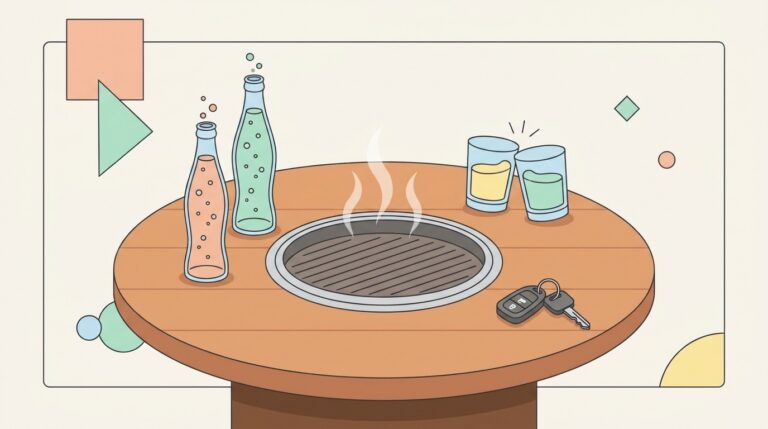
Picture this: You are seated at a bustling Korean barbecue restaurant in Hongdae. Thick cuts of pork belly (samgyeopsal) are sizzling over hot charcoal, laughter echoes across the room, and someone loudly cracks open a cold bottle of soju. Suddenly, your Korean colleague or friend turns to you with a bright smile, raises the green bottle, and prepares to pour a drink into your cup. Your heart does a little backflip—because you drove your rental car to dinner, or maybe you simply don’t drink alcohol!
In many K-dramas, turning down a drink looks dramatic, almost scandalous. You might fear that saying “no” will offend everyone or kill the festive mood. Take a deep breath: modern Korea takes designated driving (daeri-unjeon) and personal health very seriously! Over the past decade tutoring hundreds of international learners, I have seen so many students freeze up in this exact situation. Today, I will teach you the exact, culturally fluent way to say you drove and want a non-alcoholic drink—so you can clink glasses (jjan!) with confidence without sipping a single drop of alcohol.
Phase 2: 핵심 표현 3선 심층 분석 (Top 3 Core Expressions)
Here are the three golden phrases you need to navigate any Korean drinking table with charm and grace.
1. 저는 오늘 차를 가져와서 무알코올 음료로 마실게요. (Jeoneun oneul chareul gajyeowaseo mualkool eumnyoro masilgeyo.)
- Pronunciation: [Jeo-neun oh-neul cha-reul ga-jyeo-wa-seo moo-al-co-ol eum-nyo-ro ma-shil-ge-yo] (Think: “Jeo-neun” sounds like a relaxed “juh-noon”, “cha” rhymes with “car”, and “mualkool” sounds like “moo” + “alcohol”)
- Meaning: Literal: “As for me, today car brought, so non-alcoholic beverage with I will drink.” / Nuance: “I drove today, so I’ll stick to a non-alcoholic drink!”
- K-Culture Moment: In workplace K-dramas like Misaeng, when an employee holds car keys and announces they drove, the senior boss immediately stops pouring alcohol and nods in full agreement.
- Editor’s Insight: Bringing a car (차를 가져오다) is universally recognized in Korea as the ultimate, indisputable reason not to drink. Mentioning your car first immediately clears away any pressure.
- Situation Spectrum: Casual (✅) / Semi-formal (✅) / Formal (✅)
- 🤔 Think About It: In your home country, do people need an explicit “excuse” like driving to decline a drink, or can you just say “no thanks” without explaining why?
2. 저는 술을 잘 못 마셔요. (Jeoneun sureul jal mot masyeoyo.)
- Pronunciation: [Jeo-neun su-reul jal mot ma-shyeo-yo] (Sounds like: “Jeo-neun sue-reul jahl mote mah-shyuh-yo”)
- Meaning: Literal: “As for me, alcohol well cannot drink.” / Nuance: “I have low alcohol tolerance / I don’t drink well.”
- K-Culture Moment: When a character blushes red after just one sip of beer in a romance drama, their friend teases them affectionately while sliding a can of soda across the table.
- Editor’s Insight: Notice how Korean speakers say “잘 못 마셔요” (cannot drink well) rather than a blunt “안 마셔요” (I will not drink). Softening your statement makes you sound modest and polite rather than confrontational.
- Situation Spectrum: Casual (✅) / Semi-formal (✅) / Formal (⚠️)
- 🤔 Think About It: Why does Korean culture value softening a refusal with modesty instead of giving a direct, definitive statement?
3. 탄산음료로 건배해도 될까요? (Tansaneumnyoro geonbaehaedo doelkkayo?)
- Pronunciation: [Tahn-san-eum-nyo-ro geon-bae-hae-do doel-kka-yo] (Think: “Tahn-sahn” like a soda fizz, “geon-bae” rhymes with “sun-day”)
- Meaning: Literal: “Carbonated drink with cheers do, may I?” / Nuance: “May I join the toast with a soda?”
- K-Culture Moment: At a company team dinner, the teetotaler raises a small glass of Chilsung Cider to touch glasses with the team leader’s soju glass.
- Editor’s Insight: Toasting (건배) is about collective solidarity, not the liquid itself. Asking this shows you genuinely want to participate in the bond, even without the alcohol.
- Situation Spectrum: Casual (✅) / Semi-formal (✅) / Formal (✅)
- 🤔 Think About It: In Korean gatherings, participation matters more than the beverage. How does sharing a toast create connection in your own culture?
Phase 3: 교과서 한국어 vs 진짜 한국어 (Textbook vs. Real Korean)
Let’s upgrade your speech from stiff robotic grammar to natural local flow!
Situation 1: Declining alcohol politely
- 📖 교과서 한국어: 술을 거절하겠습니다. (Sureul geojeolhagetsseumnida.) — “I shall refuse the alcohol.”
- 🗣️ 진짜 한국어: 저 오늘은 사이다로 짠할게요! (Jeo oneureun saidaro jjanhalgeyo!) — “I’ll toast with cider (soda) today!”
- 💡 왜 다를까?: The textbook phrase sounds like an official legal rejection. In reality, substituting alcohol with 사이다 (Chilsung Cider or lemon-lime soda) keeps the party cheerful and proactive.
Situation 2: Stating your low alcohol tolerance
- 📖 교과서 한국어: 저의 주량은 맥주 한 잔입니다. (Jeoui juryangeun maekju han janimnida.) — “My alcohol tolerance capacity is one cup of beer.”
- 🗣️ 진짜 한국어: 저 완전 알쓰예요! (Jeo wanjeon alsseuyeyo!) — “I’m a total lightweight!”
- 💡 왜 다를까?: 주량 is a stiff demographic term, whereas 알쓰 (short for 알코올 쓰레기, lighthearted slang meaning alcohol lightweight) is a beloved conversational word among 20s and 30s Koreans that immediately disarms any drinking peer pressure.
Phase 4: K-Culture 딥다이브 & 비언어적 매너 (Deep Dive & Non-Verbal Manners)
4-1. 눈치 (Nunchi) & Gestures
Even if your glass contains cold water or lemon-lime soda, Korean drinking etiquette still applies! When someone senior or older pours your soda, hold your glass with both hands (place your right hand around the cup and rest your left hand gently underneath or touching your right wrist).
When clinking glasses for a toast (짠!), position the rim of your glass slightly lower than the senior person’s glass as a sign of respect. Never leave your glass empty—if it is sitting empty, people’s caring instincts kick in to refill it immediately! Keep it half-full with soda or barley tea (boricha).
4-2. Cultural Code Analysis: The Strict Rule of Driving & The Rise of Zero-Alcohol
In South Korea, driving after even one single sip of beer is strictly taboo. Due to the reinforced laws (known colloquially as the Yoon Chang-ho Act), legal blood alcohol limits are virtually zero (0.03%). Koreans will never pressure a driver to drink. Furthermore, the modern hoesik (회식 – dining with coworkers) landscape has shifted dramatically: trendy restaurants and convenience stores now stock premium zero-alcohol beers (무알코올 맥주) and sparkling flavored waters to accommodate everyone.
Phase 5: 실전 롤플레이 시나리오 (Real-Life Roleplay Scenario)
Setting: A lively pork belly BBQ restaurant near Gangnam Station on a Friday evening.
Characters:
* Min-woo (민우): Your warm, energetic Korean project partner who loves social gatherings.
* You: An exchange student/traveler who rented a car for a weekend road trip.
- 민우: 와, 오늘 삼겹살 진짜 맛있겠네요! 건배부터 할까요? 소주 한 잔 드릴게요!
(Wa, oneul samgyeopsal jinjja masitgetneyo! Geonbaebuteo halkkayo? Soju han jan deurilgeyo!)
“Wow, the pork belly looks incredible today! Shall we start with a toast? Let me pour you a shot of soju!”
🎭 Picks up a cold soju bottle with both hands, ready to pour. -
You: 아, 민우 씨! 정말 감사하지만, 저는 오늘 차를 가져왔어요.
(A, Min-u ssi! Jeongmal gamsahajiman, jeoneun oneul chareul gajyeowasseoyo.)
“Ah, Min-woo! Thank you so much, but I drove my car today.”
🎭 Gently places both hands over your cup with a friendly smile. -
민우: 아, 진짜요? 차를 가져오셨구나! 그럼 술은 절대 안 되죠.
(A, jinjjayo? Chareul gajyeoosyeotguna! Geureom sureun jeoldae an doejo.)
“Oh, really? You brought your car! Then alcohol is definitely off the table.”
🎭 Immediately sets the soju bottle down and looks around for the menu. -
You: 네! 그래서 저는 오늘 무알코올 음료로 마실게요.
(Ne! Geuraeseo jeoneun oneul mualkool eumnyoro masilgeyo.)
“Yes! So I will drink a non-alcoholic beverage today.”
🎭 Points politely at the beverage section of the table menu. -
민우: 좋아요! 사이다 하나 시켜드릴까요? 아니면 제로 콜라?
(Jowayo! Saida hana sikyeodeurilkkayo? Animyeon jero kolla?)
“Great! Shall I order a Chilsung Cider for you? Or a Coke Zero?”
🎭 Raises a hand to call the restaurant server. -
You: 사이다로 부탁드려요. 탄산음료로 건배해도 되죠?
(Saidaro butakdeuryeoyo. Tansaneumnyoro geonbaehaedo doejo?)
“Cider, please. It’s okay to toast with soda, right?”
🎭 Smiles warmly while nodding. -
민우: 당연하죠! 잔에 사이다 채우고 다 같이 짠해요!
(Dangyeonhajo! Jane saida chae-ugo da gachi jjanhaeyo!)
“Of course! Fill your glass with cider and let’s all clink glasses together!”
🎭 Pours the cold cider into your glass with two hands. -
You: 좋아요! 오늘 즐거운 시간 보내요, 짠!
(Jowayo! Oneul jeulgeoun sigan bonaeyo, jjan!)
“Sounds great! Let’s have a wonderful time tonight, cheers!”
🎭 Taps glasses together holding your cup with both hands.
🔀 Interactive Decision Point
When Min-woo offers you alcohol, what would you say?
- Option A: “저는 술 싫어해요. 혼자 드세요.” (Jeoneun sul sireohaeyo. Honja deuseyo. – “I hate alcohol. Drink by yourself.”)
- Feedback (Bad): This cuts the conversation sharply and makes the other person feel awkward and dismissed.
- Option B: “아, 딱 한 잔만 마시고 운전할게요.” (A, ttak han janman masigo unjeonhalgeyo. – “Ah, I’ll just have one drink and drive.”)
- Feedback (Risk): Danger! Korea has zero tolerance for drinking and driving. Your Korean friends will be genuinely distressed and prevent you from driving.
- Option C: “제가 오늘 운전해야 해서 사이다로 대신 마실게요!” (Jega oneul unjeonhaeya haeseo saidaro daesin masilgeyo! – “I have to drive today, so I will drink cider instead!”)
- Feedback (Best): Perfect! It states a clear, respected reason and offers an instant alternative so the celebration continues smoothly.
Phase 6: 10초 감정 섀도잉 드릴 (10-Second Emotion Shadowing Drill)
Practice speaking these aloud with natural pauses (/) and real emotions!
[🚗 Polite and clear]
저는 오늘 / 차를 가져와서 / 무알코올 음료로 마실게요.
(Jeoneun oneul / chareul gajyeowaseo / mualkool eumnyoro masilgeyo.)-
[😊 Bright and enthusiastic]
사이다로 / 같이 건배해요! / 짠!
(Saidaro / gachi geonbaehaeyo! / Jjan!) -
[🥺 Playfully apologetic]
저 오늘은 / 술을 못 마셔서 / 아쉬워요!
(Jeo oneureun / sureul mot masyeoseo / aswiwoyo!)
Phase 7: K-Culture 미니 사전 (Mini Dictionary)
- 대리운전 (Daeri-unjeon)
- Meaning: Designated driver service.
- Usage: If someone accidentally drinks alcohol while having their car, they hire a licensed daeri driver through an app to drive their car back home safely.
- 알쓰 (Al-sseu)
- Meaning: Alcohol lightweight (slang).
- Usage: Used among peers to self-deprecatingly admit you turn red or get dizzy after half a glass of beer.
- 짠 (Jjan)
- Meaning: Clinking glasses sound (“Cheers!”).
- Usage: The most popular informal cheer shouted with colleagues, friends, and family when touching drinks.
- 2차 (I-cha)
- Meaning: Round 2 of a night out.
- Usage: Moving from a barbecue restaurant to a second location, such as a cozy pub, café, or karaoke room (noraebang).
Phase 8: 여행자를 위한 생존 키트 (Traveler’s Survival Kit)
Top 3 Survival Phrases
- 무알코올 맥주 있어요? (Mualkool maekju isseoyo?)
- “Do you have non-alcoholic beer?”
- Pro Tip: Many convenience stores and hip restaurants carry 0.00% beer; ask this when you still crave the crisp beer flavor!
- 물 한 잔만 주실 수 있나요? (Mul han janman jusil su innayo?)
- “Could you give me a glass of water, please?”
- Pro Tip: Korean restaurants provide cold water for free (물은 셀프 – water is often self-service).
- 콜라 하나, 사이다 하나 주세요. (Kolla hana, saida hana juseyo.)
- “One Cola and one Cider, please.”
- Pro Tip: Standard Korean soft drinks are usually priced between 2,000 and 3,000 KRW per can.
Editor’s Travel Note
If you ever end up driving to a restaurant or find yourself stranded after a gathering, download the Kakao T app download guide to easily book a taxi or hire a designated driver (daeri-unjeon). Korean public transit (buses and subways) runs efficiently until around midnight, after which Kakao T is your ultimate lifesaver.
Phase 9: “한 발 더 깊이” (Cultural Reflection)
In traditional Korean culture, sharing a drink symbolized breaking down barriers and establishing deep communal intimacy (정 / Jeong). In the past, declining a drink was occasionally misinterpreted as creating emotional distance. However, contemporary Korean society balances this warm community spirit with personal responsibility and mutual respect. Today, drinking etiquette is not about forcing alcohol down someone’s throat; it is about sharing the joyous energy of the moment. Clinking a glass of sparkling water with sincere warmth bridges hearts just as deeply as any vintage liquor.
💬 Your Turn: What is your favorite non-alcoholic beverage to order when dining out? Share your go-to drink in the comments below!
Phase 10: FAQ & 오해 방지 (FAQ & Common Mistakes)
Q: Will Korean colleagues be disappointed if I don’t drink alcohol at a company dinner?
A: Not at all! Modern Korean companies strictly emphasize personal choice and safety. As long as you participate energetically, laugh along, and raise your soda glass during toasts, everyone will appreciate your company.
Q: What is the difference between 무알코올 (mualkool) and 비알코올 (bialkool)?
A: Great question! In Korea, 무알코올 (non-alcoholic) indicates 0.00% zero alcohol, whereas 비알코올 (dealcoholized) may legally contain trace amounts below 1%. If you are driving or strictly avoiding alcohol, double-check for the label 0.00% 무알코올.
Q: Is it rude to turn my head away while drinking water or soda?
A: Turning your head to the side when drinking is a manner reserved for drinking alcohol in front of elders. If you are drinking water, soda, or tea, you do not need to turn your head away, though holding the glass with both hands is still considered very polite.
🚨 Common Mistakes Warning Board
- Mistake: Saying “싫어요” (Sireoyo – “I hate it / No”).
- Correct Action: Use “괜찮습니다” (Gwaenchansseumnida – “I am okay/fine”) or “오늘은 차를 가져왔어요” (Oneureun chareul gajyeowasseoyo – “I drove today”).
- Mistake: Leaving your cup upside down on the table.
- Correct Action: In Korea, turning your cup upside down can look defensive or gloomy. Leave your cup right-side up and fill it with tea or soda.
- Mistake: Not participating in the toast (건배).
- Correct Action: Even if your cup has just two drops of tap water, always raise it and join the cheer (짠!) together!
Phase 11: 액션 미션 & 참여 유도 (Action Missions)
- 🥉 Bronze Mission (Solo Practice): Stand in front of your mirror and practice saying: “저는 오늘 차를 가져와서 사이다 마실게요!” with a beaming smile 3 times.
- 🥈 Silver Mission (Social Share): Snap a photo of your favorite zero-alcohol drink or soda, upload it to Instagram or your study log, and caption it in Korean: “오늘도 사이다로 짠!”
- 🥇 Gold Mission (Real-Life Application): The next time you visit a Korean restaurant or meet Korean friends, actively order a soft drink and initiate the toast yourself using “탄산음료로 건배해요!”.
- 🎮 K-Culture Mission: Watch an episode of a modern office drama (like Business Proposal or Hospital Playlist) and spot which characters drink cider or water during group dinner scenes.
Phase 12: 인터랙티브 퀴즈 챌린지 (Interactive Quiz Challenge)
Test your knowledge before heading out to dinner!
1. Situation Judgment: You are at a team dinner and someone offers to fill your glass with beer, but you must drive home. What is the most appropriate action?
* (A) Drink the beer quickly and drink lots of water afterward.
* (B) Block your glass aggressively with your palm and frown.
* (C) Say politely that you brought your car and ask if you can toast with soda.
2. Fill-in-the-Blank: Complete the sentence:
“저는 오늘 차를 가져와서 [ ] 음료로 마실게요.”
* (A) 고알코올 (High alcohol)
* (B) 무알코올 (Non-alcoholic)
* (C) 매운 (Spicy)
3. True or False: In modern Korea, designated driving (대리운전) services are widely used, and no one will force you to drink if you state you drove.
* (True / False)
👉 Click here to check the answers!
- 1. Answer: (C). Stating that you drove and asking to toast with soda keeps the atmosphere warm while respecting legal and safety rules.
- 2. Answer: (B) 무알코올. The full phrase is “저는 오늘 차를 가져와서 무알코올 음료로 마실게요.”
- 3. Answer: True. Strict drunk driving regulations and modern social norms make “I drove” the most widely respected boundary at any Korean dining table.
🎬 Watch Our Daily Videos! (Daily Hangul Official Instagram)
Review the expressions you learned in this article with our fun daily short videos! Check out native pronunciation and real-life nuances in action.
- Instagram @dailyhangul_en






