

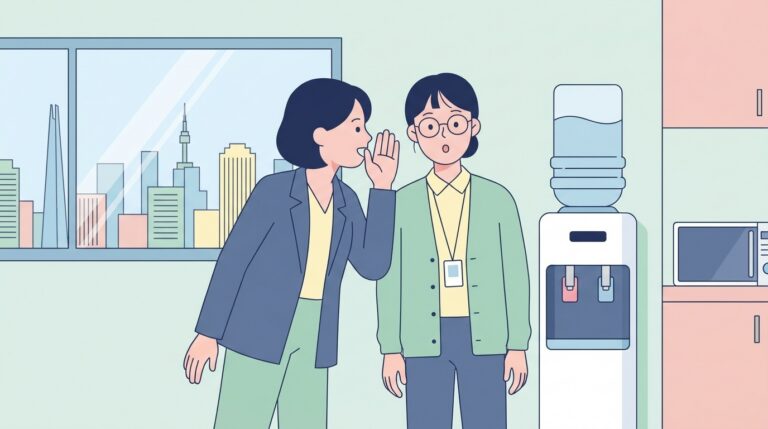
The Two-Faced Art of Survival: Calling Out Fair-Weather Friends in Korean
Phase 1: Empathy & Cultural Immersion
안녕하세요! 매일한글 에디터입니다. (Annyeonghaseyo! It’s your Daily Hangul editor.)
Picture this all-too-familiar scene straight out of a hit K-Drama like Misaeng (미생) or Agency (대행사): You have a colleague or acquaintance who has left your KakaoTalk messages on “read” (the dreaded ‘1’ never disappeared, or it vanished with complete silence) for four straight months. Then suddenly, out of the blue on a rainy Tuesday morning, your phone buzzes. “Unnie/Hyung! My dearest friend! How have you been? You know what an amazing designer you are, right? By the way, could you review this 40-page deck for me by lunchtime?”
Your stomach twists. You feel that sharp pang of annoyance. You think to yourself, “You never cared about me yesterday, but now that you need a lifeline, you’re treating me like your soulmate?”
In English, you might call them a fair-weather friend, an opportunist, or someone who flip-flops loyalties for self-gain. But in Korean, we have an intensely vivid, almost visceral anatomical metaphor that captures this exact slimy behavior: “간에 붙었다 쓸개에 붙었다 한다”—literally, sticking to the liver one second and latching onto the gallbladder the next!
Navigating real social dynamics in Korea requires more than just textbook politeness. To truly understand adult Korean conversations at the B2 level, you need to read between the lines, recognize nunchi (눈치) dynamics, and master the colorful idioms locals use behind closed doors to call out fake flattery, envy, and shameless behavior. Today, based on feedback from intermediate learners who often get blindsided by insincere Korean acquaintances, we are going to unlock the exact conversational toolkit to spot, dissect, and talk about these two-faced personalities like a true Seoulite.
Phase 2: Top 3 Core Idioms Deep Dive
1. 간에 붙었다 쓸개에 붙었다 한다 (Gane but-eot-da sseul-gae-e but-eot-da han-da)
- Pronunciation: Gah-neh boo-teot-dah sseul-gae-eh boo-teot-dah han-dah (Think of ‘but’ as the sticky sound of a suction cup popping onto a wet surface).
- Meaning:
- Literal: To stick to the liver and then stick to the gallbladder.
- Actual Nuance: To have no personal principles or loyalties, constantly switching sides or flattering whoever holds the upper hand purely for personal convenience or survival.
- K-Culture Moment: You will hear this in every historical drama (Sageuk) when a spineless royal court minister swiftly switches allegiance from the declining Queen’s faction to the rising Crown Prince’s camp the moment political power shifts.
- Editor’s Insight: The liver (gan) and gallbladder (sseulgae) sit right next to each other in the human body. This idiom visualizes a shameless parasite that slides back and forth between adjacent organs depending on which one offers more nutrients. It carries heavy contempt!
- Situation Spectrum:
- Casual (with close friends to gossip): ✅
- Semi-formal (in polite office banter with trusted peers): ⚠️ (Use cautiously)
- Formal (meetings, presentations): 🚫
- 🤔 Think About It: Does your native culture compare human loyalty to internal organs, or do you use weather metaphors (like “fair-weather”)? Why do you think ancient Koreans mapped social ethics directly onto internal anatomy?
2. 비위를 맞추다 (Bi-wi-reul mat-chu-da)
- Pronunciation: Bee-wee-reul maht-choo-dah (Flows like “bee-wee”, rhythmically snapping on “mat-chu-da”).
- Meaning:
- Literal: To tune or align someone’s stomach and spleen.
- Actual Nuance: To cater to someone’s sensitive temper, pander to their mood, or flatter a superior to keep them happy.
- K-Culture Moment: Seen in contemporary corporate K-Dramas when a junior manager laughs uncontrollably at the executive director’s unfunny dad jokes during an awkward hoesik (company dinner).
- Editor’s Insight: Biwi (비위) refers to your digestive temperament. If someone has a “weak biwi” (비위가 약하다), they get nauseated easily. Therefore, “matching someone’s biwi” means handling them so delicately that they don’t get disgusted or irritated.
- Situation Spectrum:
- Casual: ✅
- Semi-formal: ✅
- Formal: ⚠️
- 🤔 Think About It: In English, we say “buttering someone up” or “walking on eggshells.” How does focusing on digestive comfort shift how you perceive pleasing a demanding boss?
3. 시치미를 떼다 (Si-chi-mi-reul tte-da)
- Pronunciation: Shee-chee-mee-reul tteh-dah (The ‘tte’ has a crisp, tense pop sound, like snapping a thread).
- Meaning:
- Literal: To tear off the falcon’s owner-tag.
- Actual Nuance: To play dumb, feign absolute innocence, or pretend not to know something that you are 100% guilty of.
- K-Culture Moment: A variety show staple on Running Man! A member secretly steals a mission item, hides it in their jacket, and when everyone asks who took it, they wide-eye the camera and ask, “What item? Did something disappear?”
- Editor’s Insight: In the Goryeo dynasty, hunting falcons were precious status symbols. Owners attached an identification tag made of bone called a sichimi to the bird’s tail feathers. When a stolen falcon was captured, thieves would pluck off the sichimi and shamelessly claim the bird was wild or belonged to them!
- Situation Spectrum:
- Casual: ✅
- Semi-formal: ✅
- Formal: ⚠️
- 🤔 Think About It: Feigning ignorance often carries social consequences in tightly-knit groups. Have you ever caught someone pulling a sichimi on you?
Phase 3: Textbook Korean vs. Real Korean
Situation 1: Describing a colleague who switches sides to curry favor
- 📖 Textbook Korean:
- 그 사람은 자신의 이익에 따라 태도를 자주 바꿉니다. (Geu sarameun jasinui i-ige ttara taedoreul jaju bakkumnida.)
- “That person frequently changes their attitude depending on their own benefit.”
- 🗣️ Real Korean:
- 저 사람 완전 간에 붙었다 쓸개에 붙었다 하네. 진짜 얄밉다. (Jeo saram wanjeon gane but-eot-da sseul-gae-e but-eot-da hane. Jinjja yalmipda.)
- “Look at him flip-flopping loyalties left and right. Seriously so cheeky and annoying!”
- 💡 Why is it different? Textbook phrases read like human resources reports. Real native conversation uses visceral, metaphorical idioms plus expressive emotional adjectives like 얄밉다 (yalmipda – petulantly annoying/dislikable) to show human reaction.
Situation 2: Reacting to someone contacting you only when they want a favor
- 📖 Textbook Korean:
- 평소에는 연락하지 않다가 부탁이 있을 때만 연락합니다. (Pyeongso-eneun yeollakhaji antaga butagi isseul ttaeman yeollakhamnida.)
- “They do not contact me usually, but only reach out when they have a favor.”
- 🗣️ Real Korean:
- 아쉬울 때만 살갑게 굴면서 비위 맞추는 것 봐. 속 보인다, 정말. (Aswiul ttaeman salgapge gulmyeonseo bi-wi matchuneun geot bwa. Sok boinda, jeongmal.)
- “Look at them acting all sweet and buttering me up only when they’re desperate. Their hidden motive is so transparent!”
- 💡 Why is it different? Phrases like 속 보인다 (sok boinda – I can see right through your stomach/intentions) and 살갑게 굴다 (salgapge gulda – acting tenderly/affectionately) pinpoint the fake sweetness instantly.
Phase 4: K-Culture Deep Dive & Non-Verbal Manners
4-1. Nunchi (눈치) & Non-Verbal Tells of an Opportunist
When an opportunist in Korea approaches you to stick to your “liver,” they often deploy what Koreans call 자본주의 미소 (jabonjuui miso – the capitalist smile)—a high-energy, overly wide grin that doesn’t reach the eyes. Watch for these physical tells:
* Sudden Intimacy: A coworker who usually offers a curt 15-degree nod suddenly leans in with a tilted head, soft eye contact, and hands clasped together in front of their chest in a pleading son-mo-a (손모아) gesture.
* Excessive Back-Channeling: During conversation, they nod aggressively (끄덕끄덕 – kkeudeok-kkeudeok) and shower you with unprompted praise about your fashion, haircut, or talent.
* The Side Eye (곁눈질 – gyeon-nun-jil): When the third party walks into the room, their gaze instantly darts away to measure who holds more immediate social clout in the room. If someone’s eyes scan the hierarchy before responding to you, nunchi dictates you keep your emotional guard up!
4-2. Cultural Code: The Office Micro-Politics of K-Workplace Culture
In Korean corporate settings, personal relationships (inmaek – 인맥) are often tied to project allocation and promotions. Because team leaders exert heavy authority over performance ratings, opportunists who “stick to the liver and gallbladder” are a constant archetype in workplace discussions. While openly confronting an opportunist violates the unwritten rule of harmony, peers vent together over coffee or chimaek (chicken and beer) using these idioms. Expressing mutual frustration over someone’s gan-sseulgae behavior is actually a primary bonding ritual among Korean coworkers!
Phase 5: Real-Life Roleplay Scenario
Setting: A quiet lounge at a digital marketing agency in Gangnam. It is 5:30 PM on Friday.
Characters:
* Min-jae (민재): A notorious sweet-talking colleague who never replies to team chats unless he needs assistance.
* You (Alex / 알렉스): An experienced marketer known for being competent at slide presentations.
- Turn 1: Min-jae 🎭 [approaches your desk with a warm canned coffee, smiling excessively wide]
알렉스 씨! 오늘 옷 완전 멋진데요? 피곤해 보여서 제가 커피 하나 샀어요! (Alex ssi! Oneul ot wanjeon meotjinde-yo? Pigonhae boyeoseo jega keopi hana sasseoyo! / “Alex! Your outfit looks fantastic today! You looked a bit tired so I bought you a coffee!”) -
Turn 2: You 🎭 [looking at the coffee skeptically, keeping posture straight]
어… 고마워요, 민재 씨. 그런데 평소엔 인사도 잘 안 하시더니 웬일이세요? (Eo… gomawoyo, Min-jae ssi. Geureonde pyeongso-en insado jal an hasideoni wen-irise-yo? / “Uh… thank you, Min-jae. But you usually barely greet me, what’s with the special occasion?”) -
Turn 3: Min-jae 🎭 [laughs nervously, rubbing hands together]
에이, 제가 항상 알렉스 씨 존경하는 거 알잖아요. 비위 맞추려는 건 아니고요! 실은… 다음 주 발표 자료가 조금 급해서요. (Ei, jega hangsang Alex ssi jongyeonghaneun geo aljanayo. Bi-wi matchuryeoneun geon anigoyo! Sireun… daeum ju balpyo jaryoga jogeum geuphaeseoyo. / “Come on, you know I always respect you, Alex! I’m not trying to flatter you! Actually… next week’s presentation deck is a bit urgent.”) -
Turn 4: You 🎭 [raising an eyebrow, crossing arms]
그 프로젝트, 어제 팀장님 앞에서는 김 대리님 아이디어가 최고라고 그쪽에 붙으셨잖아요? (Geu peurojekteu, eoje timjangnim apeseoneun Gim daerinim a-idieoga choegorago geujjoge but-eusyeotjanayo? / “For that project, yesterday in front of the team lead you said Assistant Manager Kim’s idea was the best and sided with him, didn’t you?”) -
Turn 5: Min-jae 🎭 [feigning utter shock, blinking innocently]
제가요? 아이쿠, 시치미 떼는 게 아니라 진짜 기억이 안 나네요! 전 알렉스 편이죠! (Jegayo? Aiku, si-chi-mi tteneun ge anira jinjja gieogi an naneyo! Jeon Alex pyeon-ijyo! / “Me? Oh gosh, I’m not playing dumb, I truly don’t recall that! I’ve always been on your side!”) -
Turn 6: You 🎭 [smirking dryly]
민재 씨, 정말 간에 붙었다 쓸개에 붙었다 하시는 데 선수시네요. (Min-jae ssi, jeongmal gane but-eot-da sseul-gae-e but-eot-da hasineun de seonsusineyo. / “Min-jae, you are truly a master at sticking to the liver one second and the gallbladder the next.”) -
Turn 7: Min-jae 🎭 [coughing awkwardly, scratching the back of his neck]
하하… 너무 뼈 때리시네. 딱 30분만 도와주시면 안 될까요? (Haha… neomu ppyeo ttaerisine. Ttak samsip-bunman dowajusimyeon an doelkkayo? / “Haha… that hit right to the bone. Could you please just help me for thirty minutes?”) -
Turn 8: You 🎭 [handing the coffee back gently with a calm smile]
죄송하지만 오늘은 제 마감도 바빠서요. 다음엔 평소에 소통 좀 해요, 민재 씨. (Joesonghajiman oneureun je magamdo bappaseoyo. Daeumen pyeongso-e sotong jom haeyo, Min-jae ssi. / “I’m sorry, but I’m busy with my own deadline today. Next time, let’s keep in touch regularly, Min-jae.”)
🔀 Interactive Decision Point
How would you respond if Min-jae continued pleading in Turn 7?
- Option A: “민재 씨, 자꾸 이러시면 팀장님한테 다 말씀드려요.” (Min-jae ssi, jakku ireosimyeon timjangnimhante da malsseumduryeoyo. / If you keep this up, I’ll report everything to the team lead.)
- Feedback: [Risk / Awkward Escalation] Threatening direct reporting over an unofficial help request makes you seem inflexible and destroys workplace rapport. Better to handle it within peer boundaries.
- Option B: “바쁜 건 알겠지만, 제 선에서는 여기까지예요. 월요일 회의 때 봅시다.” (Bappeun geon algetjiman, je seoneseoneun yeogikkajiyeyo. Woryoil hoe-ui ttae bopsida. / I understand you’re busy, but my boundary is firm here. See you at Monday’s meeting.)
- Feedback: [Best Response] Professional, clear, polite, and completely shuts down opportunistic manipulation without emotional outbursts.
- Option C: “알겠어요… 이번 한 번만 도와줄게요. 커피 잘 마실게요.” (Algesseoyo… ibeon han beonman dowajulgeyo. Keopi jal masilgeyo. / Alright… I’ll help just this once. Thanks for the coffee.)
- Feedback: [Bad Response] You just reinforced his strategy! He will ignore your messages again until his next panic moment.
Phase 6: 10-Second Emotional Shadowing Drill
Practice speaking these out loud with rhythm and facial expression!
[😒 Sarcastic & Cold]
저 사람 / 완전 / 간에 붙었다 / 쓸개에 붙었다 하네. / 속 보인다 정말.
(Jeo saram / wanjeon / gane but-eot-da / sseul-gae-e but-eot-da hane. / Sok boinda jeongmal.)-
[🙄 Annoyed & Sassy]
이제 와서 / 비위 맞추면 / 내가 도와줄 줄 알았어? / 시치미 떼지 마.
(Ije waseo / bi-wi matchumyeon / naega dowajul jul arasseo? / Si-chi-mi tteji ma.) -
[😏 Playfully Teasing a Close Friend]
너 / 아쉬울 때만 / 연락해서 / 살갑게 굴더라? / 얄미워 죽겠네!
(Neo / aswiul ttaeman / yeollakhaeseo / salgapge guldeora? / Yalmiwo jukgenne!)
Phase 7: K-Culture Mini Dictionary
-
간신배 (Gansinbae)
- Meaning: A treacherous subject or sycophant.
- Real Usage: Used humorously among friends or seriously in politics to describe someone who flatters leaders while stabbing peers in the back.
- 얄밉다 (Yalmipda)
- Meaning: Dislikeable or cheeky in an irritatingly clever way.
- Real Usage: Applied when someone avoids difficult chores while taking all the credit, or asks favors with shameless charm.
- 아쉬운 소리 (Aswiun sori)
- Meaning: Words of pleading / asking for a humiliating favor.
- Real Usage: When someone says, “난 남한테 아쉬운 소리 하기 싫어” (I hate having to beg or plead with others), expressing pride in self-sufficiency.
- 자본주의 미소 (Jabonjuui miso)
- Meaning: “Capitalist smile.”
- Real Usage: The instant customer-service smile that workers or idols snap into whenever a client, customer, or camera appears.
Phase 8: Survival Kit for Travelers
Top 3 Survival Expressions
- 괜찮습니다, 생각 좀 해볼게요. (Gwaenchanseumnida, saenggak jom haebolgeyo.)
- “I’m okay, I’ll think about it.”
- Pro Tip: Use this firm phrase when pushy cosmetics or street market vendors over-flatter you to buy items.
- 원래 가격이 얼마예요? (Wollae gagyeogi eolmayeyo?)
- “What was the original price?”
- Pro Tip: Cuts straight through theatrical flattery in traditional souvenir markets.
- 부담 갖지 마세요. (Budam gatji maseyo.)
- “Please don’t feel burdened / pressured.”
- Pro Tip: The polite way to tell a Korean host or acquaintance that you don’t expect them to go out of their way to please you.
Editor’s Travel Note
When shopping in dynamic places like Dongdaemun or traditional craft alleys in Insadong, store owners can be charmingly sweet, offering free tea or calling you “Yebbeun-i” (pretty one). Enjoy the warmth, but don’t feel obligated to buy! To navigate Seoul seamlessly and find genuine local reviews without falling into tourist traps, make sure to check the Naver Map navigation app download to read authentic Korean customer reviews (Naver MY Place) where locals openly point out over-priced stores.
Phase 9: “한 발 더 깊이” (Going One Step Deeper)
In Western linguistics, emotions are predominantly attributed to the heart or mind. In traditional Korean medicine and folk psychology, however, psychological fortitude and integrity were deeply embedded inside the five internal organs (O-jang-yuk-bu, 오장육부). Courage lives in the gallbladder (which is why a brave person has a “big gallbladder” – 간/쓸개가 크다), and temperamental harmony lives in the digestive organs (비위).
When Koreans say someone “sticks to the liver and gallbladder,” it is not merely an accusation of being inconsistent; it hints that the person lacks internal bodily grounding—they are essentially organless, blown about by the winds of self-preservation. In a collectivistic society where lifelong loyalty (Uiri, 의리) has historically guaranteed survival, flipping loyalties for petty gain remains one of the greatest moral taboos.
💬 Your Turn: Have you ever experienced an acquaintance who acts like a chameleon depending on who is in the room? How does your native language describe this kind of person? Share your stories in the comments below!
Phase 10: FAQ & Common Mistakes
Q: Can I use “간에 붙었다 쓸개에 붙었다 한다” directly to my boss when they change their mind?
A: Absolutely not! This is a heavily critical and sarcastic expression. Saying this to a boss or senior colleague will be perceived as a direct insult to their character. Keep this expression for casual venting sessions with close, trusted friends or when analyzing K-drama characters.
Q: What is the difference between ‘비위를 맞추다’ and ‘아부하다’?
A: 아부하다 (abu-hada) specifically translates to “to flatter / to brown-nose,” focusing purely on verbal insincerity. 비위를 맞추다 (bi-wi-reul mat-chu-da) is broader; it means taking active care of someone’s fragile moods, which can sometimes be done out of kindness and care (e.g., caring for a sick patient or an upset spouse), not just sycophancy.
Q: Can ‘시치미를 떼다’ be used in lighthearted situations?
A: Yes! Unlike the liver-gallbladder idiom, 시치미를 떼다 is very common in playful banter. For example, if your friend eats the last slice of pizza and pretends they didn’t, you can playfully say with a laugh, “시치미 떼지 마! 네 입에 소스 묻었어!” (Don’t play innocent! There’s sauce on your mouth!).
🚨 Common Mistakes Warning Board
- Mistake 1: Translating “You’re two-faced” literally as “너는 두 얼굴이다”.
- Correct Action: While Koreans understand “두 얼굴,” it sounds overly dramatic like a movie title (The Two Faces of Jekyll). In conversation, say “앞뒤가 다르다” (ap-dwiga dareuda – the front and back are different) or “간에 붙었다 쓸개에 붙었다 한다”.
- Mistake 2: Using 비위를 맞추다 when you actually mean “I feel nauseous.”
- Correct Action: To say something disgusts you or ruins your appetite, say “비위가 상하다” (bi-wiga sanghada) or “비위에 안 맞다”.
- Mistake 3: Forgetting particle nuances.
- Correct Action: The idiom specifically requires the destination particle -에 (간에, 쓸개에), not the object particle -을/를.
Phase 11: Action Mission & Engagement
- 🥉 Bronze Mission (Solo Mastery): Record yourself repeating the shadowing drill in Phase 6 with your voice recorder. Focus on hitting the sharp, biting stress on “붙었다” (boo-teot-da)!
- 🥈 Silver Mission (Social Sharing): Write a one-sentence Korean journal entry about a K-Drama villain who flip-flops, using the phrase: “[Character Name]은/는 정말 간에 붙었다 쓸개에 붙었다 하는 사람이다.”
- 🥇 Gold Mission (Real Interaction): The next time a Korean friend playfully pretends they didn’t take your snack or text you back, jokingly drop: “시치미 떼지 마요! 다 알아요!” and watch their surprised reaction.
- 🎮 K-Culture Media Mission: Watch Episode 1 or 2 of any workplace K-Drama (e.g., Misaeng or Good Manager). Listen for characters buttering up supervisors with 비위 맞추기!
Phase 12: Interactive Quiz Challenge
Q1. Situational Judgment:
Your colleague Min-ho always praised Team Leader Park. But the moment Team Leader Lee was promoted instead, Min-ho bought coffee exclusively for Leader Lee and started criticizing Leader Park behind his back. Which idiom best describes Min-ho’s behavior?
* (A) 배가 아프다 (Baega apeuda)
* (B) 간에 붙었다 쓸개에 붙었다 한다 (Gane but-eot-da sseul-gae-e but-eot-da handa)
* (C) 발이 넓다 (Bari neolpda)
Q2. Fill in the Blank:
“분명히 네가 내 케이크 먹었잖아! 입가에 크림 다 묻었는데 왜 자꾸 ____________?”
* (A) 시치미를 떼니 (si-chi-mi-reul tteni)
* (B) 비위를 맞추니 (bi-wi-reul matchuni)
* (C) 간을 보니 (gan-eul boni)
Q3. True or False Culture Check:
The idiom “시치미를 떼다” originated from medieval Korean archers removing identifying marks from their arrows to avoid blame. (True / False)
👉 Click to reveal answers & explanations!
- Answer: (B) Min-ho shifts loyalties purely based on who holds immediate power, perfectly fitting “간에 붙었다 쓸개에 붙었다 한다”. (Option A means being jealous; Option C means being well-connected).
- Answer: (A) 시치미를 떼다 means to play dumb or pretend not to know when caught red-handed with evidence!
- Answer: False! Sichimi was a tag attached to trained hunting falcons (hawks), not arrows, to identify ownership in the Goryeo dynasty.







