

Phase 1: Empathy & Storytelling Opening
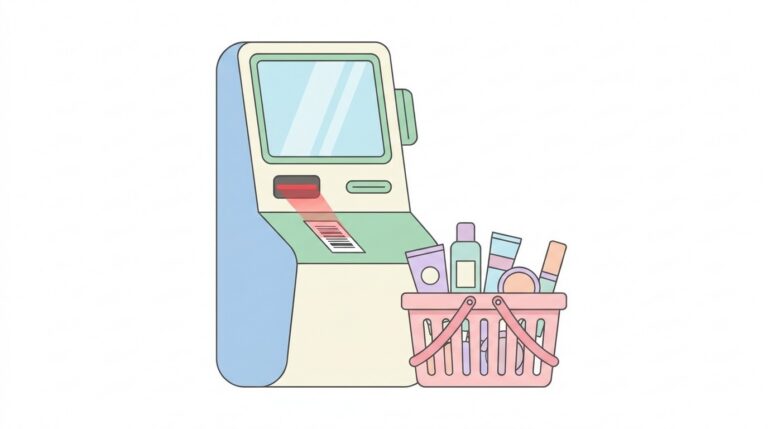
안녕하세요! 매일한글 에디터입니다. (Annyeonghaseyo! I am your Daily Hangul editor.) Imagine this: you just stepped into a dazzling, four-story Daiso in Hongdae. Your shopping basket is happily stacked with adorable Sanrio stickers, soothing sheet masks, and viral K-beauty sponges. But as you walk up to pay, you are suddenly met with a row of glowing digital kiosks and a friendly computerized voice chiming: 바코드를 스캔해 주세요 (Bakodeureul seukaenhae juseyo – Please scan the barcode).
A line of busy locals begins forming behind you. The screen flashes bright buttons in Korean, the scanner beeps unexpectedly, and your palms sweat as you scramble to find where the barcode is hidden. Don’t worry at all! Over 300 beginner learners in our community confessed that self-checkout kiosks in Korea caused them the most real-world anxiety. Today, your Korean bestie has your back. With this step-by-step beginner guide, you will master self-checkouts in Daiso and supermarkets with absolute poise and zero stress!
Phase 2: Top 3 Core Expressions
1. 바코드를 찍으세요 (Bakodeureul jjigeuseyo)
- Pronunciation: [Ba-ko-deu-reul jji-geu-se-yo] (Analogy: ‘Ba’ like bar, ‘ko’ like core, ‘deu’ like the ‘goo’ in good without ‘g’, ‘jji’ like a crisp ‘tchee’, ‘geu’ like ‘girth’ without ‘rth’, ‘se-yo’ like say-yo)
- Meaning: Literal: “Please imprint/press the barcode.” / Real nuance: “Please scan the barcode over the red laser sensor.”
- K-Culture Moment: Seen in convenience store scenes and K-vlogs where characters hover snacks over red laser scanners at Daiso and Han River ramen kiosks.
- Editor’s Insight: Koreans use the verb 찍다 (jjikda – to stamp, capture, or imprint) for scanning barcodes, snapping photos, and even dipping fries in sauce! You will hear the kiosk automated voice repeat this phrase patiently.
- Situation Spectrum: Casual: ⚠️ | Semi-formal: ✅ | Formal: ✅
- 🤔 Think About It: In English, we say “scan” (referencing optical technology), but Korean uses “찍다” (physical contact/imprinting). How does physical action reflect Korean descriptive vocabulary?
2. 봉투 필요하세요? (Bongtu piryohaseyo?)
- Pronunciation: [Bong-tu pi-ryo-ha-se-yo] (Analogy: ‘Bong’ like a bongo drum, ‘tu’ like two, ‘pi-ryo’ like peer-yo, ‘ha-se-yo’ like ha-say-yo)
- Meaning: Literal: “Is a bag needed?” / Real nuance: “Do you need to purchase a shopping bag?”
- K-Culture Moment: Every K-drama supermarket scene right before the character stuffs their grocery bags with ramyeon and banchan.
- Editor’s Insight: Due to strict eco-friendly waste laws in Korea, plastic bags are never free. Daiso self-checkout screens will display a pop-up window with this exact question. You will simply press 예 (Ye – Yes) or 아니요 (Aniyo – No).
- Situation Spectrum: Casual: ⚠️ | Semi-formal: ✅ | Formal: ✅
- 🤔 Think About It: Korea has one of the world’s most disciplined recycling frameworks. Charging for bags is a cultural duty rather than stinginess.
3. 카드로 결제할게요 (Kadeuro gyeoljehalgeyo)
- Pronunciation: [Ka-deu-ro gyeol-je-hal-ge-yo] (Analogy: ‘Ka-deu’ sounds like card, ‘ro’ like row, ‘gyeol-je’ like gyul-jay, ‘hal-ge-yo’ like hal-gay-yo)
- Meaning: Literal: “I will settle the payment with a card.” / Real nuance: “I am going to pay by credit/debit card.”
- K-Culture Moment: A classic trope when a rich drama CEO dramatically whips out a black credit card before the second lead can move.
- Editor’s Insight: Korea is practically a cashless society. Many Daiso branches have kiosks labeled “카드 전용” (Kadeu jeonyong – Card Only). Knowing this phrase clarifies your payment method immediately if an attendant assists you.
- Situation Spectrum: Casual: ⚠️ | Semi-formal: ✅ | Formal: ✅
- 🤔 Think About It: Note the polite intentional suffix -(으)ㄹ게요 (-(eu)lgeyo), expressing personal commitment without being demanding.
Phase 3: Textbook Korean vs. Real Korean
Situation 1: Declining a bag at the checkout screen or counter
- 📖 교과서 한국어 (Textbook): 비닐봉투를 구매하지 않겠습니다. (Binilbongtureul gumaehaji ankessseumnida. – I shall not purchase a plastic bag.)
- 🗣️ 진짜 한국어 (Real Korean): 봉투는 괜찮아요. (Bongtuneun gwaenchanayo. – I’m okay without a bag.)
- 💡 왜 다를까? (Why the difference?): Textbook formulations sound like an official legal declaration! In actual daily speech, Koreans use 괜찮아요 (gwaenchanayo – It’s fine / No thanks) for effortless, polite refusal.
Situation 2: Asking a nearby staff member for assistance when the machine freezes
- 📖 교과서 한국어 (Textbook): 결제 단말기 작동을 도와주실 수 있습니까? (Gyeolje danmalgi jakdongeul dowajusil su issseumnikka? – Could you please assist the operation of the payment terminal?)
- 🗣️ 진짜 한국어 (Real Korean): 저기요, 이거 어떻게 찍어요? (Jeogiyo, igeo eotteoke jjigeoyo? – Excuse me, how do I scan this?)
- 💡 왜 다를까? (Why the difference?): Real shoppers address staff with 저기요 (Jeogiyo – Excuse me) and ask simply with 어떻게 (eotteoke – how) rather than using complex technical jargon.
Phase 4: K-Culture Deep Dive & Non-Verbal Manners
4-1. 눈치 (Nunchi) & Checkout Etiquette
Korean retail operates on quick consideration for others. When queuing at Daiso self-checkouts:
* Have items barcode-ready: Before reaching the scanner, align your items so the barcodes face outwards. It saves time and prevents kiosk errors.
* Two-Hand Card Insertion: When placing your foreign travel card or T-money into the slot, inserting it with both hands or supporting your right wrist shows respect if an attendant guides your hand.
* Auditory Cue Awareness: Listen for the sharp “삑! (Ppik!)” sound before moving an item to the packing side. If you place unscanned items in the bag area, the scale sensor might freeze the machine.
4-2. Culture Code: The “Daiso Haul” (다이소 하울) Phenomenon
In Korean lifestyle culture, Daiso is not just a dollar store; it is an adventure park for affordable luxury, known as 소확행 (Sohwakhaeng – Small but Certain Happiness). Korean beauty vloggers regularly post “Daiso K-Beauty Dupes” and college students hunt for viral seasonal collections. Self-checkout kiosks were introduced en masse to keep prices strictly between 1,000 KRW and 5,000 KRW by reducing operational costs. Knowing self-checkout puts you right in stride with modern Korean youth culture!
Phase 5: Real-World Roleplay Scenario
- Location: Daiso Gangnam Flagship Store, basement floor self-checkout area.
- Characters:
- Alex (A1 Learner): Excited traveler with a basket of snacks and phone cables.
- Min-ji (Staff): Friendly Daiso team member monitoring the kiosk line.
[Dialogue]
1. Min-ji: 🎭 Smiling and pointing to an open kiosk
저쪽 계산대로 가세요! (Jeojjok gyesandaero gaseyo!)
Please head over to that checkout counter!
2. Alex: 🎭 Nods nervously and walks up to the kiosk
감사합니다! (Gamsahamnida!)
Thank you!
3. Kiosk Voice: 🎭 Animated screen lights up with red scanner beam
바코드를 찍어 주세요. (Bakodeureul jjigeo juseyo.)
Please scan the barcode.
4. Alex: 🎭 Tries scanning a small pen, but the machine is silent
어? 왜 안 되지? (Eo? Wae an doeji?)
Huh? Why isn’t it working?
5. Min-ji: 🎭 Steps over noticing Alex struggling
도와드릴까요? (Dowadeurilkkayo?)
Shall I help you?
6. Alex: 🎭 Points politely to the pen’s tiny barcode
네, 바코드 어디 있어요? (Ne, bakodeu eodi isseoyo?)
Yes, where is the barcode?
7. Min-ji: 🎭 Turns the pen tag over and holds it directly in front of the red beam
여기에 바코드를 대세요. 삑 소리 나요! (Yeogie bakodeureul daeseyo. Ppik sori nayo!)
Hold the barcode here. It will make a beep sound!
8. Alex: 🎭 Smiles broadly as the screen displays 1,000 KRW
아! 됐어요, 감사합니다! (A! Dwaesseoyo, gamsahamnida!)
Ah! It worked, thank you!
🔀 Interactive Decision Point:
The screen now pops up with an orange alert: “봉투를 구매하시겠습니까?” What should Alex do?
* Choice A: Say “봉투 주세요! (Bongtu juseyo!)” out loud to the empty machine screen.
* Feedback (Bad): The machine does not have ears! You must touch the touch-screen button “예 (Yes)” or “아니요 (No)”.
* Choice B: Tap “예 (Ye)” on screen, select a 100 KRW plastic bag, and press “카드 결제 (Card Payment)”.
* Feedback (Best!): Spot on! An attendant or the dispenser beneath will unlock the bag, and the card reader flashes blue.
* Choice C: Panic, cancel the entire screen by hitting the big red 취소 (Cancel) button, and run to the exit.
* Feedback (Risk): The alarm will chime if you leave without completing checkout, causing unnecessary embarrassment!
Phase 6: 10-Second Emotion Shadowing Drill
Practice these lines out loud with the designated emotional tone and pauses (/ marks pauses):
[😊 Confidently and brightly]
바코드를 / 찍을게요! (Bakodeureul / jjigeulgeyo! – I will scan the barcode!)[🙋 Politely requesting staff aid]
저기요, / 결제 도와주세요. (Jeogiyo, / gyeolje dowajuseyo. – Excuse me, please help me with checkout.)[😄 Relieved and appreciative]
카드로 / 계산할게요, / 감사합니다! (Kadeuro / gyesanhalgeyo, / gamsahamnida! – I will pay by card, thank you!)
Phase 7: K-Culture Mini Dictionary
- 바코드 (Bakodeu) | Barcode
Everyday Usage: At Korean supermarkets (E-Mart, Homeplus, Daiso), products have standard barcodes, but Daiso items often feature two: a store inventory code and the checkout barcode. Always look for the one labeled 결제용 (For Payment). - 셀프 계산대 (Selpeu gyesandae) | Self-checkout counter
Everyday Usage: The signs above kiosks usually read 셀프 계산 (Self-Checkout) or 무인 계산대 (Unmanned Register). Spotting this saves you from waiting in cash queues. - 종량제 봉투 (Jongnyangje bongtu) | Official government garbage bag
Everyday Usage: At larger marts and convenience stores, if you ask for a bag, they may ask: “종량제 봉투로 드릴까요?” This bag doubles as a local district trash bag you can fill and throw away in Korea! - 영수증 (Yeongsujeung) | Receipt
Everyday Usage: Kiosks will ask: 영수증을 출력하시겠습니까? (Would you like to print a receipt?). Always print it in case you need an exit barcode scan or tax refund!
Phase 8: Traveler’s Survival Kit
Survival Expressions TOP 3
- 바코드 찍어 주세요 (Bakodeu jjigeo juseyo) | [Ba-ko-deu jji-geo ju-se-yo]
Pro Tip: Use this when a cashier is present or when an attendant steps in to assist. - 영수증 버려주세요 (Yeongsujeung beoryeojuseyo) | [Yeong-su-jeung beo-ryeo-ju-se-yo]
Pro Tip: Literal: “Please discard my receipt.” Say this if you don’t need the paper receipt. - 이거 결제 안 돼요 (Igeo gyeolje an dwaeyo) | [I-geo gyeol-je an dwae-yo]
Pro Tip: Perfect beginner phrase when your foreign credit card gets declined or the scanner bugs.
Editor’s Travel Note
- Navigation Guide: Looking for the largest multi-story Daiso branches? Check 네이버 지도 앱 다운로드 (Naver Map App Download) and search for “다이소” to locate stores in Myeongdong, Gangnam, or Sinchon.
- Payment Tips: Korea’s self-checkout terminals accept international chip cards (Visa, Mastercard), but Apple Pay is limited. Always carry a backup prepaid card like WOWPASS, NAMANE, or a physical credit card.
Phase 9: One Step Deeper
South Korea boasts one of the world’s highest densities of unmanned retail stores, spanning from 24-hour ice cream shops to fully automated supermarkets. This hyper-rapid shift is powered by 높은 신뢰 자본 (High social trust) and the cherished cultural value of 배려 (Baeryeo – Mutual consideration). When Koreans use a self-checkout, they scan items briskly not merely out of impatience, but out of respect for the next person’s time. By mastering these brief kiosk steps, you are not just buying stationery; you are actively participating in Korea’s communal rhythm of mutual trust and consideration.
💬 Your Turn: Have you ever experienced a self-checkout in Korea or your home country that made you feel flustered? Tell us your experience in the comments below!
Phase 10: FAQ & Misunderstanding Prevention
Q: What should I do if the Daiso scanner has two barcodes on the tag?
A: This is the #1 mistake! Daiso tags often have a QR code/stock code and a traditional striped barcode. Look closely for the striped barcode with the tiny words “스캔 (Scan)” or “결제용 (For Payment)”. If you scan the stock QR code, the kiosk will buzz with an error sound.
Q: Can I pay with cash at Korean self-checkout kiosks?
A: Generally, no. Most self-checkout registers at Daiso and metro marts are marked 카드 전용 (Card Only). If you only have Korean Won cash (현금 – Hyeongeum), look for the manned counter labeled 현금 결제 (Cash Payment).
Q: The machine asks for a phone number after I pay. What is that?
A: That is for 포인트 적립 (Point Accumulation) for Korean residents. Whenever a screen asks you to input a 010 mobile number, simply tap the button that says 건너뛰기 (Skip) or 적립 안 함 (No Points).
🚨 Common Mistakes Warning Board
- Mistake: Placing scanned items immediately into your personal backpack before paying.
- Correct Action: Keep all scanned items on the kiosk platform until payment is fully completed to avoid triggering anti-theft sensors.
- Mistake: Forgetting to press “결제하기 (Checkout/Pay)” before inserting your credit card.
- Correct Action: Always touch the blue/green payment button first, choose “신용카드 (Credit Card)”, and then push your card firmly into the reader.
- Mistake: Leaving the kiosk right after the beep without printing your receipt.
- Correct Action: In some multi-story marts, security checks the receipt at the exit door. Tap “영수증 출력 (Print Receipt)” just in case!
Phase 11: Action Missions
- 🥉 Bronze Level (Solo Practice): Stand before a mirror with any snack box in your hand. Practice saying: 바코드를 찍을게요! (Bakodeureul jjigeulgeyo! – I will scan the barcode!) three times smoothly.
- 🥈 Silver Level (Community & SNS): Screenshot your favorite K-drama convenience store scene, tag
@DailyHangul, and caption it with: 봉투는 괜찮아요! (Bongtuneun gwaenchanayo! – I’m fine without a bag!). - 🥇 Gold Level (Real-Life Champion): Visit a Daiso, Olive Young, or mart self-checkout in Korea. Successfully scan your items and complete payment using card without switching the interface to English!
- 🎮 K-Culture Mission: Watch an episode of a Korean reality travel show (like Jinny’s Kitchen or I Live Alone). Spot how many times characters say 결제 (Gyeolje – Payment) or 카드 (Kadeu – Card).
Phase 12: Interactive Quiz Challenge
1. Situational Judgment
You are standing at a Daiso kiosk. The screen displays: “카드를 꽂아주세요.” What is the kiosk instructing you to do?
* A) Tap your transit card on the screen surface.
* B) Insert your credit card into the reader slot.
* C) Hand your card over to the customer behind you.
2. Fill in the Blank
Complete the sentence to tell the clerk you do not need a shopping bag:
* “_______ 는 괜찮아요.” (Hint: The word for bag)
3. True / False Cultural Challenge
- Statement: In Korea, plastic bags at Daiso kiosks are legally provided free of charge for tourists.
- [ True / False ]
👉 Click here to check answers & explanations!
Answers:
1. B) Insert your credit card into the reader slot. (꽂다 [kkotda] means to insert or stick something into a slot. Look for the blinking green/blue light beneath the screen!)
2. 봉투 (Bongtu). (봉투는 괜찮아요 [Bongtuneun gwaenchanayo] = A bag is fine / I don’t need a bag.)
3. False! Under Korean volume-rate garbage disposal laws, retail establishments are strictly prohibited from giving free disposable shopping bags. Everyone pays 100~500 KRW per bag.






