

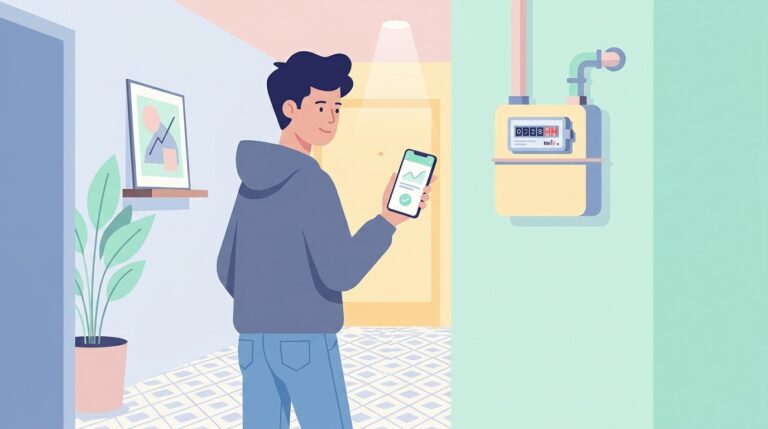
Never Overpay Again: How to Check Your Gas Meter and Submit Self-Readings Like a Local
Phase 1: Empathy (Story Immersion Opening)
안녕하세요! 매일한글 에디터입니다. (Annyeonghaseyo! It’s your Daily Hangul editor.)
Picture this: You are finally settled into your dream studio apartment in Seoul. The heated wooden floor (ondol) feels like heaven after a chilly walk from the subway. Then, on the 15th of the month, your phone buzzes with a KakaoTalk notification from Seoul City Gas (서울도시가스): “이번 달 도시가스 자가 검침 기간입니다. 지침 숫자를 입력해 주세요.” (It is this month’s city gas self-reading period. Please submit your meter reading index.)
A mild wave of panic sets in. You walk out to your corridor or balcony, stare at a grey metal box with spinning gears, and wonder: Which numbers do I actually enter? What if I add a zero and get billed 500,000 KRW? What if a gas technician knocks on my door when I’m in my pajamas?
Don’t worry! Every foreign resident in Korea has stared blankly at that little gas meter at least once. Self-meter reading (자가 검침) is a normal monthly ritual in Korean apartments, villas, and officetels. Today, we will break down the essential Korean phrases, app vocabulary, and cultural etiquette so you can submit your meter reading smoothly in less than two minutes. Let’s make you feel like an independent, savvy local!
Phase 2: Core Expressions Deep Dive
1. 계량기 숫자 확인했어요 (Gyeryanggi sutja hwaginhaesseoyo)
- Pronunciation: [Gye-ryang-gi sut-ja hwa-gin-hae-ssyo-yo] (Sounds like gay-ryahng-gee soot-jah hwah-geen-hae-so-yo)
- Meaning: Literal: “I confirmed the meter numbers.” / Nuance: “I’ve checked the gas meter digits.”
- K-Culture Moment: Seen in relatable K-dramas like Fight for My Way or Because This Is My First Life, where young adults living in multi-family villa homes remind roommates to inspect the utility meters outside the entrance.
- Editor’s Insight: 계량기 (gyeryanggi) refers to any measuring gauge or meter (gas, water, electricity). 확인하다 (hwaginhada) is the golden verb in Korea for confirming, checking, or verifying info. Pair it with past tense ~했어요 to report that your monthly check is done.
- Situation Spectrum:
- Casual (to roommates/friends): 계량기 숫자 확인했어 (Gyeryanggi sutja hwaginhaesseo) ✅
- Semi-formal (Polite standard): 계량기 숫자 확인했어요 (Gyeryanggi sutja hwaginhaesseoyo) ✅
- Formal (to landlords/call centers): 계량기 숫자를 확인했습니다 (Gyeryanggi sutjareul hwaginhaetseumnida) ✅
- 🤔 Think About It: In many Western countries, utility personnel visit your meter directly, or smart meters transmit data automatically. Why do you think Korea encourages residents to check and report their own numbers via mobile apps?
2. 앱으로 자가 검침 입력했어요 (Aebeuro jaga geomchim ipryeokhaesseoyo)
- Pronunciation: [Ae-beu-ro ja-ga geom-chim im-nyeok-hae-ssyo-yo] (Sounds like app-eu-ro jah-gah gum-cheem eem-nyuck-hae-so-yo)
- Meaning: Literal: “I entered the self-inspection through the app.” / Nuance: “I submitted my self-meter reading via the utility app.”
- K-Culture Moment: When office workers chat over iced Americanos (Ah-Ah), exchanging survival hacks about how the Gas App (가스앱) gives you cash-back points just for submitting your own readings on time.
- Editor’s Insight: 자가 (jaga) means “self” (as in 자가 격리 self-quarantine or 자가용 personal car), and 검침 (geomchim) means inspecting the meter needle/digits. Combined, 자가 검침 is the official industry term for customer self-metering.
- Situation Spectrum:
- Casual: 앱으로 자가 검침했어 (Aebeuro jaga geomchimhaesseo) ✅
- Semi-formal: 앱으로 자가 검침 입력했어요 (Aebeuro jaga geomchim ipryeokhaesseoyo) ✅
- Formal: 모바일 앱을 통해 자가 검침을 완료했습니다 (Mobail aebeul tonghae jaga geomchimeul wanryohaetseumnida) ✅
- 🤔 Think About It: Notice the particle ~으로 (~euro), indicating the tool or method used (by means of the app). How does attaching method markers clarify everyday administrative tasks in Korean?
3. 이번 달 가스비 얼마 나왔어요? (Ibeon dal gaseubi eolma nawasseoyo?)
- Pronunciation: [I-beon dal ga-seu-bi eol-ma na-wa-ssyo-yo] (Sounds like ee-bun dahl gah-seu-bee ull-mah nah-wah-so-yo)
- Meaning: Literal: “This month gas fee how much came out?” / Nuance: “How much did your gas bill come out to this month?”
- K-Culture Moment: Every winter in Korea, this question trends nationwide when heating bills spike during the freezing sub-zero Siberian chills (삼한사온).
- Editor’s Insight: In Korean, bills and fees “come out” using the verb 나오다 (naoda). Instead of asking “How much is the bill?”, Koreans ask “How much came out?” (얼마 나왔어요?).
- Situation Spectrum:
- Casual: 이번 달 가스비 얼마 나왔어? (Ibeon dal gaseubi eolma nawasseo?) ✅
- Semi-formal: 이번 달 가스비 얼마 나왔어요? (Ibeon dal gaseubi eolma nawasseoyo?) ✅
- Formal: 이번 달 가스 요금이 얼마나 청구되었습니까? (Ibeon dal gaseu yogeumi eolmana cheonggudwoeeotseumnikka?) ✅
- 🤔 Think About It: Why do you think living expenses in Korean conversations use dynamic movement verbs like 나오다 (to emerge / come out) rather than static verbs like 이다 (to be)?
Phase 3: Textbook Korean vs. Real-World Korean
Situation 1: Letting your housemate know you took care of the meter reading
- 📖 교과서 한국어 (Textbook): 제가 가스 계량기를 직접 확인하여 검침 수치를 시스템에 등록했습니다. (Jega gaseu gyeryanggireul jikjeop hwaginhayeo geomchim suchireul siseuteme deungrokhaetseumnida. / “I confirmed the gas meter directly and registered the reading value in the system.”)
- 🗣️ 진짜 한국어 (Real-World): 계량기 사진 찍어서 가스앱에 올렸어! (Gyeryanggi sajin jjigeoseo gaseuaebe ollyeosseo! / “I snapped a photo of the meter and posted it on the gas app!”)
- 💡 왜 다를까? (Why the difference?): Real Koreans rarely use formal Sino-Korean nouns like 검침 수치 등록 (registration of meter values) at home. They simply talk about taking a quick photo (사진 찍다) and uploading it (올리다) to the app.
Situation 2: Asking your landlord about the monthly submission deadline
- 📖 교과서 한국어 (Textbook): 자가 검침 입력 마감일이 언제인지 확인을 요청드립니다. (Jaga geomchim ipryeok magamiri eonjeinji hwagineul yocheongdeurimnida. / “I request confirmation regarding when the self-meter input deadline is.”)
- 🗣️ 진짜 한국어 (Real-World): 사장님, 자가 검침 언제까지 입력해야 해요? (Sajangnim, jaga geomchim eonjekkaji ipryeokhaeya haeyo? / “Landlord, until when do I need to enter the self-reading?”)
- 💡 왜 다를까? (Why the difference?): While textbook grammar leans heavily on honorific noun phrases (확인을 요청드립니다), conversational Korean conveys respect naturally through respectful titles (사장님/집주인분) and clear, polite questions (~언제까지 해야 해요?).
Phase 4: K-Culture Deep Dive & Non-Verbal Manners
4-1. 눈치 (Nunchi) & Hallway Etiquette
In older Korean studio buildings (one-room villas), gas meters are mounted on the exterior hallway wall right next to your neighbor’s front door.
* The Flashlight Courtesy: Villa stairwells frequently use automated sensor lights that turn off every 15 seconds. If you’re using your smartphone flashlight to inspect the dials, avoid pointing the beam straight at your neighbor’s door peep-hole (외시경) or digital door lock keypad, which can trigger suspicion or make people uncomfortable.
* The Quick Snap: Instead of squinting at the meter while lingering outside your neighbor’s door, do the “1-second photo snap”—take a clear photo of the gauge and step back inside your apartment to read the numbers in comfort.
4-2. Cultural Code: The Ondol (온돌) Panic & “외출 모드”
In Korean dramas like Hospital Playlist or reality shows like I Live Alone (나 혼자 산다), you often see characters agonizing over winter heating bills. Korean homes use underfloor radiant heating (ondol), powered by city gas.
If you leave your heating on maximum when leaving for work, your monthly bill can jump from 25,000 KRW to over 150,000 KRW! When you check your meter numbers every month, you become intimately aware of how much gas your boiler uses. This is why Koreans obsess over the 외출 (Away / Out-of-Home) mode button on the wall-mounted thermostat control panel.
Phase 5: Real-Life Roleplay Scenario
Setting: Outside your apartment door in Mapo-gu, Seoul. You are squinting at the hallway meter box with your smartphone open. Your friendly building neighbor, Sora, steps out to throw away the recycling.
- 소라: 어? 계량기 보고 계세요? 자가 검침 날이에요? (Eo? Gyeryanggi bogo gyeseyo? Jaga geomchim narieyo? / “Oh? Are you looking at the meter? Is it self-reading day?”)
- You: 🎭 Nodding nervously while pointing at the numbers 네, 카톡 알림이 왔는데 숫자를 어디까지 읽어야 할지 모르겠어요. (Ne, katok allimi wanneunde sutjareul eodikkaji ilgeoya halji moreugesseoyo. / “Yes, I got a Kakao notification, but I don’t know up to which digit I should read.”)
- 소라: 🎭 Smiling kindly and stepping closer to point with her finger 아, 빨간색 박스 테두리 안에 있는 소수점 숫자는 빼고, 앞쪽 검은색 숫자만 읽으시면 돼요! (A, bpalgansaek bakseu teduri ane inneun sosujeom sutjaneun ppaego, apjjok geomeunsaek sutjaman ilgeusimyeon dwaeyo! / “Ah, leave out the decimal numbers inside the red border, and just read the black numbers in front!”)
- You: 🎭 Taking a close-up photo with your phone 아하! 검은색 숫자 다섯 자리만 적으면 되는군요. (Aha! Geomeunsaek sutja daseot jariman jeogeumyeon doeneungunyo. / “Aha! So I only need to write the five black digits.”)
- 소라: 맞아요! 사진 찍어서 도시가스 앱에 바로 올리면 진짜 편해요. (Majayo! Sajin jjigeoseo dosigaseu aebe baro ollimyeon jinjja pyeonhaeyo. / “Exactly! If you take a photo and upload it directly to the city gas app, it’s super convenient.”)
- You: 🎭 Opening the app screen to check 지금 앱 켰는데, ‘자가 검침 등록’ 버튼을 누르면 되죠? (Jigeum aep kyeonneunde, ‘jaga geomchim deungrok’ beoteuneul nureumyeon doejo? / “I just opened the app now; I press the ‘Register Self-Reading’ button, right?”)
- 소라: 네, 거기 누르고 오늘 날짜 지침 입력하시면 끝나요! (Ne, geogi nureugo oneul naljja jichim ipryeokhasimyeon kkeutnayo! / “Yes, tap that, input today’s meter index, and you’re all set!”)
- You: 🎭 Bowing head slightly with a bright smile 친절하게 알려주셔서 정말 감사해요, 소라 씨! (Chinjeolhage allyeojusyeoseo jeongmal gamsahaeyo, Sora ssi! / “Thank you so much for explaining so kindly, Sora!”)
🔀 Interactive Decision Point
Suppose you entered the number wrong in the app and received an error message stating that your input is lower than last month’s meter index. What do you do?
- Option A: Ignore the notification and hope the company guesses the bill correctly.
- Option B: Tell your neighbor: “고지서 나올 때까지 그냥 둘게요.” (I will just leave it until the bill arrives.)
- Option C: Say to the customer service center or app support: “숫자를 잘못 입력했는데, 다시 수정할 수 있나요?” (Sutjareul jalmot ipryeokhaenneunde, dasi sujeonghal su innayo? / I entered the number incorrectly; can I edit it again?)
Feedback:
* Option A (Risk): If you fail to submit, the utility company issues an estimated billing (추정 고지), which could lead to unexpected adjustments or higher rates next month!
* Option B (Bad): Never ignore an inaccurate meter reading; correcting it later takes extra documentation.
* Option C (Best!): Perfect! Within the self-reading window (usually 2~3 days), you can easily modify (수정) your submission in the app or via the automated phone system.
Phase 6: 10-Second Emotional Shadowing Drill
Practice reading these lines aloud with natural rhythm, using the pauses (/) and emotional cues:
[🧐 진지하고 꼼꼼하게 (Thoughtful and meticulous)]
빨간색 숫자는 빼고 / 검은색 숫자만 / 입력해야 돼요.
(Ppalgansaek sutjaneun ppaego / geomeunsaek sutjaman / ipryeokhaeya dwaeyo.)
Leave out the red numbers / and only input / the black digits.-
[😊 안도하며 시원시원하게 (Relieved and bright)]
계량기 사진 찍어서 / 앱에 올리니까 / 일 분도 안 걸리네요!
(Gyeryanggi sajin jjigeoseo / aebe ollinikka / il bundo an geollineyo!)
Taking a photo of the meter / and uploading it to the app / takes less than a minute! -
[❄️ 깜짝 놀라며 걱정스럽게 (Worried and surprised)]
이번 달 보일러 많이 틀었는데 / 가스비 얼마나 나오려나?
(Ibeon dal boilleo mani teureonneunde / gaseubi eolmana naoryeona?)
I ran the boiler a lot this month / I wonder how much the gas bill will come out to?
Phase 7: K-Culture Mini Dictionary
- 자가 검침 (Jaga geomchim) | Self-Meter Reading | A system where residents read the utility dials themselves and submit the numerical index through phone ARS, website, or mobile application.
- 지침 (Jichim) | Meter Index / Current Reading | The current cumulative number displayed on your gas meter gauge. When the app asks for 지침, it means the reading of the meter.
- 도시가스 앱 (Dosigaseu aep) | City Gas App (e.g., Gas App) | The all-in-one regional mobile utility app in Korea that handles monthly readings, billing statements, payment methods, and move-in/move-out appointments.
- 외출 모드 (Oechul mode) | Away / Out-of-Home Mode | A standard setting on Korean wall boilers (귀뚜라미, 린나이, 경동나비엔) that maintains minimum warm water circulation to prevent pipe freezing while minimizing gas consumption.
Phase 8: Resident’s Survival Kit
Top 3 Survival Expressions
- 자가 검침 입력 기간이 지났어요. (Jaga geomchim ipryeok gigani jinasseoyo.)
- Meaning: The self-meter input period has passed.
- Pro Tip: If you missed the window, don’t panic! The company will bill an estimate based on your previous year’s seasonal average, and it self-corrects the following month.
- 계량기 위치가 어디에 있어요? (GyeryanggiControllerCard wichiga eodie isseoyo?)
- Meaning: Where is the gas meter located?
- Pro Tip: In studios (one-rooms), look near the boiler on the back veranda, or open the grey utility cabinet beside the staircase outside your apartment.
- 가스 명의 변경하고 싶어요. (Gaseu myeongui byeongyeonghago sipeoyo.)
- Meaning: I want to transfer/change the name on the gas account.
- Pro Tip: When moving in, always update the account name to avoid inheriting unpaid balances from the prior tenant.
Editor’s Life in Korea Note
- Install the official mobile platform by searching for the official [Gas App for Android and iOS on Korean app stores]. It supports convenient KakaoTalk login.
- Most regional gas providers (Seoul City Gas, Kiturami, Yesco, Samchully) link directly to this universal app. You can even configure push notifications so you never forget the self-reading dates!
Phase 9: “One Step Deeper” (Cultural Reflection)
In many Western metropolitan areas, meter readers knock directly on apartment doors, or smart grids update readings remotely. Korea’s pervasive adoption of 자가 검침 (self-reading) illustrates the high level of mutual civic trust (신뢰) and digital integration in Korean residential life.
Rather than viewing meter checking as a chore, residents take pride in monitoring their household consumption directly on their smartphones. It balances convenience, privacy for single-person households (1인 가구), and rapid digital administration.
💬 Your Turn: Have you ever checked a utility meter in Korea or in your home country? Did you ever get startled by a winter gas bill? Share your experience in the comments below!
Phase 10: FAQ & Common Mistakes
Q: Do I need to enter the red numbers on the gas meter?
A: No! Gas meters display black digits on the left and red digits on the right. The red digits represent decimals ($m^3$). You must only input the black digits (usually 4 to 5 digits). Entering the red numbers will make your bill appear artificially massive!
Q: What happens if I forget to submit the self-reading on time?
A: If you miss the designated 2-to-3-day window, the gas provider applies an estimated calculation (인근 유사 가구 또는 전년 동월 기준 추정 고지). Once you submit the correct index next month, any difference is reconciled automatically on your next invoice.
Q: Can I submit the meter reading without downloading the app?
A: Yes! When you receive the automated KakaoTalk notification (알림톡), it usually contains an instant web-link where you can input the digits without creating an app account. Alternatively, you can reply via the automated telephone ARS number listed on the text message.
🚨 Common Mistakes Warning Board
- Mistake: Entering the red decimal numbers.
- Correct Action: Completely ignore the red box digits. Report only the black numbers.
- Mistake: Checking your neighbor’s meter by mistake.
- Correct Action: Verify the unique serial number (계량기 기번) printed on the metal plate against the serial number shown on your gas bill.
- Mistake: Shutting the boiler completely off in deep winter sub-zero weather.
- Correct Action: Never turn the boiler power switch off completely when leaving home in winter! The pipes can freeze and burst (동파). Always switch it to 외출 모드 (Away Mode).
Phase 11: Action Missions
- 🥉 Bronze Level: Locate your apartment’s gas meter box today. Take a quick practice photo and identify which numbers are black and which are red.
- 🥈 Silver Level: Check your thermostat control panel on your wall. Identify the 외출 (Away) button and say aloud: “외출할 때는 외출 모드로 바꿔요” (When going out, I switch to Away mode).
- 🥇 Gold Level: During your next monthly self-reading window, open your regional gas app or Kakao link and submit your meter index completely in Korean without translating into English!
- 🎮 K-Culture Mission: Watch an episode of a slice-of-life Korean drama (like My Liberation Notes or Welcome to Samdal-ri) and listen for mentions of 가스비 (gas bill) or 보일러 (boiler)!
Phase 12: Interactive Quiz Challenge
Test what you learned today! Click the toggle to reveal answers and explanations.
- Situational Judgment: You are looking at your gas meter. The black numbers read
01452and the red numbers read89. What number should you enter into the app?- (A) 0145289
- (B) 1452
- (C) 89
- (D) 01452.89
- Fill in the Blank: 매달 앱으로 계량기 숫자를 직접 입력하는 것을 “____ 검침”이라고 해요.
- (A) 자동 (Jadong – Automatic)
- (B) 대리 (Daeri – Proxy)
- (C) 자가 (Jaga – Self)
- (D) 방문 (Bangmun – Visit)
- True or False: In the dead of winter in Korea, turning off your boiler power switch completely when going on a 3-day trip is the best way to save gas without risks.
- True / False
Click to reveal answers & explanations!
- Answer: (B) 1452 (or 01452)
- Explanation: You only enter the black integer numbers! Disregard the red decimal digits (
89).
- Explanation: You only enter the black integer numbers! Disregard the red decimal digits (
- Answer: (C) 자가 (Jaga)
- Explanation: 자가 검침 literally translates to “self-inspection of meter needles/readings.”
- Answer: False
- Explanation: Turning the boiler completely off in winter risks frozen and ruptured water pipes (배관 동파), leading to thousands of dollars in repairs! Always set it to 외출 모드 (Away Mode).
- Explanation: Turning the boiler completely off in winter risks frozen and ruptured water pipes (배관 동파), leading to thousands of dollars in repairs! Always set it to 외출 모드 (Away Mode).







