

Turn Raw Potential Into Brilliance: The Secret of Korean Execution Proverbs
Phase 1: Empathy (Immersion Opening)
안녕하세요! 매일한글 에디터입니다. (Hello! This is your Daily Hangul editor.)
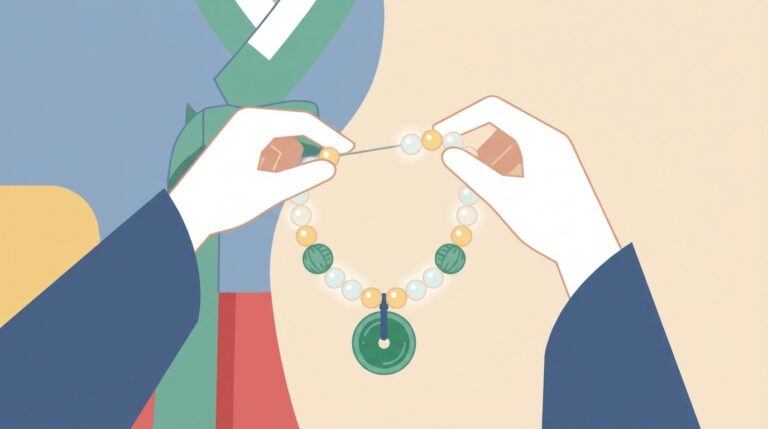
Picture this: You are sitting in a sleek glass conference room overlooking the buzzing tech hub of Pangyo Techno Valley, or perhaps in the dynamic pre-production room of a major K-drama studio in Sangam-dong. The whiteboard is bursting with world-class ideas. Your team holds terabytes of cutting-edge data, brilliant raw algorithms, or three binders filled with visionary script concepts. Yet, the atmosphere is strangely heavy. The team lead rubs their temples, sighs quietly, and murmurs a single sentence that shifts the whole room from passive conceptualizing to urgent action: “구슬이 서 말이라도 꿰어야 보배지.” (Guseuri seo marirado kkwéoya bobeji – Even three bushels of pearls are only a treasure when strung together.)
For advanced learners, the hardest barrier isn’t memorizing more high-level vocabulary; it’s sensing when an ancient, agrarian metaphor cuts straight through bureaucratic paralysis. At a C2 level, idioms are not decorative ornaments—they are social levers. Learners often tell me: “I know all the individual grammar points, but native Koreans still command executive rooms with one single proverb while I spend five minutes explaining synergy!” This guide changes that. Drawing directly from executive coaching notes and high-stakes media environments, this deep dive equips you to wield Korea’s most potent proverbs of synthesis and survival wisdom with total native confidence.
Phase 2: Core Expressions Deep Dive
1. 구슬이 서 말이라도 꿰어야 보배 (Guseuri seo marirado kkwéoya bobae)
- Pronunciation: [Goo-seul-ee seo ma-ri-ra-do kkwe-eo-ya bo-bae] (Think of the first syllable flowing like the word ‘goo’, followed by ‘seul’ like ‘surge’ without the r sound; ‘kkwé’ is a sharp, double-k sound like ‘click’ snapping into ‘way’.)
- Meaning: Literal: Even if you possess three mal (traditional bushels) of loose pearls, they only become a true family treasure once strung into a necklace. / Actual Nuance: Brilliant raw materials, unexecuted plans, or isolated genius are fundamentally worthless without final synthesis and pragmatic execution.
- K-Culture Moment: In the hit drama Start-Up, when venture capital mentor Han Ji-pyeong reviews brilliant machine learning code that hasn’t found a viable business model or user interface, this is the exact psychological critique he delivers.
- Editor’s Insight: ‘서 말’ (three bushels) represents an unimaginable volume of precious gems in pre-modern Korea. Yet antiquity’s brutal realism insists that raw volume equals zero value without labor and cohesion. Use this when a team is stuck in “analysis paralysis.”
- Situation Spectrum: Casual (⚠️ only if speaking to close peers) | Semi-formal (✅ ideal for peer work reviews) | Formal (✅ perfectly acceptable in executive keynotes and strategic meetings)
- 🤔 Think About It: Does your native culture elevate the romanticized “lone genius with brilliant thoughts,” or does it, like Korean collective pragmatism, judge value exclusively by tangible communal output?
2. 화룡점정 (Hwaryongjeomjeong)
- Pronunciation: [Hwa-ryong-jeom-jeong] (Sounds like ‘Hwa’ as in Hawaiian, ‘ryong’ rolling softly off the palate, and ‘jeom-jeong’ echoing like a resonant struck chime.)
- Meaning: Literal: Dotting the eye of the painted dragon. / Actual Nuance: The ultimate, indispensable masterstroke that brings an entire project to vivid life.
- K-Culture Moment: Seen on variety shows like Culinary Class Wars or Street Woman Fighter when a master chef adds one drop of aged perilla oil or a choreographer inserts an unexpected bridge move that transforms a good performance into iconic art.
- Editor’s Insight: Derived from the Hanja idiom of a painter whose dragon flew into the sky the instant its pupils were dotted. Unlike ‘구슬이 서 말…’, which warns against laziness or lack of follow-through, 화룡점정 celebrates the exquisite touch of decisive mastery.
- Situation Spectrum: Casual (✅) | Semi-formal (✅) | Formal (✅)
- 🤔 Think About It: What constitutes the “dragon’s eye” in your field: the user experience, the packaging, or the delivery?
3. 마침표를 찍다 (Machimpyoreul jjikda)
- Pronunciation: [Ma-chim-pyo-reul jjik-da] (Crisp ‘ma-chim’, followed by ‘pyo’, and an emphatic glottal snap on ‘jjik-da’.)
- Meaning: Literal: To stamp a period at the end of a sentence. / Actual Nuance: To successfully conclude, finalize, or resolve a long-running ordeal or massive initiative.
- K-Culture Moment: Often headline news across Korean financial dailies when long-term corporate mergers or high-stakes diplomatic agreements finally reach fruition: “10년 분쟁에 마침표를 찍다” (Putting an end to a ten-year dispute).
- Editor’s Insight: C2 mastery requires knowing collocational weight. You don’t just “finish” (끝내다) a milestone project; you “stamp the period” with historical finality.
- Situation Spectrum: Casual (✅) | Semi-formal (✅) | Formal (✅)
- 🤔 Think About It: Why does the act of punctuation serve as such a culturally resonant metaphor for triumph in modern Korean writing?
Phase 3: Textbook Korean vs. Real Korean
Scenario 1: Reorienting a drift-prone strategy meeting
- 📖 Textbook Korean: “우리는 훌륭한 데이터를 많이 모았으니 이제 좋은 결과물을 만들어 봅시다.” (Since we have gathered a lot of great data, let’s now produce good results.)
- 🗣️ Real Korean: “구슬이 서 말이라도 꿰어야 보배잖아요. 이제 리서치는 멈추고 아웃풋으로 마침표를 찍읍시다.” (Guseuri seo marirado kkwéoya bobejanayo. Ije riseochineun meomchugo auteu-puseuro machimpyoreul jjik-eupsida. – Three bushels of pearls mean nothing until strung together. Let’s halt the research and finalize our deliverables.)
- 💡 Why different? Textbook Korean sounds like an artificial kindergarten poster. Native Korean professionals deploy proverb-anchored leverage combined with modern corporate loanwords (아웃풋, 마침표) to project authority without sounding pedantic.
Scenario 2: Cutting through endless conceptual ideation
- 📖 Textbook Korean: “생각만 하지 말고 실제로 제품을 출시하는 것이 중요합니다.” (It is important to actually launch the product instead of just thinking.)
- 🗣️ Real Korean: “아이디어 빌드업은 이쯤 하죠. 결국 실체화 못 시키면 다 도로 아미타불이에요.” (A-i-di-eo bil-deu-eobeun i-jjeum hajyo. Gyeolguk silchehwa mot sikimyeon da doro amitabul-ieyo. – Let’s wrap up the ideation build-up here. If we can’t materialize it, it all reverts to complete zero anyway.)
- 💡 Why different? Combining 실체화 (materialization) with the ancient Buddhist idiom 도로 아미타불 (all efforts coming to naught) demonstrates a C2-level command of stylistic registers that instantly shifts team priorities.
Phase 4: K-Culture Deep Dive & Non-Verbal Manners
4-1. Nunchi (눈치) & Gestural Codes
When uttering “구슬이 서 말이라도 꿰어야 보배” in a professional setting, delivery determines whether you sound like an inspiring strategist or an abrasive critic.
* The Hand Motif: Native Korean executives rarely pound the table with this phrase. Instead, they bring both hands together toward their chest in an overlapping, weaving motion—mimicking the threading of a needle through beads. This visually signals: “I am not rejecting our work; I am calling for collective integration.”
* Gaze & Pitch Dynamics: Begin the first clause (구슬이 서 말이라도…) with an open, appreciative, slightly higher pitch acknowledging the team’s hard work. Then, drop your vocal register by an octave on 꿰어야 보배 while locking eyes with the key execution lead. This is high-level 눈치 in action: affirmation followed by an unmistakable mandate for closure.
4-2. Cultural Code Analysis: The Pangyo Tech Ethos & The Idol Debut Pipeline
In contemporary South Korea, the tension between raw accumulation and execution defines two major industries: Silicon Valley-style IT startups and K-Pop talent incubators.
* In K-Pop trainee showcases, agencies scout trainees possessing vocal agility, dance mastery, and visual charisma. Yet weekly review panels routinely cut trainees using variations of this proverb: having top-tier technical skills is irrelevant if the artist cannot synthesize them into cohesive stage presence.
* Similarly, in Pangyo’s tech incubators, developers often celebrate sophisticated algorithms, but project directors invoke 꿰어야 보배 to remind engineers that without an intuitive UX and sustainable monetization, a billion rows of clean code remain useless stones. Korea’s rapid compressed modernization (압축성장) instilled a collective cultural terror of unapplied potential.
Phase 5: Real-Life Roleplay Scenario
Setting: A tension-filled sprint review in a startup studio near Gangnam Station. The team has spent six weeks collecting user feedback and market data, but hasn’t finalized the minimum viable product (MVP).
Characters:
* 강 팀장 (Team Lead Kang): Brilliant, exacting, hyper-focused on tangible execution.
* 민우 (Min-woo / You): Lead Product Architect navigating timeline pressure.
— Dialogue —
- 강 팀장: 민우 씨, 지난 3주 동안 모은 유저 인터뷰 데이터 분석 끝났습니까?
(Min-woo ssi, jinan sam-ju dongan moeun yujeo inteobyu de-i-teo bunseok kkeutnas-seumnikka?)
🎭 Looks over his glasses, fingers tapping rapidly on a tablet.
“Min-woo, is the analysis of the user interview data gathered over the past three weeks done?” -
민우 (You): 네, 팀장님. 500명 분량의 정성 데이터와 테크 스펙 정리는 완벽히 끝난 상태입니다.
(Ne, timjangnim. O-baek-myeong bunryang-ui jeongseong de-i-teowa te-keu seu-pek jeongnineun wanbyeokhi kkeutnan sangtae-imnida.)
🎭 Nods calmly, presenting a thick digital binder of insights.
“Yes, Team Lead. We have completely sorted out the qualitative data and tech specs for 500 respondents.” -
강 팀장: 좋은데… 그래서 이번 주 배포 빌드에 정확히 어떤 피처가 들어갑니까? 화면 와이어프레임은요?
(Joeunde… geuraeseo ibeon ju baepo bildeue jeonghwakhi eotteon picheoga deureogamnikka? Hwamyeon wa-ieo-peure-imeun-yo?)
🎭 Frowns slightly, leaning forward over the table.
“That’s nice… but exactly which features make it into this week’s deployment build? Where are the wireframes?” -
민우 (You): 아직 데이터 간 상관관계를 추가 검증 중이라 배포 피처 확정은 다음 주로 미뤘습니다.
(Ajik de-i-teo gan sanggwan-gwan-gyereul chuga geomjeung jung-ira baepo picheo hwakjeongeun daeum juro mirwot-seumnida.)
🎭 Hesitates, holding eye contact carefully.
“We’re still validating correlations across data points, so we postponed finalizing the deployment features to next week.” -
강 팀장: 허, 참. 민우 씨, 구슬이 서 말이라도 꿰어야 보배라는 말 모르지 않을 텐데요.
(Heo, cham. Min-woo ssi, guseuri seo marirado kkwe-eoya bobe-raneun mal moreuji aneul tende-yo.)
🎭 Pushes the tablet aside with a soft sigh and softens his voice with calculated gravity.
“Sigh. Min-woo, you surely know the saying that three bushels of pearls are worthless until strung together.” -
민우 (You): 뼈아픈 지적이십니다. 정밀 분석에 갇혀 실행 속도를 놓치고 있었습니다.
(Bbyeo-apeun jijeok-isipnida. Jeongmil bunseoge gachyeo silhaeng sokdoreul notchigo isseoss-seumnida.)
🎭 Bows head slightly in recognition, accepting the critique without getting defensive.
“That hits right at home. I was trapped in over-analysis and lost sight of execution velocity.” -
강 팀장: 맞아요. 원천 기술과 데이터가 산더미 같아도 앱스토어에 안 올라가면 그냥 0점짜리예요.
(Majayo. Woncheon gisulgwa de-i-teoga sandeomi gat-ado aep-seuto-eo-e an olla-gamyeon geunyang yeong-jeom-jjari-ye-yo.)
🎭 Nods firmly, gesturing a straight line with his hand.
“Exactly. Even if we have mountains of source tech and data, if it doesn’t ship to the App Store, it’s just a flat zero.” -
민우 (You): 바로 금일 퇴근 전까지 핵심 피처 세 가지만 꿰어서 MVP 빌드로 마침표 찍겠습니다.
(Baro geumil toegeun jeon-kkaji haeksim picheo se gajiman kkwe-eoseo MVP bildeuro machimpyo jjik-getseumnida.)
🎭 Stands up with resolute posture, picking up the presentation notes.
“Right before close of business today, I will string together just three core features and conclude with an MVP build.”
🔀 Interactive Branching Choice
If you were in Min-woo’s seat at Turn 6, how would you respond?
* Option A: “하지만 팀장님, 데이터가 틀리면 꿰어봤자 쓰레기가 나오는 것 아닙니까?” (Risk: Highly confrontational; portrays you as resistant to execution and disrespectful of seasoned leadership.)
* Option B: “죄송합니다. 다음 분기까지 더 많은 데이터를 모아오겠습니다.” (Bad: Catastrophic misunderstanding; doubles down on hoarding raw pearls instead of stringing them.)
* Option C: “뼈아픈 지적이십니다. 지금 당장 가장 핵심적인 가치만 추려서 실행 결과물로 입증하겠습니다.” (Best: Demonstrates elite emotional maturity, acknowledges the cultural idiom, and commits to tangible synthesis immediately.)
Phase 6: 10-Second Emotion Shadowing Drill
Master the cadences of native authority. Pay attention to the slashes (/), which indicate deliberate breath pauses.
[😤 비장하고 결단력 있게 - Stern & Resolute]
“구슬이 / 서 말이라도 / 꿰어야 보배입니다. / 이제 기획은 멈추고 / 당장 만듭시다.”
(Guseuri / seo marirado / kkwe-eoya bobe-imnida. / Ije gi-hwegeun meomchugo / dangjang mandeupsida.)
Pause after ‘서 말이라도’ to create tension before snapping the word ‘꿰어야’!-
[🤝 팀원들을 독려하며 확신에 차서 - Inspiring & Reassuring]
“우리한테 재료는 이미 충분해요. / 화룡점정의 디테일만 더해서 / 멋지게 마침표 찍죠!”
(Urihante jaeryoneun imi chungbunhaeyo. / Hwaryongjeomjeong-ui dite-ilman deohaeseo / meotjige machimpyo jjikjyo!)
Lift your tone on ‘충분해요’ and hit ‘마침표’ with a crisp, punchy terminal drop. -
[😌 담담하게 결과를 증명하며 - Calm & Self-Assured]
“말만 앞서는 계획은 의미 없습니다. / 결국 실체화된 결과물만이 / 우리 실력을 말해줍니다.”
(Malman apseoneun gye-hwegeun uimi eopseumnida. / Gyeolguk silchehwadoen gyeolgwamul-mani / uri silryeogeul malhaejumnida.)
Deliver smoothly with steady vocal resonance, showing zero anxiety.
Phase 7: K-Culture Mini Dictionary
- 서 말 (Seo mal) | Measurement | Three traditional Korean bushels (~54 liters). Metaphorically used to designate an abundant, overwhelming volume of raw resources or potential.
- 보배 (Bobae) | Noun | An irreplaceable communal or familial treasure. Contrasted with raw unpolished gems to denote a finished, perfected asset.
- 실체화 (Silchehwa) | Business Noun | Materialization or substantiation. Often used in boardrooms to challenge purely abstract PowerPoint concepts into viable market offerings.
- 뒷심 (Dwitsim) | Cultural Concept | Staying power or finishing stamina. In Korean competitive culture, having great talent at the start is common; the winner is always the one who possesses the 뒷심 to string the pearls to the very end.
Phase 8: Traveler and Expat Survival Kit
Survival Expressions TOP 3
- “실행에 집중해 주십시오.” (Silhaeng-e jipjunghae jusipsio.)
Meaning: Please focus on execution.
Pro Tip: Use this in Slack or meetings when Korean colleagues spin into recursive debates over hypothetical edge cases. - “핵심만 추려서 바로 갑시다.” (Haeksimman churyeoseo baro gapsida.)
Meaning: Let’s distill only the essentials and move right now.
Pro Tip: A phrase beloved by project managers across Seoul; it cuts through meeting fatigue instantly. - “오늘 안으로 가시적인 결과물이 필요합니다.” (Oneul aneuro gasijeogin gyeolgwamuri piryohamnida.)
Meaning: We need visible, tangible deliverables before the day ends.
Pro Tip: High-register, polished professional Korean for executive escalation.
Editor’s Travel Note: Thriving in the Korean Fast-Lane
When collaborating on projects while visiting Seoul, your efficiency reflects your competence. Download the Naver Map navigation application for real-time transit coordination down to the exact subway transfer door. When working from creative cafe clusters in Seongsu-dong or Pangyo, don’t rely solely on digital chats. Meeting physically to resolve operational roadblocks over a quick shot of iced Americano (얼죽아) demonstrates high-touch dedication that cements partnerships instantly.
Phase 9: “One Step Deeper” (Humanities Essay)
Korean culture’s relentless worship of execution over passive contemplation is rooted in historical geography and agrarian survival. In a mountainous peninsula where seasonal shifts are dramatic and typhoons arrive with clockwork severity, planting or harvesting a few days late meant starvation for the entire village. Wisdom was never an abstract ivory-tower discourse; it was the physical craft of bundling grain before the frost fell. This collective survival instinct was turbo-charged during the post-war industrial era into the famous 빨리빨리 (hurry-hurry) ethos. Therefore, when a native speaker tells you “구슬이 서 말이라도 꿰어야 보배”, they are not quoting poetry. They are channeling centuries of hardscrabble wisdom: potential that does not manifest into the world to sustain the community is practically a sin.
💬 Your Turn: Have you ever experienced a project where endless talent or data was wasted because no one strung the pearls? Share your experience in the comments below using today’s proverb! (여러분의 경험을 한국어로 남겨주세요!)
Phase 10: FAQ & Common Mistakes
Q: Can I use “구슬이 서 말이라도 꿰어야 보배” when talking about individual hobbies or fitness?
A: Absolutely! It fits perfectly. For instance, if you buy expensive gym equipment or high-end paints but leave them sitting in your room, a friend might tease: “장비만 사면 뭐해? 구슬이 서 말이라도 꿰어야 보배지! 운동을 해야지!” (What good is buying gear? Pearls must be strung to become treasure—go work out!)
Q: What is the grammatical function of “-라도” in this proverb?
A: The particle -라도 expresses concession with an extreme or unexpected baseline—meaning “even though it amounts to as much as…” It emphasizes that no matter how massive the baseline quantity (three entire bushels!), it does not excuse the lack of execution.
Q: Is this expression ever used condescendingly?
A: If said with a flat, condescending sneer by a boss without giving adequate resources, it can certainly feel stinging. However, in professional and artistic settings, it is overwhelmingly used as an energizing rallying cry to defeat perfectionism and deliver.
🚨 Common Mistakes Warning Board
- Mistake: Pronouncing 서 말 as 세 말 (Se mal).
Correction: In traditional vernacular proverbs, the archaic counter form 서 (three) is fixed. Never swap it with standard modern 세 in this idiom. - Mistake: Confusing 꿰어야 (kkwé-eo-ya; must string) with 꺼내야 (kkeo-nae-ya; must take out).
Correction: Taking the pearls out of the box changes nothing; they must be actively threaded (꿰다). - Mistake: Using this proverb to belittle someone’s initial brainstorm.
Correction: Never drop this in the first 10 minutes of ideation. It is designed for the transition phase from synthesis to execution, not for crushing embryonic creativity.
Phase 11: Action Missions
- Bronze Level (Solo Muscle Memory): Stand in front of your mirror and shadow the Phase 6 drill three times, focusing on shifting your vocal register on the phrase 꿰어야 보배.
- Silver Level (Social Engagement): Post a short project update or study screenshot on your Instagram Story or LinkedIn with the Korean caption: “구슬이 서 말이라도 꿰어야 보배! 오늘도 마침표 하나 찍었습니다 🧵✨” (Pearls must be strung to be treasure! Stamped another period today).
- Gold Level (Real-Life Deployment): In your next Korean workplace, university, or language exchange meeting, consciously spot when debate is dragging and propose: “이제 기획안을 바탕으로 실체화하는 데 집중해 보죠. 구슬이 서 말이라도 꿰어야 보배니까요.”
- 🎮 K-Culture Mission: Watch an episode of a Korean business competition show or startup drama (such as Start-Up or Search: WWW). Keep a notepad ready and spot how many times characters use metaphors relating to strings, dots, or completion to evaluate executive fitness.
Phase 12: Interactive Quiz Challenge
Test your mastery of Korean execution philosophy with these three challenges.
1. Situational Judgment:
Your research team has compiled 300 pages of pristine market data, but the deadline is in 48 hours and no presentation deck exists. What is the most culturally adept, leadership-caliber remark to make?
* (A) “데이터가 많으니 우리는 이미 성공한 셈입니다.”
* (B) “구슬이 서 말이라도 꿰어야 보배입니다. 당장 핵심 5장 요약본으로 실체화합시다.”
* (C) “화룡점정의 의미로 데이터를 100페이지 더 추가 조사합시다.”
2. Fill-in-the-Blank:
아무리 뛰어난 기술력을 가졌더라도 시장에 출시하여 결과물로 ( ) 찍지 못하면 사업적으로 성공하기 어렵다.
(Hint: The metaphor of stamping a punctuation mark!)
3. True or False:
In the proverb 구슬이 서 말이라도 꿰어야 보배, the word 보배 refers to natural pearls discovered in oyster shells on the seashore. (True / False)
🔍 Click to reveal answers & explanations
- Answer: (B)
Explanation: Option (B) correctly identifies that data without synthesis is ineffective and uses the proverb to trigger decisive, concise action. (A) ignores execution entirely; (C) completely misapplies 화룡점정 to pointless over-accumulation. -
Answer: 마침표를 (Machimpyoreul)
Explanation: The fixed idiomatic phrase is 마침표를 찍다 (to put a period / finalize an endeavor to full completion). -
Answer: False
Explanation: The word 보배 signifies an elevated, culturally revered treasure—specifically created here through human curation and threading. Raw pearls are merely 구슬 (loose beads); they transform into 보배 only via execution!







