

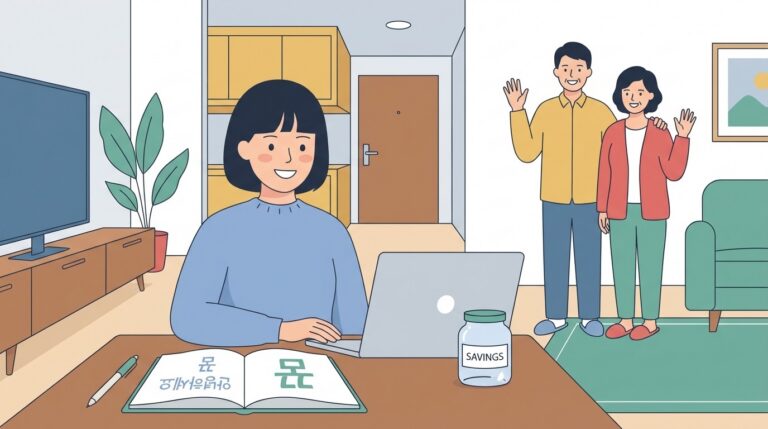
Winning Parents Over: Talking About Career Independence in Korean
Phase 1: Empathy & Narrative Opening
안녕하세요! 매일한글 에디터입니다. (Hello! I’m your Daily Hangul editor.)
Have you ever found yourself in the living room of your dreams, frozen in silence because your parents asked, “So, what are your plans for the future?” If you grew up with traditional expectations—or if you have watched K-dramas like Record of Youth (청춘기록) or Start-Up (스타트업)—you know this heavy tension all too well. In Korean culture, parents often express love through worry. When Sae-ro-yi in Itaewon Class or Hye-jun in Record of Youth chose unconventional paths, their parents did not doubt their passion; they were terrified their children might face cold nights and unpaid bills.
Many of our intermediate learners tell us: “I want to explain to Korean friends or my in-laws that I’m making my own way, but saying ‘I follow my passion’ sounds a bit immature or defiant in Korean.” That is because in Korea, the most respectful and persuasive response is not just an impassioned argument; it is showing steady, reliable self-reliance.
Today, we are mastering one of the most heartwarming milestones in adulthood: explaining how you handled your expenses, saved steadily, and earned your family’s genuine cheer. Master this lesson, and you won’t just learn intermediate grammar—you will understand the tender heart of Korean family dynamics.
Phase 2: Core Expressions Deep Dive
1. 스스로 해결하다 (Seuseuro haegyeolhada)
- Pronunciation: [Seu-seu-ro hae-gyeol-ha-da] (Think of ‘seu’ like the start of ‘sir’, and ‘haegyeol’ sounds like ‘heh-gyeol’)
- Meaning: Literally “to solve by oneself” | Actual Nuance: To take full financial and personal responsibility without leaning on others.
- K-Culture Moment: Heard when a young adult proudly tells their older sibling or mentor in a drama that they paid their monthly rent (월세) with their own earnings without asking their parents for a single won.
- Editor’s Insight: Combining
스스로(by oneself) with해결하다(to solve/manage) conveys mature accountability. It reassures elders that you are not being reckless.- Situation Spectrum: Casual: ✅ | Semi-formal: ✅ | Formal: ✅
- 🤔 Think About It: In English, we often say “I became independent.” In Korean, framing life costs as problems you can “solve on your own” highlights proactive problem-solving. How does your culture view self-reliance?
2. 보람을 느끼다 (Boram-eul neukkida)
- Pronunciation: [Bo-ram-eul neu-kki-da] (Rhymes with ‘go-calm’ + ‘nuh-kki-da’)
- Meaning: Literally “to feel worth/fruitfulness” | Actual Nuance: To experience deep, fulfilling accomplishment from your effort.
- K-Culture Moment: Often shared over a late-night dinner of samgyeopsal after completing a tough project, expressing why you stay up late working even when the salary isn’t sky-high yet.
- Editor’s Insight: Koreans value
보람(meaningful purpose) immensely. When you tell your parents you feel보람, it shows your job feeds your soul, not just your stomach.- Situation Spectrum: Casual: ✅ | Semi-formal: ✅ | Formal: ✅
- 🤔 Think About It: Is job fulfillment considered a luxury or a baseline expectation among older generations in your home country?
3. 점차 응원해 주시다 (Jeomcha eung-wonhae jusida)
- Pronunciation: [Jeom-cha eung-won-hae ju-si-da] (Jeom-cha sounds like ‘jump-cha’ with a soft j; eung-won sounds like ‘oong-won’)
- Meaning: Literally “to gradually give cheer/support (honorific)” | Actual Nuance: To slowly open one’s heart and transition from skepticism into genuine encouragement.
- K-Culture Moment: Used in interviews where successful creators or entrepreneurs reflect on their early days when their parents were initially skeptical.
- Editor’s Insight: Notice
점차(gradually) and주시다(the honorific form of giving). It acknowledges that your parents needed time to understand, showing patience and filial respect.- Situation Spectrum: Casual: ⚠️ (Use
응원해 줬어) | Semi-formal: ✅ | Formal: ✅- 🤔 Think About It: Why does Korean grammar make you change the verb ending depending on who is performing the act of cheering?
Phase 3: Textbook Korean vs. Real Korean
Situation 1: Explaining that you pay your own bills and save up
- 📖 교과서 한국어: 저는 돈을 벌어서 생활비를 내고 저축합니다. (Jeoneun doneul beoreoseo saenghwalbireul naego jeochukhamnida.) — I earn money, pay living expenses, and save.
- 🗣️ 진짜 한국어: 매달 생활비는 제가 다 감당하고, 적금도 조금씩 붓고 있어요. (Maedal saenghwalbineun jega da gamdanghago, jeokgeumdo jogeumssikEngine butgo isseoyo.)
- 💡 왜 다를까?: Real speakers use
감당하다(to shoulder/handle) and the vivid verb적금을 붓다(literally “to pour into a savings installment”) rather than textbook verbs like내다or저축하다.
Situation 2: Describing how your parents came around to your career choice
- 📖 교과서 한국어: 부모님이 저의 직업을 허락하셨습니다. (Bumonimi jeoui jigeobeul heorakhasyeosseumnida.) — My parents permitted my occupation.
- 🗣️ 진짜 한국어: 이제는 부모님도 마음을 여시고 엄청 밀어주세요! (Ijeneun bumonimdo maeumeul yeosigo eomcheong mireojuseyo!)
- 💡 왜 다를까?: Career choice among adult children is rarely an official “permission” (허락). Koreans say someone “opens their heart” (마음을 열다) and “pushes/backs you up” (밀어주다).
Phase 4: K-Culture Deep Dive & Non-Verbal Manners
4-1. Nunchi (눈치) & Gestures
When discussing your finances or career with Korean elders or close sunbaes (seniors):
* The Modest Smile (겸손의 미소): Do not boast loudly about how much money you save. Slightly lower your chin and smile warmly when saying “제가 감당하고 있어요.” (Jega gamdanghago isseoyo.)
* Two Hands Rule: If you are treating your parents to a meal or giving them a small gift envelope (용돈) from your first savings, always present it with both hands, lightly supporting your right forearm with your left hand.
4-2. Cultural Code: From ‘효도’ to ‘밥벌이’
In traditional Korea, hyodo (filial piety) meant passing government exams or joining a prestigious conglomerate (대기업). Today, however, younger Koreans redefined success around bapbeori (밥벌이)—the dignified act of feeding oneself and doing work that has heart. Parents worry because economic security in Korea is fierce. When you demonstrate that your work sustains your life practically, their anxiety dissolves into proud respect.
Phase 5: Real-World Roleplay Scenario
- Setting: A warm, indie coffee shop near Mangwon Station. Min-woo is catching up with his former mentor and trusted sunbae, Su-jin.
- Characters:
- Su-jin (수진): Experienced designer, empathetic and observant.
- Min-woo (민우): Left a corporate role to become a freelance UI illustrator.
— Dialogue Start —
- 수진: 민우 씨, 프리랜서로 전향한 지 벌써 반년 됐죠? 부모님 걱정은 좀 덜어드렸어요?
(Min-woo ssi, peuriraenseoro jeonhyanghan ji beolsseo bannyeon dwaetjyo? Bumonim geokjeong-eun jom deoreodeuryeosseoyo?)
“Min-woo, it’s already been six months since you went freelance, right? Have you eased your parents’ worries a bit?”
🎭 행동 지문: [따뜻한 라떼 잔을 두 손으로 감싸 쥐며 걱정 어린 눈빛으로 묻는다] -
민우: 네, 처음엔 반대가 심하셨는데 지금은 분위기가 완전히 달라졌어요.
(Ne, cheoeumen bandaega simhasyeonneunde jigeumeun bunwigiga wanjeonhi dallajyeosseoyo.)
“Yes, they were very against it at first, but the mood has completely shifted now.”
🎭 행동 지문: [쑥스러운 듯 머리를 살짝 긁적이며 미소 짓는다] -
수진: 정말요? 어떻게 설득했어요? 비결이 뭐예요?
(Jeongmalyo? Eotteoke seoldeukhaesseoyo? Bigyeori mwoyeyo?)
“Really? How did you convince them? What’s your secret?”
🎭 행동 지문: [눈을 반짝이며 몸을 테이블 쪽으로 기울인다] -
민우: 매달 생활비를 스스로 해결하고 조금씩 저축하는 모습을 보여 드렸거든요.
(Maedal saenghwalbireul seuseuro haegyeolhago jogeumssik jeochukhaneun moseubeul boyeo deuryeotgeodeunyo.)
“I showed them that I handle my living expenses every month and save bit by bit.”
🎭 행동 지문: [담담하지만 확신에 찬 목소리로 또박또박 말한다] -
수진: 와, 말보다 행동으로 먼저 보여줬군요. 대단해요.
(Wa, malboda haengdong-euro meonjeo boyeojwotgunyo. Daedanhaeyo.)
“Wow, you showed them with actions before words. That is truly impressive.”
🎭 행동 지문: [고개를 끄덕이며 진심으로 감탄하는 표정을 짓는다] -
민우: 게다가 제 일에서 보람을 느끼는 걸 보시더니 부모님도 점차 응원해 주셨어요.
(Gedaga je il-eseo borameul neukkineun geol bosideoni bumonimdo jeomcha eung-wonhae jusyeosseoyo.)
“On top of that, seeing how fulfilled I felt in my work, they gradually came to cheer me on.”
🎭 행동 지문: [가슴 한구석이 벅차오르는 듯 편안하게 웃는다] -
수진: 부모님께는 통장 잔고보다 자식이 행복한 게 최고의 안심이죠.
(Bumonimkkeneun tongjang jango-boda jasigi haengbokhan ge choegoui ansim-ijyo.)
“For parents, seeing their child happy is more reassuring than any bank balance.”
🎭 행동 지문: [민우의 어깨를 가볍게 툭 치며 격려한다] -
민우: 맞아요. 이번 주말에는 제 첫 수입으로 부모님 맛있는 저녁 사드리려고요.
(Majayo. Ibeon jumareneun je cheot su-ibeuro bumonim masinneun jeonyeok sadeuriryeogoyo.)
“Exactly. This weekend, I plan to treat them to a delicious dinner with my earnings.”
🎭 행동 지문: [주머니에서 지갑을 살짝 매만지며 뿌듯하게 웃는다]
— Dialogue End —
🔀 인터랙티브 분기점 (Interactive Choice)
If Su-jin asks you, “부모님이 계속 반대하시면 어떡할 거예요?” (What if your parents keep opposing your dreams?), how will you answer?
- Option A: “제 인생인데 왜 부모님 눈치를 봐야 해요? 그냥 신경 안 써요.” (It’s my life, why should I care? I just ignore them.)
- Feedback (Risk): Sounds confrontational and dismissive of relational harmony in Korean culture.
- Option B: “제가 스스로 밥벌이하고 즐겁게 일하는 모습을 꾸준히 증명해 보여야죠.” (I should consistently prove it by supporting myself and working happily.)
- Feedback (Best!): Highly mature, proactive, and perfectly aligns with Korean relational values.
- Option C: “포기하고 그냥 부모님이 원하시는 공무원 시험 준비해야죠.” (I guess I should give up and study for the civil service exam.)
- Feedback (Bad): Passive and overly defeatist.
Phase 6: 10초 감정 섀도잉 드릴 (Shadowing Drill)
Practice these emotional rhythm patterns aloud. Pay attention to the pauses marked with /.
[😌 안도하며 뿌듯하게 (Relieved & Proud)]
매달 생활비를 / 스스로 해결하고 / 조금씩 저축하고 있어요.
(Maedal saenghwalbireul / seuseuro haegyeolhago / jogeumssik jeochukhago isseoyo.)
“I handle my living expenses monthly / on my own / and save little by little.”-
[✨ 눈을 반짝이며 당당하게 (Sparkling Eyes & Confident)]
제가 하는 일에서 / 진짜 보람을 / 느끼고 있거든요.
(Jega haneun il-eseo / jinjja borameul / neukkigo itgeodeunyo.)
“Because in the work I do / true fulfillment / I am feeling.” -
[🥺 진심 어린 목소리로 뭉클하게 (Heartfelt & Sincere)]
그 모습을 보시더니 / 부모님도 / 점차 응원해 주셨어요.
(Geu moseubeul bosideoni / bumonimdo / jeomcha eung-wonhae jusyeosseoyo.)
“Seeing that side of me / my parents too / gradually began cheering me on.”
Phase 7: K-Culture Mini Dictionary
- 밥벌이 (Bapbeori)
- Translation: Earning one’s rice / Making a living.
- Real Context: A grounded, affectionate term Koreans use for their everyday job. Saying “내 밥벌이는 내가 한다” (I earn my own rice) is a badge of authentic adult pride.
- 효도 (Hyodo)
- Translation: Filial piety.
- Real Context: Caring for one’s parents. In modern urban Korea, not asking for financial bailouts and living healthy and happy is considered the best form of hyodo.
- 적금 (Jeokgeum)
- Translation: Installment savings account.
- Real Context: Putting a fixed amount away each month. In Korea, opening a jeokgeum is the quintessential symbol of becoming financially sensible.
- 인정받다 (Injeongbatda)
- Translation: To be recognized / acknowledged.
- Real Context: Often used when colleagues or parents finally acknowledge your effort and skill. “드디어 부모님께 인정받았어요” (I was finally recognized by my parents).
Phase 8: Expat & Traveler Survival Kit
TOP 3 Survival Phrases
- 걱정 마세요, 제 앞가림은 제가 잘하고 있어요.
(Geokjeong maseyo, je apgarimeun jega jalhago isseoyo.)
Pro Tip: “앞가림하다” means to take care of one’s own affairs. Perfect for polite boundaries with nosy relatives or mentors. - 부모님 덕분에 제 길을 찾았어요.
(Bumonim deokbune je gireul chajasseoyo.)
Pro Tip: “Thanks to you, I found my path.” Giving credit back to your parents creates immense emotional warmth. - 이번 달에 적금 만기 됐어요!
(Ibeon dare jeokgeum mangi dwaesseoyo!)
Pro Tip: “My installment savings matured this month!” A great celebration sentence with Korean friends.
Editor’s Travel Note
When you live in Korea, taking charge of your finances starts with local apps. Check our 카카오뱅크 외국인 계좌 개설 가이드 to open a savings account without tedious paperwork, and track your daily spending with 네이버 페이 현장 결제 가이드.
Phase 9: 한 발 더 깊이 (One Step Deeper)
In Western cultures, independence is often celebrated as a sharp cut: turning 18, packing your bags, and answering to no one. But in Korea’s relational fabric (관계주의), independence is not about detachment; it is about reassurance. Korean parents worry relentlessly about whether their children will survive in an ultra-competitive society. When you prove that your career choice provides stability and joy, you are not simply asserting autonomy—you are freeing your parents from the lifelong burden of worry.
💬 Your Turn: How do people in your culture convince their parents when choosing a non-traditional career? Tell us in the comments below!
Phase 10: FAQ & Avoiding Misunderstandings
Q: Can I use “스스로 해결하다” when talking to my boss?
A: Yes! When reporting a challenge you resolved on your own, you can say: “이 문제는 제가 스스로 해결해 보았습니다.” (I tried solving this issue on my own.) It highlights initiative.
Q: What is the difference between 저금 (jeogeum) and 저축 (jeochuk)?
A: 저금 is the simple act of putting money aside (like coins into a piggy bank or cash into an account). 저축 is a broader economic term that includes structured savings, interest-bearing deposits, and wealth-building habits.
Q: How do I say “I got a promotion and treated my parents” naturally?
A: Say: “승진해서 부모님 맛있는 거 사드렸어요.” Using 사드리다 (honorific form of buying for someone) is essential.
🚨 Common Mistakes Board
- Saying “부모님이 저를 지원해요” (Direct translation of ‘My parents support me’):
- Correction:
지원하다sounds like institutional financial aid or applying for a job. Use응원해 주세요(cheer on emotionally) or도와주세요(help).
- Correction:
- Using 반말 with parents when translating thoughts:
- Correction: When talking about your parents to others, use honorific verbs:
응원해 주셨어요instead of응원해 줬어.
- Correction: When talking about your parents to others, use honorific verbs:
- Confusing ‘보람’ with ‘재미’:
- Correction:
재미is just fun/entertainment;보람is deep fulfillment. Writing code for 10 hours may not be pure재미, but launching the app brings huge보람.
- Correction:
Phase 11: Action Missions
- 🥉 Bronze Mission: Record a 10-second voice memo saying: “매달 생활비를 스스로 해결하고 있어요.” (I handle my monthly living expenses myself.)
- 🥈 Silver Mission: Write a comment or Instagram story about your job using the pattern:
[My Job]에서 보람을 느껴요. - 🥇 Gold Mission: Watch an episode of a K-Drama with family conflict (e.g., Castaway Diva or Record of Youth) and transcribe one sentence where a character explains their passion to their family.
- 🎮 K-Culture Mission: Look up the lyrics of the indie song 퇴근길 (Way Back Home) or 옥상달빛 (Rooftop Moonlight) songs to see how modern Korean youths sing about daily hard work and small achievements.
Phase 12: Interactive Quiz Challenge
1. Situational Judgment:
You want to tell your Korean friend that your parents were doubtful at first, but now they back your music career. Which sentence is best?
* (A) 부모님이 제 음악을 무시했어요.
* (B) 처음엔 걱정하셨지만, 지금은 점차 응원해 주시는 편이에요.
* (C) 부모님이 음악 하라고 명령했어요.
2. Fill-in-the-Blank:
“월급을 받으면 생활비부터 (____) 해결하고 남은 돈을 저축해요.”
* Hint: An adverb meaning “by oneself / independently”
3. Culture True/False:
In Korea, treating your parents to dinner with your first paycheck (첫 월급) is a classic symbol of adult independence. (True / False)
Click to view answers and explanations
- Answer: (B) – (B) captures the natural nuance of parents transitioning from worry to gentle support. (A) is overly harsh, and (C) means “commanded.”
- Answer: 스스로 (seuseuro) – Translates to “handling it by myself.”
- Answer: True – Known as ‘첫 월급으로 부모님 빨간 내복 / 식사 대접’ (buying red thermal underwear or treating dinner with your first salary), it is an iconic rite of passage!







