

Phase 1: Empathy (Story-Driven Opening)
안녕하세요! 매일한글 에디터입니다. (Hello! I’m your Daily Hangul editor!)
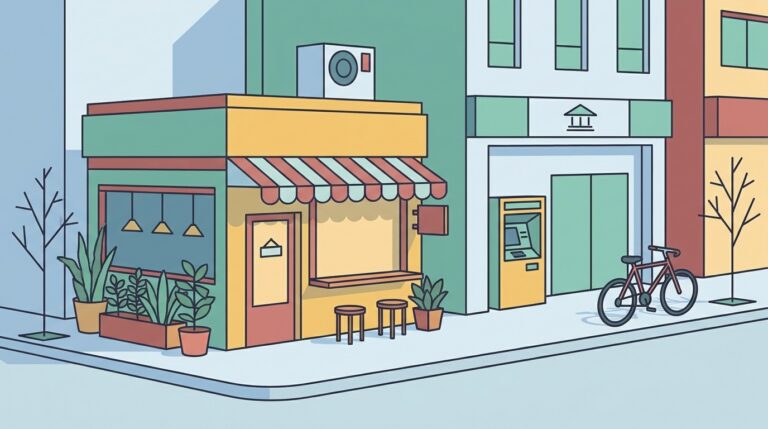
Picture this: You just landed in Seoul, your playlist is buzzing with NewJeans, and you have bookmarked the aesthetic cafe featured in your favorite K-drama in the trendy alleys of Seongsu-dong. You step out of the subway station, pull up Google Maps, and… nothing moves properly. Korean navigation relies heavily on local map engines, and street signs can quickly blur together when you are an A1 beginner. Your phone battery is dipping to 12%, and you desperately need a warm vanilla latte and a seat. You spot a tall, blue bank building—a landmark. You know the cafe should be right beside it, but how do you ask a friendly passerby or confirm you are in the right spot without panicking?
If you have ever frozen on a busy Seoul street corner trying to connect words in your head, take a deep breath. Over the past decade tutoring global Korean learners, I have seen hundreds of students struggle with basic spatial words. Today, we will master the simple, life-saving pattern: “은행 옆에 카페가 있어요” (There is a cafe next to the bank). By the end of this guide, you will effortlessly point out locations, understand quick directions from locals, and walk the streets of Seoul with pure confidence!
Phase 2: Core Expressions In-Depth
1. 옆에 있어요 (Yeop-e isseoyo)
- Pronunciation: [Yeop-e isseoyo] (Sounds like “Yup-eh ee-sseo-yo”—think of “Yup!” with an “eh” sound at the end)
- Meaning: Literal: “At the side, it exists” | Actual Nuance: “It’s right beside / next to [it].”
- K-Culture Moment: You hear this constantly in workplace K-dramas when an intern asks a senior colleague where the printer paper or the pantry is: “정수기 옆에 있어요!” (It’s next to the water purifier!).
- Editor’s Insight: The word 옆 (yeop) specifically means the side flank. Adding the location particle 에 (e) marks where an object rests.
- Situation Spectrum: Casual: ⚠️ (Use ‘옆에 있어’ with close friends) | Semi-formal: ✅ (Polite everyday standard) | Formal: ✅ (Clear and respectful)
- 🤔 Think About It: English says “next to“, moving outwards. Korean places the anchor noun first, then tags “side-at exists.” How does anchoring the landmark first change how you view your surroundings?
2. 은행 옆에 카페가 있어요 (Eunhaeng yeop-e kape-ga isseoyo)
- Pronunciation: [Eun-haeng yeop-e ka-pe-ga is-seo-yo] (Eun-haeng sounds like “oon-hang”)
- Meaning: Literal: “Bank side-at cafe exists” | Actual Nuance: “There is a cafe next to the bank.”
- K-Culture Moment: In travel vlogs or variety shows like Running Man, members call each other to rendezvous: “Where are you?” “I’m at the cafe right next to the bank!”
- Editor’s Insight: Notice the word order formula: [Landmark] + [Direction] + 에 + [Target Object] + 이/가 + 있어요. Master this formula, and you can locate anything from convenience stores to subway exits.
- Situation Spectrum: Casual: ⚠️ | Semi-formal: ✅ | Formal: ✅
- 🤔 Think About It: Korean sentences build from the biggest reference point down to the specific item. What does this reveal about Korean contextual culture?
3. 앞 / 뒤 / 위 / 아래 (Ap / Dwi / Wi / Arae)
- Pronunciation: [Ap / Dwi / Wi / Ah-rae] (Ap sounds like “Up” with a crisp ‘p’; Dwi rhymes with “twee”; Wi sounds like “we”; Arae sounds like “ah-reh”)
- Meaning: Front / Back (Behind) / Up (Above) / Down (Below or Underneath)
- K-Culture Moment: Think of K-Pop dance practice videos where the dance instructor shouts spatial cues: “앞으로! 뒤로!” (To the front! To the back!).
- Editor’s Insight: These four monosyllabic and disyllabic spatial roots combine with ~에 있어요 just like 옆: “은행 앞에 있어요” (It is in front of the bank).
- Situation Spectrum: Casual: ✅ | Semi-formal: ✅ | Formal: ✅
- 🤔 Think About It: In many languages, “up” and “down” carry strong hierarchical metaphors. Notice how physical and grounding these basic directional words feel in Korean.
Phase 3: Textbook Korean vs. Real Korean
Situation 1: Describing location simply
- 📖 교과서 한국어 (Textbook): 카페는 은행의 옆에 위치하고 있습니다. (Kapeneun eunhaeng-ui yeop-e wichi-hago itseumnida. / The cafe is situated beside the bank.)
- 🗣️ 진짜 한국어 (Real-life): 은행 바로 옆에 있어요! (Eunhaeng baro yeop-e isseoyo! / It’s right next to the bank!)
- 💡 왜 다를까? (Why is it different?): Textbook Korean overuses possessive markers like “의 (ui)” and stiff Sino-Korean verbs like “위치하다 (to be located)”. In daily life, Koreans drop unnecessary particles and sprinkle in vivid adverbs like 바로 (baro – right/immediately) for clarity.
Situation 2: Asking for directions on the street
- 📖 교과서 한국어 (Textbook): 실례지만, 카페가 어디에 존재합니까? (Sillyejiman, kape-ga eodie jonjaehamnikka? / Excuse me, where does the cafe exist?)
- 🗣️ 진짜 한국어 (Real-life): 저기요, 혹시 이 근처에 카페 있어요? (Jeogiyo, hoksi i geuncheo-e kape isseoyo? / Excuse me, by any chance is there a cafe around here?)
- 💡 왜 다를까? (Why is it different?): Native speakers rarely say “존재하다 (exist)” for physical shops. Starting with 저기요 (jeogiyo) and softening with 혹시 (hoksi – by any chance) feels natural, warm, and distinctly Korean.
Phase 4: K-Culture Deep Dive & Non-Verbal Manners
4-1. 눈치 (Nunchi) & Gestures
When asking for or giving directions in Korea, pointing with a single extended index finger directly at a person or right in front of someone’s face can feel aggressive. Instead, use an open hand with fingers together, palm tilted slightly upward, gesturing toward the landmark. If you are standing close to someone, maintain a gentle head tilt and avoid intense, unblinking eye contact—a warm smile paired with a slight nod conveys instant respect and approachability.
4-2. The Korean Landmark Navigational Code
Korea’s address system underwent a massive shift from traditional lot numbers (지번) to road names (도로명주소). However, in everyday conversation, locals navigate by major commercial landmarks: banks (은행), convenience stores (편의점), subway station exits (출구), and pharmacy signs (약국). Banks like KB Kookmin, Shinhan, and Woori have bright, unmistakable signs, making them the ultimate street anchors. When meeting friends, Koreans rarely say “Meet me at 12 Eulji-ro”; they say: “을지로입구역 2번 출구 앞 은행 옆에서 봐!” (See you next to the bank in front of Euljiro 1-ga Station Exit 2!).
Phase 5: Real-Life Roleplay Scenario
Setting: Outside Exit 3 of Hongik University Station on a crisp autumn afternoon. You are trying to find “Cafe Haru”. You spot Min-jun, a university student waiting for a friend while holding a warm beverage.
- You: 저기요, 실례지만 길 좀 물어봐도 될까요? (Jeogiyo, sillyejiman gil jom mureobwado doelkkayo?)
🎭 행동 지문: Hands clasped lightly in front, offering a polite 15-degree bow.
(Excuse me, could I ask for directions?) - Min-jun: 네! 어디 찾으세요? (Ne! Eodi chajeuseyo?)
🎭 행동 지문: Pulls out one earbud and turns toward you with a friendly smile.
(Sure! Where are you looking for?) - You: 혹시 카페 하루가 어디에 있어요? (Hoksi kape haru-ga eodie isseoyo?)
🎭 행동 지문: Showing the cafe's photo on your smartphone screen.
(By any chance, where is Cafe Haru?) - Min-jun: 아, 카페 하루요? 저기 큰 은행 보이세요? (A, kape haruyo? Jeogi keun eunhaeng boiseyo?)
🎭 행동 지문: Extends an open hand toward a tall green bank across the crosswalk.
(Ah, Cafe Haru? Do you see that big bank over there?) - You: 네, 은행 보여요. (Ne, eunhaeng boyeoyo.)
🎭 행동 지문: Nodding while following his hand with your eyes.
(Yes, I see the bank.) - Min-jun: 은행 바로 옆에 카페가 있어요. 1분만 걸어가시면 돼요. (Eunhaeng baro yeop-e kape-ga isseoyo. Il-bun-man georeogasimyeon dwaeyo.)
🎭 행동 지문: Points his open palm slightly beside the bank with an encouraging smile.
(There is a cafe right next to the bank. You only need to walk for one minute.) - You: 아! 은행 옆이군요! 정말 감사합니다. (A! Eunhaeng yeop-igunyo! Jeongmal gamsahamnida.)
🎭 행동 지문: Brightening up with relief and bowing politely.
(Ah! Next to the bank! Thank you so much.) - Min-jun: 아니에요, 좋은 하루 보내세요! (Anieyo, joeun haru bonaeseyo!)
🎭 행동 지문: Waving hand gently in dismissal and nodding.
(No problem at all, have a wonderful day!)
🔀 Interactive Decision Point
Min-jun points across the street. How do you respond to confirm?
* Option A: “은행 뒤에 있어요?” (Eunhaeng dwi-e isseoyo? / Is it behind the bank?)
* Option B: “은행 옆에 있어요? 감사합니다!” (Eunhaeng yeop-e isseoyo? Gamsahamnida! / It’s next to the bank? Thank you!)
* Option C: “야, 카페 어디야?” (Ya, kape eodiya? / Hey, where’s the cafe?)
Feedback:
* Option A (Risk): You mixed up ‘뒤’ (back) with ‘옆’ (side). Min-jun might correct you again, causing minor confusion.
* Option B (Best): Perfect! You correctly mirrored his spatial word (옆) and closed with polite gratitude.
* Option C (Bad): Extreme casual talk (반말) toward a stranger. Highly impolite!
Phase 6: 10-Second Emotion Shadowing Drill
Practice these lines out loud. Notice the pauses (/) and embody the emotion!
[🤔 Curious & Polite]저기요, / 혹시 이 근처에 / 은행 있어요? (Jeogiyo, / hoksi i geuncheo-e / eunhaeng isseoyo? / Excuse me, by any chance is there a bank near here?)[💡 Realization & Clarity]아! / 은행 바로 옆에 / 카페가 있어요! (A! / eunhaeng baro yeop-e / kape-ga isseoyo! / Ah! There is a cafe right next to the bank!)[😊 Relieved & Cheerful]찾았어요! / 편의점 뒤에 / 있어요! (Chajasseoyo! / pyeon-ui-jeom dwi-e / isseoyo! / I found it! It is behind the convenience store!)
Phase 7: K-Culture Mini Dictionary
- 옆 (Yeop) | Side / Beside | The fundamental spatial noun for flank. In daily texting, Koreans often say “내 옆으로 와” (Come to my side).
- 은행 (Eunhaeng) | Bank | Not only a financial building, but also a homophone for “ginkgo nut.” Bank branches are Seoul’s top visual waypoints.
- 카페 (Kape) | Cafe | South Korea has one of the highest numbers of cafes per capita in the world. It serves as study hall, meeting lounge, and date venue.
- 바로 (Baro) | Right / Directly / Immediately | A magical booster word. Placing it before a location (“바로 옆에”) means “immediately next to” without any gap.
Phase 8: Traveler’s Survival Kit
Top 3 Survival Expressions
- 여기 어디예요? (Yeogi eodiyeyo?)
Pro Tip: Pinpoint your current spot on someone’s screen if your map app glitches. - [장소] 옆에 있어요? ([Jangso] yeop-e isseoyo?)
Pro Tip: Replace [장소] with any landmark: “지하철역 옆에 있어요?” (Is it next to the subway station?). - 가까워요? (Gakkawoyo?)
Pro Tip: Quick way to ask “Is it close?” before committing to a 20-minute walk.
Editor’s Travel Note
Google Maps has limited walking navigation in Korea due to national data security regulations. Before boarding your flight, make sure to complete your 네이버 지도 앱 다운로드 (Naver Map app download). It provides hyper-accurate English walking paths, subway exit numbers, and landmark-adjacent descriptions.
Phase 9: One Step Deeper (Reflection)
Korean spatial language mirrors its relational culture. Rather than viewing an address as an isolated coordinate on a grid, Korean speakers define spaces through their connection to shared social hubs—the local mart, the neighborhood bank, or the train exit. You are never just at a number; you are situated relative to where the community gathers.
💬 Your Turn: In your hometown, do you give directions using street names or prominent landmarks? Share your thoughts in the comments below!
Phase 10: FAQ & Common Mistakes
Q: What is the difference between ‘옆’ (yeop) and ‘근처’ (geuncheo)?
A: 옆 (yeop) means strictly adjacent or right next to the object. 근처 (geuncheo) means in the general neighborhood or vicinity. If a cafe is across the street, it is 근처, not 옆!
Q: Can I put the cafe first in the sentence?
A: Yes! You can say: “카페는 은행 옆에 있어요” (As for the cafe, it is next to the bank). This shifts the topic to the cafe first.
Q: How do I say “on the second floor”?
A: Use the counter 층 (cheung): “은행 위, 2층에 있어요” (Above the bank, it is on the 2nd floor).
🚨 Common Mistakes Warning Board
- ❌ Mistake 1: Saying “카페 옆 은행” when you mean “next to the bank.”
- Correct Action: Keep the anchor noun first: 은행 옆 (Next to the bank).
- ❌ Mistake 2: Dropping the location particle 에.
- Correct Action: Always attach 에 to spatial words: 옆에 (at the side), 앞에 (in front).
- ❌ Mistake 3: Confusing 위 (Wi – Up) with 뒤 (Dwi – Back) due to similar vowel sounds.
- Correct Action: Round your lips cleanly for “Wi” and start with a soft ‘d’ for “Dwi”.
Phase 11: Action Missions
- 🥉 Bronze Mission (Solo Practice): Stand in your living room and name 3 objects using
[Object] 옆에 있어요. - 🥈 Silver Mission (Social Share): Snap a photo of your desk or coffee setup, post it to your Instagram stories, and caption it in Korean:
노트북 옆에 커피가 있어요!(There is coffee next to the laptop!). - 🥇 Gold Mission (Real Life): Next time you watch a K-drama, listen actively for either 옆에, 앞에, or 뒤에, and write down the sentence in your study notebook.
- 🎮 K-Culture Mission: Search for your favorite K-pop group’s agency building on a Korean map app and identify what convenience store or landmark sits right next to it!
Phase 12: Interactive Quiz Challenge
- Situational Judgment: You want to tell someone your hotel is located right in front of the subway station. Which sentence is correct?
- (A) 호텔 뒤에 역이 있어요.
- (B) 지하철역 앞에 호텔이 있어요.
- (C) 호텔 아래에 역이 있어요.
- Fill in the Blank: “편의점 ______ 식당이 있어요.” (There is a restaurant next to the convenience store.)
- (A) 위에
- (B) 뒤에
- (C) 옆에
- True or False: In Korea, pointing with a single index finger directly into someone’s face while giving directions is considered warm and friendly.
- (True / False)
Click to view answers and explanations!
- Answer: (B) 지하철역 앞에 호텔이 있어요. (지하철역 = subway station, 앞 = front).
- Answer: (C) 옆에 (Yeop-e means “next to / beside”).
- Answer: False. Always use an open palm with gentle hand gestures when showing directions in Korean culture!







