

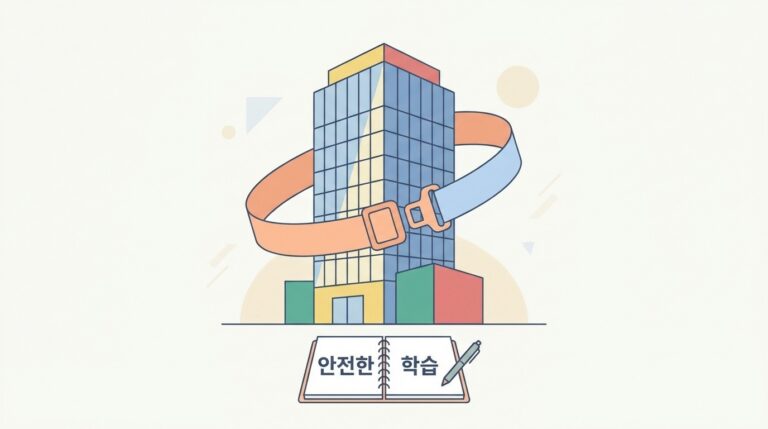
Navigating Corporate Governance: Why Compliance Is Your Company’s Ultimate Seatbelt
Phase 1: Empathy (Story-Driven Opening)
안녕하세요! 매일한글 에디터입니다. (Hello! This is your Daily Hangul editor.)
Picture this classic K-Drama workplace scene: You are sitting in an executive conference room in Yeouido, surrounded by glass walls reflecting the Han River. The Vice President slides an urgent supplier agreement across the table, tapping his pen impatiently. “We need to cut subcontractor costs by 15% immediately to hit quarterly targets. Just draft a revision memo and make them sign.” In your mind, sirens blare. You know that under South Korea’s strict Subcontract Act (Hado-geup-beop) and Fair Trade regulations, unilaterally forcing a unit price cut without formal negotiation constitutes a severe abuse of superior bargaining position. But how do you voice this without sounding like an obstructive bureaucrat who kills momentum?
Many of our advanced C1 learners working in multinational corporations and Korean conglomerates (chaebols) tell us their greatest anxiety isn’t drafting legal contracts—it is managing the high-stakes cultural diplomacy of 준법경영 (Corporate Compliance). When you treat compliance as a defensive weapon or a pure list of “don’ts,” executives dismiss you as an operational roadblock. However, when you reframe compliance as a high-speed vehicle’s essential seatbelt, the whole conversation shifts. Based on real-life advisory cases and feedback from foreign legal counsels operating in Seoul, this guide equips you with nuanced, natural, and authoritative Korean expressions that protect both your company and your professional relationships.
Phase 2: Core Expressions Deep Dive (핵심 표현 3선)
1. 준법경영은 규제가 아니라 안전벨트예요 (Junbeop-gyeong-yeong-eun gyuje-ga anira anjeonbelteu-yeyo)
- Pronunciation: Jun-beop-gyeong-yeong-eun gyu-je-ga a-ni-ra an-jeon-bel-teu-ye-yo. (Analogy: Pronounce jun-beop like the English word “June” snapped short, followed by “bup” like a soft “cup”.)
- Meaning: “Compliance is not a regulation, but a seatbelt.” (Metaphorical nuance: It is the prerequisite that enables the enterprise to accelerate safely without fatal crashes.)
- K-Culture Moment: Seen frequently in corporate boardroom dramas like Misaeng or Agency, where an internal auditor or legal strategist reframes ethical guidelines to an aggressive sales team.
- Editor’s Insight: The contrasting connector
-이/가 아니라(-i/ga anira) creates an immediate paradigm shift. In Korean corporate hierarchies, framing compliance around “safety and enablement” rather than “limitation” neutralizes executive resistance. - Situation Spectrum: Casual: ⚠️ | Semi-formal: ✅ | Formal: ✅
- 🤔 Think About It: Does your native corporate culture view compliance primarily as legal liability mitigation or as a foundational ethical brand asset?
2. 하도급법 위반 리스크를 사전에 차단해야 합니다 (Hado-geup-beop wiban riseukeureul sajeone chadanhaeya hamnida)
- Pronunciation: Ha-do-geup-beop wi-ban ri-seu-keu-reul sa-jeon-e cha-dan-hae-ya ham-ni-da. (Analogy: Cha-dan sounds like a swift karate chop: “chah-dahn”, indicating a definitive barrier.)
- Meaning: “We must preemptively block the risk of violating the Subcontract Act.”
- K-Culture Moment: Used by seasoned corporate counsels during risk audit meetings when warning departments against retroactive contract modifications.
- Editor’s Insight: The Sino-Korean word 차단 (chadan – cutoff/interception) carries immense weight. Pairing it with 사전에 (sajeone – beforehand/preemptively) displays proactive governance rather than reactive cleanup.
- Situation Spectrum: Casual: 🚫 | Semi-formal: ⚠️ | Formal: ✅
- 🤔 Think About It: Notice how Korean uses physical defensive terminology like “blocking” (차단) for systemic business risks. How does your language express proactive risk avoidance?
3. 상생 협력 모델을 구축합시다 (Sangsaeng hyeomnyeok modeureul guchukapsida)
- Pronunciation: Sang-saeng hyeom-nyeok mo-de-reul gu-chu-kap-si-da. (Analogy: Notice the nasal assimilation: hyeop-ryeok transforms into hyeom-nyeok in natural spoken flow.)
- Meaning: “Let us establish a win-win cooperative model.”
- K-Culture Moment: Prominently featured in press releases and CEO town halls when Korean conglomerates announce joint ESG initiatives with small-and-medium enterprises (SMEs).
- Editor’s Insight: 상생 (Sangsaeng)—literally “mutual living”—is the holy grail concept of modern Korean commerce. It demonstrates that the company is actively cultivating an ecosystem rather than exploiting primary suppliers.
- Situation Spectrum: Casual: 🚫 | Semi-formal: ✅ | Formal: ✅
- 🤔 Think About It: How does the Confucian value of community harmony (hyeon-gwang) influence commercial negotiations in Korea compared to Western shareholder-first models?
Phase 3: Textbook Korean vs. Real Korean
Situation 1: Declining an Unfair Supplier Squeeze
- 📖 교과서 한국어 (Textbook): 그 계약은 공정거래법에 어긋나기 때문에 변경할 수 없습니다. (Geu gyeyageun gongjeong-georaebeobe eogeunnagi ttaemune byeongyeonghal su eopseumnida. / “That contract cannot be changed because it violates Fair Trade Law.”)
- 🗣️ 진짜 한국어 (Real Native Nuance): 이 조건은 공정위 조사 시 단가 후려치기나 우월적 지위 남용으로 해석될 소지가 다분합니다. (I jogeoneun gongjeongwi josa si danka huryeochigina ueowoljeok jiwi namyong-euro haeseokdoel sojiga dabeunhamnida. / “This condition carries a significant risk of being interpreted as predatory price-slashing or abuse of superior position during a Fair Trade Commission audit.”)
- 💡 왜 다를까? (Why the Difference?): Saying “it violates the law” directly sounds accusatory and unsophisticated at the executive level. Using clinical regulatory terms like 우월적 지위 남용 (abuse of superior position) coupled with hedging phrases like -ㄹ 소지가 다분합니다 (high likelihood of being interpreted as) shifts the onus from personal blame to regulatory scrutiny.
Situation 2: Urging Strict Internal Anti-Collusion Controls
- 📖 교과서 한국어 (Textbook): 경쟁사와 가격을 맞추는 것은 불법입니다. (Gyeongjaengsa-wa gagyeogeul matchuneun geoseun bulbeobimnida. / “Fixing prices with competitors is illegal.”)
- 🗣️ 진짜 한국어 (Real Native Nuance): 사소한 정보 교환도 담합 의혹을 살 수 있으니, 공식적인 가이드라인을 철저히 따라야 합니다. (Sasohan jeongbo gyohwando damhap uihogeul sal su isseuni, gongsikjeogin gaideuraineul cheoljeohi ttaraya hamnida. / “Even trivial information exchanges can invite collusion suspicions, so we must adhere strictly to official compliance guidelines.”)
- 💡 왜 다를까? (Why the Difference?): In South Korea, 담합 (collusion/price-fixing) is strictly policed under Fair Trade enforcement. True business insiders advise colleagues by highlighting appearances of wrongdoing (의혹을 사다) rather than bluntly stating that someone is a criminal.
Phase 4: K-Culture Deep Dive & Non-Verbal Manners
4-1. Nunchi (눈치) & Gestures in Compliance Auditing
When delivering compliance warnings or discussing legal vulnerabilities with Korean executives, direct pointing, sharp head-shaking, or crossing arms will trigger defensiveness. Instead:
* The Double-Hand Document Hold: Always present contract revisions or audit summaries holding the tablet or folder with both hands, thumbs parallel, head bowed slightly at 15 degrees.
* Eye-Tracking Politeness: Maintain eye contact when listening to operational demands, but cast your gaze down slightly toward the document when stating statutory penalties. This directs negative emotional tension toward the paper, not the colleague.
* Hedging Intonation: End advisory warnings with soft terminal pitch contours (e.g., “~검토해 볼 필요가 있겠습니다”) rather than declarative finality.
4-2. The Cultural Shift: From “Gap-Eul” to ESG Governance
Historically, Korean business culture was notorious for the rigid 갑을관계 (Gap-Eul dynamic), where the commissioning corporate giant (Gap) exerted unilateral pressure over small suppliers (Eul). However, intense societal backlash, combined with strict amendments to the Subcontract Act and the rise of ESG (Environmental, Social, and Governance) investing, has flipped the board.
In modern K-Dramas like Queen of Tears or Vincenzo, the hero is often an astute legal strategist or ethical auditor dismantling corruption within major conglomerates. Compliance in modern Seoul is no longer perceived as administrative red tape; it is corporate survival currency.
Phase 5: Real-World Roleplay Scenario
Setting: A 14th-floor corner executive room at a major logistics tech firm in Gangnam. Vice President Park (박 전무), known for his aggressive expansion targets, wants to delay issuing written contracts to third-party delivery vendors.
- 박 전무 (VP Park): 이번 신규 배송 라인업 건, 계약서 작성은 런칭 후에 마무리합시다. 일정이 너무 촉박해요. (Ibeon sin-gyu baesong raineop geon, gyeyakseo jakseongeun reonching hue mamurihapsida. Iljeongi neomu chokbakamnida. / “Regarding this new delivery lineup, let’s finalize the written contracts after launch. The schedule is simply too tight.”)
- 나 (Learner / Compliance Lead): 🎭 Gently tilts head and points to the vendor checklist with an open palm 전무님, 일정이 촉박하신 점은 충분히 공감합니다. (Jeonmunim, iljeongi chokbakhasin jeomeun chungbunhi gonggamhamnida. / “Director, I fully empathize with the intense time pressure.”)
- 박 전무 (VP Park): 그렇죠? 실무단에서 융통성을 좀 발휘해 줘야 프로젝트가 돌아가지. (Geureochyo? Silmudaneseo yungtongseong-eul jom balhwihae jwoya peurojekteuga doragaji. / “Right? The operational teams need to show some flexibility for the project to run.”)
- 나 (Learner): 🎭 Lowers vocal tone calmly, maintaining steady posture 하지만 하도급법상 서면 미교부는 즉각적인 시정명령 및 과징금 부과 대상입니다. (Hajiman hadogeup-beopsang seomyeon migyobuneun jeukgakjeogin sijeong-myeong-nyeong mit gwajing-geum bugwa daesang-imnida. / “However, under the Subcontract Act, failure to issue written contracts prior to execution is subject to immediate corrective orders and regulatory fines.”)
- 박 전무 (VP Park): 🎭 Frowns, tapping the desk 우리가 하루 이틀 거래한 사이도 아닌데 협력사에서 고발이라도 하겠어요? (Uriga haru iteul georaehan saido aninde hyeomnyeoksa-eseo gobarirado hagesseoyo? / “We’ve known these partners for years; are they really going to report us?”)
- 나 (Learner): 🎭 Smiles reassuringly while placing a pre-formatted digital contract template forward 협력사와의 신뢰 때문이라도 표준하도급계약서를 먼저 교부해야 안전합니다. (Hyeomnyeoksa-wawi sinroe ttaemunirado pyojun hadogeup gyeyakseoreul meonjeo gyobuhayeoya anjeonhamnida. / “Precisely because of our trust with the partner, issuing standard subcontract agreements first keeps our business completely safe.”)
- 박 전무 (VP Park): 🎭 Sighs deeply, leaning back into his chair 규제가 너무 빡빡해서 사업 속도가 안 나네. (Gyujega neomu ppakppakhaeseo saeop sokdoga an nane. / “Regulations are so tight that we can hardly build business momentum.”)
- 나 (Learner): 준법경영은 속도를 늦추는 장애물이 아니라, 기업이 오래 달릴 수 있게 해 주는 안전벨트입니다. (Junbeop-gyeong-yeong-eun sokdoreul neutchuneun jang-aemuri anira, gieobi orae dallil su itge hae juneun anjeonbelteu-imnida. / “Compliance is not a roadblock that slows down speed, but the seatbelt allowing the business to run safely over the long haul.”)
🔀 Interactive Decision Point
How would you answer if VP Park suggests cutting supplier margins retroactively?
* Option A: “절대 안 됩니다. 형사처벌 받으실 수 있습니다.” (Jeoldae an doemnida. Hyeongsa cheobeol badeusil su isseumnida. / “Absolutely not. You could face criminal penalties.”)
* Option B: “단가 인하 전 서면 협의 절차를 거치지 않으면 부당 감액으로 간주되니, 적법한 협의 프로세스를 오늘 바로 밟으시죠.” (Danka inha jeon seomyeon hyeobui jeolchareul geochiji aneumyeon budang gamaeg-euro ganjudoeni, jeokbeophan hyeobui peuroseseureul oneul baro balbeusijyo. / “If we do not go through written consultation prior to unit price reductions, it is deemed unjustified margin cutting. Let us begin the legitimate consultation process today.”)
* Option C: “전무님이 원하시면 이번 한 번만 서류를 수정해 드리겠습니다.” (Jeonmunimi wonhasimyeon ibeon han beonman seoryureul sujeonghae deurigesseumnida. / “If you wish, Director, I will amend the paperwork just this once.”)
Outcome Feedback:
* Option A (Risk): Too confrontational. Threatening superiors directly causes loss of face (Che-myeon) and burns bridge communication.
* Option B (Best): Perfect corporate diplomacy. Identifies statutory infraction (부당 감액) and offers an actionable, compliant path forward immediately.
* Option C (Bad): Catastrophic. Complicity in subcontracting violations leads to personal and corporate liability.
Phase 6: 10-Second Emotion Shadowing Drill
Master the cadence of corporate authority. Pause at the / marks and replicate the exact emotional delivery.
[💼 단호하고 전문적으로 / Firm and Authoritative]
서면 계약 없는 업무 착수는 / 공정거래법상 / 심각한 법적 리스크를 초래합니다.
(Seomyeon gyeyak eomneun eommu chaksuneun / gongjeong-georaebeopsang / simgakan beopjeok riseukeureul choraehamnida.)
“Commencing operations without written contracts / invites critical legal exposure / under Fair Trade Law.”-
[🤝 설득력 있고 부드럽게 / Persuasive and Strategic]
준법경영은 / 규제가 아니라 / 기업의 지속 가능한 성장을 위한 안전벨트예요.
(Junbeop-gyeong-yeong-eun / gyujega anira / gieobui jisok ganeunghan seongjang-eul wihan anjeonbelteu-yeyo.)
“Compliance / is not mere red tape / but the seatbelt designed for our corporate long-term growth.” -
[⚖️ 차분하고 분석적으로 / Calm and Analytical]
협력사와의 상생 모델을 구축해야 / 장기적으로 원가 절감 효과를 극대화할 수 있습니다.
(Hyeomnyeoksa-wawi sangsaeng modeureul guchukhaeya / jang-gijeog-euro wonga jeolgam hyogwareul geukdaehwahal su isseumnida.)
“Only by building a cooperative win-win model with vendors / can we maximize unit cost savings over the long horizon.”
Phase 7: K-Culture Mini Dictionary
| Korean Keyword | Romanization | Real Business Context & Usage |
|---|---|---|
| 하도급 | Hado-geup | Subcontracting. Highly regulated in Korea to protect small manufacturers and outsourced vendors from predatory practices. |
| 갑을관계 | Gabeul-gwangye | Power imbalance dynamic between contract parties. Awareness of this dynamic is crucial when evaluating corporate reputation and fair competition. |
| 담합 | Damhap | Collusion or price-fixing among market competitors. A primary enforcement target of the Korea Fair Trade Commission (공정위). |
| 상생 | Sangsaeng | Co-prosperity. The premier corporate buzzword in Korea denoting fair commercial partnership and sustainable ecosystem cultivation. |
Phase 8: Expat Professional Survival Kit
Top 3 Business Survival Phrases
- 법적 검토를 먼저 거치는 것이 안전합니다. (Beopjeok geomtoreul meonjeo geochineun geosi anjeonhamnida.)
- Pro Tip: Use this to hit the pause button on risky operational decisions without challenging your superior’s ego.
- 공정위 가이드라인에 맞춰 수정안을 준비하겠습니다. (Gongjeongwi gaideuraine matchwo sujeong-aneul junbihagesseumnida.)
- Pro Tip: Frame your revisions around external authority (The Fair Trade Commission) rather than personal dissent.
- 상호 합의된 서면 날인이 필수적입니다. (Sangho habuidoen seomyeon narini pilsujeogimnida.)
- Pro Tip: Use this to remind teams that oral promises or chat messages hold severe evidentiary liabilities in commercial disputes.
Editor’s Business Practice Note
When validating Korean subcontractor agreements, consult the official model contracts through the Korea Fair Trade Commission Official Portal. Ensure your business utilizes recognized electronic authentication platforms like Modusign or Kakao Electronic Certificates, as informal email confirmations often fail formal audit standards under the Subcontract Act.
Phase 9: A Step Deeper (한 발 더 깊이)
Traditional Korean organizational culture placed extraordinary emphasis on Gongdongche (공동체—communal harmony) and Sokdo-jeon (속도전—all-out speed battles). In the fast-developing postwar economic era, bypassing contracts with handshakes was romanticized as a sign of deep human trust (Jeong). However, modern Korean society has matured into a hyper-transparent, legalistic market economy. Today, true loyalty to an organization is no longer defined by cutting corners for immediate sales, but by building institutional immunity against regulatory fallout.
💬 Your Turn: In your corporate environment, is compliance treated as a defensive shield or an offensive competitive advantage? Have you ever had to reframe legal regulations to convince an executive? Share your thoughts below!
Phase 10: FAQ & Avoiding Misconceptions
Q: Can an email agreement substitute for a formal subcontract document under Korean law?
A: Under Article 3 of the Fair Trade Subcontract Act, the principal contractor must deliver a written document specifying compensation, work scope, and delivery schedules before the contractor begins work. While authenticated electronic records are accepted, informal email chains missing statutory clauses will result in formal administrative warnings and potential fines.
Q: What is the most common linguistic mistake foreigners make during compliance negotiations in Korea?
A: Translating “This is illegal” directly as “이것은 불법입니다” (Igeoseun bulbeobimnida). In Korean corporate hierarchy, directly labeling an action as illegal in open company meetings sounds like a personal criminal accusation. Seasoned professionals use systemic terminology: “법적 리스크가 큽니다” (The legal risk is substantial) or “공정위 제재 가능성이 있습니다” (There is risk of KFTC sanctions).
Q: Does the Subcontract Act apply only to manufacturing factories?
A: No! The modern Korean Subcontract Act covers manufacturing, repair, construction, and extensively encompasses software development, digital content creation, and creative design services.
🚨 Common Mistakes Board
- Mistake 1: Relying solely on verbal instructions (Gudu-jisi) to kick off third-party vendor jobs.
- Correct Action: Issue a formal written pre-engagement memo or standard subcontract agreement before execution begins.
- Mistake 2: Using informal phrasing like “우리끼리 알아서 해요” (Let’s just work it out between us).
- Correct Action: Anchor decisions to compliance protocols: “내부 준법 매뉴얼에 따라 진행하겠습니다” (We will proceed according to internal compliance manuals).
- Mistake 3: Treating Korean suppliers as one-off vendors rather than strategic partners.
- Correct Action: Integrate the vocabulary of 상생 (Sangsaeng) in your proposals to demonstrate institutional alignment.
Phase 11: Action Missions
- 🥉 Bronze Mission (Solo Shadowing): Read aloud Phase 6’s Shadowing Drill 5 times using your smartphone recorder until the pause points (/) feel completely natural.
- 🥈 Silver Mission (Community Sharing): Leave a comment writing a 2-sentence corporate warning using the grammar structure
[Subject]은 규제가 아니라 [Safety Metaphor]예요. - 🥇 Gold Mission (Real-World Practice): In your next corporate meeting or mock business drill, articulate a compliance boundary using the phrase “사전에 차단해야 합니다” (We must block this preemptively).
- 🎮 K-Culture Mission: Watch an episode of a workplace K-drama (such as Misaeng or Doctor Lawyer) and identify scenes where contract documentation or internal auditing creates friction between sales and compliance teams.
Phase 12: Interactive Quiz Challenge
Test your mastery of Korean corporate compliance nuances!
1. Situational Judgment: When your department lead asks to reduce a vendor’s fee after project completion without prior agreement, what is the most tactful and compliant response?
* (A) “불법이니까 경찰에 신고하겠습니다.” (It’s illegal, so I will report it to the police.)
* (B) “사후 감액은 하도급법상 부당 감액으로 간주되어 막대한 과징금이 부과될 수 있습니다.” (Post-facto reductions are considered unjust margin cuts under the Subcontract Act and could trigger heavy fines.)
* (C) “알겠습니다. 이번 한 번만 그렇게 처리하겠습니다.” (Understood. I will process it that way just this once.)
2. Fill-in-the-Blank:
준법경영은 기업의 발목을 잡는 규제가 아니라, 장기적으로 안전하게 달릴 수 있게 해 주는 ____________예요.
* (A) 신호등 (Traffic light)
* (B) 안전벨트 (Seatbelt)
* (C) 속도계 (Speedometer)
3. True or False: In Korea, discussing pricing strategies informally with peers from competing companies at an industry dinner cannot be deemed price-fixing (Damhap) if no contract was signed.
* [True / False]
👉 Click to view Answers & Explanations
- Answer: (B)
- Explanation: Option B professionally specifies the exact statutory violation (부당 감액) and organizational liability (과징금) without attacking the leader personally.
- Answer: (B) 안전벨트 (Seatbelt)
- Explanation: Our core theme! Compliance is the structural seatbelt facilitating high-velocity business stability.
- Answer: False
- Explanation: Under the Fair Trade Act, informal agreements, text communications, or verbal understandings between competitors that restrict free price competition constitute illegal collusion (담합 의혹 대상).
- Explanation: Under the Fair Trade Act, informal agreements, text communications, or verbal understandings between competitors that restrict free price competition constitute illegal collusion (담합 의혹 대상).







