

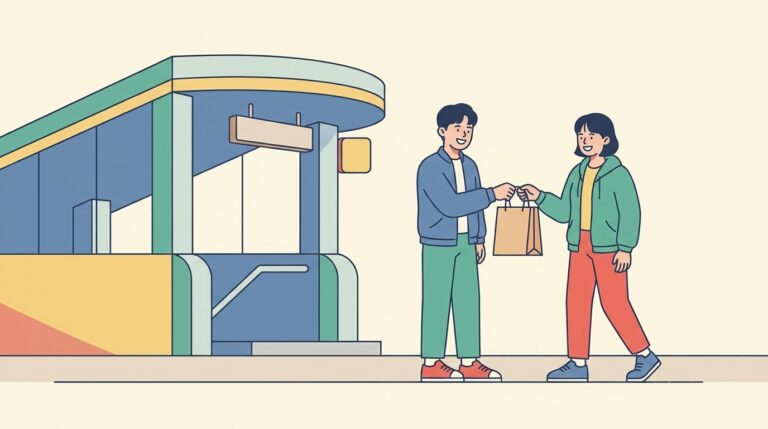
Master Karrot App: How to Politely Negotiate Prices in Korean
Phase 1: 공감 (Story-driven Opening)
안녕하세요! 매일한글 에디터입니다. Have you ever downloaded Karrot (당근마켓) while staying in Korea, spotted an adorable vintage desk lamp or rare K-pop merchandise, and immediately frozen at the chat screen? You see a price tag of 30,000 KRW, and you wonder: Is it acceptable to ask for a small discount, or will I be labeled a rude customer (진상)? Negotiating price in another language can make your heart race. In Korea, bargaining on secondhand neighborhood apps is not merely about trimming a few thousand won—it is a subtle social dance built on warmth, consideration, and neighborhood etiquette (정, Jeong). At Daily Hangul, dozens of beginner students tell us they accidentally offended sellers simply by sounding too blunt or demanding. Don’t worry! This guide is packed with friendly, field-tested phrases directly adapted from real Seoul locals to help you score great deals while leaving a delightful impression.
Phase 2: 핵심 표현 3선 심층 분석 (3 Key Expressions)
1. 혹시 가격 네고 조금 가능할까요? (Hoksi gagyeok nego jogeum ganeunghalkkayo?)
- Pronunciation: [Hok-shi ga-gyeok ne-go jo-geum ga-neung-hal-kka-yo?] (Sound analogy: Hok-shee like hockey, nego like negotiation, ga-neung like “garnering”).
- Meaning: Literal: “By any chance, is price negotiation a little bit possible?” | Real Nuance: “Could you perhaps offer a tiny discount if it’s not too much trouble?”
- K-Culture Moment: Seen frequently in slice-of-life K-dramas where frugal college students politely message sellers while decorating their tiny one-room (원룸) apartments.
- Editor’s Insight: The magic shield word here is 혹시 (hoksi – by any chance) coupled with 조금 (jogeum – a little bit). Koreans use these softening cushions to remove pressure from the listener.
- Situation Spectrum: Casual: ⚠️ | Semi-formal: ✅ | Formal: ✅
- 🤔 Think About It: In many Western marketplaces, haggling is direct (“Will you take 20?”). In Korea, asking indirect questions preserves the other person’s comfort and saves face.
2. 쿨거래하시면 조금 깎아드릴게요. (Kul-georaehasi-myeon jogeum kkakka-deurilgeyo.)
- Pronunciation: [Kool-geo-rae-ha-shi-myeon jo-geum kka-kka-deu-ril-ge-yo] (Sound analogy: Cool + geo-rae like “go-ray”).
- Meaning: Literal: “If you make a cool deal, I will cut the price a bit.” | Real Nuance: “If you buy right away without hassle, I’ll happily discount it for you.”
- K-Culture Moment: Sellers on YouTube vlogs highlighting quick sales love posting this caption to attract decisive buyers.
- Editor’s Insight: A 쿨거래 (Cool-transaction) means no endless questioning, no last-minute cancellations, and prompt meetup. When a seller offers this, they value peace of mind over a few extra won.
- Situation Spectrum: Casual: ✅ | Semi-formal: ✅ | Formal: ⚠️
- 🤔 Think About It: Why does Korean internet culture value “coolness” in transactions? It shows mutual respect for personal time in a fast-paced (빨리빨리) society.
3. 에눌 되나요? (Enul doenayo?)
- Pronunciation: [Eh-nool doe-na-yo?] (Sound analogy: Eh as in “echo”, nool as in “noodle”).
- Meaning: Literal: “Is markdown possible?” | Real Nuance: “Can you lower the price?” (Short and informal).
- K-Culture Moment: Common in flea market scenes or vintage shops in Dongdaemun.
- Editor’s Insight: 에눌 is short for 에누리 (enuri – discount). While popular, using it alone without polite markers can sound curt in digital chats with strangers.
- Situation Spectrum: Casual: ✅ | Semi-formal: ⚠️ | Formal: 🚫
- 🤔 Think About It: Shortened slang builds quick intimacy between close peers, but how might brevity be perceived between strangers on mobile apps?
Phase 3: 교과서 한국어 vs 진짜 한국어 (Textbook vs. Real-Life Korean)
Situation 1: Asking if a discount is possible in an in-app chat
- 📖 교과서 한국어: 가격을 할인해 주시겠습니까? (Gagyeog-eul harinhae jusigessseumnikka? – “Will you grant a price reduction?”)
- 🗣️ 진짜 한국어: 혹시 네고 조금 가능할까요? (Hoksi nego jogeum ganeunghalkkayo? – “Could you perhaps do a tiny discount?”)
- 💡 왜 다를까?: Nobody uses formal terms like “할인해 주시겠습니까” on chat apps; it sounds like an official corporate contract rather than a neighbor-to-neighbor conversation.
Situation 2: Proposing a direct pickup near a subway station
- 📖 교과서 한국어: 저는 당신이 있는 곳으로 직접 가겠습니다. (Jeoneun dangsin-i inneun goseuro jikjeop gagessseumnida. – “I will personally go to the place where you are.”)
- 🗣️ 진짜 한국어: 제가 그쪽으로 갈게요! 역 앞에서 봬요. (Jega geujjogeuro galgeyo! Yeok ap-eseo bwaeyo. – “I’ll come over to your area! Let’s meet in front of the station.”)
- 💡 왜 다를까?: Natural Korean omits stiff pronouns like “당신” (which can sound confrontational) and specifies convenient public landmarks like subway exits.
Phase 4: K-Culture 딥다이브 & 비언어적 매너 (Culture Deep Dive & Non-Verbal Manners)
4-1. 눈치 (Nunchi) & Physical Meetup Etiquette
When trading on Karrot, your negotiation power depends heavily on your Manner Temperature (매너온도)—a baseline score of 36.5°C that rises with compliments and drops with complaints. To ensure a smooth deal:
* The Timed Request: Never ask for a discount after arriving at the meetup spot. All negotiations must be agreed upon beforehand in chat.
* The Polite Handover: When handing over cash or picking up the item, use two hands or place your left hand gently under your right wrist. A light 15-degree head bow accompanied by “감사합니다! (Gamsahamnida!)” warms the atmosphere instantly.
4-2. Cultural Code: “당근이세요?” (Are you Karrot?)
In South Korea, meeting strangers from Karrot has spawned its own cultural catchphrase: “혹시… 당근이세요?” (Excuse me… are you Karrot?). It has appeared in popular variety shows and YouTube comedy sketches. Because users meet in public places like convenience store fronts or subway station exits, people nervously eye each other clutching recognizable shopping bags. Responding with a warm, smiling nod dissolves the awkwardness right away.
Phase 5: 실전 롤플레이 시나리오 (Real-World Roleplay Scenario)
Setting: Alex wants to buy a slightly used Bluetooth speaker listed for 25,000 KRW from Seller Minji on Karrot Market.
- Turn 1 (Alex): 안녕하세요! 블루투스 스피커 아직 있나요? (Annyeonghaseyo! Beullutuseu seupikeo ajik innayo?)
🎭 Typing politely with a friendly profile picture- Translation: Hello! Is the Bluetooth speaker still available?
- Turn 2 (Minji): 네! 아직 있어요. 구매 가능하세요! (Ne! Ajik isseoyo. Gumae ganeunghaseyo!)
🎭 Replying promptly with an exclamation mark- Translation: Yes! It’s still available. You can purchase it!
- Turn 3 (Alex): 상태 좋아 보이네요. 혹시 2만 원에 네고 조금 가능할까요? (Sangtae joa boineyo. Hoksi iman wone nego jogeum ganeunghalkkayo?)
🎭 Complimenting the item first before cautiously asking for a discount- Translation: It looks in great condition. By any chance, could you do a small discount to 20,000 KRW?
- Turn 4 (Minji): 음, 2만 원은 조금 어렵고… 2만 2천 원은 어떠세요? (Eum, iman woneun jogeum eoryeopgo… iman-icheon woneun eotteoseyo?)
🎭 Pondering, then proposing a fair middle ground- Translation: Um, 20,000 won is a bit difficult… how about 22,000 won?
- Turn 5 (Alex): 좋아요! 쿨거래 감사합니다. 제가 계시는 곳으로 갈게요. (Joayo! Kulgeorae gamsahamnida. Jega gyesineun goseuro galgeyo.)
🎭 Accepting graciously and offering to travel to the seller's location- Translation: Sounds great! Thank you for the cool deal. I will go to your location.
- Turn 6 (Minji): 배려 감사해요! 오늘 저녁 7시 강남역 4번 출구 괜찮으세요? (Baeryeo gamsahaeyo! Oneul jeonyeok ilgopsi Gangnam-yeok sabeon chulgu gwaenchaneuseyo?)
🎭 Appreciative of the buyer's willingness to travel- Translation: Thanks for your consideration! Would 7 PM tonight at Gangnam Station Exit 4 work for you?
- Turn 7 (Alex): 네, 시간 딱 좋아요. 그때 뵐게요! (Ne, sigan ttak joayo. Geuttae boelgeyo!)
🎭 Confirming time with cheerful punctuation- Translation: Yes, that time is perfect. See you then!
- Turn 8 (Minji): 네! 조심히 오세요~ (Ne! Josimhi oseyo~)
🎭 Ending with a welcoming tilde- Translation: Great! Travel safely~
🔀 Interactive Decision Branch
What would you reply if the seller had said: “죄송해요, 네고는 불가합니다 (Sorry, no negotiation allowed)”?
* Option A: “아 네! 알겠습니다. 정가대로 구매할게요! 어디서 뵐까요?” (Ah, I see! I will buy it at the listed price! Where shall we meet?) -> [Best Outcome] Shows flexibility, respect, and keeps your Manner Temperature high.
* Option B: “왜 안 돼요? 깎아주면 바로 살 텐데요.” (Why not? I would buy it right away if you discounted it.) -> [Bad Outcome] Sounds argumentative and may lead the seller to block you.
* Option C: (Read the message and abandon the chat without replying) -> [Risk Outcome] Leaving people on read (읽씹) damages your seller rating and wastes neighborhood goodwill.
Phase 6: 10초 감정 섀도잉 드릴 (10-Second Emotional Shadowing Drill)
Practice these lines out loud with the exact pacing and emotional markers indicated below:
[🥺 조심스럽고 예의 바르게 / Cautiously and respectfully]- 혹시 / 가격 네고 / 조금 가능할까요? (Hoksi / gagyeok nego / jogeum ganeunghalkkayo?)
[😊 감사하고 쿨하게 / Cheerful and cooperative]- 좋아요! / 쿨거래 해주셔서 / 정말 감사해요. (Joayo! / Kulgeorae haejusyeoseo / jeongmal gamsahaeyo.)
[👋 현장에서 반갑게 / Warm and friendly in person]- 혹시 / 당근이세요? / 날씨가 춥죠! (Hoksi / danggeuniseyo? / Nalssiga chupjyo!)
Phase 7: K-Culture 미니 사전 (Mini Dictionary)
- 네고 (Nego) | Short for “Negotiation”. Widely used in texting to request discounts on used goods.
- 쿨거래 (Kul-georae) | Fast, hassle-free transaction where neither party quibbles or delays.
- 매너온도 (Maeneoon-do) | “Manner Temperature”; Karrot’s user rating metric starting at human body temperature (36.5°C).
- 직거래 (Jik-georae) | In-person direct transaction, preferred in Korea to avoid mail fraud and inspect products.
Phase 8: 여행자를 위한 생존 키트 (Traveler’s Survival Kit)
Top 3 Survival Phrases
- 계좌이체 가능한가요? (Gyejwa-iche ganeunghangayo?) | Can I pay via bank transfer? (Pro Tip: Many sellers prefer instant mobile bank transfer on the spot over paper cash!)
- 제가 지금 출발할게요! (Jega jigeum chulbalhalgeyo!) | I am departing right now! (Pro Tip: Always send this update so the seller knows you are on schedule.)
- 후기 예쁘게 남겨드릴게요! (Hugi yeoppeuge namgyeodeurilgeyo!) | I will leave a lovely review for you! (Pro Tip: Promising a warm review often softens the seller toward your discount request.)
Editor’s Travel Note
Before stepping out, ensure you review the 당근(Karrot) 앱 설치 및 이용 가이드 to verify your local neighborhood via GPS. Always schedule your in-person meetups right near station ticket barriers or well-lit convenience stores for safety and convenience.
Phase 9: “한 발 더 깊이” (Cultural Reflection Essay)
In Korean interpersonal relationships, requesting a favor must never impose an emotional burden (부담, budam) on the receiver. When asking for a discount, phrases like “혹시” (by any chance) or “조금” (a little bit) serve as polite cushions. They give the other party an easy, guilt-free exit to say no without confrontation. By offering to travel directly to the seller’s doorstep in exchange for a price cut, you balance the scale of favors through mutual goodwill.
💬 Your Turn: In your home country, is haggling expected or considered impolite? How does your culture balance price bargaining with politeness? Share your thoughts below!
Phase 10: FAQ & 오해 방지 (FAQ Schema)
Q: Can I offer half the listed price if I think it’s overpriced?
A: Absolutely not! Offering an extreme lowball (termed 후려치기) is considered very rude on Korean secondhand platforms. Standard discounts usually range between 5% and 15% of the item’s listed value.
Q: What if the post says “네고 불가” or “네고 X”?
A: That means “No negotiations permitted.” Respect this boundary strictly. Messaging to negotiate when marked “불가” will likely get you blocked or reported.
Q: Is it okay to pay with a 50,000 KRW bill for a 12,000 KRW item in person?
A: Avoid this if possible. Bringing exact cash or using direct mobile bank transfer shows courteous consideration so the seller doesn’t need to hunt for change.
🚨 Common Mistakes (흔한 실수)
- Mistake 1: Haggling at the meetup spot. (Correction: Agree on the final price in the chat before meeting).
- Mistake 2: Asking “깎아줘” (Cut the price) in casual language. (Correction: Always use polite endings like “~가능할까요?”).
- Mistake 3: Showing up late without notice. (Correction: If delayed by even 5 minutes, message immediately: “조금 늦을 것 같아요, 죄송해요!”).
Phase 11: 액션 미션 & 참여 유도 (Action Missions)
- 🥉 Bronze Mission: Practice shadowing the phrase “혹시 가격 네고 조금 가능할까요?” aloud 5 times using your sweetest polite voice.
- 🥈 Silver Mission: Write a mock chat sentence in the comments proposing a direct meetup spot at your favorite Seoul subway station.
- 🥇 Gold Mission: Next time you use Karrot or visit a traditional market in Korea, try asking for a small discount using our polite cushioning formula!
- 🎮 K-Culture Mission: Watch an episode of a modern Korean variety show (like Hangout with Yoo or I Live Alone) and spot how celebrities greet strangers during second-hand exchanges.
Phase 12: 인터랙티브 퀴즈 챌린지 (Interactive Quiz Challenge)
1. Situation Challenge: You want to ask for a 2,000 KRW discount on a 15,000 KRW toaster. Which sentence is the most natural and polite?
* (A) 돈이 없으니 13,000원에 주세요.
* (B) 혹시 13,000원으로 네고 조금 가능할까요?
* (C) 13,000원에 안 해주면 안 사요.
2. Fill-in-the-Blank: Complete the phrase meaning “smooth, hassle-free deal”:
* “[ ____ ]거래 하시면 제가 깎아드릴게요!”
3. True or False: It is good etiquette on Karrot to bargain down the price further once you meet the seller face-to-face. (T / F)
👉 Click to reveal answers & explanations!
- Answer: (B)
- Explanation: Option (B) uses the softening word “혹시” and polite potential ending “가능할까요?” which is the gold standard of secondhand app manners.
- Answer: 쿨 (Cool)
- Explanation: “쿨거래” represents a quick, pleasant transaction without fussy complaints.
- Answer: False
- Explanation: In-person renegotiation is considered very bad manners (비매너) in Korea. Always finalize the price in the chat first!
- Explanation: In-person renegotiation is considered very bad manners (비매너) in Korea. Always finalize the price in the chat first!







