

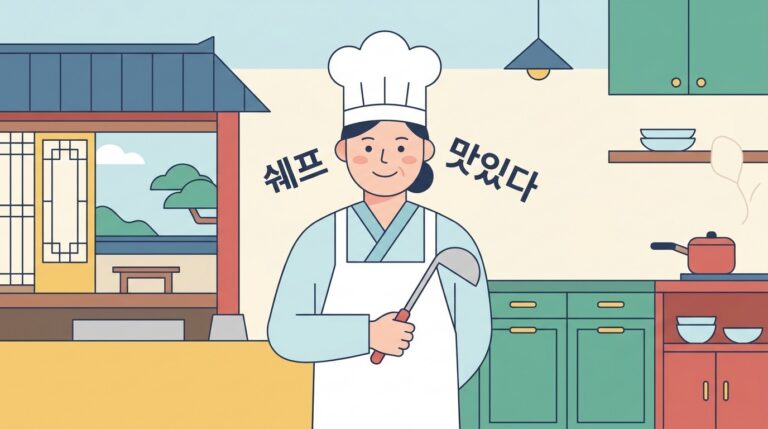
Master Job Introductions in Korean: Confidently Say “요리사예요 (I am a chef)”
Phase 1: Empathy & Storytelling Opening
안녕하세요! 매일한글 에디터입니다. (Hello! This is your Daily Hangul editor.)
Picture this: You are sitting at a cozy community cooking workshop in Mangwon-dong, Seoul. The aroma of toasted sesame oil fills the air, and someone smiles warmly at you, asking: “무슨 일 하세요?” (What kind of work do you do?) Your heart races. In your head, you replay scenes from hit K-dramas like Culinary Class Wars or Itaewon Class. You want to say “I am a chef!” or “I work in a kitchen!” with cool confidence, but your brain freezes over verb endings. Is it 이다? 이에요? Or 예요?
You end up nodding awkwardly, pointing to your spatula, and smiling nervously. Don’t worry—almost every Korean learner hits this exact stumbling block when introducing their daily life and occupation! Stating what you do should feel empowering, not stressful. In this guide, backed by feedback from hundreds of beginner students at Daily Hangul, you’ll master how to introduce your profession smoothly, naturally, and with the exact polite nuance Koreans use every day. Let’s dive in together!
Phase 2: Core Expressions Deep Dive
1. 요리사예요 (Yorisa-yeyo)
- Pronunciation: [yo-ri-sa-ye-yo] (Sounds like: “Yo-ree-sah, yeah-yo!”)
- Meaning: Literal: “Chef / Cook [am]” | Actual Nuance: “I am a chef.” / “I’m a cook.”
- K-Culture Moment: The moment a contestant steps onto the stage of Culinary Class Wars and proudly states their specialty.
- Editor’s Insight: In Korean, you attach the polite ending -예요 (yeyo) directly to nouns that end in a vowel sound (like 요리사). There is no need to add words like “a” or “the”—Korean keeps it simple and streamlined!
- Situation Spectrum: Casual: ⚠️ (Use ‘요리사야’ with close younger friends) | Semi-formal: ✅ (Perfect for daily polite talk) | Formal: ✅ (Polite enough for social gatherings)
- 🤔 Think About It: In English, saying “Am chef” sounds incomplete without “I” and “a”. Why does Korean feel completely natural dropping “I” when the context is already clear?
2. 무슨 일 하세요? (Museun il haseyo?)
- Pronunciation: [mu-seun il ha-se-yo] (Sounds like: “Moo-soon eel ha-say-yo?”)
- Meaning: Literal: “What work do you do?” | Actual Nuance: “What do you do for a living?”
- K-Culture Moment: The classic ice-breaker question heard during casual blind dates (소개팅, sogaeting) in countless K-Dramas.
- Editor’s Insight: Notice that Koreans rarely ask “What is your job title?” Directly asking “What work do you do?” feels much friendlier and less like a job interview.
- Situation Spectrum: Casual: 🚫 (Sounds overly polite) | Semi-formal: ✅ (Standard friendly polite) | Formal: ✅ (Respectful)
- 🤔 Think About It: Why do you think Korean society prefers asking about the activity (일 하세요) rather than interrogating someone’s institutional label?
3. 식당에서 일해요 (Sikdang-eseo ilhaeyo)
- Pronunciation: [sik-dang-e-seo il-hae-yo] (Sounds like: “Seek-dahng-eh-saw eel-hey-yo”)
- Meaning: Literal: “Restaurant-at work-do” | Actual Nuance: “I work at a restaurant.”
- K-Culture Moment: When a character in Hospital Playlist or Our Blues explains their daily routine over evening drinks.
- Editor’s Insight: Pair this phrase with your job title! Saying “요리사예요. 식당에서 일해요” adds instant natural flow to your self-introduction.
- Situation Spectrum: Casual: ⚠️ (Use ‘일해’ with peers) | Semi-formal: ✅ (Ideal for everyday conversations) | Formal: ✅
- 🤔 Think About It: How does specifying your workspace (식당에서) create an immediate mental picture for the listener compared to just naming a title?
Phase 3: Textbook Korean vs. Real Korean
Situation 1: Introducing Your Profession
- 📖 교과서 한국어 (Textbook): 저는 요리사입니다. (Jeoneun yorisa-imnida.) — “I am a chef (formal).”
- 🗣️ 진짜 한국어 (Real Korean): 저 요리사예요! (Jeo yorisa-yeyo!) — “I’m a chef!”
- 💡 왜 다를까? (Why the difference?): While -입니다 is grammatically pristine, it sounds like an evening news broadcast or a military briefing. In normal daily social settings, Koreans prefer the warm, approachable -이에요/예요 ending.
Situation 2: Asking What Someone Does
- 📖 교과서 한국어 (Textbook): 당신의 직업은 무엇입니까? (Dangsin-ui jigeob-eun mueos-imnikka?) — “What is your occupation?”
- 🗣️ 진짜 한국어 (Real Korean): 어떤 일 하세요? (Eotteon il haseyo?) or 무슨 일 하세요? (Museun il haseyo?) — “What kind of work do you do?”
- 💡 왜 다를까? (Why the difference?): Using the word “당신 (dangsin – you)” in real life can sound confrontational or overly dramatic. Native speakers simply omit the pronoun entirely!
Phase 4: K-Culture Deep Dive & Non-Verbal Manners
4-1. 눈치 (Nunchi) & Gestures
When sharing what you do in Korea, modesty and posture speak volumes.
* The Humble Nod: When saying “요리사예요 (Yorisa-yeyo)”, accompany it with a gentle, slight nod of the head (about 15 degrees).
* Open Hands: Avoid puffing your chest or crossing your arms. Rest your hands gently in front of your waist or lap. In Korean culture, speaking passionately yet humbly about your trade conveys true mastery.
4-2. Cultural Code: The Rise of the Korean Chef
Historically, commercial cooking in Korea was sometimes viewed merely as hard labor under the term 주방장 (jubangjang – kitchen master). However, over the past decade, a major cultural revolution sparked by culinary K-dramas, celebrity food shows, and global K-food acclaim has transformed chefs (요리사 / 셰프) into respected artisans and trendsetters. When you tell a Korean friend you are a chef, expect genuine curiosity about what flavors you love to craft!
Phase 5: Real Roleplay Scenario
Setting: A vibrant culinary cooking workshop kitchen in Seoul.
Character: Minwoo (민우), an encouraging Korean sous-chef who loves meeting foreign food enthusiasts.
- Turn 1 (Minwoo): 안녕하세요! 오늘 클래스 참여해 주셔서 감사해요. (Annyeonghaseyo! Oneul keullaeseu chamyeohae jusyeoseo gamsahaeyo.)
🎭 Smiling brightly and bowing slightly.
“Hello! Thank you so much for joining today’s class.” -
Turn 2 (You): 안녕하세요! 만나서 반가워요. (Annyeonghaseyo! Mannaseo bangawoyo.)
🎭 Returning a warm, polite head nod.
“Hello! Nice to meet you.” -
Turn 3 (Minwoo): 혹시 한국에서 어떤 일 하세요? (Hoksi hanguk-eseo eotteon il haseyo?)
🎭 Tying his apron strings attentively.
“By any chance, what kind of work do you do in Korea?” -
Turn 4 (You): 저 요리사예요. (Jeo yorisa-yeyo.)
🎭 Speaking clearly with a proud smile.
“I am a chef.” -
Turn 5 (Minwoo): 와, 정말요? 대단하세요! 어떤 요리 하세요? (Wa, jeongmalyo? Daedanhaseyo! Eotteon yori haseyo?)
🎭 Eyes widening in genuine surprise.
“Wow, really? That’s amazing! What kind of food do you cook?” -
Turn 6 (You): 이탈리아 요리 만들어요. 식당에서 일해요. (Itallia yori mandeureoyo. Sikdang-eseo ilhaeyo.)
🎭 Using your hands lightly to gesture.
“I make Italian food. I work at a restaurant.” -
Turn 7 (Minwoo): 멋지네요! 오늘 수업에서 활약 기대할게요! (Meotjineyo! Oneul sueop-eseo hwalyak gidaehalgeyo!)
🎭 Giving a friendly thumbs-up.
“That’s so cool! I’ll look forward to your skills in class today!” -
Turn 8 (You): 감사합니다. 열심히 배울게요! (Gamsahamnida. Yeolsimhi baeulgeyo!)
🎭 Clasping hands together politely.
“Thank you. I will learn diligently!”
🔀 Interactive Decision Point
How would you answer Minwoo in Turn 4 if you want to respond like a natural pro?
* Option A: “나는 요리사다!” (Naneun yorisada!)
* Option B: “저 요리사예요.” (Jeo yorisa-yeyo.)
* Option C: “당신은 요리사입니까?” (Dangsineun yorisa-imnikka?)
- Option A Feedback [Risk]: This is extremely informal, abrupt, and sounds like a monologue from an anime villain. Never use this with someone you just met!
- Option B Feedback [Best]: Spot-on! Humble pronoun 저 (jeo) paired with the polite -예요 (yeyo) hits the exact Goldilocks zone of politeness.
- Option C Feedback [Bad]: You are asking him a question with the awkward word “당신” instead of stating your own profession!
Phase 6: 10-Second Shadowing Drill
Read aloud along the rhythm slashes / while channeling the emotion marked in brackets!
[😊 자부심을 담아 밝게]저 / 요리사예요!
(Jeo / yorisa-yeyo! — I / am a chef!)[🤝 공손하고 따뜻하게]무슨 / 일 하세요?
(Museun / il haseyo? — What kind of / work do you do?)[🍳 즐겁고 활기차게]식당에서 / 요리해요!
(Sikdang-eseo / yorihaeyo! — At a restaurant / I cook!)
Phase 7: K-Culture Mini Dictionary
- 요리사 (Yorisa) | Chef / Cook
Traditional and standard Korean term for someone whose profession is preparing food. - 회사원 (Hoesawon) | Office worker / Company employee
The most common default answer you will hear in Seoul coffee shops and subways! - 학생 (Haksaeng) | Student
Use this if you are currently studying: “저 학생이에요” (Jeo haksaeng-ieyo). - 선생님 (Seonsaengnim) | Teacher / Respected professional
Used for teachers, but also as a high-honorific title for respected doctors, masters, and chefs in their field.
Phase 8: Survival Kit for Travelers
TOP 3 Survival Phrases
- 저 요리사예요. (Jeo yorisa-yeyo.) — “I’m a chef.”
Pro Tip: Use it whenever you attend food tours or meet Korean locals eager to share local food recommendations. - 메뉴 추천해 주세요. (Menyu chucheonhae juseyo.) — “Please recommend a menu item.”
Pro Tip: If a chef loves food, let the Korean restaurant owner showcase their pride dish! - 정말 맛있어요! (Jeongmal masisseoyo!) — “It’s truly delicious!”
Pro Tip: The ultimate compliment you can pay any chef or food cart vendor in Korea.
Editor’s Travel Note
When hunting for hidden culinary gems in Seoul, Google Maps often lacks real-time local updates. Make sure to complete your [네이버 지도 앱 다운로드 (Download Naver Map App)] setup before landing. Furthermore, when paying at independent Korean eateries, remember that tipping is non-existent; simply present your payment card with both hands as a respectful gesture.
Phase 9: Think Deeper (한 발 더 깊이)
In Western individualism, one’s occupation is often viewed as a self-selected badge of personal achievement. In Korea, however, work introduces where you fit within the broader social tapestry. When you say “요리사예요” using the humble pronoun 저 (jeo), you are acknowledging your community role while simultaneously elevating the listener. It is a linguistic dance of mutual honor.
💬 Your Turn: What is your profession or hobby, and how do you feel about introducing yourself without saying “I” or “a”? Share your Korean introduction in the comments below!
Phase 10: FAQ & Common Mistakes
Q: What is the exact difference between 이에요 (ieyo) and 예요 (yeyo)?
A: Look at the last syllable of the noun! If the noun ends in a consonant (받침, batchim), add 이에요 (e.g., 학생 + 이에요 = 학생이에요). If the noun ends in a vowel sound (no batchim), add 예요 (e.g., 요리사 + 예요 = 요리사예요).
Q: Can I use the English word “Chef” in Korea?
A: Yes! Koreans frequently use the loanword 셰프 (sye-peu), especially for modern restaurant head chefs: “저 셰프예요” (Jeo syepeu-yeyo).
Q: Should I say “나는 (naneun)” or “저는 (jeoneun)”?
A: As an A1 beginner interacting with locals, always default to 저 (jeo). “나 (na)” is casual language and can sound impolite if used with strangers or elders.
🚨 Common Mistakes Board
| Mistake | Why It Happens | Correct Action |
|---|---|---|
| 요리사이에요 | Forgetting the vowel-ending rule | Say 요리사예요 (smooth glide, no awkward vowel clash). |
| 당신의 직업은? | Translating “What is your job?” word-for-word | Ask 무슨 일 하세요? (natural, friendly etiquette). |
| 저는 요리사이다 | Using the dictionary form in real speech | Always conjugate to 요리사예요 when speaking. |
Phase 11: Action Missions
- 🥉 Bronze Mission: Stand in front of your mirror and practice saying “저 요리사예요 (Jeo yorisa-yeyo)” 5 times with a gentle head nod.
- 🥈 Silver Mission: Post an Instagram Story of your favorite food or workspace with the sticker text: 요리사예요 or 무슨 일 하세요?.
- 🥇 Gold Mission: In your next language exchange or Korean dining experience, introduce your occupation in one complete Korean sentence without glancing at your notes!
- 🎮 K-Culture Mission: Watch an episode of a Korean cooking show or K-Drama and pause whenever someone introduces their role. Listen for -이에요 or -예요!
Phase 12: Interactive Quiz Challenge
1. Situation Check
You meet your Korean neighbor in the elevator. She politely asks: “무슨 일 하세요?” How should you reply if you are an office worker (회사원, ends in consonant ㄴ)?
* A) 회사원예요 (Hoesawon-yeyo)
* B) 회사원이에요 (Hoesawon-ieyo)
* C) 회사원입니다요 (Hoesawon-imnidayo)
🔍 Click to reveal the answer and explanation!
Correct Answer: B) 회사원이에요 (Hoesawon-ieyo)
Explanation: Since 회사원 ends with a consonant (batchim ‘ㄴ’), it naturally links with 이에요 for smooth vocal flow.
2. Fill-in-the-Blank
Complete the sentence for “I am a chef”:
저 요리사______. (Jeo yorisa______.)
🔍 Click to reveal the answer and explanation!
Correct Answer: 예요 (yeyo)
Explanation: 요리사 ends in the vowel ‘ㅏ’, so it combines with 예요 to form 요리사예요.
3. Cultural True or False
True or False: Asking “당신의 직업은 무엇입니까?” is the warmest, most common way to ask a new Korean friend about their job at a café.
🔍 Click to reveal the answer and explanation!
Correct Answer: False!
Explanation: “당신 (Dangsin)” sounds stiff or even confrontational in real-life spoken Korean. Use “무슨 일 하세요?” or “어떤 일 하세요?” instead!







