

Master Korean Food Reviews: When the Wait Is Totally Worth It!
Phase 1: Empathy (Story-Driven Opening)
안녕하세요! 매일한글 에디터입니다. (Annyeonghaseyo! It is your Daily Hangul editor here!)
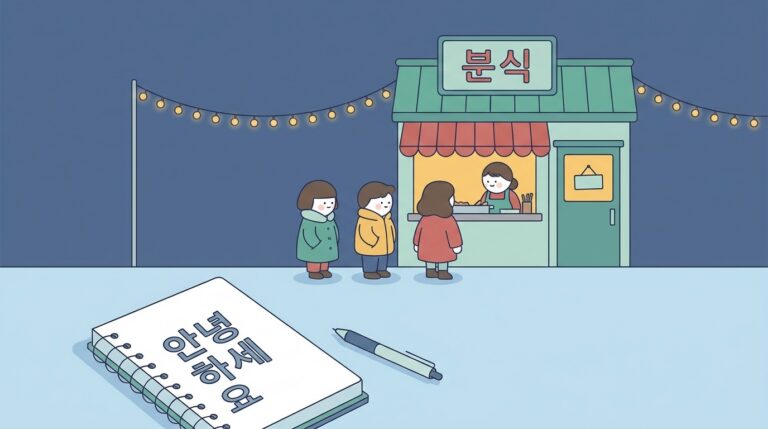
Picture this: You are standing in front of a trendy pork belly spot in Yeonnam-dong. The chilly Seoul night wind is blowing, your stomach is growling like an angry tiger, and the digital queue screen reads: “18 teams ahead of you.” You endure forty long minutes, sniffing the smoky, garlicky aromas drifting from the ventilation pipes. Finally, you sit down, take your first bite of sizzling samgyeopsal wrapped in crisp lettuce, and instantly—all the cold and tiredness vanish. It is culinary magic.
Full and euphoric, you open Naver Map or CatchTable on your phone to leave a heartfelt 5-star review. You want to tell the world: “Yes, the wait was a bit long, but oh boy, it was totally worth it!” But your fingers freeze on the Korean keyboard. Do you write a formal essay? Will a translation app make you sound like a robot from 1995?
Don’t worry! Leaving honest, warm, and natural restaurant reviews is one of the quickest ways to connect with local Korean culture. In this lesson, designed specifically for A2 learners and based on real feedback from dozens of our Daily Hangul students, you will learn the exact phrases locals use to praise delicious food while keeping it real about waiting times.
Phase 2: Core 3 Expressions In-Depth
1. 웨이팅이 조금 길었어요 (Waiting-i jogeum gireosseoyo)
- Pronunciation: [we-i-ting-i jo-geum gi-reo-sseo-yo] (Think of saying way-ting followed by cho-gum like a soft sneeze, and gear-up-saw-yo).
- Meaning: Literal: “The waiting was a little long.” / Real nuance: “There was a bit of a queue, but nothing unreasonable.”
- K-Culture Moment: You will hear food creators in K-Variety shows (like The Backpacker Chef) say this right as they enter a legendary eatery after standing outside with umbrellas.
- Editor’s Insight: Koreans borrowed the English word “waiting” and turned it into the noun 웨이팅 (waiting). The word 조금 (jogeum, a little) softens the sentence so you don’t sound angry or overly critical.
- Situation Spectrum:
- Casual (Friends): ⚠️ 웨이팅 좀 길었어 (Waiting jom gireosseo)
- Semi-formal (Public Reviews / Polite): ✅ 웨이팅이 조금 길었어요 (Waiting-i jogeum gireosseoyo)
- Formal (Official report): 🚫 대기 시간이 다소 길었습니다 (Daegi sigani daso gireotseumnida)
- 🤔 Think About It: Notice how adding 조금 (jogeum) protects the restaurant owner’s feelings. Why do you think Korean communication prefers softening negative experiences instead of making blunt complaints?
2. 기다릴 만한 가치가 있어요 (Gidaril manhan gachiga isseoyo)
- Pronunciation: [gi-da-ril man-han ga-chi-ga it-seo-yo] (Sounds like key-dah-reel mahn-hahn gah-chee-gah ees-saw-yo).
- Meaning: Literal: “It has the value of waiting.” / Real nuance: “It was totally worth the wait!”
- K-Culture Moment: When a K-pop idol visits a famous bakery on vlog camera and takes their first bite of salt bread, they nod vigorously and say this phrase directly to the camera.
- Editor’s Insight: The grammar pattern
-(으)ㄹ 만하다means “worth doing.” Pair it with 가치 (gachi, value), and you sound like a sophisticated foodie who appreciates good craftsmanship! - Situation Spectrum:
- Casual: ⚠️ 기다릴 만해! (Gidaril manhae!)
- Semi-formal: ✅ 기다릴 만한 가치가 있어요 (Gidaril manhan gachiga isseoyo)
- Formal: ✅ 기다릴 만한 가치가 충분합니다 (Gidaril manhan gachiga chungbunhamnida)
- 🤔 Think About It: In English, we simply say “worth it.” In Korean, explicitly using the word “value” (가치) emphasizes that time and effort are precious currencies exchanged for quality food.
3. 별점 5점 드려요 (Byeoljeom o-jeom deuryeoyo)
- Pronunciation: [byeol-jeom o-jeom deu-ryeo-yo] (Byeol rhymes with “y’all” starting with a B, jeom sounds like “jump” with a soft J, o as in “open”, and deu-ryeo-yo).
- Meaning: Literal: “I give 5 star-points.” / Real nuance: “5 stars from me! / Giving this place top marks!”
- K-Culture Moment: The iconic final sentence in viral Instagram food reels and travel blog entries across Korean social media.
- Editor’s Insight: Koreans use the honorific verb 드려요 (deuryeoyo, give politely) instead of 줘요 (jwoyo). You are politely offering your rating as a gift of appreciation to the chef!
- Situation Spectrum:
- Casual: ⚠️ 별점 5개 준다! (Byeoljeom daseot-gae junda!)
- Semi-formal: ✅ 별점 5점 드려요 (Byeoljeom o-jeom deuryeoyo)
- Formal: ✅ 별점 5점 만점에 5점입니다 (Byeoljeom o-jeom manjeome o-jeom-imnida)
- 🤔 Think About It: Rating someone’s hard work is taken seriously. Giving respect even when leaving an online review reflects the Korean value of mutual consideration (배려).
Phase 3: Textbook Korean vs. Real Korean
Situation 1: Commenting on the wait time
- 📖 교과서 한국어 (Textbook): 대기 시간이 길었으나 만족스럽습니다. (Daegi sigani gireosseuna manjokseureopseumnida. – “The queue duration was prolonged, however I am satisfied.”)
- 🗣️ 진짜 한국어 (Real Korean): 웨이팅은 좀 있었는데 완전 대박이에요! (Waiting-eun jom isseonneunde wanjeon daebagieyo! – “There was some wait, but it was absolutely incredible!”)
- 💡 왜 다를까? (Why the difference?): Old-school textbooks teach Sino-Korean administrative vocabulary like 대기 시간 (daegi sigan). Modern Koreans under 40 almost exclusively say 웨이팅 (waiting) in casual dining contexts.
Situation 2: Promising to return
- 📖 교과서 한국어 (Textbook): 다음 기회에 다시 방문하겠습니다. (Daeum gihoee dasi bangmunhagetseumnida. – “I shall visit again at the next opportunity.”)
- 🗣️ 진짜 한국어 (Real Korean): 재방문 의사 100%예요! (Jaebangmun uisa baek-peosenteuyeyo! – “100% willing to revisit!”)
- 💡 왜 다를까? (Why the difference?): Online review culture created shorthand idioms. Saying your intention to revisit is 100% (재방문 의사 100%) is the ultimate stamp of foodie approval in Korea.
Phase 4: K-Culture Deep Dive & Non-Verbal Manners
4-1. Nunchi (눈치) & Gestures
When you see a crowded restaurant with a crowd waiting outside, do not barge into the doorway asking for a table. Look around for a standing tablet kiosk near the entrance—that is where you register your phone number for the queue! If you don’t have a local Korean phone number, practice gentle nunchi: catch the eye of the staff member managing the door, give a slight 15-degree bow, hold up two fingers, and politely ask: 웨이팅 어떻게 해요? (Waiting eotteoke haeyo? / “How do I queue for waiting?”).
When finishing your meal and paying at the counter, a bright smile accompanied by “잘 먹었습니다!” (Jal meogeotseumnida! / “I ate well!”) gives immense joy to hardworking kitchen staff before you post your glowing 5-star review.
4-2. Cultural Code: The “Mat-jip” (맛집) Phenomenon
In Korea, waiting in line isn’t viewed as an inconvenience—it is practically part of the dining experience! A restaurant with no queue in a bustling district like Hongdae or Gangnam often raises suspicious eyebrows. Koreans willingly queue for an hour because long lines validate that the food is authentic, fresh, and trending. Experiencing the anticipation alongside fellow food-lovers makes that first bite taste twice as delicious.
Phase 5: Real-Life Roleplay Scenario
Setting: Outside a famous sundubu-jjigae (soft tofu stew) spot in Bukchon Hanok Village. You and your Korean friend Min-ji just stepped out after an incredible meal.
- Turn 1 (Min-ji): 아, 배부르다! 오늘 웨이팅 30분 했는데 어땠어? (A, baebureuda! Oneul waiting samsip-bun haenneunde eottaesseo?)
🎭 Pats her stomach contentedly, looking at you with curiosity.
“Ah, I’m so full! We waited 30 minutes today, how did you like it?” - Turn 2 (Learner): 웨이팅이 조금 길었지만 기다릴 만한 가치가 있었어요! (Waiting-i jogeum gireotjiman gidaril manhan gachiga isseosseoyo!)
🎭 Smiling brightly and giving two thumbs up.
“The wait was a bit long, but it was totally worth waiting for!” - Turn 3 (Min-ji): 그치? 국물이 진짜 진하고 맛있었지? (Geuchi? Gukmuri jinjja jinhago masisseotji?)
🎭 Nodding enthusiastically in agreement.
“Right? The broth was so rich and tasty, wasn’t it?” - Turn 4 (Learner): 네, 맞아요. 국물이 진짜 깊은 맛이었어요. (Ne, majayo. Gukmuri jinjja gipeun masieosseoyo.)
🎭 Wiping your brow as if still savoring the spicy heat.
“Yes, exactly. The broth had a really deep flavor.” - Turn 5 (Min-ji): 여기 지도 앱에 별점 리뷰 좀 남겨줄래? 사장님 정말 친절하셨잖아. (Yeogi jido aep-e byeoljeom ribyu jom namgyeojullae? Sajangnim jeongmal chinjeolhasyeotjana.)
🎭 Points to her smartphone screen with Naver Map open.
“Could you leave a star review on the map app? The owner was so kind.” - Turn 6 (Learner): 당연하죠! 별점 5점 드려요! (Dangyeonhajyo! Byeoljeom o-jeom deuryeoyo!)
🎭 Taking out your phone with excitement.
“Of course! Giving it 5 stars!” - Turn 7 (Min-ji): 뭐라고 쓸 거야? 한 줄 평 보여줘! (Mworago sseul geoya? Han jul pyeong boyeojwo!)
🎭 Peeking over your shoulder playfully.
“What are you gonna write? Show me your one-line review!” - Turn 8 (Learner): ‘재방문 의사 100%예요!’라고 쓸게요. (‘Jaebangmun uisa baek-peosenteuyeyo!’rago sseulgeyo.)
🎭 Typing proudly on the screen and chuckling.
“I’ll write: ‘100% willing to revisit!'”
🔀 Interactive Branching Moment
Imagine you are typing the review and want to write the closing line. Which one do you choose?
- Option A: “웨이팅이 조금 길었지만 맛있어서 괜찮아요. 별점 5점 드려요!” (Waiting-i jogeum gireotjiman masisseoseo gwaenchanayo. Byeoljeom o-jeom deuryeoyo!)
- Option B: “너무 늦게 나와서 화났어요. 1점 줍니다.” (Neomu neutge nawaseo hwanasseoyo. Il-jeom jumnida.)
- Option C: “기다릴 만한 가치가 없는 맛. 다신 안 옴.” (Gidaril manhan gachiga eomneun mat. Dasin an om.)
Feedback:
* Option A (Best): 🌟 Perfect balance! Acknowledging the wait honestly while celebrating the taste and giving warm encouragement to small business owners. Highly recommended!
* Option B (Bad): ❌ Very aggressive and blunt. Even if you were unhappy, A2 learners should avoid harsh terms like 화났어요 (hwanasseoyo, I was angry) in public reviews unless severe hygiene issues occurred.
* Option C (Risk): ⚠️ Extreme and curt online slang (다신 안 옴). It sounds confrontational and dismissive.
Phase 6: 10-Second Emotional Shadowing Drill
Practice these with natural rhythm! Pauses are marked with /.
- [😊 솔직하고 다정하게 – Honest & Friendly]
웨이팅이 / 조금 길었지만 / 기다릴 만한 가치가 있어요.
(Waiting-i / jogeum gireotjiman / gidaril manhan gachiga isseoyo.) -
[🤤 군침 돌며 감탄하듯이 – Mouthwatering Wonder]
음식이 너무 맛있어서 / 순식간에 다 먹었어요!
(Eumsigi neomu masisseoseo / sunsikgane da meogeosseoyo!)
(The food was so tasty / I finished it in an instant!) -
[⭐ 자신감 넘치고 확신에 차서 – Confident & Decisive]
친절하시고 맛도 최고! / 별점 5점 드려요!
(Chinjeolhasigo matdo choego! / Byeoljeom o-jeom deuryeoyo!)
(Kind staff and the best taste! / Giving 5 stars!)
Phase 7: K-Culture Mini Dictionary
- 웨이팅 (Waiting): Queue / Waiting list. Used universally in restaurants, cafes, and pop-up stores in place of traditional terms. Example: “여기 웨이팅 있어요?” (Is there a waiting line here?)
- 맛집 (Matjip): Famous delicious restaurant. A compound of 맛 (taste) and 집 (house). Used in compound slang like 인생 맛집 (life-defining best eatery).
- 재방문 (Jaebangmun): Revisit. A staple in consumer review culture. Combined with “의사” (intention), it signals ultimate restaurant quality.
- 별점 (Byeoljeom): Star rating. Composed of 별 (star) and 점 (points). Used across delivery apps like Baemin and navigation tools.
Phase 8: Survival Kit for Travelers
Top 3 Survival Phrases
- 웨이팅 얼마나 걸려요? (Waiting eolmana geollyeoyo?)
How long is the wait?
💡 Pro Tip: Staff will usually respond with numbers like “삼십 분이요” (About 30 minutes). - 포장도 웨이팅 해야 해요? (Pojangdo waiting haeya haeyo?)
Do I also need to queue for takeout?
💡 Pro Tip: Many famous eateries let takeout customers skip the seated waiting line! - 순서 되면 전화 주시나요? (Sunseo doemyeon jeonhwa jusinayo?)
Do you call us when our turn comes?
💡 Pro Tip: Useful when you want to look around nearby shops while waiting.
Editor’s Travel Note
Before roaming the food alleys of Seoul or Busan, prepare in advance! Download the CatchTable Global reservation app which supports international phone numbers and foreign credit cards for queueing. Additionally, use the Naver Map search app to read authentic photos and star reviews left by locals before choosing where to eat.
Phase 9: “One Step Deeper” (Reflective Prompt)
In many Western cultures, waiting forty minutes outside a restaurant might feel like poor management or an unacceptable delay. But in South Korea, queueing together creates a sense of shared community anticipation. Standing shoulder-to-shoulder with strangers under winter heat lamps validates the chef’s craft and turns eating into a shared communal achievement. When you leave a review acknowledging that wait, you aren’t just critiquing a service—you are participating in a nationwide cultural ritual.
💬 Your Turn: What is the longest you have ever waited for a meal, and was it truly “기다릴 만한 가치” (worth waiting for)? Drop your story in the comments below!
Phase 10: FAQ & Avoiding Misunderstandings
Q: Can I use “웨이팅” (waiting) when waiting for a bus or a friend?
A: No! 웨이팅 (waiting) is almost exclusively reserved for service queues like restaurants, trendy pop-up stores, and cafes. When waiting for a bus or a friend, always use the standard verb 기다리다 (gidarida), such as “친구를 기다려요” (I am waiting for a friend).
Q: How do I say “It was NOT worth waiting for” politely?
A: Instead of saying harsh words, use: “기대보다는 조금 아쉬웠어요” (Gidaebodaneun jogeum aswiwosseoyo / “It was a little disappointing compared to my expectations”). This expresses honest critique with high etiquette.
Q: Why do reviews say “별점 5점 드려요” instead of just “5점”?
A: Adding 드려요 (deuryeoyo) softens the tone and expresses polite gratitude towards the cooks and staff who served your meal.
🚨 Common Mistakes Alert
- Mistake: Writing “웨이팅이 너무 길어서 싫었어요” in a 4-star review.
Correction: Using 싫었어요 (I hated it) sounds childish and harsh. Use “웨이팅이 길어서 힘들었지만 맛있었어요” (The wait was exhausting, but the food was delicious). - Mistake: Using “기다림 가치 있어요” directly translated from English word-for-word.
Correction: Must use grammatical connective: “기다릴 만한 가치가 있어요”. - Mistake: Forgetting the particle and writing “5점 줘요”.
Correction: In written reviews, use “별점 5점 드려요” for respectful digital manners.
Phase 11: Action Missions & Engagement
- 🥉 Bronze Mission (Solo Practice): Read the phrase “기다릴 만한 가치가 있어요” out loud 5 times using our emotion shadowing pauses.
- 🥈 Silver Mission (Social Share): Snap a photo of your lunch today and post it on your Instagram Story with the caption: 웨이팅이 조금 길었지만 기다릴 만한 가치가 있어요! #DailyHangul
- 🥇 Gold Mission (Real Life Action): Open Naver Map, find a Korean restaurant you have visited before, and post your first real one-line review in Korean using today’s expressions.
- 🎮 K-Culture Mission: Watch any Korean food travel vlog on YouTube and comment below when you spot the host saying “웨이팅” or “만하다”!
Phase 12: Interactive Quiz Challenge
1. Situational Judgment:
You waited 20 minutes for iced coffee at a trendy Seongsu cafe. You loved the coffee and want to leave a polite 5-star review. Which sentence is best?
* A) 커피 맛없어요. 별점 1점 드려요.
* B) 웨이팅이 조금 있었지만 커피가 맛있어서 기다릴 만한 가치가 있어요!
* C) 대기 시간이 극심하여 분노를 느꼈습니다.
👉 Click to reveal answer & explanation
Correct Answer: B
Explanation: Option B naturally connects the minor wait with high praise and polite phrasing. Option A is negative, and Option C is excessively dramatic and stiff!
2. Fill in the Blank:
Complete the sentence meaning: “I give 5 stars!”
“별점 5점 ________!”
👉 Click to reveal answer & explanation
Correct Answer: 드려요 (deuryeoyo)
Explanation: 드려요 is the polite honorific form of ‘give’ used in public ratings and reviews.
3. Cultural True / False:
True or False: In Korea, a long waiting line outside an eatery is generally seen as a red flag that the restaurant has slow, inefficient staff.
👉 Click to reveal answer & explanation
Correct Answer: False
Explanation: Long queues are widely considered a proof of quality (맛집 – Matjip). People perceive lines as a guarantee of fresh ingredients and delicious food!







