

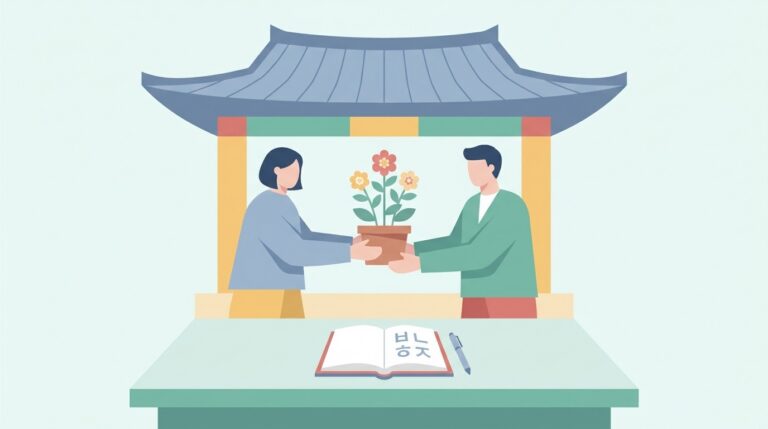
Phase 1: Empathy & Story-Driven Opening
안녕하세요! 매일한글 에디터입니다. (Annyeonghaseyo! It’s your Daily Hangul editor.)
Imagine sitting in a high-level symposium at the Seoul Global Center overlooking Gwanghwamun Plaza. You are surrounded by senior diplomats, cultural attachés, and researchers debating Korea’s exploding global footprint. An eager speaker takes the podium and repeatedly praises “Hallyu as an export weapon to conquer international markets,” framing cultural diplomacy as a one-sided promotional campaign. Notice the subtle shifts in the room: Korean cultural scholars softly clearing their throats, diplomats looking down at their notes, and an awkward stillness settling over the hall. Why? Because in contemporary Korean intellectual and diplomatic discourse, reducing soft power to state-sponsored propaganda is regarded as profoundly tone-deaf.
Mastering advanced Korean at the C2 level demands more than impeccable syntax; it requires grasping the philosophical pivot from nationalistic self-aggrandizement (gukppong) to reciprocal, bidirectional empathy (sangho hohyejeok gyoryu). When you articulate that authentic public diplomacy must transcend unilateral projection and respect the interlocutor’s history, you instantly earn profound professional respect in Korean academic, governmental, and creative circles. This guide draws upon real workshop insights and diplomatic debriefs to equip you with the sophisticated rhetoric needed to navigate soft power discourse with nuance and poise.
Phase 2: Deep Dive into 3 Core Expressions
1. 일방적인 주입보다는 상호 호혜적인 소통이 본질입니다
- Pronunciation: [Ilbangjeogin juipbodaneun sangho hohyejeogin sotongi bonjirimnida] (Pronounce ‘ho-hye’ smoothly like ‘ho-hyeh’, avoiding hard stops between syllables)
- Meaning: Literal: “Rather than one-way injection, reciprocal and mutually beneficial communication is the essence.” / Actual Nuance: “Authentic engagement relies on bilateral dialogue and mutual respect rather than unilateral didacticism.”
- K-Culture Moment: Seen frequently in panel discussions on Arirang TV’s diplomatic forums or JTBC’s policy debates when critique is leveled against rigid, government-led overseas promotion.
- Editor’s Insight: The phrase 상호 호혜적 (sangho hohyejeok) is the gold standard in Korean diplomatic vocabulary. It signals that you view the counterpart not as a consumer of your culture, but as an equal partner in dialogue.
- Situation Spectrum: Casual 🚫 | Semi-formal ⚠️ | Formal ✅
- 🤔 Think About It: Does your native language differentiate between simple “two-way communication” and “mutually benevolent reciprocity” (hohye)? How does this reflect the Confucian premium placed on harmonious interdependence?
2. 문화적 우월주의를 경계하고 상대의 역사적 맥락을 헤아려야 합니다
- Pronunciation: [Munhwajeok uweoljuuileul gyeong-gyeha-go sangdae-ui yeoksajeok maeknakeul he-aryeoya hamnida] (Nasalize ‘maek-nak’ into ‘maeng-nak’)
- Meaning: Literal: “We must guard against cultural superiority and measure the counterpart’s historical context.” / Actual Nuance: “We must consciously prevent cultural chauvinism by deeply attuning ourselves to the historical sensibilities of our partners.”
- K-Culture Moment: Evoked by veteran cultural directors and film curators during international film festivals like BIFF (Busan International Film Festival) when discussing cross-border collaborations.
- Editor’s Insight: 헤아리다 (he-arida) is a beautiful, deeply Korean verb that means to thoughtfully fathom, weigh, and empathize with someone’s inner circumstances rather than merely analyzing them logically.
- Situation Spectrum: Casual 🚫 | Semi-formal ⚠️ | Formal ✅
- 🤔 Think About It: Notice the ethical imperative in 경계하다 (gyeong-gyehada – to be vigilant against). Why is self-restraint considered a core virtue when discussing soft power in Korea?
3. 진정한 소프트파워는 공감과 연대에서 발현됩니다
- Pronunciation: [Jinjeonghan sopeuteupaweo-neun gonggamgwa yeondaeeseo balhyeondoemnida] (Pronounce ‘balhyeon’ with a crisp, clear ‘h’ sound)
- Meaning: Literal: “Genuine soft power is manifested from empathy and solidarity.” / Actual Nuance: “True soft power does not coerce; it naturally emerges from shared emotional resonance and collective solidarity.”
- K-Culture Moment: Reminiscent of BTS’s landmark address at the United Nations General Assembly, where their message focused not on their commercial dominance, but on youth vulnerability and global healing.
- Editor’s Insight: 발현되다 (balhyeondoeda) implies an organic emergence or blossoming from within, contrasting sharply with 강요하다 (gang-yohada – to enforce/impose).
- Situation Spectrum: Casual ⚠️ | Semi-formal ✅ | Formal ✅
- 🤔 Think About It: How does equating power with 연대 (yeondae – solidarity) subvert traditional Western realist concepts of political dominance?
Phase 3: Textbook Korean vs. Real-World Korean
Situation 1: Critiquing aggressive state-led cultural marketing
- 📖 교과서 한국어 (Textbook Korean): 우리 문화를 전 세계에 널리 알려서 국가 이미지를 높여야 합니다. (Uri munhwaleul jeon segye-e neolli allyeoseo gukga imijileul nopyeoya hamnida. / “We must widely publicize our culture across the world to elevate our national image.”)
- 🗣️ 진짜 한국어 (Real-World C2 Korean): 자기 자랑만 늘어놓는 일방적 프로파간다는 오히려 상대국의 반감만 사기 십상이에요. (Jagi jarangman neureonohneun ilbangjeok peuropagandaneun ohiryeo sangdaeguk-ui bangamman sagi sipsang-ieyo. / “Unilateral propaganda that merely flaunts one’s own achievements is bound to trigger backlash from counterpart nations.”)
- 💡 왜 다를까? (Why the divergence?): Textbook formulations often sound like outdated 1980s bureaucrat brochures. Contemporary elites use ~기 십상이다 (~gi sipsang-ida – prone to/bound to result in negative consequences) to caution against tone-deaf national vanity.
Situation 2: Defining genuine cultural exchange
- 📖 교과서 한국어 (Textbook Korean): 문화 교류는 양국 간의 관계를 증진시키는 중요한 활동입니다. (Munhwa gyolyuneun yangguk gan-ui gwan-gyeleul jeungjinsikineun jung-yohan hwaldong-imnida. / “Cultural exchange is an important activity that improves bilateral relations.”)
- 🗣️ 진짜 한국어 (Real-World C2 Korean): 문화는 주입하는 게 아니라 서로의 삶에 자연스럽게 스며드는 과정이어야 하잖아요. (Munhwaneun juiphaneun ge anira seoroui salme jayeonseureopge seomyeodeuneun gwajeong-ieoya hajanayo. / “Culture isn’t something you inject; it ought to be a process of naturally permeating into each other’s daily lives.”)
- 💡 왜 다를까? (Why the divergence?): C2 speakers frequently use metaphorical sensory verbs like 스며들다 (seomyeodeulda – to soak in, permeate, seep gently) to emphasize organic integration over transactional diplomacy.
Phase 4: K-Culture Deep Dive & Non-Verbal Manners
4-1. 눈치 (Nunchi) & Intellectual Posture in Korean Discourse
When engaging in high-level discussions in Korea, physical posture and verbal pacing signal intellectual humility (gyeomson).
* The Attentive Tilt (경청의 각도): Avoid leaning back with crossed arms, which reads as cynical detachment. Lean forward slightly (around 5 to 10 degrees). When a senior scholar or diplomat speaks, nod slowly and deliberately (고개를 깊이 끄덕임), keeping your lips gently closed.
* The Bilateral Palm Gesture: When asserting a point about mutuality (상호 호혜성), refrain from pointing a finger (삿대질). Instead, hold both hands at chest level, palms turned slightly upward and facing each other, moving them inward to symbolize reciprocal synthesis.
* Modulating Assertiveness: Preface strong critiques with cushioning hedges (쿠션어) such as “외람된 말씀이지만…” (Oeramdoen malsseum-ijiman… / “Forgive my presumption, but…”) or “물론 다양한 시각이 존재합니다만…” (Mullon dayanghan sigagi jonjaehamnidaman… / “While diverse perspectives certainly exist…”).
4-2. Cultural Code Analysis: The Anti-Propaganda Ethos in K-Wave
Why did Director Bong Joon-ho’s Oscar acceptance speech resonate so powerfully in Korea? Instead of declaring Korean cinematic supremacy, he quoted Martin Scorsese: “가장 개인적인 것이 가장 창의적인 것이다” (The most personal is the most creative). This intellectual humility embodies modern Korea’s aspiration: achieving soft power not by enforcing an official national narrative, but by validating shared human vulnerability. From BTS advocating self-love to literary works like Han Kang’s explorations of historical grief, South Korea’s most potent cultural capital thrives when it sheds bureaucratic jingoism and embraces self-reflective universalism.
Phase 5: Real-World Roleplay Scenario
Setting: A quiet lounge at the National Museum of Modern and Contemporary Art (MMCA), Seoul, following an international cultural diplomacy forum.
Characters:
* Elena (엘레나): Visiting Senior Cultural Policy Analyst from Europe.
* Min-jun (민준): Director of Strategic Cultural Exchange at a public foundation.
Turn 1
* 엘레나: 🎭 (찻잔을 조심스럽게 내려놓으며 진지한 눈빛으로) 민준 디렉터님, 오늘 포럼에서 K-컬처의 산업적 성과만 지나치게 강조된 것 같아 조금 아쉬웠어요.
* Romanization: Minjun direktonim, oneul poreom-eseo K-keolcheo-ui saneopjeok seonggwaman jinachige gangjodoen geot gata jogeum aswiwosseoyo.
* English: Director Min-jun, I felt a bit disappointed that today’s forum seemed to place excessive emphasis solely on the commercial outcomes of K-Culture.
Turn 2
* 민준: 🎭 (공감하듯 천천히 고개를 끄덕이며) 저 역시 뼈아프게 공감하는 대목입니다. 소프트파워를 수치화된 수출 실적으로만 환원하는 시각은 대단히 위험하죠.
* Romanization: Jeo yeoksi ppyeoapeuge gonggamhaneun daemogimnida. Sopeuteupaweoreul suchihwadoen suchul siljeogeoroman hwanweonhaneun sigageun daedanhi wiheomhajyo.
* English: I painfully agree with your observation. Reducing soft power strictly to quantified export metrics is exceedingly precarious.
Turn 3
* 엘레나: 🎭 (기대 섞인 표정으로 상체를 살짝 기울이며) 맞아요. 상대국에 대한 존중 없는 일방적 홍보는 자칫 문화적 제국주의로 비칠 수 있잖아요?
* Romanization: Majayo. Sangdaeguk-e daehan jonjung eomneun ilbangjeok hongboneun jachit munhwajeok jegukjuuilo bichil su itjanayo?
* English: Exactly. Unilateral promotion lacking respect for host countries risks being perceived as cultural imperialism, doesn’t it?
Turn 4
* 민준: 🎭 (두 손을 모아 가슴 앞에 두고 차분한 어조로) 정확한 지적이십니다. 진정한 공공외교는 우리의 것을 일방적으로 주입하는 게 아니라, 상대의 역사적 맥락에 귀를 기울이는 데서 출발해야 합니다.
* Romanization: Jeonghwakhan jijeogisimnida. Jinjeonghan gonggong-oegyoneun uri-ui geoseul ilbangjeog-euro juiphaneun ge anira, sangdae-ui yeoksajeok maeknag-e gwireul giul-ineun deoseo chulbalhaeya hamnida.
* English: That is an accurate critique. True public diplomacy must not inject our narratives unilaterally; it must begin by lending an attentive ear to the counterpart’s historical context.
Turn 5
* 엘레나: 🎭 (안도하는 미소를 지으며) 그런 쌍방향 교류야말로 지속 가능한 문화적 연대를 이끌어낼 수 있다고 봐요.
* Romanization: Geureon ssangbanghyang gyoryuyamallo jisok ganeunghan munhwajeok yeondaereul ikkeul-eonael su itdago bwayo.
* English: I believe that very kind of bidirectional exchange is what fosters sustainable cultural solidarity.
Turn 6
* 민준: 🎭 (따뜻한 눈빛으로 잔을 매만지며) 동의합니다. 서로의 문화적 다양성을 긍정하고 상호 호혜적인 토대를 구축할 때 비로소 진정한 매력이 발현되니까요.
* Romanization: Dong-uihamnida. Seoroui munhwajeok dayangseong-eul geungjeonghago sangho hohyejeogin todaereul guchukhal ttae biroso jinjeonghan maeryeogi balhyeondoenikkayo.
* English: I agree. It is when we validate each other’s cultural diversity and build a mutually reciprocal foundation that authentic magnetism truly manifests.
Turn 7
* 엘레나: 🎭 (수첩을 꺼내며 적극적인 태도로) 다음 분기 한-EU 문화 협력 기획안에 바로 이 ‘상호 학습’ 프레임워크를 공동으로 반영해보면 어떨까요?
* Romanization: Daeum bungi Han-EU munhwa hyeopryeok gihoegan-e baro i ‘sangho hakseup’ peureimweokeureul gongdong-euro banyeonghaebomyeon eotteolkkayo?
* English: Why don’t we jointly incorporate this ‘mutual learning’ framework into next quarter’s Korea-EU cultural cooperation proposal?
Turn 8
* 민준: 🎭 (정중하게 살짝 목례하며) 매우 뜻깊은 제안입니다. 프로파간다를 넘어선 진솔한 연대의 모델을 함께 만들어 보시죠.
* Romanization: Maeu tteutgipeun je-animnida. Peuropeogandareul neomeoseon jinsolhan yeondae-ui modeureul hamkke mandeul-eo bosijo.
* English: That is an exceptionally meaningful proposal. Let us build together a model of heartfelt solidarity that transcends crude propaganda.
🔀 Interactive Branching Point
If Min-jun had defensively dismissed Elena’s critique in Turn 2, how would you respond as Elena to maintain diplomatic poise while upholding the core principle?
- Option A: “그래도 정부 예산이 들어갔는데 국익을 극대화하는 게 당연하지 않나요?” (Graedo jeongbu yesani deureogatneunde gugigeul geukdaehwahaneun ge dang-yeonhaji annayo?)
- Assessment: Bad (🚫). This completely concedes the high ground and reverts back to utilitarian mercantilism.
- Option B: “한국 문화가 세계 최고라는 자만심은 결국 한류의 수명을 단축시킬 뿐입니다.” (Hanguk munhwaga segye choegoraneun jamansimeun gyeolguk hallyu-ui sumyeong-eul danchuksikil ppunimnida.)
- Assessment: Risk (⚠️). While intellectually valid, the accusatory tone (자만심 – arrogance/complacency) breaks diplomatic politeness and triggers psychological resistance.
- Option C: “국가 브랜드 제고라는 취지는 이해하지만, 지속 가능성을 담보하려면 현지 사회와의 정서적 교감이 선행되어야 하지 않을까요?” (Gukga beuraendeu jegoraneun chwijineun ihaehajiman, jisok ganeungseong-eul damboharyeomyeon hyeonji sahoewaui jeongseojeok gyogami seonhaengdoe-eoya haji aneulkkayo?)
- Assessment: Best (✅). Masterful diplomatic reframing. It validates the institutional intent (취지는 이해하지만) while introducing sustainable emotional communion (정서적 교감) as the strategic prerequisite.
Phase 6: 10-Second Emotion Shadowing Drill
Practice these high-register cadence markers aloud. Use the slashes / as breath-pauses to project scholarly gravity.
[🤝 진정성 있고 설득력 있게 / Earnest and persuasive]
일방적인 홍보는 / 피로감을 낳지만, / 상호 존중은 / 영속적인 신뢰를 구축합니다.
(Ilbangjeogin hongboneun / pirogameul najiman, / sangho jonjungeun / yeongsokjeogin sinroereul guchukhamnida.)
“One-sided promotion breeds exhaustion, / but mutual respect / builds enduring trust.”-
[🕊️ 차분하고 단호한 성숙함 / Calm and firm maturity]
문화는 경쟁의 도구가 아니라, / 국경을 넘어 / 서로의 상처를 위로하는 연대의 통로여야 합니다.
(Munhwaneun gyeongjaeng-ui doguga anira, / gukgyeong-eul neomeo / seoroui sangcheoreul wirohaneun yeondae-ui tongro-yeoya hamnida.)
“Culture is not an instrument of rivalry; / it must be an avenue of solidarity / healing wounds across national borders.” -
[💡 지적이면서도 통찰력 있게 / Intellectual and insightful]
우월성을 과시하려는 순간 / 매력은 반감되고, / 경청과 겸양을 실천할 때 / 진정한 소프트파워가 완성됩니다.
(Uweolseong-eul gwasiharyeoneun sungan / maeryeog-eun bangamdoego, / gyeongcheong-gwa gyeomyang-eul silcheonhal ttae / jinjeonghan sopeuteupaweoga wanseongdoemnida.)
“The instant one flaunts superiority, / allure dissipates; / when we practice attentive listening and humility, / genuine soft power is fulfilled.”
Phase 7: K-Culture Mini Dictionary
-
상호 호혜성 (Sangho Hohyeseong)
- Translation: Principle of Reciprocity / Mutual Benevolence
- Nuance & Usage: Essential in diplomatic communiqués and cultural policy treatises. It implies that both parties give and receive intangible value equally without transactional coercion.
- 문화 패권주의 (Munhwa Paegwonjuui)
- Translation: Cultural Hegemonism / Cultural Chauvinism
- Nuance & Usage: A sharp critical term used to condemn powers that impose their cultural values upon others under the guise of globalization.
- 스며들다 (Seomyeodeulda)
- Translation: To naturally permeate, soak into, or suffuse
- Nuance & Usage: Used by Korean sociologists to contrast gentle, natural cultural absorption (문화적 스며듦) against forceful indoctrination (문화적 강요).
- 공공외교 거버넌스 (Gonggong-oegyo Geobeoneonseu)
- Translation: Public Diplomacy Governance
- Nuance & Usage: Refers to the multi-stakeholder ecosystem—including grassroots citizens, artists, NGOs, and government agencies—collaborating horizontally rather than through a top-down bureaucratic hierarchy.
Phase 8: Traveler and Practitioner Survival Kit
Top 3 Survival Expressions for Seminars & High-Level Encounters
- “쌍방향 문화 교류 사업에 대한 구체적인 논의를 진전시키고 싶습니다.”
(Ssangbanghyang munhwa gyoryu sa-eob-e daehan guchejeogin non-uireul jinjeonsikigo sipsumnida.)- Pro Tip: Use this when redirecting an official conversation from mere consumer exports toward joint artist-in-residence or co-production initiatives.
- “현지 시민사회의 목소리를 정책에 수렴하는 과정이 선행되어야 합니다.”
(Hyeonji siminsahoe-ui moksorireul jeongchaege suryeomhaneun gwajeong-i seonhaengdoe-eoya hamnida.)- Pro Tip: Demonstrates institutional literacy during Q&A sessions at cultural summits.
- “다름을 인정하는 포용성이야말로 진정한 국가 브랜드의 품격 아닐까요?”
(Dareumeul injeonghaneun poyongseong-iyamallo jinjeonghan gukga beuraendeu-ui pumgyeok anilkkayo?)- Pro Tip: A sophisticated closing remark that shifts the debate from transactional value to ethical prestige (품격).
Editor’s Field Note for Seoul Diplomacy & Culture Scholars
When visiting institutions such as the Korea Foundation Global Center or attending symposiums at the National Museum of Korea, bypass generic commercial maps and utilize specialized local resources. Consult the National Museum of Korea Exhibition Guide and Audio App Download to analyze how South Korea curates foreign cultural relics with profound deference. When traveling between diplomatic precincts around Gwanghwamun and Hannam-dong, verify transit via Naver Map Subway and Bus Route Planner. Note that during high-level roundtables, exchanging business cards (명함 교환) should always be conducted with both hands, accompanied by a brief respectful glance into the recipient’s eyes before examining their title.
Phase 9: One Step Deeper (Humanities Thought Inquiry)
In early Korean modernization, the desperate quest for international recognition spawned the colloquial syndrome known as 국뽕 (gukppong)—an intoxicating rush of nationalistic pride triggered whenever a foreigner praised kimchi or Korean electronics. Yet as South Korea matured into an established democratic powerhouse, its civil society recognized that reflexive ethnocentrism breeds intellectual insularity. True soft power transcends the instinct to turn culture into a trophy. It reinterprets the traditional Korean concept of 정 (Jeong)—not as exclusive, insular bonding, but as expansive, transnational empathy that reaches out to stand in solidarity with marginalized global struggles.
💬 Your Turn: In your native culture, where does the boundary lie between healthy patriotic celebration and alienating cultural chauvinism? How would you articulate this boundary using the Korean concept of 상호 호혜성 (reciprocity) in the comments below?
Phase 10: FAQ & Common Mistakes
Q: Isn’t all public diplomacy fundamentally designed to serve the national interest (국익)?
A: While public diplomacy inevitably aligns with national interests, modern diplomatic theory recognizes that ‘enlightened national interest’ (개명된 국익) is achieved when partners flourish together. If public diplomacy devolves into naked propaganda, it incurs an ‘integrity deficit’ (진정성의 결여), which ultimately degrades national brand prestige rather than elevating it.
Q: What is the difference between 문화 선전 (Munhwa Seonjeon) and 공공외교 (Gonggong-oegyo)?
A: 문화 선전 (Munhwa Seonjeon) translates to cultural propaganda—a unilateral, didactic dissemination of state ideology aimed at controlling external perception. Conversely, 공공외교 (Gonggong-oegyo) is horizontal, dialogic, and civic-driven, aiming for enduring mutual comprehension and collaborative problem-solving.
Q: How can I respectfully challenge an overly nationalistic statement in Korean without causing offense?
A: Anchor your intervention in systemic sustainability rather than personal ethics. Use the formula: “선생님의 고견에 깊이 공감합니다만, 장기적인 지속 가능성을 고려한다면 상호주의적 관점도 함께 안배할 필요가 있어 보입니다.” (I deeply appreciate your astute insight, but considering long-term sustainability, it seems necessary to balance it with a reciprocal perspective.)
🚨 Common Mistakes Warning Board
- Mistake: Using 선전 (Seonjeon – propaganda/advertisement) when referring to public diplomacy initiatives.
- Correct Action: Replace with 공공외교 지평 확장 (expanding public diplomacy horizons) or 문화 교류 촉진 (facilitating cultural exchange). 선전 carries harsh authoritarian connotations.
- Mistake: Confusing 소프트파워 (Soft Power) with 한류 마케팅 (Hallyu commercial marketing).
- Correct Action: Distinguish between commercial content export (콘텐츠 수출) and values-based public diplomacy (가치 기반 공공외교).
- Mistake: Pronouncing 상호 호혜성 as [Sang-ho ho-hye-seong] with a heavy glottal break.
- Correct Action: Blend the vowels naturally like [Sangho hohyesseong], assimilating the final consonant tension smoothly.
Phase 11: Action Missions & Engagement
- 🥉 Bronze Mission (Solo Shadowing): Record yourself delivering the second drill from Phase 6 with deliberate pauses and solemn vocal resonance. Listen back and check whether your intonation feels persuasive rather than didactic.
- 🥈 Silver Mission (Analytical Review): Choose an international speech by a Korean artist or diplomat (e.g., RM’s UNICEF speech, Youn Yuh-jung’s BAFTA speech). Identify one instance of self-deprecating wit or reciprocal respect, and post a 2-sentence critique on your social media using the tag
#매일한글_공공외교. - 🥇 Gold Mission (Real-world Debate Simulation): In your next advanced Korean conversation exchange or seminar, introduce the phrase “일방적인 주입보다는 상호 호혜적인 소통이 본질입니다” to steer a conversation about globalization.
🎮 K-Culture Mission: Watch an episode of a Korean variety show featuring foreign residents (such as 비정상회담 – Abnormal Summit archives or 어서와 한국은 처음이지). Note down how Korean panelists balance pride in local customs against cultural curiosity toward foreign traditions.
Phase 12: Interactive Quiz Challenge
1. Situation Judgment Quiz
You are drafting a keynote address for a bilateral cultural foundation. Which of the following sentences best reflects genuine public diplomacy without sounding propagandistic?
* A) 우리 고유의 우수한 문화를 상대국 대중에게 남김없이 전수해야 합니다.
* B) 국가의 위상을 드높이기 위해 K-콘텐츠의 소비를 전방위적으로 확대해야 합니다.
* C) 양국의 문화적 서사가 만나 새로운 공감대를 형성할 수 있도록 상호 경청의 장을 마련해야 합니다.
🔍 정답 및 해설 보기 (Click to Reveal Answer & Analysis)
- Correct Answer: C
- Explanation: Option A (우수한 문화를 전수하다) carries paternalistic cultural arrogance. Option B (소비 확대) reduces culture to a commercial export. Option C beautifully encapsulates the reciprocal ethos of modern public diplomacy through 상호 경청 (mutual listening) and 공감대 형성 (building shared empathy).
2. Fill-in-the-Blank Challenge
다음 빈칸에 들어갈 가장 알맞은 전문 외교 용어를 고르세요.
“진정한 공공외교는 자국의 이미지를 일방적으로 각인시키는 활동이 아니라, 양국 간의 ( )을 바탕으로 장기적인 신뢰 자본을 축적하는 과정입니다.”
* 1) 일방주의 (Ilbangjuui)
* 2) 상호 호혜성 (Sangho Hohyeseong)
* 3) 문화 사대주의 (Munhwa Sadaejuui)
🔍 정답 및 해설 보기 (Click to Reveal Answer & Analysis)
- Correct Answer: 2) 상호 호혜성 (Sangho Hohyeseong)
- Explanation: 상호 호혜성 means reciprocal mutuality—the cornerstone of sustainable cultural diplomacy. 1) means unilateralism, and 3) means cultural subservience/toadyism.
3. True or False Cultural Concept Quiz
True or False: In contemporary Korean public diplomacy discourse, the word 스며들다 is often used negatively to describe foreign cultural contamination.
🔍 정답 및 해설 보기 (Click to Reveal Answer & Analysis)
- Correct Answer: False
- Explanation: 스며들다 is predominantly utilized in a profoundly positive, poetic sense to describe how culture ought to naturally, gently, and organically infuse daily life without forceful political coercion.







