

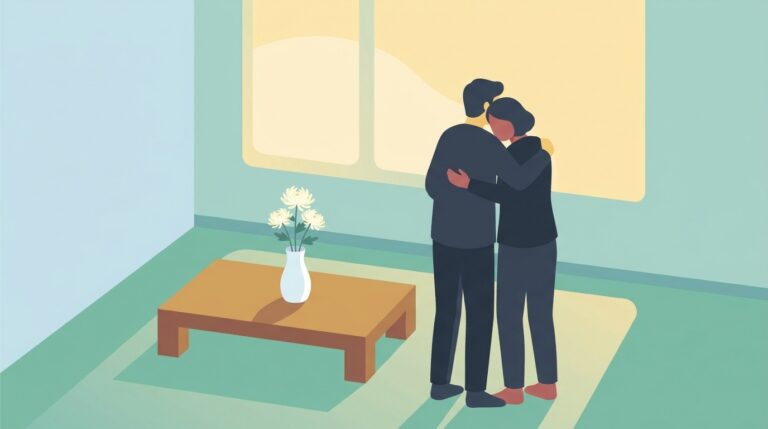
Phase 1: Empathy & Story Opening
안녕하세요! 매일한글 에디터입니다. Hello and welcome! As your trusted cultural navigator at Daily Hangul, I’m so glad you’re here.
Have you ever watched that poignant scene in My Mister (나의 아저씨) or Hospital Playlist where a character experiences a devastating family loss? Instead of an empty, hushed room, you see friends, colleagues, and neighbors streaming into a bustling funeral hall (장례식장, jangnyesikjang) late into the night. They sit cross-legged on the floor, share a steaming bowl of spicy beef soup (yukgaejang), and simply remain there until dawn.
For many international learners, encountering a Korean obituary text message (부고, bugo) triggers instant anxiety: What should I wear? Do I send money? What do I say so I don’t sound cold or awkward? In our 10 years of mentoring expatriates and global professionals in Korea, we have watched so many caring people freeze up out of fear of making a cultural mistake. But here is the heartwarming truth of Korean society: when you show up during someone’s darkest hour, your presence plants a seed of lifelong warmth and unbreakable loyalty (jeong, 정). This guide gives you the exact phrases, cultural codes, and quiet confidence you need to stand by your Korean friends when it matters most.
Phase 2: Key Expressions Breakdown
Here are the three foundational expressions every intermediate learner must understand to express heartfelt condolences in Korea.
1. 삼가 고인의 명복을 빕니다 (Samga goin-ui myeongbogeul bimnida)
- Pronunciation: [Sam-ga go-in-ui myeong-bo-geul bim-ni-da] (Sound guide: Think “Sam-gah” like the name Sam, “go-in” like ‘going’ without the g, “myeong-bok” like ‘mye-ong boke’, “bim-ni-da”).
- Meaning:
- Literal: “Humbly praying for the deceased’s blessings in the afterlife.”
- Nuance: The most solemn, standard formal condolence phrase in the Korean language.
- K-Culture Moment: Seen draped across black-and-white condolence flower wreaths (근조 화환) or sent in respectful text replies when receiving a mobile obituary.
- Editor’s Insight: The adverb “삼가 (samga)” means acting with utmost humility, restraint, and reverence. Because it carries such profound weight, use it exclusively in formal bereavement messages or formal bows.
- Situation Spectrum: Casual 🚫 | Semi-formal ⚠️ | Formal ✅
- 🤔 Think About It: In English, we often say “I’m so sorry for your loss,” keeping the grammatical focus on the grieving person’s emotional state. Why do you think the Korean phrase directly wishes peace and safe passage for the soul of the departed person instead?
2. 얼마나 마음이 아프세요 (Eolmana maeumi apeuseyo)
- Pronunciation: [Eol-ma-na ma-eum-i a-peu-se-yo] (Sound guide: Melodic and gentle: “Uhl-mah-nah mah-eum-ee ah-peu-seh-yo”).
- Meaning:
- Literal: “How painful must your heart be?”
- Nuance: “I cannot imagine the depth of your heartache; my heart aches beside you.”
- K-Culture Moment: Spoken softly with downcast eyes while greeting a close friend or colleague who is serving as the chief mourner (상주, sangju) at the funeral parlor.
- Editor’s Insight: Rather than offering rushed words of false optimism (like “Cheer up”), this phrase validates their overwhelming sorrow. In Korean emotional dynamics, allowing someone to be completely heartbroken is the highest form of comfort.
- Situation Spectrum: Casual ⚠️ | Semi-formal ✅ | Formal ✅
- 🤔 Think About It: Why does acknowledging unbearable sadness build a deeper bond of empathy than telling someone to look on the bright side?
3. 자리 지켜 줘서 정말 고마워 (Jari jikyeo jwoseo jeongmal gomawo)
- Pronunciation: [Ja-ri ji-kyeo jwo-seo jeong-mal go-ma-wo] (Sound guide: “Jah-ree jee-kyuh jwuh-suh jung-mahl go-mah-wo”).
- Meaning:
- Literal: “Thank you so much for guarding/holding this spot.”
- Nuance: “Thank you for staying by my side during this grief; your physical presence gave me strength.”
- K-Culture Moment: Said by the bereaved friend late at night at the funeral hall dining table, or sent in an appreciative message days after the funeral concludes.
- Editor’s Insight: In Korean culture, physical presence speaks louder than poetic words. “자리를 지키다 (to hold down one’s spot)” implies that you didn’t just drop off an envelope and sprint away; you shared the heavy atmosphere of the room with them.
- Situation Spectrum: Casual ✅ | Semi-formal ✅ (Add -yo: 고마워요 / 감사합니다) | Formal ⚠️
- 🤔 Think About It: In Western etiquette, grieving families are frequently given quiet space and solitude. Why does Korean culture value visitors lingering late into the night?
Phase 3: Textbook Korean vs. Real Korean
Let’s compare robotic book formulas with what sensitive, culturally intuitive native speakers actually say.
Situation 1: Replying to a digital obituary text message (부고 문자)
- 📖 교과서 한국어 (Textbook):
깊은 애도의 뜻을 표하며 삼가 고인의 명복을 빕니다.
(Gipeun aedoui tteuseul pyohamyeo samga goinui myeongbogeul bimnida.)
“I express my deep mourning and pray for the blessing of the deceased.” - 🗣️ 진짜 한국어 (Real-Life):
갑작스러운 비보에 마음이 너무 아픕니다. 삼가 고인의 명복을 빕니다.
(Gapjakseureoun biboe maeumi neomu apeumnida. Samga goinui myeongbogeul bimnida.)
“My heart hurts so much at this sudden sad news. I pray for peace for the deceased.” - 💡 왜 다를까? (Why the difference?):
The textbook version reads like a cold bureaucratic telegram. By adding “갑작스러운 비보에 마음이 너무 아픕니다” (My heart aches at this sudden sad news), you infuse genuine human warmth before the formal prayer.
Situation 2: Comforting the chief mourner face-to-face
- 📖 교과서 한국어 (Textbook):
슬픔을 억누르시고 힘내시기 바랍니다.
(Seulpeumeul eongnuruesigo himnaesigi baramnida.)
“Please suppress your sadness and cheer up.” - 🗣️ 진짜 한국어 (Real-Life):
어떤 위로의 말씀을 드려야 할지 모르겠습니다… 몸 잘 챙기세요.
(Eotteon wiro-ui malsseumeul deuryeoya halji moreugesseumnida… Mom jal chaenggiseyo.)
“I truly don’t know what words could possibly comfort you… Please take care of your health.” - 💡 왜 다를까? (Why the difference?):
Telling someone to “suppress grief” (억누르다) or “cheer up” (힘내세요) can feel dismissive. Admitting that human language falls short in the face of death is far more humble and comforting.
Phase 4: K-Culture Deep Dive & Non-Verbal Manners
4-1. 눈치 (Nunchi) & Physical Decorum
- The Attire & The Sock Rule: Wear a conservative black or dark charcoal suit/dress with no skin showing on the legs. Crucial detail: Korean funeral parlors require removing your shoes before stepping up to the altar. Never wear bare feet or vibrant, cartoon socks! Plain, clean black socks are mandatory.
- The Bowing Code (절):
- If participating in traditional bows in front of the altar portrait (yeongjeong sajin, 영정 사진), perform two deep floor bows (keun-jeol), followed by one standing half-bow.
- Hand Placement: During funerals, men place their right hand over their left hand; women place their left hand over their right hand (the exact opposite of joyful holidays like Seollal!).
- If you have personal religious objections (e.g., Christian tradition), you may stand quietly, bow your head, offer a silent prayer for 30 seconds, and place a white chrysanthemum flower (heonhwa, 헌화) instead.
- Mourner Greeting: Turn toward the chief mourner (sangju), bow once together, exchange a very soft word of comfort, and step back gently. Avoid direct, intense eye contact.
4-2. Cultural Code: The Midnight Yukgaejang (육개장)
After paying respects at the altar, visitors are ushered into an adjoining dining area. You will be served a tray with spicy red beef soup (yukgaejang), rice, side dishes, and drinks.
- Why Spicy Red Soup? Ancient folk beliefs held that the vibrant red chili oil kept negative, wandering spirits at bay. Practically, funerals in Korea traditionally last three days (sam-il-jang, 3일장), and warm, nutrient-dense soup keeps exhausted hosts and traveling guests sustained.
- The Golden Rule: It is customary to stay, eat, and chat quietly. Leaving immediately after bowing makes you look like you are checking off an obligation. Staying to share a meal tells the family: “You are not alone in this grief.”
Phase 5: Real-Life Roleplay Scenario
Setting: The funeral hall at Seoul National University Hospital. Junho (the chief mourner) is standing in black attire with a mourning armband. Liam (a B1 international colleague) arrives after work in a dark suit.
- Turn 1 (Liam): (Bowing respectfully with dark suit and hands folded) 준호 씨, 갑작스러운 소식에 마음이 너무 아파요. (Junho ssi, gapjakseureoun sosige maeumi neomu apayo.) “Junho, my heart hurts so much at this sudden news.” 🎭 숙연한 표정으로 조용히 고개를 숙이며 (With a solemn expression, bowing head softly)
- Turn 2 (Junho): (Voice quiet, eyes tired) 리암 씨… 바쁘실 텐데 이렇게 와 줘서 고마워요. (Liam ssi… bappeusil tende ireoke wa jwoseo gomawoyo.) “Liam… thank you for coming all this way despite your busy schedule.” 🎭 두 손을 모아 맞절하듯 허리를 숙이며 (Folding both hands and bowing back in gratitude)
- Turn 3 (Liam): (Placing the white condolence envelope into the collection box) 조의금 봉투 여기 넣었어요. 어떤 말로도 위로가 안 되겠지만, 기운 내세요. (Joeuigeum bongtu yeogi neoeosseoyo. Eotteon mallodo wiroga an doegessjiman, giun naeseyo.) “I placed the condolence envelope here. No words can heal the grief, but please take care of yourself.” 🎭 두 손으로 공손하게 봉투를 넣으며 (Politely placing the envelope with both hands)
- Turn 4 (Junho): (Gently gesturing toward the dining tables) 정말 큰 힘이 돼요. 식사 안 하셨죠? 저쪽에서 국 한 그릇 꼭 드시고 가세요. (Jeongmal keun himi dwaeyo. Siksa an hasyeossjyo? Jeojjok-eseo guk han geureut kkok deusigo gaseyo.) “It truly gives me strength. You haven’t eaten, right? Please have a warm bowl of soup over there.” 🎭 식사 자리로 조심스럽게 안내하며 (Gently gesturing toward the dining area)
- Turn 5 (Liam): (Sitting at the table with colleagues) 네, 준호 씨도 식사 꼭 챙겨 드세요. 잠은 좀 주무셨어요? (Ne, Junho ssi-do siksa kkok chaenggyeo deuseyo. Jameun jom jumusyeosseoyo?) “Yes, please make sure you eat too, Junho. Have you managed to get any sleep?” 🎭 걱정스러운 눈빛으로 준호의 안색을 살피며 (Checking his condition with concerned eyes)
- Turn 6 (Junho): (Sitting down briefly across the table with a faint sigh) 손님들이 계속 오셔서 눈은 못 붙였지만, 자리를 지켜 주는 분들이 많아서 버티고 있어요. (Sonnimdeuri gyesok osyeoseo nuneun mot buchyeotjiman, jarireul jikyeo juneun bundeuri manhaseo beotigo isseoyo.) “Visitors kept arriving so I couldn’t sleep, but so many people holding down the space helps me endure it.” 🎭 피곤하지만 진심 어린 눈빛으로 바라보며 (Looking back with tired but heartfelt sincerity)
- Turn 7 (Liam): (Nodding warmly, speaking softly) 오늘은 늦게까지 곁에 있을 테니 걱정 말고 일 보세요. (Oneureun neutgekkaji gyeote isseul teni geokjeong malgo il boseyo.) “I’ll stay by your side until late tonight, so please don’t worry about me and take care of matters.” 🎭 준호의 팔을 가볍게 토닥이며 (Gently comforting him with a soft touch on the arm)
- Turn 8 (Junho): (Deeply touched, bowing his head slightly) 고마워요, 리암 씨. 이 마음 평생 잊지 않을게요. (Gomawoyo, Liam ssi. I maeum pyeongsaeng ijji aneulgeyo.) “Thank you, Liam. I will never forget your kindness for the rest of my life.” 🎭 두 손을 꼭 모으며 (Holding both hands together in deep thanks)
🔀 Interactive Branching Choice
You have finished your meal and are preparing to leave the funeral hall around 11:30 PM. What do you say to Junho?
- Choice A: “준호 씨, 오늘 너무 재밌었어요! 다음에 밖에서 술 한잔해요!” (Junho, today was so fun! Let’s drink together outside next time!)
- 🚨 Feedback: DISASTROUS (Bad). Even if the dining room feels social, using words like “재밌다 (fun)” or proposing casual drinking outings is a massive cultural taboo and deeply offensive.
- Choice B: “준호 씨, 먼저 일어날게요. 몸 잘 챙기시고, 나중에 마음 추스르면 연락 주세요.” (Junho, I’ll take my leave first. Please take care of your body, and reach out later whenever your heart has settled.)
- 🏆 Feedback: PERFECT (Best). Extremely thoughtful, respectful, and considerate. It acknowledges his need for self-care and avoids pressuring him for an immediate response.
- Choice C: “준호 씨, 슬퍼하지 말고 파이팅 하세요!” (Junho, don’t be sad, fighting!)
- ⚠️ Feedback: AWKWARD (Risk). “파이팅 (Fighting)” is an upbeat cheer used for sports or exams. Using it at a funeral invalidates their mourning and clashes with the atmosphere.
Phase 6: 10-Second Emotional Shadowing Drill
Practice these three lines with the emotional pacing markers (/ = pause):
[🥺 슬픔과 깊은 공감을 담아 - With deep empathy and quiet sorrow]
갑작스러운 비보에 / 마음이 너무 아픕니다. / 삼가 고인의 명복을 빕니다.
(Gapjakseureoun biboe / maeumi neomu apeumnida. / Samga goin-ui myeongbogeul bimnida.)-
[🕊️ 차분하고 정중한 어조로 - With calm, respectful sincerity]
어떤 위로의 말씀을 / 드려야 할지 모르겠습니다… / 몸조심하세요.
(Eotteon wiro-ui malsseumeul / deuryeoya halji moreugesseumnida… / Momjosimhaseyo.) -
[🤍 묵직한 진심과 고마움을 담아 - With heavy gratitude and warmth]
힘든 시간에 / 자리를 지켜 줘서 / 정말 고마워.
(Himdeun sigane / jarireul jikyeo jwoseo / jeongmal gomawo.)
Phase 7: K-Culture Mini Dictionary
- 부의금 / 조의금 (Bu-ui-geum / Jo-ui-geum) | Condolence Money | Cash gifted in a clean white envelope to support the bereaved family with funeral expenses. Amounts are traditionally prepared in odd-number increments (50,000 KRW, 100,000 KRW, etc.).
- 상주 (Sang-ju) | Chief Mourner | The immediate family member (often the eldest son, daughter, or spouse) wearing a black armband (wanjang) or hair ribbon who officially greets visitors.
- 품앗이 (Pum-asi) | Communal Mutual Aid | The ancient Korean social pact of exchanging labor and support during life’s momentous events. Returning condolence visits across generations is considered an sacred social debt.
- 조문 (Jo-mun) | Condolence Visit | The full ceremonial act of visiting a funeral home, paying respects before the altar, and offering consoling words to the family.
Phase 8: Survival Kit for Travelers & Expats
Top 3 Survival Expressions
- 부의금 봉투 어디에 있나요? (Bu-ui-geum bongtu eodie innayo?)
- Meaning: “Where are the condolence envelopes?”
- Pro Tip: If you couldn’t find one at a convenience store, look right next to the guestbook desk at the funeral hall entrance. Free white envelopes printed with “부의 (Condolence)” are always provided.
- 삼가 조의를 표합니다. (Samga jouireul pyohamnida.)
- Meaning: “I express my humble condolences.”
- Pro Tip: A concise, elegant alternative when speaking to older mourners or colleagues if the longer standard phrase feels difficult to remember under stress.
- 헌화는 어떻게 하나요? (Heonhwaneun eotteoke hanayo?)
- Meaning: “How should I offer the flower?”
- Pro Tip: Hold the white chrysanthemum with both hands and place it on the table so the blossom faces the deceased’s portrait, with the stem pointing toward you.
Editor’s Travel & Life Note
- Envelope Protocol: Use black ink. On the front, standard envelopes have “부의 (賻儀)” pre-printed vertically. On the back left side, write your full name vertically. If representing a workplace or school, write the organization name just to the right of your name.
- Condolence Amount: For a casual acquaintance or coworker: 50,000 KRW. For a close friend or close colleague: 100,000 KRW to 200,000 KRW. Always use crisp, clean bills.
- Navigation Tip: Funeral halls are often located inside large hospital complexes. To locate the specific mortuary hall without getting lost, check the mobile obituary link and copy the address directly into the download Naver Map app.
Phase 9: “한 발 더 깊이” (Deep Cultural Reflection)
In Korean society, human relationships are not judged by how many parties you attend together; they are measured by whether you show up when someone’s world crumbles. Koreans use the compound word 경조사 (Gyeong-jo-sa), which bundles celebratory events (gyeong) and mournful events (jo).
However, there is an unwritten hierarchy: missing a wedding may earn you mild teasing, but missing a close friend’s parent’s funeral without a critical reason can silently end a relationship forever. Conversely, the coworker who quietly traveled two hours across town, bowed respectfully, and sat eating soup with you until midnight becomes family. That simple act is the purest manifestation of jeong (정)—a shared human solidarity that transcends words.
💬 Your Turn: In your home country, is grief processed through quiet solitude or communal gatherings? Have you ever felt comforted just by someone sitting quietly in the same room? Share your thoughts in the comments below!
Phase 10: FAQ & Common Mistakes
Q: What should I do if I am traveling and cannot attend in person?
A: Send a gentle, personalized KakaoTalk condolence text immediately. Most modern digital obituaries (mobile bugo) include a dedicated bank account number for condolence money (bu-ui-geum song-geum). Wiring 50,000 or 100,000 KRW with your name attached is widely accepted and deeply appreciated in modern Korea.
Q: Can I wear dark navy or dark grey if I don’t own a black suit?
A: Yes! Dark navy, dark charcoal, or muted dark brown are completely acceptable. The goal is sobriety and respect. Just avoid loud patterns, flashy accessories, bare shoulders, and bare feet.
Q: Is it true that people shouldn’t clink glasses at a funeral?
A: Yes, absolutely! When drinking beer, soju, or soft drinks at the funeral dining table, never clink glasses (건배 금지) or propose toasts. Simply lift your glass and drink quietly.
🚨 흔한 실수 (Common Mistakes) TOP 3
- Mistake: Accidentally saying “축하드립니다” (Congratulations!) out of nervous habit.
- Correct Action: If your tongue freezes up under stress, do not force long phrases. A quiet, deep bow and a gentle “마음이 너무 아픕니다” (My heart aches) is far safer and more touching.
- Mistake: Handing condolence money directly to the chief mourner’s hand.
- Correct Action: Condolence money is never handed directly to the family. Insert the envelope into the wooden collection box (bu-ui-ham, 부의함) located near the guest book at the entrance.
- Mistake: Forgetting to take off shoes before stepping onto the altar mat.
- Correct Action: Always look down at the floor boundary. Step out of your shoes onto the wooden threshold, leaving your shoes pointed neatly away from the altar, before approaching the memorial portrait.
Phase 11: Action Mission & Engagement
Action Mission 3-Step Challenge
- 🥉 Bronze Mission (Solo Practice): Read our Phase 6 shadowing drill out loud three times until “갑작스러운 비보에 마음이 너무 아픕니다” flows naturally without hesitation.
- 🥈 Silver Mission (Social Share): Grab a blank sheet of paper and practice writing your name vertically on the back-left side, exactly as it should appear on a Korean condolence envelope.
- 🥇 Gold Mission (Real Life Application): The next time a Korean friend, teacher, or colleague shares news of a loss, send a personalized message using today’s phrases rather than an auto-translated English condolence.
🎮 K-Culture Mission
Watch Episode 16 of the acclaimed K-Drama My Mister (나의 아저씨) or Episode 1 of Move to Heaven (무브 투 헤븐). Observe the funeral hall scene closely: take note of the armbands worn by the family, the white envelopes, and how friends stay by their side until the early hours of the morning.
Phase 12: Interactive Quiz Challenge
Test your cultural instincts! Check your answers using the dropdown toggle below.
1. Situational Judgment: You are sitting at the funeral dining table having a drink with colleagues. Your coworker pours you a cup of soju. What should you do?
* A) Raise your glass high and yell “위하여! (Cheers!)”
* B) Clink your glass against theirs gently and smile.
* C) Raise your glass slightly without clinking, and drink quietly without making a toast.
2. Fill-in-the-Blank: 슬픈 일이 있을 때 곁에서 (_____ ) 지켜 준 고마움은 평생 잊지 못해요.
(The gratitude of someone holding down the space by your side during grief is never forgotten.)
* Hint: The Korean word for ‘spot’ or ‘seat’.
3. True or False: When performing traditional bows (큰절) in front of the deceased’s altar portrait at a funeral, men place their left hand over their right hand.
* A) True
* B) False
👉 Click to reveal the correct answers and explanations!
- Answer: C
- Explanation: Clinking glasses or toasting (geonbae) is strictly forbidden at Korean funerals because it signifies celebration. You should drink quietly without clinking.
- Answer: 자리 (Jari)
- Explanation: The idiom 자리를 지키다 (to hold down the spot / remain by someone’s side) encapsulates the core philosophy of Korean condolence etiquette.
- Answer: B (False)
- Explanation: At funerals, men place their right hand over their left, and women place their left hand over their right. Placing the left hand over the right for men is reserved for happy ceremonies like New Year’s Seollal bows!
- Explanation: At funerals, men place their right hand over their left, and women place their left hand over their right. Placing the left hand over the right for men is reserved for happy ceremonies like New Year’s Seollal bows!







