

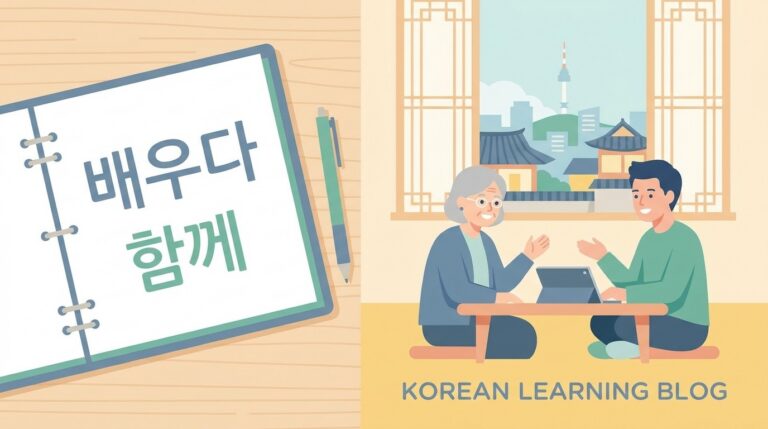
Rethinking Korean Retirement: How Silver Workers Are Reshaping the Modern K-Office
Phase 1: 공감 (Story-Driven Opening)
안녕하세요! 매일한글 에디터입니다.
Imagine walking into a sleek tech firm in Pangyo or a historic corporate headquarters in Gwanghwamun. You notice Senior Director Kim—in his late 50s, impeccably dressed, sharper than ever with data analytics—mentoring a twenty-something junior associate. But behind this harmonious scene lies one of modern Korea’s most intense, high-stakes water-cooler debates. South Korea officially entered a super-aged society, and with birth rates plunging, the demographic cliff isn’t just an abstract economic statistic; it’s an everyday reality unfolding in boardrooms and dinner discussions alike.
Many of our advanced C1 learners tell us: “I can handle daily conversations and even business presentations, but when Korean colleagues start passionately debating national pension reform, ‘정년 연장’ (retirement age extension), and generational friction at team dinners, I freeze!” It feels daunting because these discussions blend intricate labor law, deeply rooted Confucian respect for elders, and acute anxieties about youth unemployment. Today, we’re unpacking authentic, high-level Korean expressions that will elevate your conversational ability from merely fluent to intellectually compelling, grounded in real feedback from foreign professionals thriving in Korea.
Phase 2: 핵심 표현 3선 심층 분석 (Core Expressions In-Depth)
1. 정년 연장을 제도화하다 (Jeong-nyeon yeon-jang-eul je-do-hwa-ha-da)
- Pronunciation: [Jung-nyun yun-jang-eul je-do-hwa-ha-da] (Think “Jung” as in jungle + “nyun” as in neon, “yun-jang” rhyming with fun-song)
- Meaning: Literal: To institutionalize the extension of the retirement age. / Nuance: Legally standardizing an older mandatory retirement age across industries through binding policy rather than optional company guidelines.
- K-Culture Moment: Seen in boardroom dramas like Agency (대행사) or political thrillers where HR executives argue over whether raising the retirement threshold to 65 will burden corporate payrolls.
- Editor’s Insight: The noun ‘정년’ (legal retirement age) usually hovers around 60 in Korea. Pairing it with ‘제도화하다’ elevates your speech to formal debate or editorial quality, signaling that you understand systemic policy shifts.
- Situation Spectrum: Casual 🚫 | Semi-formal ⚠️ | Formal ✅
- 🤔 Think About It: Does your home country enforce a mandatory retirement age, or is statutory retirement viewed as age discrimination? How does legally enforced retirement change how employees view their late-career loyalty?
2. 계속고용 제도를 도입하다 (Gye-sok-go-yong je-do-reul do-ip-ha-da)
- Pronunciation: [Gye-sok-go-yong je-do-reul do-eeb-ha-da] (Pronounce “Gye-sok” like ‘guess-oak’ swiftly, and “do-ip” like ‘dough-eep’)
- Meaning: Literal: To introduce a continuous employment system. / Nuance: Allowing veteran workers who hit the legal retirement age to be rehired, contracted, or retained under flexible wage terms without simply mandating a blanket retirement extension.
- K-Culture Moment: Frequently highlighted in current affairs programs like SBS Curious Story Y or documentary features covering “Active Seniors” (액티브 시니어) re-entering manufacturing and tech as specialized consultants.
- Editor’s Insight: ‘계속고용’ is the pragmatic middle ground currently favored by many Korean policymakers to avoid immediate friction with youth job quotas. Using this term shows you know the current legislative pulse!
- Situation Spectrum: Casual 🚫 | Semi-formal ✅ | Formal ✅
- 🤔 Think About It: Why might seasoned workers prefer re-employment tracks (계속고용) over an abrupt end to their career, even if it comes with adjusted compensation?
3. 세대 간 상생 방안을 모색하다 (Se-dae gan sang-saeng bang-an-eul mo-saek-ha-da)
- Pronunciation: [Se-dae gahn sang-seng bahng-ahn-eul mo-sek-ha-da] (Think “Se-dae” like ‘say-day’, “sang-saeng” like ‘song-seng’)
- Meaning: Literal: To seek win-win solutions between generations. / Nuance: Formulating balanced social strategies so supporting older workers does not block career pathways for younger generations entering the job market.
- K-Culture Moment: A staple phrase in presidential town halls and corporate PR addresses when navigating generational tension between the MZ generation and Baby Boomers.
- Editor’s Insight: ‘상생’ (win-win/mutual coexistence) is a quintessential Korean socio-philosophical keyword. It frames contentious issues not as a zero-sum battle, but as collective harmony.
- Situation Spectrum: Casual ⚠️ | Semi-formal ✅ | Formal ✅
- 🤔 Think About It: How does your native language express generational compromise? Is it framed as competition for limited resources or mutual symbiosis?
Phase 3: 교과서 한국어 vs 진짜 한국어 (Textbook vs. Real Native)
Situation 1: Explaining that a veteran colleague is staying past sixty
- 📖 교과서 한국어:
그 부장님은 나이가 많지만 퇴직하지 않고 계속 회사에 다니십니다.
(Geu bu-jang-nim-eun na-i-ga man-ji-man toe-jik-ha-ji an-ko gye-sok hoe-sa-e da-ni-sim-ni-da.)
“That general manager is old, but he does not retire and keeps attending the company.” - 🗣️ 진짜 한국어:
부장님께서 정년 퇴직 후에도 촉탁직 형태로 계속고용 계약을 맺으셨어요.
(Bu-jang-nim-kke-seo jeong-nyeon toe-jik hu-e-do chok-tak-jik hyeong-tae-ro gye-sok-go-yong gye-yak-eul mae-jeu-syeo-sseo-yo.)
“Even after reaching mandatory retirement, the department head signed a re-employment contract on special advisor terms.” - 💡 왜 다를까? In actual Korean professional settings, saying someone is “old” (나이가 많다) sounds blunt and disrespectful. Native speakers specify employment tracks like ‘촉탁직’ (contract/advisor status) or ‘계속고용’ while honoring seniority with honorifics.
Situation 2: Proposing generational equity in a team meeting
- 📖 교과서 한국어:
젊은 사람과 노인이 일자리를 공평하게 나누어야 합니다.
(Jeol-meun sa-ram-gwa no-in-i il-ja-ri-reul gong-pyeong-ha-ge na-nu-eo-ya ham-ni-da.)
“Young people and old people must divide jobs fairly.” - 🗣️ 진짜 한국어:
청년층의 신규 채용 여력을 해치지 않으면서, 시니어 인력을 안착시킬 상생 모델이 시급해요.
(Cheong-nyeon-cheung-ui sin-gyu chae-yong yeo-ryeok-eul hae-chi-ji an-eu-myeon-seo, si-ni-eo in-ryeok-eul an-chak-si-kkil sang-saeng mo-del-i si-geup-hae-yo.)
“We urgently need a win-win model that anchors senior personnel without choking the hiring capacity for entry-level youth.” - 💡 왜 다를까? C1-level discourse uses socio-economic categorizations like ‘청년층’ (youth demographic) and ‘시니어 인력’ (senior workforce) instead of simplistic labels, using actionable conceptual verbs like ‘안착시키다’ (to successfully settle/anchor).
Phase 4: K-Culture 딥다이브 & 비언어적 매너 (Deep Dive & Non-Verbal Manners)
4-1. 눈치(Nunchi) & 제스처 (Gestural Etiquette)
When discussing sensitive topics like retirement age or pension contributions in Korea, direct bluntness can be perceived as confrontational.
* The Softening Stance: Native speakers rarely say flatly, “정년을 늘려야 합니다” (Retirement must be extended). Instead, tilt your head slightly, hold both hands loosely clasped on the table, and frame it thoughtfully: “정년 연장과 계속고용 제도를 병행하는 편이 합리적이지 않을까 싶습니다” (I wonder if it might be reasonable to pursue both retirement extension and continuous employment concurrently).
* Eye Contact Modulation: During debates with seniors or executives, avoid unblinking direct eye contact while refuting their points. Lower your gaze momentarily toward the briefing document before looking up to offer an alternative view.
4-2. 문화 코드 분석 (Active Seniors in Modern K-Media)
In past K-dramas, grandparents were depicted resting in rural hanoks or watching TV. Today, dramas like Navillera (나빌레라) and lifestyle essays feature vibrant older Koreans declaring their “인생 2막” (Second Act of Life). With Korea entering super-aged status, seniors do not wish to be passive welfare recipients. They are digital consumers, baristas, logistics experts, and technical mentors. When you talk about the silver economy in Korea, acknowledging this vibrant energy immediately endears you to local colleagues.
Phase 5: 실전 롤플레이 시나리오 (Real-World Roleplay Scenario)
Setting: A strategic planning room at a manufacturing enterprise in Pangyo.
Characters:
* 박 전무 (Executive Director Park, 59): A dedicated veteran facing mandatory retirement next spring, deeply committed to company institutional knowledge.
* You (Foreign Senior HR Strategist): Advising the executive board on human capital sustainability amidst Korea’s demographic shift.
박 전무: 우리 회사 생산직 숙련공들이 내년에 대거 정년을 맞이합니다. 기술 전수가 끊길까 봐 밤잠이 안 와요.
(U-ri hoe-sa saeng-san-jik suk-ryeon-gong-deul-i nae-nyeon-e dae-geo jeong-nyeon-eul ma-ji-ham-ni-da. Gi-sul jeon-su-ga kkeun-kil-kka bwa bam-jam-i an wa-yo.)
“Our plant’s veteran technicians reach mandatory retirement en masse next year. I lose sleep worrying our core expertise will vanish.”
You: 🎭 [진지한 눈빛으로 고개를 끄덕이며 자료를 펼친다 – Nodding seriously and opening the strategy deck]
단순히 일괄적인 정년 연장만 고집하기보다, 계속고용 제도를 도입해 숙련 인력을 재고용하는 트랙은 어떨까요?
(Dan-sun-hi il-gwal-jeok-in jeong-nyeon yeon-jang-man go-jip-ha-gi-bo-da, gye-sok-go-yong je-do-reul do-ip-hae suk-ryeon in-ryeok-eul jae-go-yong-ha-neun teu-raek-eun eo-tteol-kka-yo?)
“Rather than insisting solely on an across-the-board retirement age extension, how about introducing a continuous employment track to rehire skilled personnel?”
박 전무: 계속고용이라… 그렇다면 노조와 임금 체계 개편을 두고 협상해야 할 텐데, 청년 노조원들의 반발은 어떻게 조율하지요?
(Gye-sok-go-yong-i-ra… Geu-reoh-da-myeon no-jo-wa im-geum che-gye gae-pyeon-eul du-go hyeop-sang-hae-ya hal ten-de, cheong-nyeon no-jo-won-deul-ui ban-bal-eun eo-tteoh-ge jo-yul-ha-ji-yo?)
“Continuous employment… That would require renegotiating wage structures with the labor union. How do we mediate pushback from younger union members?”
You: 🎭 [손바닥을 부드럽게 펴 보이며 공감을 표한다 – Gesturing openly with palms to express empathy]
임금피크제와 직무급제를 유연하게 연계해 청년 채용 쿼터를 보장한다면, 세대 간 상생 모델을 구축할 수 있습니다.
(Im-geum-pi-keu-je-wa jik-mu-geup-je-reul yu-yeon-ha-ge yeon-gye-hae cheong-nyeon chae-yong kwo-teo-reul bo-jang-han-da-myeon, se-dae gan sang-saeng mo-del-eul gu-chuk-hal su it-seum-ni-da.)
“If we flexibly link wage-peak models and role-based pay to safeguard youth hiring quotas, we can establish an intergenerational win-win model.”
박 전무: 세대 간 상생이라… 청년층에게 부담을 주지 않으면서 고령층의 전문성을 살릴 묘수군요.
(Se-dae gan sang-saeng-i-ra… Cheong-nyeon-cheung-e-ge bu-dam-eul ju-ji an-eu-myeon-seo go-ryeong-cheung-ui jeon-mun-seong-eul sal-lil myo-su-gun-yo.)
“Intergenerational win-win… That truly sounds like an ingenious move to leverage senior expertise without burdening youth.”
You: 🎭 [미소를 지으며 확신을 담아 덧붙인다 – Smiling and adding with quiet conviction]
초고령사회 진입 국면에서는 건강한 시니어가 노동시장에 머물도록 유도하는 것이 곧 기업의 지속 가능성입니다.
(Cho-go-ryeong-sa-hoe jin-ip guk-myeon-e-seo-neun geon-gang-han si-ni-eo-ga no-dong-si-jang-e meo-mul-do-rok yu-do-ha-neun geot-i got gi-eop-ui ji-sok ga-neung-seong-im-ni-da.)
“In an era transitioning into a super-aged society, encouraging healthy seniors to stay in the labor market is essential to corporate sustainability.”
🔀 인터랙티브 분기점 (Branching Decision)
How would you formulate your concluding recommendation to Director Park?
- Option A: “기존 호봉제를 그대로 유지하면서 정년을 68세까지 법적으로 무조건 연장해야 합니다.”
- Feedback [Risk]: Insisting on strict seniority wage systems (호봉제) while extending statutory retirement causes severe corporate payroll strain and triggers sharp opposition from younger job seekers.
- Option B: “계속고용 제도와 직무급 재설계를 병행해, 세대 간 일자리 충돌 없는 상생안을 마련해야 합니다.”
- Feedback [Best!]: Flawless C1 articulation! Pragmatically balances veteran retention with fiscal feasibility and generational equity.
- Option C: “고령 직원은 생산성이 떨어지니 정년이 되면 전원 퇴사시키고 신입만 뽑으시죠.”
- Feedback [Bad]: Highly insensitive. Disregards institutional memory, exacerbates skilled labor shortages, and violates Korean workplace relational respect.
Phase 6: 10초 감정 섀도잉 드릴 (Emotional Shadowing Drill)
Practice matching intonation and dramatic emotional delivery using pause indicators (/):
[🧐 진중하고 설득력 있게 - Thoughtful and persuasive]
“정년 연장과 / 계속고용 제도를 병행해야 / 세대 간 상생이 / 가능해집니다.”
(Jeong-nyeon yeon-jang-gwa / gye-sok-go-yong je-do-reul byeong-haeng-hae-ya / se-dae gan sang-saeng-i / ga-neung-hae-jim-ni-da.)-
[🤝 포용적이고 미래지향적으로 - Inclusive and forward-looking]
“건강한 시니어 인력이 / 노동시장에 더 오래 머물도록 / 유연한 고용 트랙을 / 마련해야 합니다.”
(Geon-gang-han si-ni-eo in-ryeok-i / no-dong-si-jang-e deo o-rae meo-mul-do-rok / yu-yeon-han go-yong teu-raek-eul / ma-ryeon-hae-ya ham-ni-da.) -
[💡 단호하면서도 정중하게 - Resolute yet courteous]
“청년 채용을 위축시키지 않는 / 정교한 임금 체계 설계가 / 전제되어야 합니다.”
(Cheong-nyeon chae-yong-eul wi-chuk-si-ki-ji an-neun / jeong-gyo-han im-geum che-gye seol-gye-ga / jeon-je-doe-eo-ya ham-ni-da.)
Phase 7: K-Culture 미니 사전 (Core Keywords)
- 초고령사회 (Cho-go-ryeong-sa-hoe) | Super-aged Society
Context: Officially defined when people aged 65 or older exceed 20% of the national population. A standard term in Korean socio-economic journalism. - 임금피크제 (Im-geum-pi-keu-je) | Wage Peak System
Context: A compensation structure where employee wages are gradually reduced a few years before retirement in exchange for job tenure or post-retirement contract retention. - 인생 2막 (In-saeng I-mak) | Act Two of Life
Context: Metaphor referring to an active, purposeful career or lifestyle reinvented after statutory retirement. - 세대 갈등 (Se-dae Gal-deung) | Intergenerational Conflict
Context: Generational tension over national pension contributions, labor mobility, and societal leadership positions.
Phase 8: 여행자와 거주자를 위한 생존 키트 (Survival Kit)
Top 3 Socio-Workplace Survival Expressions
- 어르신, 제가 들어드릴게요. (Eo-reu-sin, je-ga deu-reo-deu-ril-ge-yo.)
“Elder, allow me to carry that for you.”
Pro Tip: Use ‘어르신’ instead of ‘할아버지/할머니’ when addressing unfamiliar seniors respectfully in public transit or neighborhood settings. - 선배님의 오랜 노하우를 배우고 싶습니다. (Seon-bae-nim-ui o-raen no-ha-u-reul bae-u-go sip-seum-ni-da.)
“I would love to learn from your deep expertise, senior colleague.”
Pro Tip: Builds instant rapport with senior mentors who may feel vulnerable about pending retirement. - 정년 이후 계획은 어떻게 되세요? (Jeong-nyeon i-hu gye-hoek-eun eo-tteoh-ge doe-se-yo?)
“What are your plans following retirement?”
Pro Tip: Polite phrasing when an older colleague naturally brings up their transition timeline.
Editor’s Travel Note
When taking the Seoul Metro or intercity trains, pay close attention to designated silver seating areas (노약자석). Even during peak rush hour, leaving these seats open for older citizens is deeply ingrained civic etiquette. To keep up with high-level socio-economic debates, consider browsing genuine editorial columns via the 네이버 뉴스 앱 다운로드 to see how Korean columnists weigh in on pension reforms.
Phase 9: 한 발 더 깊이 (Reflective Essay)
In traditional Korean culture, filial piety (효, Hyo) meant adult children and society directly caring for aging elders in domestic peace. But as Korea navigates the world’s fastest demographic shift, care and respect are taking a structural, institutional turn. Respect today no longer means asking our elders to step aside into quiet seclusion; it means preserving their dignity, intellectual vitality, and financial autonomy within the economic ecosystem. Developing an authentic intergenerational safety net is not merely an economic survival mechanism—it is Korea’s collective effort to redefine the bond between younger and older generations in the modern century.
💬 Your Turn: How does your culture balance opportunities for youth entering the job market with the welfare and dignity of senior workers? Share your thoughts below in Korean!
Phase 10: FAQ & 오해 방지 (FAQ & Common Mistakes)
Q: What is the main practical difference between ‘정년 연장’ and ‘계속고용’?
A: ‘정년 연장’ (Retirement Age Extension) legally raises the statutory age limit (e.g., from 60 to 65) that applies across standard employment contracts. ‘계속고용’ (Continuous Employment Track) offers companies flexibility by allowing them to rehire retired employees under new contracts, consultant roles, or customized wage scales without uniformly changing statutory retirement mandates.
Q: Can I use the word ‘노인’ (No-in) when discussing senior workers in corporate meetings?
A: Avoid using ‘노인’ in business contexts. While linguistically neutral in legal definitions, it carries connotations of frailty. In corporate or policy contexts, always use ‘시니어 인력’ (senior workforce), ‘고령층 근로자’ (older workers), or honorific titles like ‘선배님/전문위원님’.
Q: Why do Korean unions and youth groups clash over retirement extension?
A: Many Korean companies still utilize seniority-based pay systems (호봉제), where wages peak at older ages. Younger job seekers worry that if senior employees stay longer under the same payroll allocation, corporations will freeze entry-level hiring.
🚨 흔한 실수 (Common Mistakes) 경고판
- ❌ Mistake 1: Calling an elderly worker “할아버지/할머니” in a professional office.
👉 Correct Action: Refer to them by their corporate job title plus honorific (e.g., “박 부장님”, “고문님”) or “선생님/어르신”. - ❌ Mistake 2: Translating “old people” directly as “늙은 사람”.
👉 Correct Action: Use “고령층” (older demographic) or “어르신들” (honored elders). - ❌ Mistake 3: Treating ‘상생’ as just an empty buzzword.
👉 Correct Action: Use ‘세대 간 상생’ specifically when proposing mutually beneficial policy trade-offs between younger and veteran cohorts.
Phase 11: 액션 미션 & 참여 유도 (Action Missions)
- 🥉 Bronze Level: Practice the Phase 6 Shadowing Drill out loud 3 times, paying close attention to pausing and warm confidence.
- 🥈 Silver Level: Write a 2-sentence comment discussing whether statutory retirement should be extended in your country, using the term ‘세대 간 상생’.
- 🥇 Gold Level: Engage in a conversation with an advanced Korean language partner or colleague about: “정년 연장과 청년 고용의 균형을 맞추려면 어떤 제도가 필요할까요?”
- 🎮 K-Culture Mission: Watch an episode of a Korean business or workplace documentary (like KBS 시사기획 창), and spot how many times terms like ‘인생 2막’, ‘초고령사회’, or ‘임금피크제’ are mentioned!
Phase 12: 인터랙티브 퀴즈 챌린지 (Interactive Quiz Challenge)
1. Situational Judgment:
You are participating in a policy workshop on pension reform. You want to argue that veteran technicians should remain active without choking youth recruitment. Which sentence is the most natural and persuasive?
* (A) 나이 든 사람들을 쫓아내고 청년만 채용합시다.
* (B) 계속고용 제도를 도입하여 고령 인력을 활용하면서 청년 채용과 상생해야 합니다.
* (C) 정년을 무조건 없애서 노조의 요구만 들어주면 됩니다.
2. Fill-in-the-Blank:
우리 사회가 65세 이상 인구 비율이 20%를 넘어서는 ( )에 진입함에 따라, 노동 시장의 구조적 개편이 시급합니다.
3. True or False:
In business meetings, referring to elderly professionals as ‘시니어 인력’ or ‘고령층 근로자’ is considered more professional and courteous than using ‘늙은 근로자’. [ True / False ]
👉 Click to view answers and explanations
-
Answer: (B)
Explanation: (B) accurately utilizes advanced terms (‘계속고용 제도’, ‘고령 인력’, ‘상생’) in a polite, structured C1 manner. (A) and (C) are aggressive, crude, or one-sided. -
Answer: 초고령사회 (Super-aged Society)
Explanation: A nation where over 20% of the total population is 65 or older is formally termed a ‘초고령사회’. -
Answer: True
Explanation: ‘늙은 근로자’ sounds derogatory. ‘시니어 인력’ or ‘고령층 근로자’ is the respectful, industry-standard phrasing.







