

Phase 1: 공감 (Story-Immersive Opening)
안녕하세요! 매일한글 에디터입니다.
Picture this: You are sitting in a cozy, bustling K-BBQ spot in Hongdae. Your stomach is full of savory galbi, the grill is sizzling softly, and you are ready to head out to your next adventure. You wait patiently at your table, looking around for the waiter to bring the leather bill folder. Minutes tick by. Servers hustle past holding piping hot pots of kimchi stew, but nobody stops at your table with a check.
You make awkward eye contact with an employee, give a hesitant little wave, and wonder: Did they forget about me? How do I pay without causing a scene?
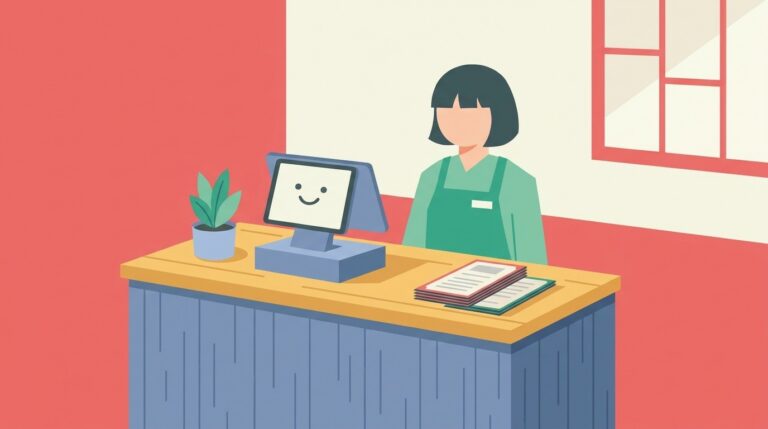
If this sounds familiar, take a deep breath—you did nothing wrong! In Korea, table service rarely includes bringing the bill to your seat. Instead, payment happens almost exclusively at the front counter by the exit. Sitting and waiting for the check will only leave you waiting until closing time!
This guide is created directly from real classroom experiences with beginner learners just like you. By mastering just a few short, magic phrases, you will walk up to any register in Seoul with rock-solid confidence. Let us turn that payment anxiety into your smoothest K-culture flex yet!
Phase 2: 핵심 표현 3선 심층 분석 (Top 3 Essential Expressions)
1. 계산할게요 (Gyesanhalgeyo)
- Pronunciation: [Gye-san-hal-ge-yo] (Sounds like Gay-sahn-hahl-gay-yoh)
- Meaning: Literal: “I will calculate” | Real Nuance: “I’d like to pay!” or “Check, please!”
- K-Culture Moment: In K-dramas, whenever friends fight over who gets to pay after drinks, someone suddenly rushes to the counter, slams down a card, and confidently shouts this exact phrase.
- Editor’s Insight: The base word gyesan (계산) literally means calculation or computation. Adding -halgeyo makes it a polite statement of your intention. It is the gold standard phrase at any checkout counter.
- Situation Spectrum: Casual: ⚠️ (Use Gyesan-hae with close friends) / Semi-formal: ✅ (Perfect for restaurants) / Formal: ✅ (Gyesan-hagesseumnida)
- 🤔 Think About It: In English, we ask a question (“Could we get the check?”), but Koreans make a polite statement of their own action (“I will pay”). Why do you think Korean communication favors stating personal action when initiating payment?
2. 얼마예요? (Eolmayeyo?)
- Pronunciation: [Eol-ma-ye-yo] (Sounds like Uhl-mah-yay-yoh)
- Meaning: Literal: “How much is it?” | Real Nuance: “What is the total?”
- K-Culture Moment: Often heard in traditional markets like Gwangjang Market when travelers order spicy rice cakes directly from food stalls.
- Editor’s Insight: If you see no printed bill on your table or at the register, this 4-syllable lifesaver is all you need to ask the owner for the total.
- Situation Spectrum: Casual: ⚠️ (Eolmaya?) / Semi-formal: ✅ (Standard) / Formal: ✅ (Eolma-imnikka?)
- 🤔 Think About It: Notice how short this sentence is compared to Western equivalents. Korean language prioritizes speed and directness in everyday commerce.
3. 카드로 할게요 (Kadeuro halgeyo)
- Pronunciation: [Ka-deu-ro hal-ge-yo] (Sounds like Kah-doo-roh hahl-gay-yoh)
- Meaning: Literal: “I will do by card” | Real Nuance: “I’ll pay with a card.”
- K-Culture Moment: Practically every convenience store and modern cafe scene in trendy Seongsu-dong.
- Editor’s Insight: South Korea is virtually cashless. Over 95% of retail transactions use credit or debit cards. The particle -ro (로) means “by means of”.
- Situation Spectrum: Casual: ⚠️ (Kadeuro halge) / Semi-formal: ✅ (Standard) / Formal: ✅ (Kadeuro hagesseumnida)
- 🤔 Think About It: Do you usually pay with physical cards, mobile pay, or cash in your hometown? In Korea, you can spend weeks without ever touching a paper bill!
Phase 3: 교과서 한국어 vs 진짜 한국어 (Textbook vs. Real Korean)
Situation 1: Asking to settle the bill
- 📖 교과서 한국어: 계산서를 가져다주십시오. (Gyesanseoreul gajyeodajusipsio. / Please bring me the bill.)
- 🗣️ 진짜 한국어: 여기 계산할게요! (Yeogi gyesanhalgeyo! / Check here, please!)
- 💡 왜 다를까?: Textbook Korean assumes Western-style table checkout. Real Korean dining etiquette expects you to pick up your table slip, walk to the counter, and announce yourself politely.
Situation 2: Asking if cards are accepted
- 📖 교과서 한국어: 신용카드를 사용할 수 있습니까? (Sinyongkadeureul sayonghal su itsseumnikka? / May I use a credit card?)
- 🗣️ 진짜 한국어: 카드 돼요? (Kadeu dwaeyo? / Does card work?)
- 💡 왜 다를까?: Koreans love brevity and economy of words. Kadeu dwaeyo? is three syllables and perfectly polite for quick interactions.
Phase 4: K-Culture 딥다이브 & 비언어적 매너 (Deep Dive & Non-Verbal Manners)
4-1. 눈치 (Nunchi) & Gestures
- The Table Slip Hunt: Look around your table before standing up. In 90% of Korean diners, the server tucked a small clipboard or clear plastic cylinder holding your order sheet (jumunseo, 주문서) at the edge of your table. Pick this up and carry it to the counter near the main door!
- The Two-Handed Handover: When handing over your payment card or receiving a physical receipt, never use one limp hand. Hold your card with both hands, or support your right wrist/forearm lightly with your left hand. This small gesture conveys deep respect and will instantly earn you a warm smile from the shop owner.
4-2. 문화 코드 분석 (Culture Code)
- Ppalli-Ppalli (빨리빨리) Speed: Lunch breaks in downtown Seoul are fast. Payment counters are engineered for speed: tap, beep, done. Most registers do not even require signatures for transactions under 50,000 KRW. Embracing this promptness makes checkout smooth for everyone.
Phase 5: 실전 롤플레이 시나리오 (Real Roleplay Scenario)
- Setting: A buzzing neighborhood Korean barbecue joint in Itaewon. Sizzling meat aromas fill the air. You just finished dinner.
- Characters:
- Alex: A beginner Korean learner on his first solo Seoul trip.
- Imo-nim (이모님): The warm, energetic restaurant owner wearing a colorful floral apron.
Turn 1
Alex: 🎭 [Picks up the order slip from the table, walks to the front counter]
저기요, 계산할게요! (Jeogiyo, gyesanhalgeyo!)
“Excuse me, I’d like to pay!”
Turn 2
Imo-nim: 🎭 [Takes the slip with a broad smile and scans the barcode]
네! 맛있게 드셨어요? (Ne! Masitge deusyeosseoyo?)
“Yes! Did you enjoy your meal?”
Turn 3
Alex: 🎭 [Nods enthusiastically with a slight bow]
네, 진짜 맛있었어요! (Ne, jinjja masisseosseoyo!)
“Yes, it was really delicious!”
Turn 4
Imo-nim: 🎭 [Points to the digital screen showing the total]
총 이만 사천 원이에요. (Chong iman sacheon-wonieyo.)
“It comes to 24,000 KRW in total.”
Turn 5
Alex: 🎭 [Holds out credit card using both hands]
카드로 할게요. (Kadeuro halgeyo.)
“I’ll pay by card.”
Turn 6
Imo-nim: 🎭 [Inserts the card into the IC reader, beep sound rings]
결제되셨습니다! 영수증 드릴까요? (Gyeoljedoesyeotseumnida! Yeongsujeung deurilkkayo?)
“Payment went through! Would you like a receipt?”
Turn 7
Alex: 🎭 [Gently raises one hand in a polite ‘no thank you’ wave]
괜찮아요, 버려주세요. (Gwaenchanhayo, beoryeojuseyo.)
“It’s okay, you can discard it.”
Turn 8
Imo-nim: 🎭 [Hands card back with both hands]
감사합니다! 또 오세요! (Gamsahamnida! Tto oseyo!)
“Thank you! Please come again!”
🔀 인터랙티브 분기점 (Interactive Branching)
What should Alex do when he arrives at the front counter?
- Option A: Leave the table slip at the table, walk to the counter empty-handed, and point toward his seat.
👉 Feedback [Risk]: The cashier will have to pause, walk out to find your table, and check what you ate. It slows down the counter and creates mild awkwardness. - Option B: Bring the order clip from the table and say “저기요, 계산할게요!” with a polite bow.
👉 Feedback [Best]: Perfect native manner! The cashier scans your slip instantly, smiles, and completes payment in under 10 seconds. - Option C: Sit at the table for 15 minutes, repeatedly waving your credit card in the air.
👉 Feedback [Bad]: Staff might assume you are waiting for extra side dishes or just chatting. Nobody will come take your card!
Phase 6: 10초 감정 섀도잉 드릴 (10-Second Emotion Shadowing Drill)
Read these aloud while mimicking the emotional tone marks:
[😊 Bright and polite]
여기 / 계산할게요! (Yeogi / gyesanhalgeyo!)
Pause at the slash: Yeogi… gyesanhalgeyo!-
[🙂 Soft and inquiring]
카드 / 돼요? (Kadeu / dwaeyo?)
Gentle upward pitch at the end: Kadeu… dwae-yo? -
[😌 Relaxed and casual]
영수증은 / 버려주세요. (Yeongsujeungeun / beoryeojuseyo.)
Smooth downward melody: Yeongsujeungeun… beoryeojuseyo.
Phase 7: K-Culture 미니 사전 (Mini Dictionary)
-
계산대 (Gyesandae)
Translation: Cashier counter / Checkout desk
Real-World Use: Located right next to the entrance/exit doors in Korean eateries. Always aim your steps here when finished. -
영수증 (Yeongsujeung)
Translation: Receipt
Real-World Use: Cashiers almost always ask: “영수증 드릴까요?” (Would you like a receipt?). -
카드 (Kadeu)
Translation: Payment card (Credit/Debit)
Real-World Use: Derived from the English word ‘card’. Say “Kadeu-yo” when holding out your plastic card. -
현금 (Hyeongeum)
Translation: Cash
Real-World Use: Used primarily in small traditional market stalls or street food carts (pojangmacha).
Phase 8: 여행자를 위한 생존 키트 (Traveler’s Survival Kit)
Survival Expressions TOP 3
- 따로따로 계산할게요. (Ttarottaro gyesanhalgeyo.)
Meaning: “We’d like to pay separately (split the bill).”
Pro Tip: Best used in student hubs like Sinchon or Hongdae. In crowded traditional spots during rush hour, paying together is appreciated. - 영수증 버려주세요. (Yeongsujeung beoryeojuseyo.)
Meaning: “Please throw away the receipt.”
Pro Tip: Saves paper and time if you track your expenses on your banking app. - 잘 먹었습니다! (Jal meogeotseumnida!)
Meaning: “I ate well! (Thank you for the meal!)”
Pro Tip: Say this as you step out the door. It warms every restaurant owner’s heart.
Editor’s Travel Note
- Before exploring local food alleys, prepare your navigation by checking the Naver Map app download to find highly-rated restaurants with counter payment photos.
- Foreign Visa and Mastercard credit cards work across 98% of Korean restaurants, but keeping 20,000 KRW cash tucked in your phone case is smart backup for subway kiosks and street food stalls.
Phase 9: “한 발 더 깊이” (Cultural Reflection)
Have you ever witnessed two Korean adults fiercely wrestling each other at the cashier counter, pushing each other’s credit cards away? In Korean culture, treating friends or junior colleagues to a meal is a core expression of Jeong (정, deep bonding and affection).
Rather than splitting bills down to the single cent, Koreans traditionally prefer taking turns treating one another: “You bought lunch today, so coffee is on me!” This circular hospitality keeps relationships warm and interconnected.
💬 Your Turn: How does splitting the bill work in your home country? Would you enjoy a culture where friends take turns treating each other? Share your thoughts below!
Phase 10: FAQ & 오해 방지 (FAQ & Common Mistakes)
Q: Can I pay at the table if I wave my credit card?
A: In standard Korean restaurants, no. Servers will typically point toward the front counter near the door. The only exceptions are high-end fine dining spots, traditional full-course Hanjeongsik, or modern pubs equipped with table-side tablet ordering tablets that have card readers built into the screens.
Q: What should I do if nobody is standing at the cashier counter?
A: Simply step up to the counter and say politely: 저기요, 계산할게요! (Jeogiyo, gyesanhalgeyo!). A staff member from the kitchen or floor will promptly hurry over to help you.
Q: Can foreign cards do contactless tap-to-pay in Korea?
A: While Apple Pay is gradually expanding in convenience stores and major franchises, many traditional Korean restaurants still rely on standard IC chip insertion. Hand your card over so the cashier can insert it into the terminal.
🚨 Common Mistakes Alert
- Waiting at the table indefinitely: Waiting for someone to deliver your check wastes valuable travel time. Pick up your table slip and go to the exit.
- Handing payment cards with one hand: Handing a card with one limp hand can look dismissive. Always support your arm or hold the card with two hands.
- Shouting across the quiet restaurant: Use a moderate, polite tone when you are near the counter. Save loud calls only for when staff are far back in the kitchen.
Phase 11: 액션 미션 & 참여 유도 (Action Missions)
- 🥉 Bronze Mission (Solo Drill): Stand in front of your bathroom mirror. Hold a payment card with both hands, bow your head 15 degrees, and say: “저기요, 계산할게요! (Jeogiyo, gyesanhalgeyo!)” three times.
- 🥈 Silver Mission (Community Drill): Comment below writing “카드로 할게요! (Kadeuro halgeyo!)” without looking back at the spelling.
- 🥇 Gold Mission (Real-World Challenge): Visit a local Korean restaurant or grocery mart this week. When paying at the register, use “계산할게요” and finish with “감사합니다! (Gamsahamnida!)”.
🎮 K-Culture Mission: Watch any modern K-Drama restaurant scene (like in Itaewon Class or Weightlifting Fairy Kim Bok-joo). Spot the exact moment someone walks toward the entrance to pay and notice where the register is located!
Phase 12: 인터랙티브 퀴즈 챌린지 (Interactive Quiz Challenge)
Q1. Where does payment usually happen in everyday Korean restaurants?
A) At the dining table, brought in a leather checkbook
B) At the front checkout counter near the exit door
C) Outside on the sidewalk
Q2. Fill in the blank:
“I would like to pay by card: [ ]로 할게요!”
Q3. True or False:
Giving your credit card to the shop owner using both hands is considered polite Korean dining etiquette. (True / False)
👉 Click to view Answer & Explanation
- Q1 Answer: B) Almost all traditional and casual Korean restaurants settle payments at the front register (Gyesandae) near the entrance door.
- Q2 Answer: 카드 (Kadeu) -> 카드로 할게요! (Kadeuro halgeyo! / I’ll pay by card!)
- Q3 Answer: True! Using two hands or supporting your wrist shows respect and good manners (Ye-ui).







